Can You See Glow Worms During The Day In The Blue Mountains?
Yes, you can see glow worms during the day inside the 387 m Glow Worm Tunnel near Lithgow, because it is dark enough for the colony to shine. Open cave and gully sites only work after dark, which is why the guided night hike from Sydney runs when it does.
Can You See Glow Worms During The Day?
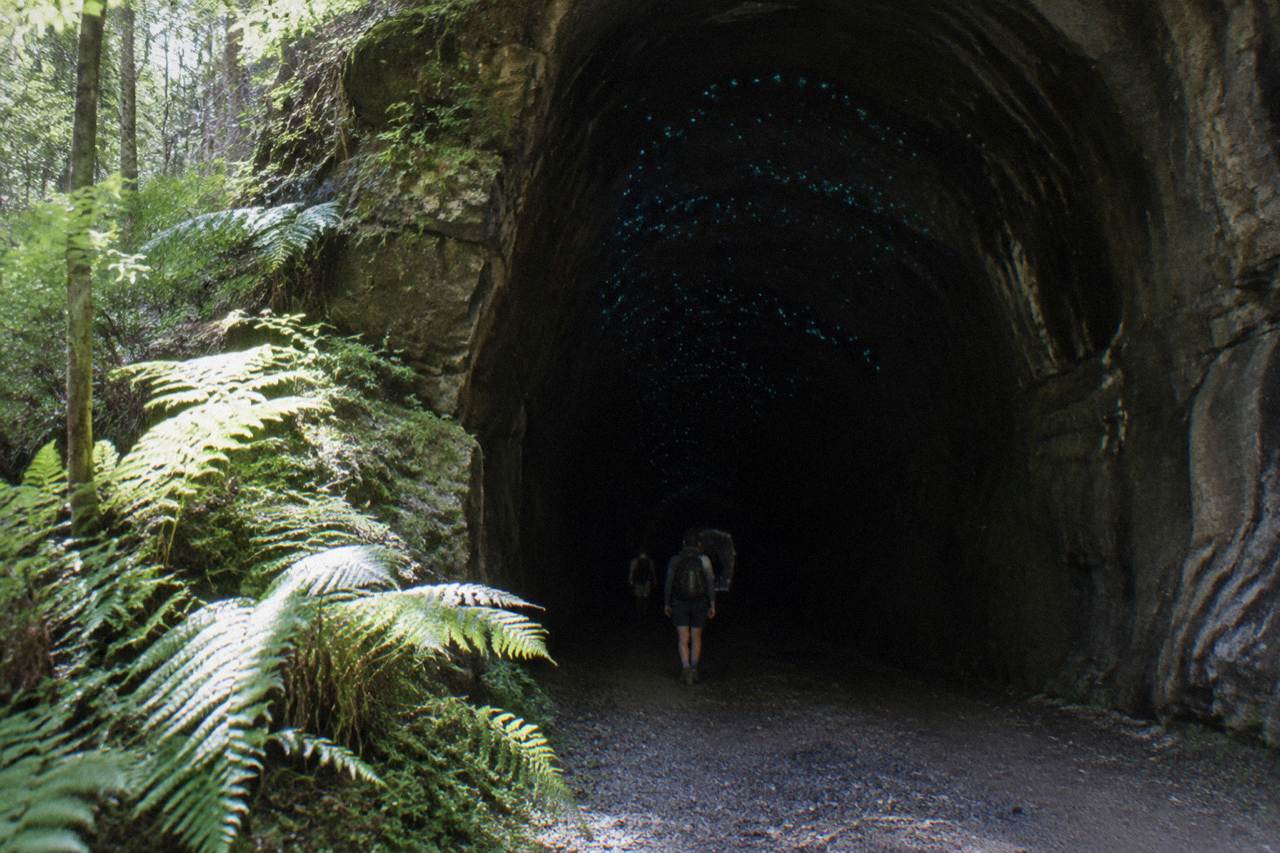
Yes, in one very specific place. The 387 metre Glow Worm Tunnel near Lithgow gets dark enough in daylight for the resident colony to glow, because the tunnel's length blocks nearly all ambient light. Open sites such as caves, overhangs and rainforest gullies only produce visible displays after full dark, so daytime viewing works at the tunnel and almost nowhere else in the region. For everything you need on getting there and what to expect inside, our full guide to the Glow Worm Tunnel near Lithgow covers the practical details.
That single distinction drives almost every planning decision around glow worms in the Blue Mountains. NSW National Parks says it plainly on the track page for the Glow Worm Tunnel walking track: "Because the tunnel is long, it gets dark enough to see glow worms during the day." The tunnel, built in the early 1900s as Tunnel No. 2 of the Newnes mining railway, is 387 metres of curved sandstone with no natural light beyond the first few metres at either end. Walk in twenty paces and the daylight behind you stops mattering. The colony on the walls and ceiling glows regardless of the clock. And if you're wondering where these glowing larvae came from in the first place, the answer is that the Blue Mountains glow worms are a native Australian species, not an introduced one.
Everywhere else is different. Glow worms, the larval stage of a small fungus gnat, need darkness for their light to be worth anything. In an open overhang or a shallow cave, daytime ambient light washes the blue-green glow out completely, the way a torch beam erases a phone screen in the sun. At those sites the display only exists between full dark and dawn. This is why the question has a split answer, and why two very different experiences, a free daytime walk through a disused railway tunnel and a guided night hike from Sydney to a cave behind a waterfall, both legitimately put glow worms in front of your eyes.
For readers weighing the bookable option, the night hike from Sydney is the region's one listed glow worm tour with hotel pickup, and it runs at night precisely because its cave site, unlike the tunnel, is not dark enough in daylight.
Why The Glow Worm Tunnel Works In Daylight
The tunnel works in daylight because of geometry, not luck. At 387 metres long, with a single narrow bore, it cuts out enough ambient light that the interior stays effectively pitch black at midday. NSW National Parks states that glow worms can be seen inside during the day, which makes it the one regional site where a daytime visit and a good display are the same thing.
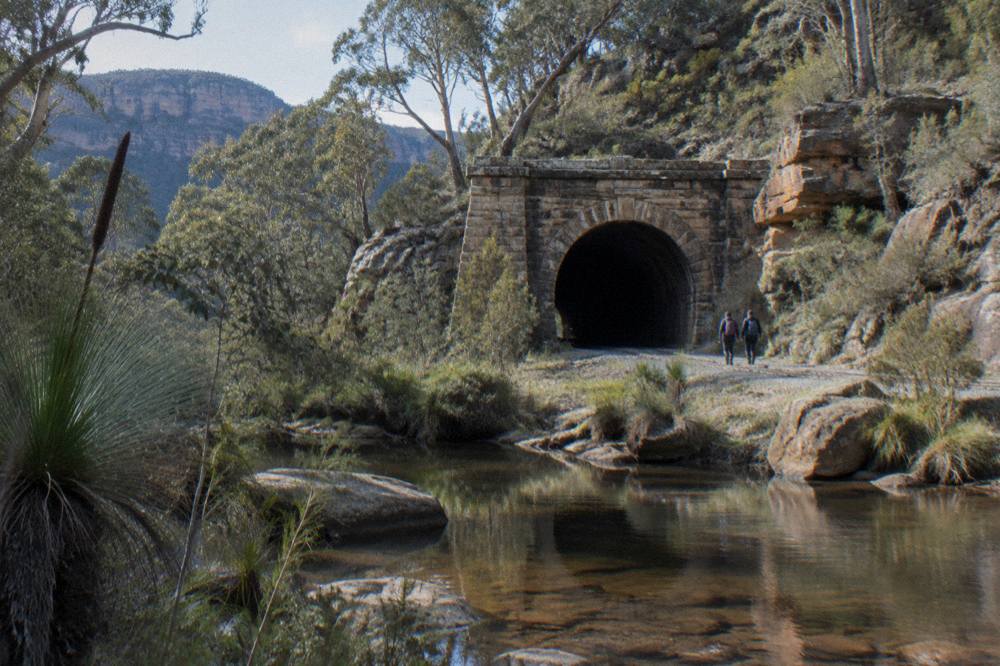
The physics is simple. A glow worm's light is a chemical reaction in its transparent rear end, a faint blue-green bioluminescence that lures small flying insects into sticky silk snares. That light is genuinely dim. It evolved to work in caves, overhangs and gullies where the competition from the sun is zero. In an open space, even a moonlit night can suppress it, and daylight erases it entirely. But a 387 metre tunnel is effectively a cave, and NSW National Parks describes the habitat the larvae need as sheltered, humid, still and dark, with running water nearby. The tunnel supplies all of it, which is why the colony established itself there permanently, likely colonised by adults flying in from nearby rainforest gullies. Spotting one in the wild is another matter entirely, though, and our guide to how hard glow worms are to find explains why darkness and damp matter so much.
Practically, this changes what a daytime visit looks like. You walk 1.5 km from the carpark at the end of Glowworm Tunnel Road to the entrance, step inside, let your eyes adjust, and the ceiling and walls pick out in hundreds of tiny lights. The NPWS story on the park describes "hundreds of blue-green tail lights" along the walls. Upgrades have evened the tunnel floor and added an internal handrail, though the surface is uneven and rocky and can be wet. The full track is 6 km return, Grade 3, with over 80 steps that have no handrails, and NPWS suggests allowing 2 to 3 hours. The full route details, including the pinch point and the barrier with a 1 m gap at the trailhead, are covered in the Glow Worm Tunnel walking track guide.
The daytime advantage is real, but it comes with the daytime crowd. The tunnel is the most accessible glow worm display in New South Wales, which means mid-morning through afternoon in summer, on weekends and in school holidays can queue people at the portal. Glow worms switch their lights off when disturbed, and a steady stream of torch beams and voices is exactly that. A weekday morning in spring or autumn, outside peak periods, is the sweet spot the park service itself points to.
Why The Guided Night Hike Runs After Dark
The bookable night hike from Sydney visits a glow worm cave behind a waterfall, an open natural site that is not dark enough in daylight for the colony to show. The operator runs it in the evening, with staggered hotel pickups from about 7:50pm to 8:35pm, because after dark is the only time that site performs. It is a different habitat with the same species, and the schedule follows the biology.
The tour, operated by Wildscape Adventures, is a guided bush walk in the dark using headlamps with a red-light mode, out to a cave with a waterfall where native glow worms can be seen, plus a chance of other local wildlife. It runs about 5 hours, returns around 11pm to midnight per the operator, caps groups at 9 travellers, and includes transport in a small van, parking fees, water and a certified outdoor instructor. It is rated 4.9 from 210 reviews and costs from $128 USD per person. The operator does not publish the cave's location, which is a deliberate protection for a wild colony rather than a marketing tease.
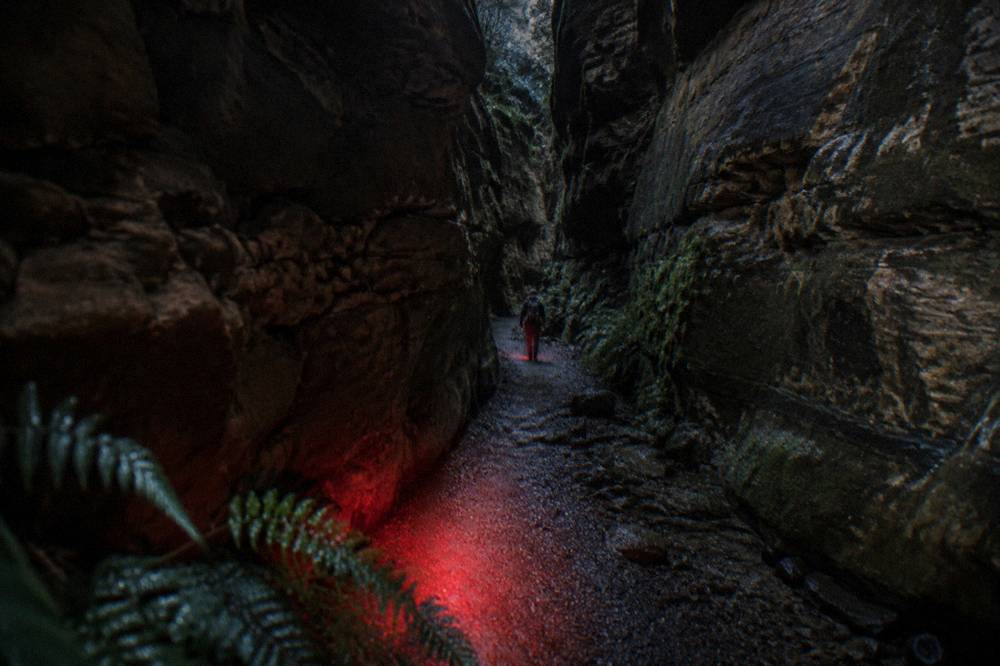
Two things follow from the site's nature. First, the display is not guaranteed: glow worms are wild animals, they dim or switch off when disturbed, and the operator cancels for bad weather or if minimum numbers are not met. Second, the night timing is not a gimmick layered onto a daytime attraction. The cave behind the waterfall is an open gully habitat, closer to the rainforest gullies glow worms colonise naturally than to a sealed railway tunnel. In daylight it holds a colony you cannot see. After dark, with headlamps dimmed to red and voices down, it holds one you can. The night versus day glow worm tours comparison breaks down which format suits which traveller in more detail.
The red-light discipline matters here as much as the clock. NSW National Parks advises shining a torch at the ground or using a red-light option, because white light pointed at glow worms can damage their bioluminescence and makes them turn their lights off. The tour supplies headlamps with a red-light mode for exactly this reason, and a guide keeps the group quiet and on the path. That structure is what lets a group of nine people stand within metres of a wild colony without shutting it down.
When Daytime Viewing Beats A Night Tour
Daytime wins on cost, access and family logistics, and loses on atmosphere and reliability of a strong display. The tunnel walk is free with no permit or entry fee listed, doable in daylight with children who meet the track's Grade 3 demands, and reachable by ordinary car in dry weather. A night tour wins on intimacy, expert guidance and a site the public cannot reach alone, at from $128 USD per person.
| Factor | Glow Worm Tunnel, daytime self-guided | Night hike from Sydney |
|---|---|---|
| Cost | No entry or permit fee listed by NSW National Parks | From $128 USD per person |
| When | Any daylight hour; the tunnel is dark inside | Evening, hotel pickup about 7:50pm to 8:35pm |
| Getting there | About a 2.5 hour drive from Sydney, unsealed road, no public transport | Hotel pickup and drop-off from Sydney included |
| Sighting character | A permanent colony in a 387 m tunnel, visible day or night | A wild colony in a cave behind a waterfall, night only |
| Group size | Whoever is on the track | Maximum 9 travellers |
| Fitness demand | Grade 3, 6 km return, over 80 steps without handrails | Moderate fitness, guided walk in the dark |
| Cancellation | Weather may close the track or the Newnes section after heavy rain | Free cancellation up to 24 hours before; operator cancels for bad weather |
The honest read of that table is that they are not really competitors. The tunnel is a public park asset you walk into for free, and its daytime quirk is the whole point of this article. The night hike is a guided experience to a site with no public access, timed for the only hours it works. A traveller with a car, dry weather and a free afternoon can do the tunnel tomorrow. A traveller based in Sydney without a vehicle, or wanting a guide, wildlife spotlighting and the theatre of a waterfall cave after dark, has exactly one listed option, and it is the night tour.
One daytime caution deserves its own sentence: heat and dry conditions stress glow worm colonies, and the wetter, warmer months are when operators and travel press say displays tend to be strongest. That seasonal claim is operator and press opinion rather than official data, and no official source ranks months by brightness. What NSW National Parks does say, on the record, is that glow worms are present year round and that spring or autumn weekdays are the best time to manage crowds and parking.
How To Behave Around Glow Worms At Any Hour
Stay on the path, keep noise to a minimum, shine your torch at the ground or use a red-light setting, and never point a beam directly at the glow worms, because bright light can damage their bioluminescence and makes them switch off. Let your eyes adjust in the dark, look but do not touch, and never remove or disturb the silk snares. These rules apply midday in the tunnel and midnight in a gully alike.
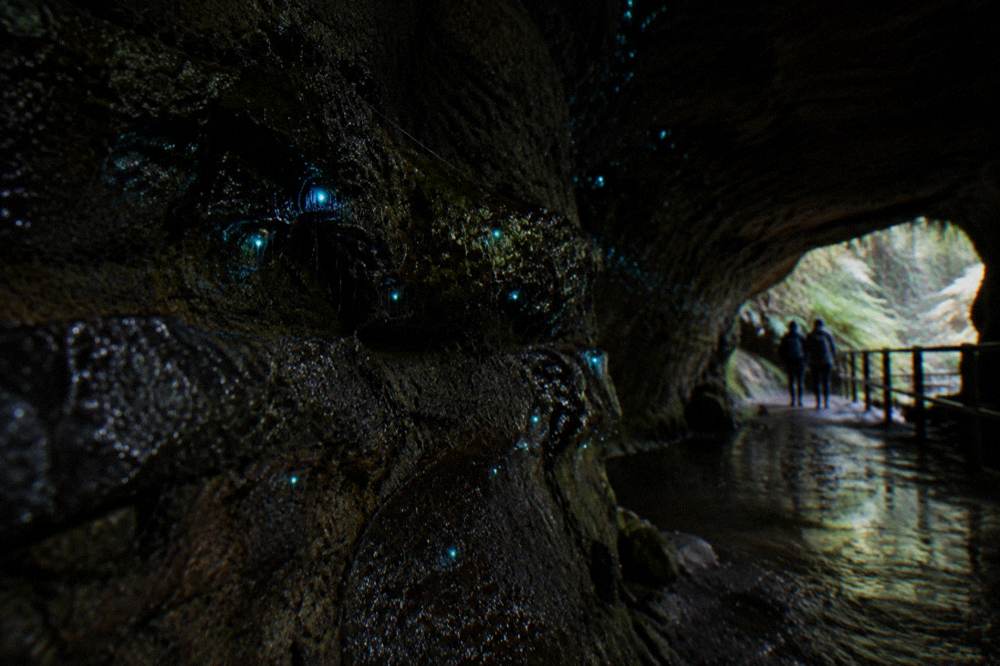
The biology explains every rule. The light comes from the larva's transparent rear end, and the animal can control it: NSW National Parks notes glow worms "can control their lights and will turn them off if disturbed." A torch beam, a loud voice or a hand across the snares reads as a disturbance, and a colony that has switched off can take a long time to switch back on, long after the offender has walked away and left the next visitor staring at a black wall. The larva spends 6 to 9 months in its glowing stage, catching mosquitoes, moths and occasionally insects as big as a cockroach in silk snares it secretes from its mouth, and then has just 14 days in a cocoon and about 3 days as an adult fly. The glow is its livelihood for most of a year, and careless visitors can undo it in seconds.
Photography is the grey area. No NSW National Parks flash or photography rule was found on the pages covering the tunnel. The safe practice, consistent with the torch guidance, is to avoid firing a flash at the worms, since a flash is the most concentrated torch beam there is. The Glow Worm Tunnel photography guide covers the practical settings for shooting in near-darkness. Beyond light, the fixed rules are simple: no camping, no cycling on the track or in the tunnel, no pets, no smoking, and stay on the path even when the wall ten steps away looks like it holds the densest cluster you have ever seen.
Daytime visitors carry one extra responsibility. The tunnel's daytime accessibility is exactly what makes it vulnerable, because it delivers far more people to the colony than any night site sees, often with no guide present to correct behaviour. The etiquette is self-enforced: red light or torch at the ground, voices down, eyes given time to adjust before anyone decides the worms "are not on tonight." On a quiet weekday morning the display inside is as good as it gets anywhere in the state, and it stays that way only if the daytime crowd keeps its end of the bargain.
Planning the drive itself matters almost as much as the hour you arrive. The unsealed Glowworm Tunnel Road is passable in a 2WD in dry weather but the park service recommends a 4WD, and access is by 4WD only when it is wet, with no long vehicles allowed and very limited parking at the end. There is no public transport to the carpark at all. The Glow Worm Tunnel road and car park guide maps both approach routes, the Lithgow option via Old Bells Line of Road and the State Mine Gully Road alternative, and flags the single-lane 60 m tunnel just before the carpark that catches first-time drivers out.
The Blue Mountains region holds many glow worm colonies, mostly in caves and disused mines, and most of them are on land the public cannot reach. What makes this corner of New South Wales unusual is that it offers both ends of the spectrum: a free, daytime-accessible tunnel where the darkness is manufactured by 387 metres of sandstone, and a guided night walk to a wild cave that only performs after sunset. Blue Mountains Glow Worms exists to keep the honest differences between those two straight, because the question this article opened with has a real answer, and the answer is a place, an hour and a set of rules, not a simple yes.
Common Questions About Daytime Glow Worms
Can You See Glow Worms During The Day?
Yes, inside the 387 metre Glow Worm Tunnel near Lithgow, which NSW National Parks says is dark enough for the colony to be visible during the day. Open sites such as caves behind waterfalls, overhangs and rainforest gullies need full darkness, so outside the tunnel the answer is no.
Is the Glow Worm Tunnel dark enough at midday?
Yes. The tunnel is 387 m long, so daylight only penetrates the ends. The interior stays effectively pitch black, which is why the permanent colony glows there at any hour.
Does the night hike from Sydney visit the tunnel?
No. The bookable night hike goes to a glow worm cave behind a waterfall at a location the operator does not publish. The Glow Worm Tunnel is a free self-guided walk in Wollemi National Park, about 2.5 hours from Sydney by road.
What time of day is best at the tunnel?
Any daylight hour works because the tunnel supplies its own darkness. NSW National Parks advises visiting during the week or in spring or autumn, when parking and crowding are at their lowest.
Can I use a torch or flash inside the tunnel?
Shine your torch at the ground or use a red-light setting. Never point a beam directly at the glow worms: bright light can damage their bioluminescence and makes them switch their lights off. No official flash photography rule exists, but a flash is the most concentrated beam there is.
Do glow worms glow year round?
Yes. The species in this region, Arachnocampa richardsae, is present year round. Operators and travel press say displays are often stronger in warm, wet months and after rain, but that is opinion, not official data.