Glow Worm Tunnel Near Lithgow: Routes, Road Conditions And The Walk In
Lithgow is the practical base for the Glow Worm Tunnel: the NPWS route starts at Clarence near the Zig Zag Railway, runs 8.4 km along Old Bells Line of Road and 26.8 km along Glowworm Tunnel Road, and ends at a small carpark 1.5 km from the tunnel mouth.
Short answer
The Glow Worm Tunnel sits in Wollemi National Park near Lithgow, about a 2.5 hour drive from Sydney. From Lithgow the route runs via Clarence and the Zig Zag Railway, then 8.4 km on Old Bells Line of Road and 26.8 km on unsealed Glowworm Tunnel Road. The walk is 6 km return, Grade 3, and the track itself has no fee listed.
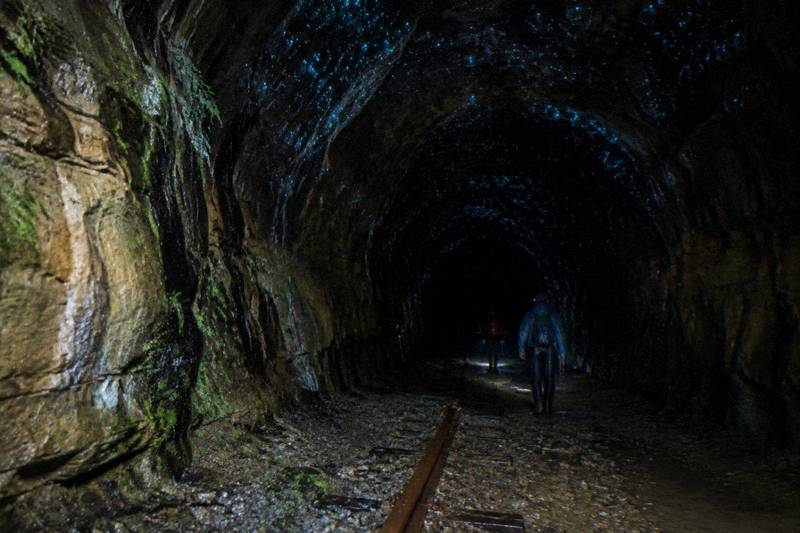
The Glow Worm Tunnel is the best known glow worm site within reach of the Blue Mountains, and Lithgow is the town most visitors use to reach it. The tunnel is a 387 m disused railway bore inside Wollemi National Park, dark enough in the middle that the resident glow worms, larvae of the fungus gnat Arachnocampa richardsae, can be seen even in daytime. NSW National Parks lists the walking track as open, with a standing note to check current alerts before travelling, because the access roads and nearby precincts carry regular works and weather closures. For a fuller glow worm experience beyond Lithgow, the Jenolan Caves and glow worm tour options explain how to combine cave visits with glow worm viewing further south.
What catches most first-time visitors out is not the walk. It is the drive. The final 26.8 km runs on unsealed gravel that NSW National Parks says is passable in a 2WD only in dry weather, with a 4WD recommended and effectively required once it rains. This guide lays out the Lithgow side of the trip: the two road routes, what the numbers on the park signs actually mean, what the walk involves, and how a self-drive compares with the one bookable glow worm night hike that picks up in Sydney.
Where Is The Glow Worm Tunnel Relative To Lithgow?
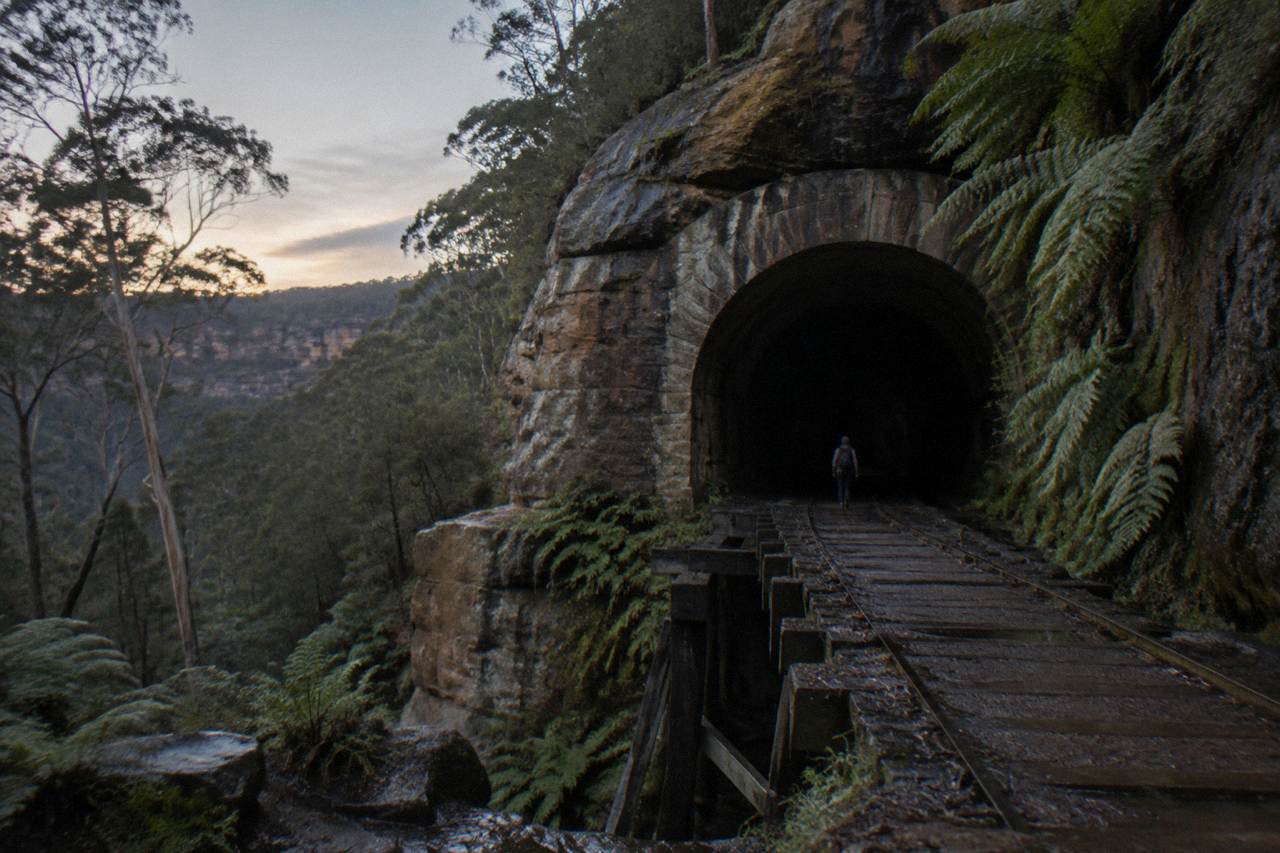
The tunnel is inside Wollemi National Park, near Lithgow: NSW National Parks places it about a 2.5 hour drive from Sydney, reached from the Lithgow side via Clarence and the Zig Zag Railway. The walking track starts at a small carpark at the end of Glowworm Tunnel Road, 1.5 km from the tunnel entrance, and covers 6 km return at Grade 3. No public transport reaches the carpark.
Wollemi National Park is a huge, largely trackless expanse west of the Blue Mountains towns, and the tunnel is one of the few developed sites in it. The tunnel itself is Tunnel No. 2 of the old Wolgan Valley Railway, built in the early 1900s to serve the Newnes mining operation. When the railway closed, the darkness and the constant drip of water through the sandstone made the bore an ideal glow worm habitat: sheltered, humid, still air, darkness and running water nearby, exactly the conditions NSW National Parks describes as the best glow worm homes. If you're torn between this site and the coastal one near Sydney, our comparison of the Helensburgh and Newnes glow worm tunnels lays out the differences in access, crowds and what each experience actually feels like.
The park service operates the site through the Blue Mountains Heritage Centre at Blackheath, which is a detail worth knowing if you plan to phone ahead. That office, at 270 Govetts Leap Road, Blackheath, is open 9am to 4pm daily except Christmas Day, on 02 4787 8877. It is on the other side of the mountains from Lithgow, but it is the listed contact for track conditions and alerts.
One point of disambiguation before the route details, because it trips up a lot of searches. The bookable glow worm night hike sold on this site does not go to this tunnel. It is a Sydney-pickup guided bush walk to a glow worm cave behind a waterfall, at a location the operator does not publish. The tunnel is a free, self-guided walk, or a direct operator tour from the mountains. Both are honest ways to see glow worms in the region; they are simply different products, and the comparison later in this guide sets them side by side. If you're wondering whether the tunnel works outside night hours, the short answer on seeing glow worms during daylight at the Lithgow tunnel is yes, since its darkness lets the colony glow even at midday.
How Do You Drive From Lithgow To The Tunnel Carpark?
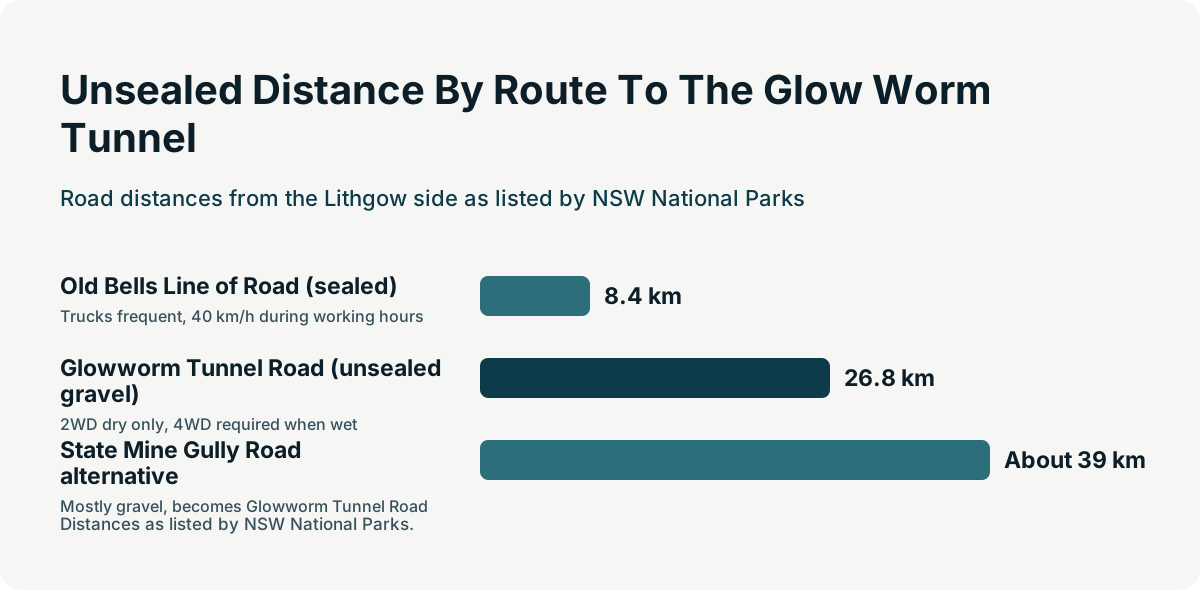
NSW National Parks describes two road routes from the Lithgow side. The first runs via Clarence, beside the Zig Zag Railway, then 8.4 km along Old Bells Line of Road and 26.8 km along Glowworm Tunnel Road, passing through a 60 m single-lane tunnel just before the carpark. The second runs via State Mine Gully Road, gravel for most of its roughly 39 km, becoming Glowworm Tunnel Road.
The Clarence route is the one most visitors take because the sealed section runs further. Old Bells Line of Road carries frequent trucks, and the park service asks drivers to take care and observe a 40 km/h limit during working hours. Petra Avenue in Clarence is the turnoff that puts you on Old Bells Line of Road. After the 8.4 km, the surface turns to gravel at Glowworm Tunnel Road and stays that way for the remaining 26.8 km. Just short of the carpark the road passes through a 60 m single-lane rail tunnel, one of the more photographed moments of the drive, and one that requires a stop and a look for oncoming traffic.
The State Mine Gully Road route is signposted as an alternative from Lithgow itself. It is gravel for most of its length, roughly 39 km in total, and suits drivers already comfortable with unsealed surfaces. In dry conditions a careful 2WD driver can complete either route. Once rain falls, NSW National Parks' guidance hardens: 4WD only in wet weather. Long vehicles are not permitted on the road at any time.
| Leg | Distance | Surface | Notes |
|---|---|---|---|
| Lithgow to Clarence (Zig Zag Railway side) | Local section | Sealed | Petra Avenue turnoff onto Old Bells Line of Road |
| Old Bells Line of Road | 8.4 km | Sealed | Trucks frequent, 40 km/h during working hours |
| Glowworm Tunnel Road | 26.8 km | Unsealed gravel | 2WD possible dry, 4WD recommended, 4WD only when wet; 60 m single-lane tunnel before carpark |
| State Mine Gully Road alternative | About 39 km | Mostly gravel | Signposted from Lithgow, becomes Glowworm Tunnel Road |
Parking at the end of the road is limited, and the park service warns it is often full at peak times: summer, weekends and holiday periods. There is no booking system for the carpark and no fee listed for parking or track access. If you arrive and the bays are gone, the practical fallback is the Old Coach Road carpark on the Pagoda walking track side, a 4 km return route to the tunnel described in the park service's own story pages.
The gravel section deserves one more plain sentence. Rental car agreements in New South Wales commonly exclude unsealed roads, and a recovery from Glowworm Tunnel Road is a long way from anywhere. Mobile reception at the carpark is very limited, and the park service suggests the Emergency Plus app for anyone walking or driving in the area. If any of that reads like a bad fit for your trip, the guided options in the next section are the stress-free route.
Self-Drive Or Guided: Which Way To The Tunnel Suits You?
Self-driving from Lithgow costs nothing in track fees, since none are listed, but it means 26.8 km of gravel each way, your own vehicle, your own lighting and your own reading of the alerts. A guided tunnel tour from the mountains, such as Beyond The Blacktop's, lists adults at $210 with departures from Katoomba Station or the Zig Zag Railway at Clarence, about 5 hours, with no Sydney hotel pickup.
The choice comes down to three things: your vehicle, your confidence on gravel after dark, and how much of the logistics you want to hand off. The table below compares the honest options for seeing glow worms in this region. Note the distinction that keeps getting lost in search results: the tunnel and the waterfall cave are different places, reached differently, and only one of them picks you up in Sydney.
| Option | Cost as listed | Duration | Getting there | Best for |
|---|---|---|---|---|
| Self-drive to the tunnel | No track fee listed | 6 km return walk, 2 to 3 hours suggested | Own vehicle, 26.8 km unsealed from the Clarence side | Confident drivers with a suitable car |
| Beyond The Blacktop guided tunnel tour | $210 adult, $159 child, $189 senior on the operator's own page, currency not stated | About 5 hours | Meets at Katoomba Station or Zig Zag Railway, Clarence | Visitors who want the tunnel without driving gravel |
| Night hike from Sydney (waterfall cave) | From $128 USD per person, 4.9 from 210 reviews | About 5 hours | Hotel pickup in Sydney, about 7:50pm to 8:35pm window | Travellers without a car, or anyone who wants glow worms plus wildlife spotlighting |
The guided tunnel operator is licensed under the NSW National Parks Eco Pass scheme, runs small groups with local guides, and states on its own page that glow worms can be seen year round, with darker conditions giving the best visibility. Its prices are the operator's own listing, with currency not stated on the page, so treat them as a planning figure and confirm at booking. Wolgan Valley Eco Tours, which once ran tunnel hikes from the valley side, shows no availability on its listings after reported access problems on the Wolgan Valley road.
The night hike from Sydney is the product this site features, and it earns the spot honestly: 4.9 from 210 reviews, a maximum of 9 travellers, headlamps with a red-light mode supplied, and a certified outdoor instructor leading the walk. Free cancellation applies up to 24 hours before, and the listing is flagged as often selling out. It is described in full in the site's night hike from Sydney tour page, and it makes a genuine alternative for readers who like the idea of glow worms but not the idea of the long gravel road.
Can A 2WD Actually Reach The Glow Worm Tunnel Carpark?
Yes, in dry weather, with care: NSW National Parks states 2WD access is possible on Glowworm Tunnel Road when it is dry, a 4WD is highly recommended, and access is by 4WD only when the road is wet. Long vehicles are excluded. The surface is gravel for 26.8 km on the Clarence route, with a 60 m single-lane tunnel just before the carpark and limited parking at the end.
The honest reading of that guidance is that a 2WD is a fair-weather option, not a plan. Rain in the Blue Mountains and the Newnes Plateau can arrive without much warning, and a wet gravel road with clay sections is where hire cars get damaged and city drivers get stuck. If rain has fallen in the days before your trip, or is forecast, the self-drive option should be treated as off the table unless you have a 4WD and the experience to use it.
The other 2WD consideration is timing. The tunnel is dark enough inside for daytime viewing, so there is no need to drive the gravel after dark to see glow worms, and arriving in daylight is the sensible choice regardless of vehicle. A mid-week morning gives you the best odds on the limited parking as well, matching the park service's advice that it is best to visit during the week or in spring or autumn.
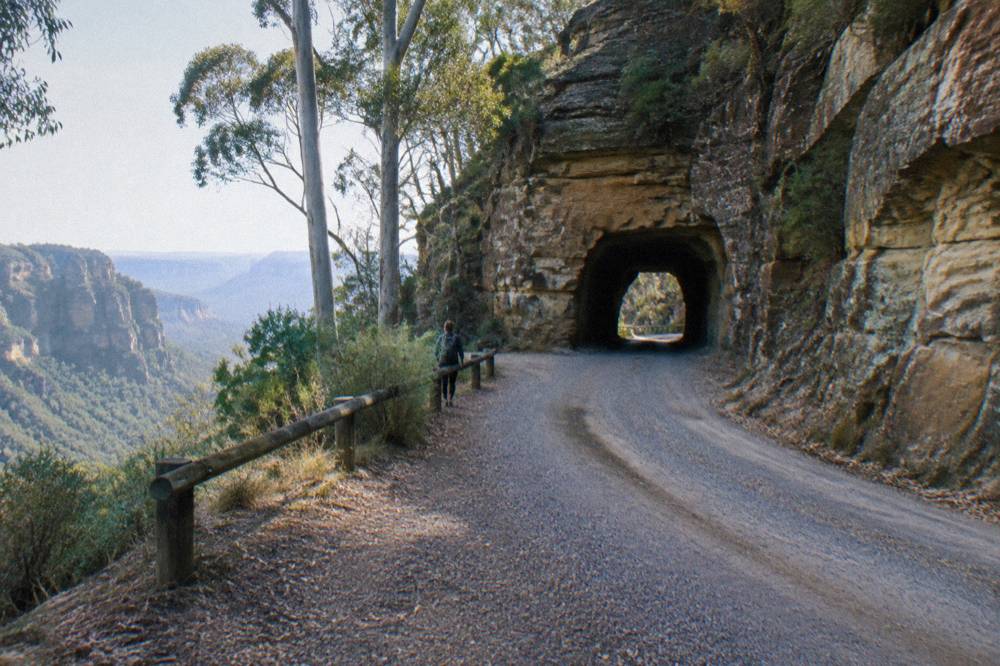
Drivers wanting a fuller picture of the road, the carpark and the parking fallbacks can read the site's dedicated Glow Worm Tunnel road and car park guide, which covers the route in more detail than this page. The short version for Lithgow-based planning: fuel up in Lithgow, check the alerts page that morning, allow about an hour from Clarence to the carpark in dry conditions, and do not rely on water or supplies at the end of the road, because there are none beyond two non-flush toilets and a timber bench.
For travellers who weigh all of that and decide the gravel is not for them, the night hike from Sydney removes the car question entirely. Hotel pickup between about 7:50pm and 8:35pm, a small group of no more than 9, and a guided walk with red-light headlamps supplied: it is a different glow worm site, but the same quiet, dark, respectful experience.
What Does The Walk From The Carpark Involve?
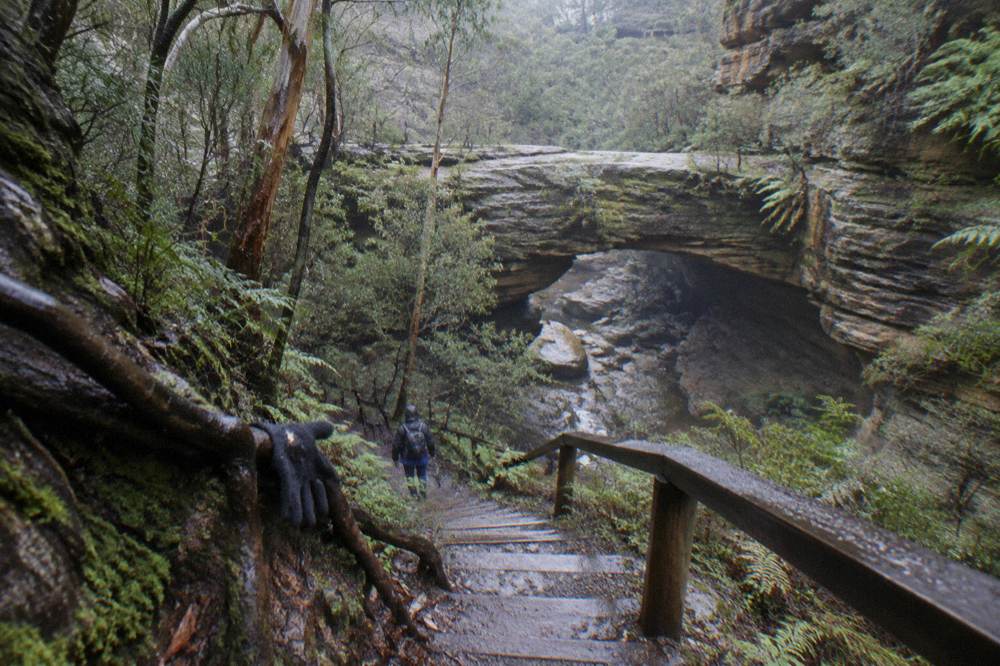
From the carpark the track runs 1.5 km to the tunnel entrance, and the full listed walk is 6 km return at Grade 3, with 2 to 3 hours suggested and some bushwalking experience recommended. The route includes more than 80 steps without handrails, a pinch point about 0.5 m wide after a bridge, and an uneven, rocky, sometimes wet tunnel floor. It is not wheelchair or pram accessible.
The numbers deserve unpacking, because the "6 km return" figure covers more than the tunnel. The first 1.5 km takes you to the tunnel mouth. You can then walk through the 387 m bore, which the park service has upgraded with an evened surface and a handrail inside, and continue another 1.5 km through Penrose Gorge to a lookout over Donkey Mountain and the Wolgan Valley, then return. The through-section beyond the lookout is not suitable for children, and the Glow Worm Tunnel to Newnes section may close during or after heavy rain because of rockfall and flood risk.
| Walk segment | Distance | Character | Watch for |
|---|---|---|---|
| Carpark to tunnel entrance | 1.5 km | Graded track, about 30 stone steps down to a bridge, about 30 narrow timber steps back up | Steps have no handrails; barrier with a 1 m gap at the trailhead |
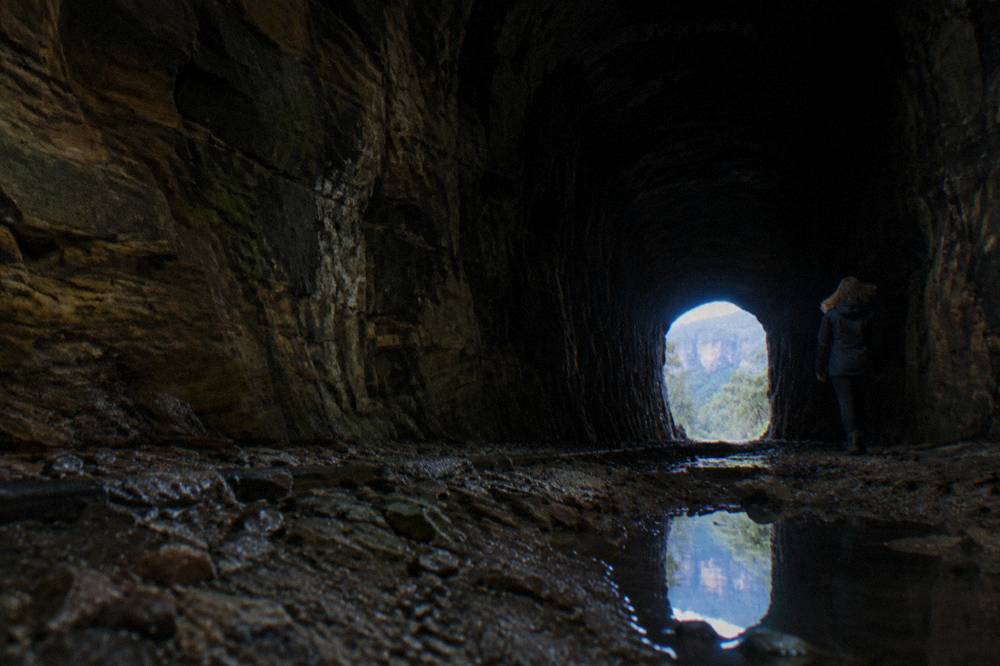
| Through the tunnel | 387 m | Evened surface with handrail inside, uneven and rocky in places, may be wet | Let eyes adjust; use a red-light torch or shine any torch at the ground |
| Tunnel to Penrose Gorge lookout | 1.5 km | Pinch point about 0.5 m wide after the bridge, then gorge track | Beyond the lookout not suitable for children; may close after heavy rain |
The steps are the part that surprises people. There are roughly 30 stone steps down to a bridge and about 30 narrow winding timber steps back up, all without handrails. At the trailhead a barrier leaves a 1 m gap to pass through. None of this is mountaineering, but the park service's Grade 3 rating, short steep hills and all, is a fair description, and anyone with mobility limits should treat the tunnel mouth, 1.5 km in, as the turnaround point.
Inside the tunnel the etiquette is simple and it matters. Glow worms can control their lights and will switch them off if disturbed, so NSW National Parks asks visitors to stay on the path, keep noise to a minimum, let eyes adjust after turning off torches, and shine any torch at the ground or use a red-light option, the least disruptive choice. The park service's story on the site adds: do not point a torch at the glow worms, it can damage their bioluminescence and makes them turn their lights off, and look but do not touch. The full viewing rules and the biology behind them are covered in the site's Glow Worm Tunnel walking track guide.
What Alerts And Road Works Affect The Lithgow Side Right Now?
The track itself is listed as open, check current alerts, but the Lithgow approach carries live works: construction at the Bungleboori precinct until December 2026 with that site closed to visitors, and Glowworm Tunnel Road reduced to a single lane at the Lost City North and Maiyingu Marragu intersections from 11 October 2026, with delays of up to 5 minutes. A park fire ban applies across Wollemi National Park from 1 October 2026 to 31 March 2027.
None of those alerts closes the tunnel or the main walking track. The single-lane section and the Bungleboori works are the ones that touch the drive, and both are minor in time terms but worth knowing about before you set out, especially if you are driving in the dark or on a tight schedule. The fire ban prohibits campfires and solid-fuel stoves, with gas and electric cookers allowed under conditions, which matters mainly to anyone combining the tunnel with a longer Newnes Plateau trip.
Alerts of this kind change weekly, and the park service re-reviews them regularly. The practical habit is to open the alerts page on the morning of the drive rather than the week before. Weather closures are the bigger risk on this side of the mountains: the unsealed road deteriorates quickly with rain, and the Newnes-side track section can close after heavy falls.
What Does A Lithgow Base Give You Beyond The Tunnel?
Lithgow gives you the closest town fuel and supplies to the tunnel route, the Zig Zag Railway at Clarence as a route landmark, and a second Wollemi attraction in the Newnes industrial ruins and campground, reached by a separate road through the Wolgan Valley. It does not give you evening glow worm walks: NPWS and operator pages mention no night glow worm walks near Lithgow, Katoomba, Leura or Blackheath.
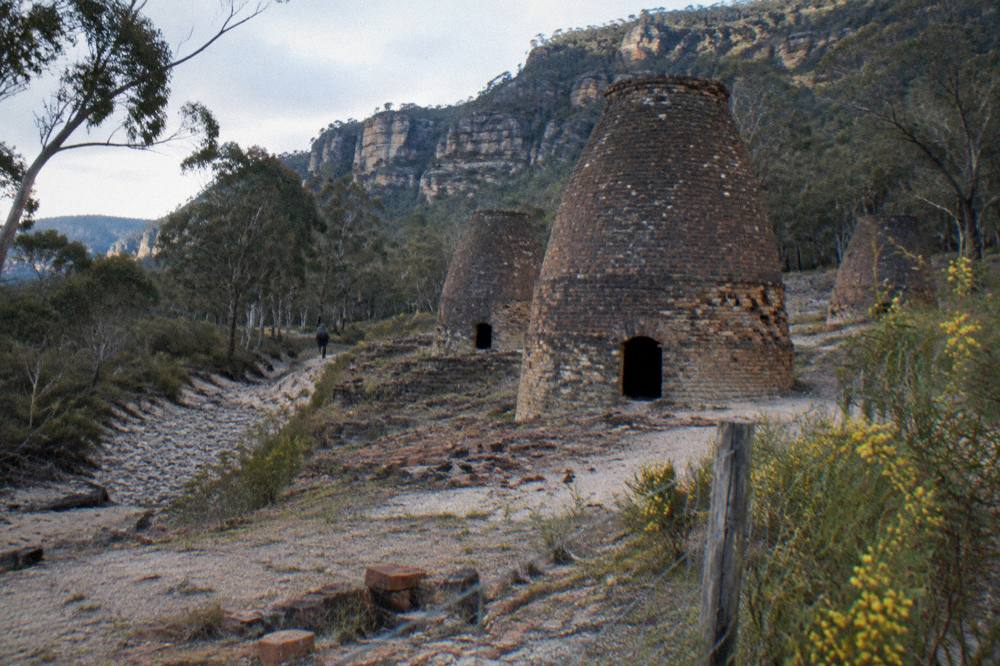
The Newnes side is a genuinely different day out. The Newnes Industrial Ruins walk in Wollemi National Park passes the coke ovens, brick kilns, paraffin sheds, a 15 m wall known as the Big Wall, and the beehive kilns of the old shale oil works. Access is via Wolgan Road, a mix of sealed and unsealed surface with 4WD recommended especially in wet weather, and the Old Newnes Hotel is named on park pages only as an access landmark. The nearest campground to the tunnel is at Newnes, reached by that valley road rather than the plateau route.
What Lithgow does not offer, and this is worth being blunt about, is any bookable glow worm experience departing from the town itself. The licensed tunnel operators depart from Katoomba Station or Clarence, and the Sydney night hike departs from Sydney hotels. A Lithgow motel is a fine base for a self-guided tunnel day trip, but travellers who want a guide will still drive to a departure point or be picked up in Sydney.
For travellers weighing the whole region, the site's self-drive versus guided tunnel comparison works through the same decision with the tunnel as the single focus, and the best time to see glow worms in the Blue Mountains guide covers the seasonal picture, including the park service's advice on spring, autumn and weekdays and the operator and press view that displays are often stronger in warm, wet months.
How Much Does The Tunnel Cost From Lithgow?
The track and tunnel have no entry, parking or permit fee listed on any NSW National Parks page. The real costs are the vehicle, fuel for the gravel section, and time: about 2.5 hours from Sydney to the area, then the Clarence or State Mine Gully approach, then a 6 km return walk. The licensed guided tunnel tour lists adults at $210 on the operator's own page, currency not stated.
Free is the honest headline, and it is one of the reasons the tunnel is so loved: a year-round natural spectacle that costs nothing to walk into, as the park service's own story puts it. The catch is that free assumes a car you are willing to drive on 26.8 km of gravel and a walk you are fit enough to enjoy. For travellers without those two things, the paid options are not indulgences, they are the only access.
Budget travellers can read the site's breakdown of free glow worm spots and budget Blue Mountains options, which covers the tunnel alongside the smaller operators whose status varies, such as the Mt Tomah area tours listed as temporarily closed and the Bilpin property tours whose prices are unverified here. The verified paid options remain the licensed tunnel operators and the Sydney night hike.
Speaking of that hike, it is worth restating what it is and is not, because search results blur the two. It does not go to the tunnel, to Newnes, to Lithgow or to Jenolan. It is a guided night bush walk, about 5 hours, from $128 USD per person, to a glow worm cave behind a waterfall whose location the operator keeps unpublished, with hotel pickup in Sydney between about 7:50pm and 8:35pm and a return around 11pm to midnight. Glow worms are wild animals and the operator cancels for bad weather, so no honest writer will promise a sighting on either the tunnel walk or the cave hike. What the hike guarantees is the logistics: transport, a certified instructor, headlamps with red-light mode, water, parking fees and a group of no more than 9.
The comparison in plain terms: the tunnel is free, self-guided and demands a car plus gravel-road judgement; the guided tunnel tour is $210-ish per adult on the operator's page, meets in the mountains and covers the same 6 km walk with a local guide; the Sydney night hike is from $128 USD per person, picks you up at your hotel, and shows you a different glow worm colony entirely. Readers planning a Blue Mountains trip around the tunnel may also find the site's Blue Mountains day trip from Sydney planning guide useful for the wider itinerary.
For a night in the mountains built around glow worms rather than a self-guided day walk, the same small-group hike is the one product on this site's roster, and its reviews, 4.9 from 210 of them, describe exactly the experience the listing promises: quiet, dark, well guided and small enough to hear the guide speak.
Common Questions About The Glow Worm Tunnel Near Lithgow
Is the Glow Worm Tunnel in Lithgow itself?
No. The tunnel is inside Wollemi National Park, near Lithgow, reached by road from the Lithgow side via Clarence and the Zig Zag Railway, then 8.4 km on Old Bells Line of Road and 26.8 km on unsealed Glowworm Tunnel Road. NSW National Parks describes it as about a 2.5 hour drive from Sydney.
Can you drive to the Glow Worm Tunnel in a 2WD?
In dry weather, yes, with care: NSW National Parks states 2WD access is possible when the gravel road is dry, a 4WD is highly recommended, and access is by 4WD only when it is wet. Long vehicles are not permitted. Parking at the end is limited, with no fee listed.
How long is the walk from the carpark to the tunnel?
The track runs 1.5 km from the carpark to the tunnel entrance, with the full listed walk at 6 km return and 2 to 3 hours suggested at Grade 3. It includes more than 80 steps without handrails, a pinch point about 0.5 m wide, and an uneven tunnel floor that may be wet.
How much does it cost to go through the Glow Worm Tunnel?
Nothing is listed. No entry, parking or permit fee appears on the NSW National Parks track, visitor info or alerts pages. The paid alternatives are licensed guided tours, such as the operator listing adults at $210 on its own page, currency not stated.
Can you see glow worms in the tunnel during the day?
Yes. The tunnel is 387 m long and gets dark enough inside for the glow worms to be visible during the day, which is why the site works as a daytime walk. Glow worms are present year round, and NSW National Parks suggests visiting during the week or in spring or autumn to avoid crowds and limited parking.
Does the Sydney glow worm night hike go to the Lithgow tunnel?
No. The bookable night hike from Sydney visits a glow worm cave behind a waterfall at a location the operator does not publish, not the Glow Worm Tunnel at Newnes. The tunnel is a free self-guided walk or a direct guided tour from the mountains. Both are ways to see glow worms in the region.
Travellers who want the region's glow worm picture in one place can start with Blue Mountains Glow Worms and its month-by-month ribbon, then return to this page for the Lithgow route details. The park service's own pages remain the authority on the day: the Glow Worm Tunnel walking track listing carries the current status line, the visitor info page covers the roads in full, and the NSW National Parks glow worm page explains the biology behind the red-light rules. Check the alerts before you drive the gravel, and give the worms the quiet, the darkness and the distance they need to keep their lights on.