Glow Worm Tunnel Walking Track: The Complete Walk Guide
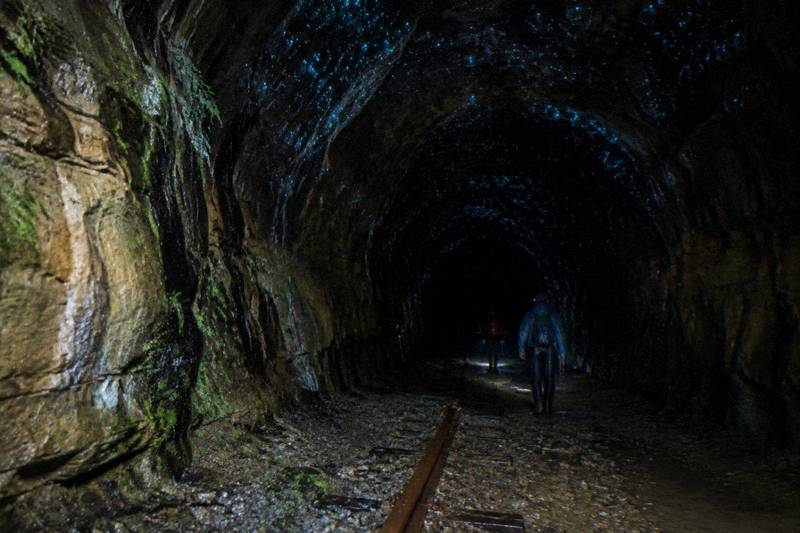
The Glow Worm Tunnel walking track is a 6 km return walk in Wollemi National Park that leads into a 387 m abandoned railway tunnel where native glow worms can be seen even in the middle of the day. Here is how the walk works, stage by stage.
Short answer
The Glow Worm Tunnel walking track is a 6 km return, Grade 3 walk in Wollemi National Park near Lithgow, about 2.5 hours from Sydney. It takes 2 to 3 hours, covers 1.5 km each way from the carpark to the tunnel, and the tunnel is dark enough to show glow worms during the day. No fee is listed.
What Is The Glow Worm Tunnel Walking Track?
The Glow Worm Tunnel walking track is a 6 km return bushwalk in Wollemi National Park near Lithgow, about a 2.5 hour drive from Sydney. It runs 1.5 km from the carpark at the end of Glowworm Tunnel Road to a 387 m disused railway tunnel, and NSW National Parks grades it Grade 3 with some bushwalking experience recommended. The tunnel is dark enough inside for glow worms to be visible during the day. Before you set off, check whether the walk needs any paperwork by reading do you need a permit for the Lithgow glow worm tunnel.
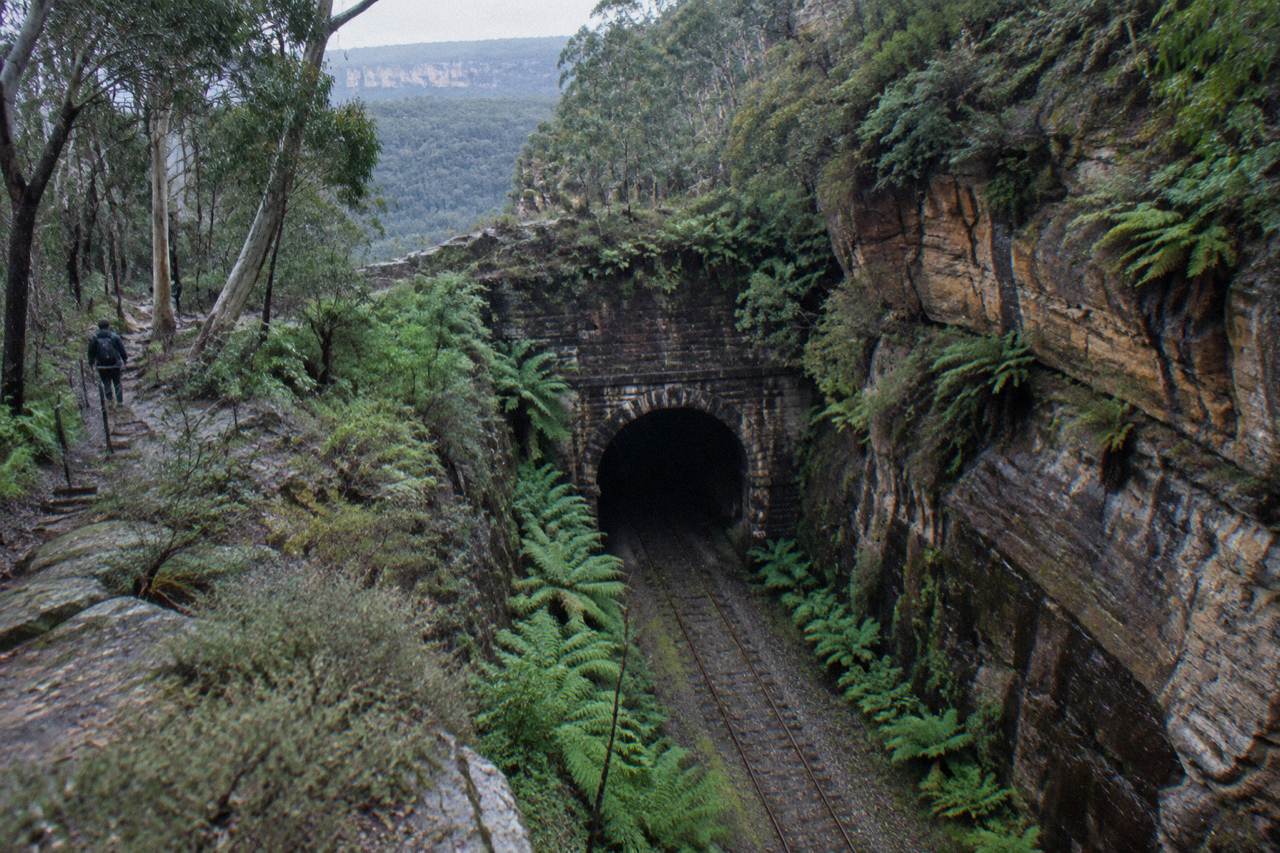
The tunnel was built in the early 1900s for the Newnes mining railway, as Tunnel No. 2 of the Wolgan Valley Railway. When the railway closed, the darkness and constant damp inside the tunnel turned it into exactly the kind of sheltered, humid habitat glow worms need, and a permanent colony moved in. NSW National Parks describes the tunnel as pitch black inside, which is why the walk works as a daytime glow worm experience rather than only a night one. If you'd rather not walk in from the standard trailhead, a 4WD tour through Wolgan Valley to the glow worm tunnel covers the drive and the tunnel visit in one trip.
The walk is managed from the Blue Mountains Heritage Centre at Blackheath, and the current status line on the official track page reads "Open, check current alerts", which is worth doing before any trip because the access road and nearby precincts carry active works and closures at the moment. The full picture on access, gravel roads and where to park is covered in the Glow Worm Tunnel road and car park guide, and the wider area background is in the Wollemi National Park guide.
One thing the walk is not: it is not the bookable Sydney-pickup night hike this site features. The tunnel walk is a free, self-guided walk you drive to yourself. The guided hike, run by Wildscape Adventures, is a different experience entirely: hotel pickup from Sydney, headlamps, a small group of at most 9, and a glow worm cave behind a waterfall whose location the operator does not publish. Both are honest ways to see glow worms in the Blue Mountains region, and this article is about the walk.
Track Facts At A Glance
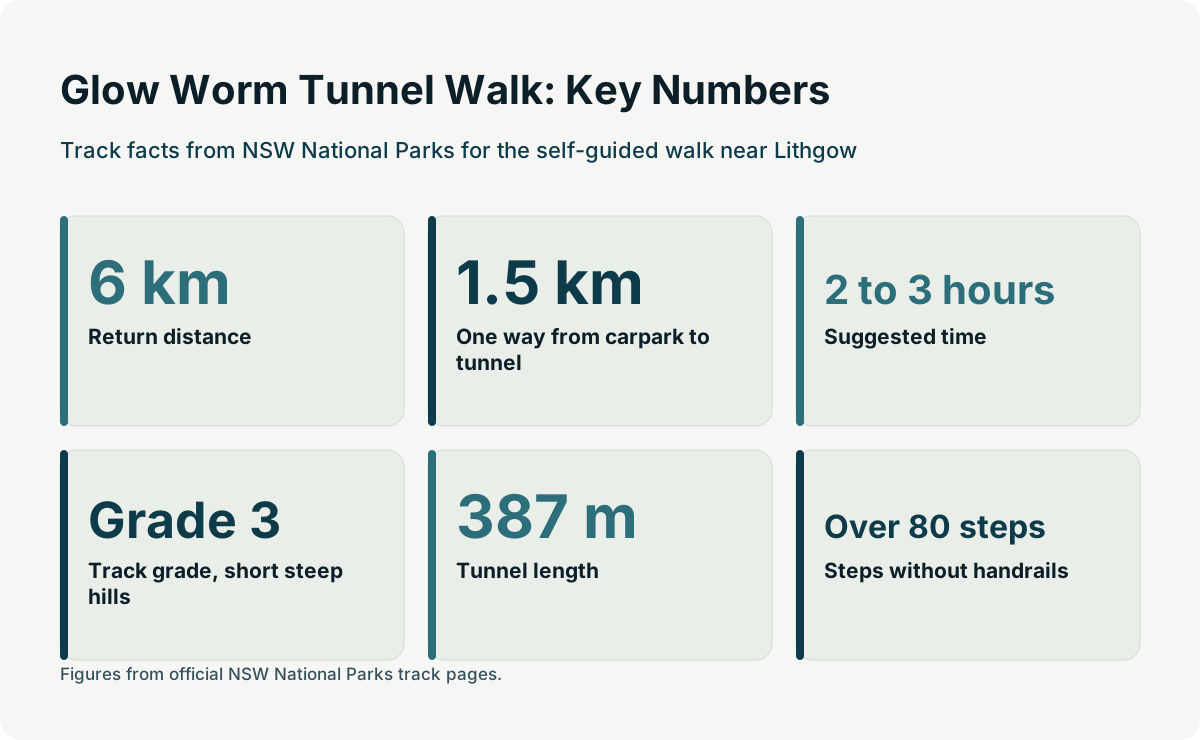
The headline numbers: 6 km return, 1.5 km each way from carpark to tunnel, suggested 2 to 3 hours, Grade 3, and a 387 m tunnel. Over 80 steps have no handrails, the trailhead barrier has a 1 m gap, and there is a pinch point 0.5 m wide after the bridge. No entry fee is listed, and the track is not suitable for wheelchairs or prams.
These figures all come from the official track pages published by NSW National Parks, which list the walk as an easy-to-medium Grade 3 track with short steep hills. The suggested time of 2 to 3 hours covers the 6 km return to the tunnel and back at a steady pace with a stop inside. From the tunnel you can optionally continue 1.5 km on through Penrose Gorge to a lookout over Donkey Mountain and the Wolgan Valley, but NSW National Parks states plainly that the track beyond the lookout is not suitable for children.
| Fact | Detail |
|---|---|
| Distance | 6 km return (carpark to tunnel and back) |
| One-way distance to tunnel | 1.5 km |
| Optional extension | 1.5 km on through Penrose Gorge to a lookout over Donkey Mountain and the Wolgan Valley |
| Suggested time | 2 to 3 hours |
| Grade | Grade 3, some bushwalking experience recommended, short steep hills |
| Tunnel length | 387 m |
| Steps | Over 80 steps without handrails (about 30 stone steps down to a bridge, about 30 narrow winding timber steps back up) |
| Obstacles | Pinch point 0.5 m wide after the bridge; barrier with a 1 m gap at the trailhead; uneven, possibly wet tunnel floor |
| Access | No wheelchair or pram access |
| Fees | None listed on the track, visitor info or alerts pages |
| Facilities | 2 non-flush toilets, one timber bench, no drinking water, very limited mobile reception |
| Status | Open, check current alerts |
The facilities list deserves a second look before you go. There is no drinking water anywhere on the track, the toilets are non-flush, and mobile reception is very limited, which is why NSW National Parks suggests carrying the Emergency Plus app. The full packing rundown, including what the guided night hike supplies and what it does not, is in the what to bring guide.
If the gravel access road, the steps and the self-guided nature of this walk feel like more logistics than you want, the guided alternative removes all of them. The night hike picks up from Sydney hotels in a small van, supplies headlamps with a red-light mode, includes water and parking fees, and returns around 11pm to midnight per the operator. It is a different route to a different glow worm site, and it is the only bookable glow worm product this site carries.
The Walk Stage By Stage
The walk breaks into four stages: 1.5 km of track from the carpark to the tunnel entrance, the 387 m tunnel itself, an optional 1.5 km continuation through Penrose Gorge to the Donkey Mountain lookout, and the same 1.5 km back to the carpark. The hardest ground is the stepped and pinched section before the tunnel, and the darkest, slowest ground is inside it.
Stage one starts at the carpark at the end of Glowworm Tunnel Road, which you reach after driving through a 60 m single-lane tunnel just before the parking area. The track begins with a barrier that has a 1 m gap, so anyone with mobility limits should treat that as the first honest signal of what follows. The walking surface is bush track with short steep hills, and NSW National Parks recommends some bushwalking experience for the walk as a whole.
| Stage | Distance | What happens |
|---|---|---|
| 1. Carpark to tunnel entrance | 1.5 km | Bush track, short steep hills, about 30 stone steps down to a bridge, then a 0.5 m pinch point |
| 2. Through the tunnel | 387 m | Uneven, rocky, possibly wet floor; upgrades have evened the surface and added a handrail inside; pitch black in the middle |
| 3. Tunnel to lookout (optional) | 1.5 km | Penrose Gorge, about 30 narrow winding timber steps back up, lookout over Donkey Mountain and the Wolgan Valley; not suitable for children beyond |
| 4. Return to carpark | 1.5 km | Same track back, including the steps and pinch point in reverse |
Stage two is the reason anyone comes. The tunnel is long enough that it gets properly dark in the middle, dark enough that NSW National Parks says glow worms can be seen during the day. Turn your torch off once you are inside, let your eyes adjust, and give the colony a few minutes to prove itself. The floor is uneven and rocky and may be wet, so a torch shone at the ground is both practical and the right thing for the glow worms. Since the tunnel stays dark enough inside for the glow worms to show themselves, timing your visit is less fussy than you might think, and the guide to Glow Worm Tunnel opening hours near Lithgow explains exactly what that means for planning.
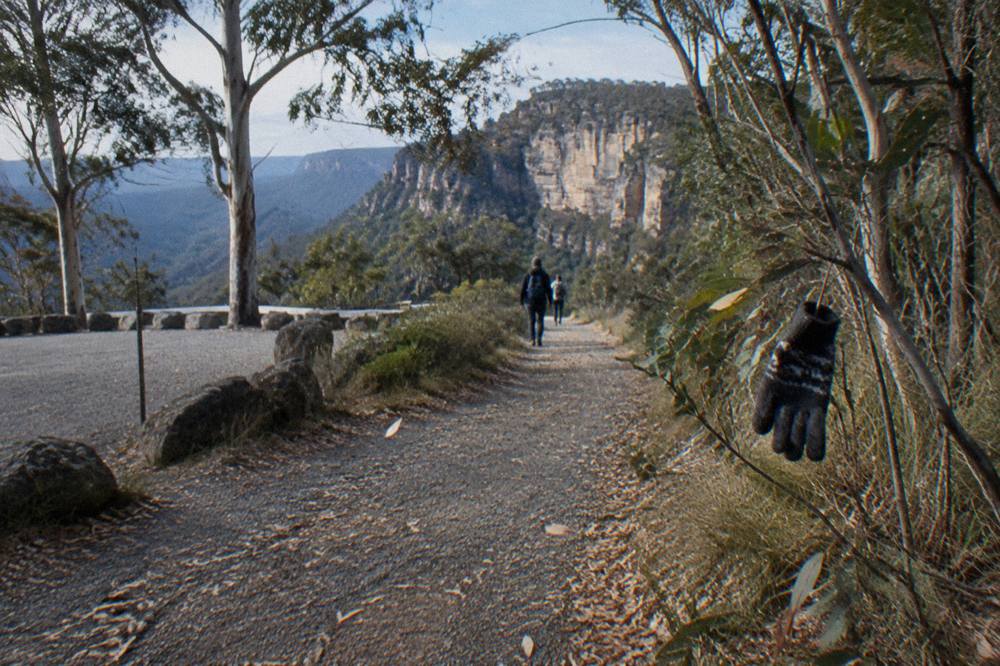
Stage three is the part most day visitors skip, and it changes the character of the day from a glow worm visit into a proper gorge walk. The timber steps back up are narrow and winding, and the payoff is a lookout across the Wolgan Valley. If you are walking with children, NSW National Parks is direct: the track beyond the lookout is not suitable for them, and families should read the walking the tunnel with kids guide before committing.
How Hard Is The Glow Worm Tunnel Walk Really?
Grade 3 means moderate, not easy. The distance is short at 6 km return, but the walk includes short steep hills, over 80 steps without handrails, a 0.5 m pinch point, an uneven and possibly wet tunnel floor, and a trailhead barrier with a 1 m gap. It is manageable for most adults with reasonable fitness and unsuitable for wheelchairs, prams and anyone unsteady on rough steps.
The grade is the honest starting point. NSW National Parks grades tracks from Grade 1 (flat, paved, accessible) to Grade 5 (demanding, remote). Grade 3 sits in the middle: some bushwalking experience recommended, short steep hills, and natural surfaces. The Glow Worm Tunnel track fits that description precisely, and the steps are the part that surprises people who read "easy" into the 6 km figure.
The step count is over 80 in total, split roughly as 30 stone steps down to a bridge and 30 narrow winding timber steps back up on the optional gorge section. None of those steps have handrails. The pinch point after the bridge is 0.5 m wide, which is a squeeze for a loaded adult and a genuine consideration for anyone broad-shouldered carrying a child. The tunnel floor itself has been upgraded with an evened surface and an inside handrail, which helps, but it remains rocky and may be wet underfoot.
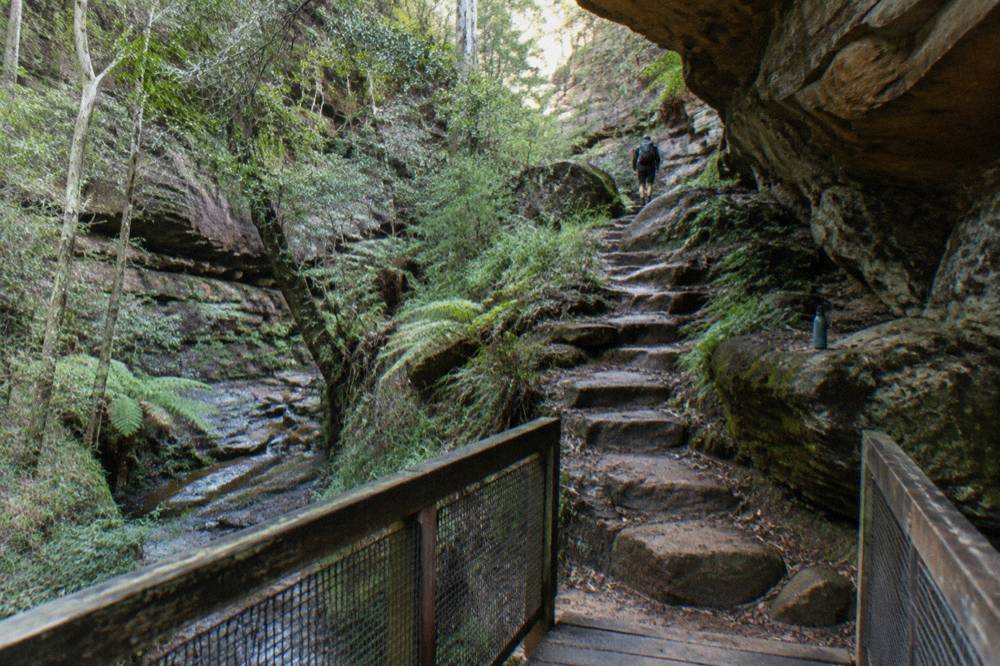
Time is the other dimension of difficulty. Two to 3 hours is the suggested window for the 6 km return, which allows for a slow tunnel stop. Add the optional 1.5 km gorge extension and you are closer to a half day, especially with a group. Walking in the dark inside the tunnel, with eyes adjusting and torches off, takes longer than the metres suggest. The question of whether to go at night or in daylight, and what each offers, is unpacked in the night versus day glow worm tours guide.
Weather changes the answer too. The Glow Worm Tunnel to Newnes section may close during or after heavy rain because of rockfall and flood risk, and the unsealed access road drops to 4WD-only in wet weather. On a hot dry day the walk itself is exposed in parts and the glow worm display may be weaker; on a cool damp one the colony tends to show better, though no official source ranks months by brightness.
The Pagoda Track Alternative
There is a second way in: the Pagoda walking track from the Old Coach Road carpark, 4 km return, described in the NSW National Parks story "Nature's own light show at Wollemi National Park". It approaches the tunnel from a different direction, avoids the single-lane road tunnel and the busiest carpark, and suits walkers who want a shorter route or a quieter arrival.
The main access route ends at the carpark at the end of Glowworm Tunnel Road, 1.5 km from the tunnel entrance. The Pagoda track starts instead from the Old Coach Road carpark and runs 4 km return to reach the tunnel, which makes it 2 km shorter than the standard 6 km return. The NPWS story that describes it frames it as the quieter, more scenic approach through pagoda rock formations, the sandstone pagodas the Gardens of Stone country is named for.
Choosing between them is mostly a choice about the drive. The Glowworm Tunnel Road approach is the standard one, with the limited parking and the 60 m single-lane tunnel just before the carpark. The Old Coach Road approach spreads visitors across two carparks and gives the walk a different opening act. Neither has a fee listed. Both end at the same 387 m tunnel with the same colony inside.
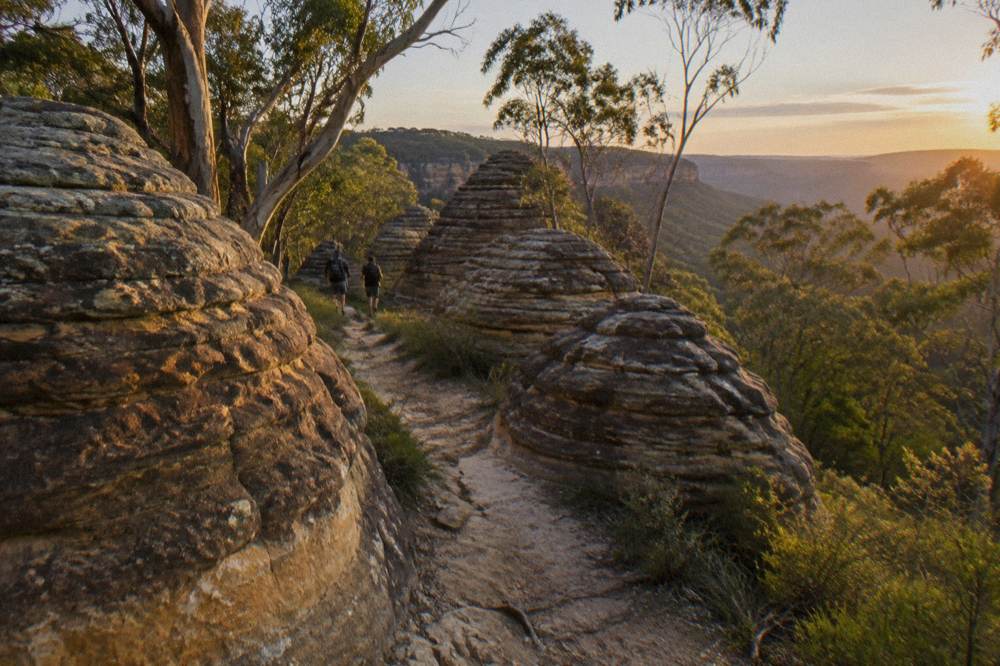
One practical note: parking is limited at peak times on the main approach, and NSW National Parks says it can be very busy during summer, weekends and holiday periods. If you arrive at the main carpark and find it full, the Old Coach Road carpark is the natural fallback rather than parking on the gravel road verge. The full parking picture, including what to do when it is busy, is in the parking near the tunnel guide.
Who Should Do This Walk (And Who Should Not)
This walk suits adults and steady teenagers with moderate fitness who want a free, self-guided glow worm experience and can drive themselves to a remote trailhead. It does not suit wheelchair users, prams, anyone unsteady on unrailed steps, or young children beyond the tunnel, per NSW National Parks. Visitors without a car should look at the guided night hike from Sydney instead.
The honest dividing lines are the barrier, the steps and the road. The trailhead barrier's 1 m gap, the 0.5 m pinch point and the 80-plus unrailed steps together rule out most mobility aids. The unsealed access road, 4WD-only in wet weather, rules out most rental agreements and low-clearance cars on a bad day. And the explicit NPWS warning that the track beyond the lookout is not suitable for children sets the family boundary at the tunnel itself.
| Walker | Verdict | Why |
|---|---|---|
| Adult with moderate fitness | Suits | 6 km return, Grade 3, manageable in 2 to 3 hours with a steady pace |
| Steady teenager | Suits | Distance and terrain are fine with supervision; the gorge extension adds steps |
| Young children | Tunnel only | NSW National Parks states the track beyond the lookout is not suitable for children |
| Wheelchair or pram users | Does not suit | 1 m barrier gap, 0.5 m pinch point, over 80 unrailed steps, uneven tunnel floor |
| Visitors without a car | Does not suit | No public transport reaches the carpark; the drive is about 2.5 hours from Sydney on unsealed gravel for the last stretch |
For visitors who want glow worms without any of that, the comparison is not really between two walks. It is between a free self-guided walk you drive to and a guided night hike that collects you from your Sydney hotel. The hike runs about 5 hours, takes at most 9 travellers, needs moderate fitness and is not wheelchair accessible either, but it removes the car, the gravel road and the navigation entirely. The trade-offs are laid out side by side in the self-drive versus guided guide.
The listing for that hike reads from $128 USD per person, with a 4.9 rating from 210 reviews, free cancellation up to 24 hours before, and a flag that it often sells out. It is the only bookable glow worm product on this site, and it is a genuinely different experience from the tunnel: a guided bush walk in the dark to a cave with a waterfall where native glow worms can be seen, rather than a disused railway tunnel you walk through alone.
Seeing Glow Worms On The Walk
Glow worms are visible in the tunnel year round, and because the 387 m tunnel is pitch black inside, they can be seen during the day. The viewing rules from NSW National Parks are simple: stay on the path, keep noise down, let your eyes adjust after turning off your torch, and shine any torch at the ground or use red light, because light pointed at the glow worms can damage their bioluminescence.
The colony itself is Arachnocampa richardsae, the larva of a fungus gnat, not a worm at all. The light is bioluminescence produced in the larva's transparent rear end, and it exists to lure prey into sticky silk snares that hang from the nest. The adult gnat lives about 3 days, while the larval stage lasts 6 to 9 months, which is the stage you are looking at on the ceiling and walls of the tunnel. The full biology, including why they switch off when disturbed, is in the what are glow worms guide.
The practical viewing sequence inside the tunnel matters more than most visitors expect. Walk in with a torch on the ground, find a spot, turn the torch off, and wait. Eyes need time to adjust to full dark, and the colony needs quiet. A loud group or a torch swung across the ceiling can switch the display off for everyone. The NPWS guidance on red light exists for exactly this reason: red light is the least disruptive option, and the guided night hike supplies headlamps with a red-light mode for the same reason.
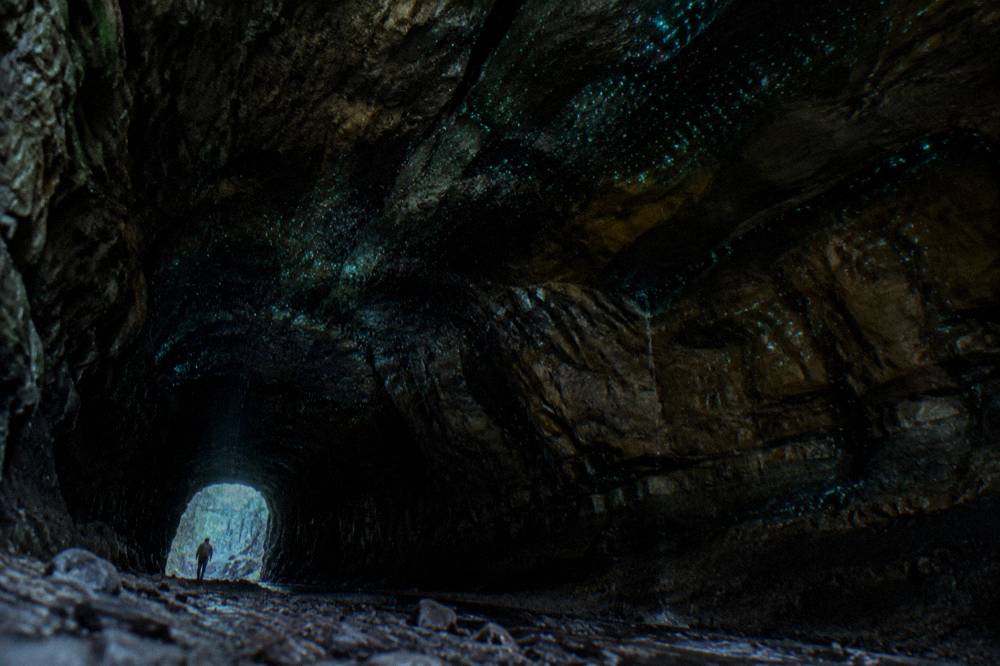
Season and weather shape the display, though no official source ranks months. What NSW National Parks does say is that it is best to visit during the week or in spring or autumn, because summer, weekends and holiday periods bring crowds and limited parking. Operators and travel press add that displays are often stronger in warm, wet months and after rain, and that moonlight and dry heat tend to dampen output, but that is operator and press opinion rather than official data. The month-by-month detail is in the best time to see glow worms guide.
Getting There, Timing And The Drive Back
The track is about a 2.5 hour drive from Sydney, per NSW National Parks, and no public transport reaches the carpark. From Lithgow the standard route runs via Clarence and the Zig Zag Railway, Petra Avenue, then 8.4 km of Old Bells Line of Road and 26.8 km of Glowworm Tunnel Road, unsealed gravel for the last stretch. Allow a full day for the round trip from Sydney.
The road detail is the part that catches Sydney visitors out. Old Bells Line of Road carries frequent trucks, and the gravel section is 2WD-possible in dry weather, 4WD-recommended, and 4WD-only in the wet. There is no long-vehicle access. The single-lane 60 m road tunnel just before the carpark is a novelty the first time and a queue point at peak. An alternative approach via State Mine Gully Road from Lithgow is signposted and runs about 39 km, joining Glowworm Tunnel Road.
Timing the day matters as much as the route. NSW National Parks suggests visiting during the week or in spring or autumn to avoid crowds and the limited parking that comes with them. A mid-week departure from Sydney that arrives mid-morning gives you the tunnel at its quietest and leaves the whole afternoon for the return drive. The detailed route options, including the drive from Sydney, are in the how to get there guide.
For anyone without a car, or unwilling to take a rental onto gravel, this is the point where the guided night hike earns its price. It collects passengers from Sydney hotels in a window from about 7:50pm to 8:35pm, staggered because there is no fixed meeting point, and the operator states returns around 11pm to midnight. The full comparison of driving yourself against riding along is in the Glow Worm Tunnel 4WD tour guide.
What To Bring And What Not To Do
Bring a torch with a red-light option or the discipline to shine it only at the ground, water for everyone, sturdy shoes with grip, warm layers for standing still in the dark, and the Emergency Plus app for the very limited mobile reception. Do not bring pets, bikes, prams or cigarettes: camping, cycling on the track or in the tunnel, pets and smoking are all prohibited on the track.
The torch rule is the one that protects the reason you came. NSW National Parks guidance is to shine a torch at the ground or use a red-light option, because light pointed at the glow worms can damage their bioluminescence and makes them turn their lights off. The same logic applies to noise: keep it to a minimum, because the colony can control its lights and will switch them off if disturbed. Look, do not touch. There is no official photography rule on those pages, so treat flash the way you would a torch pointed at the ceiling and read the tunnel photography guide before bringing a camera.
Water is the other quiet essential. There is no drinking water on the track, the toilets are non-flush, and the nearest campground is Newnes, reached via Wolgan Valley Road on a separate route. Mobile reception is very limited, which is why NSW National Parks advises the Emergency Plus app. The full checklist, including what changes in wet weather and in winter, is in the what to bring guide.
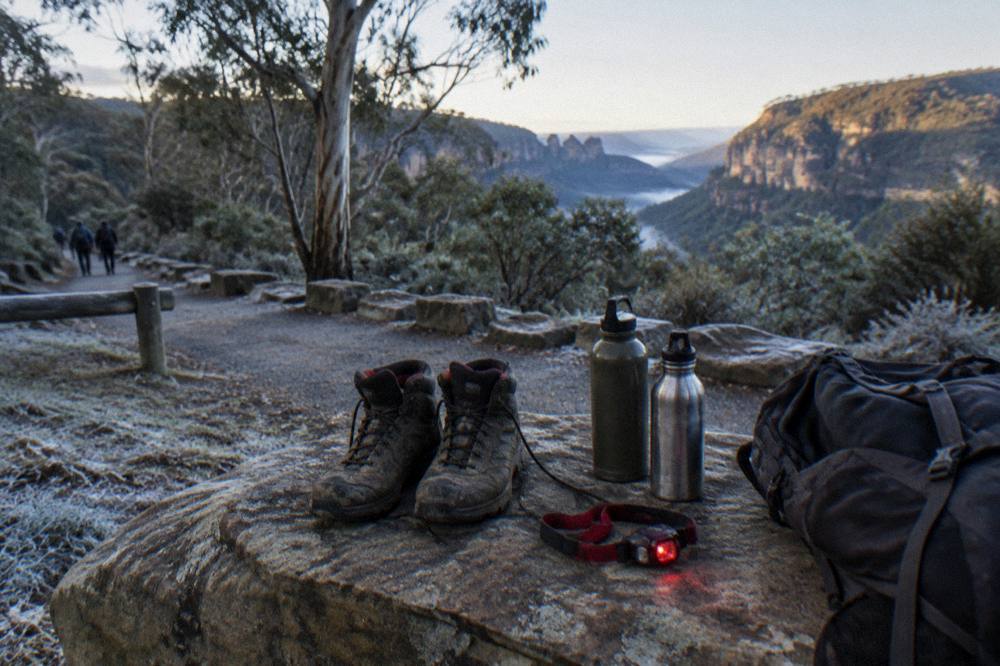
The fire ban deserves its own line for anyone thinking of a hot drink or a cook-up at the carpark. From 1 October 2026 to 31 March 2027, campfires and solid-fuel BBQs are prohibited across Wollemi National Park, with gas and electric cookers allowed only under specific conditions. Check the current alerts page before you go, because the alerts around this track change frequently, from road works to weather closures.
For a fuller picture of the region around the walk, including the Newnes industrial ruins and the Old Newnes Hotel reached via Wolgan Road, the Newnes Hotel and ruins guide covers the other side of the Wolgan Valley. And if you are weighing the whole trip against simply booking a seat in a van from Sydney, Blue Mountains Glow Worms keeps a comparison of the two on the homepage.
The guided option is worth one honest paragraph here because it answers the two biggest frictions of the tunnel walk. It removes the 2.5 hour drive each way and the gravel road, and it removes the guesswork of viewing etiquette by supplying headlamps with red-light mode and a certified outdoor instructor. Pickup runs from Sydney hotels in a window from about 7:50pm to 8:35pm, staggered because there is no fixed meeting point, and the operator states returns around 11pm to midnight. Free cancellation applies up to 24 hours before, and the listing is flagged as often selling out.
Common Questions About The Glow Worm Tunnel Walk
How long is the Glow Worm Tunnel walk?
The walk is 6 km return, suggested 2 to 3 hours, from the carpark at the end of Glowworm Tunnel Road to the tunnel and back. It is 1.5 km each way to the tunnel entrance, with an optional further 1.5 km through Penrose Gorge to a lookout over Donkey Mountain and the Wolgan Valley.
Is the Glow Worm Tunnel walking track hard?
It is Grade 3: moderate, with some bushwalking experience recommended. The distance is short, but there are short steep hills, over 80 steps without handrails, a 0.5 m pinch point and an uneven, possibly wet tunnel floor. It is not suitable for wheelchairs or prams, and NSW National Parks says the track beyond the lookout is not suitable for children.
Can you see glow worms during the day at the tunnel?
Yes. The tunnel is 387 m long and pitch black inside, dark enough for glow worms to be visible during the day. Turn off your torch, let your eyes adjust and keep noise down, and the colony can be seen year round.
Do you need a permit or pay a fee for the Glow Worm Tunnel walk?
No fee is listed on any of the NSW National Parks track, visitor info or alerts pages, and no permit is mentioned. Parking is limited at peak times, and the status line reads "Open, check current alerts", so check the alerts before travelling.
What is the pinch point on the Glow Worm Tunnel track?
After the bridge, about 30 stone steps down from the main track, there is a pinch point 0.5 m wide. It is the tightest spot on the walk. The trailhead barrier also has a 1 m gap, which is the first signal that the track is not built for mobility aids.
Is there another way to reach the tunnel besides the main track?
Yes. The Pagoda walking track from the Old Coach Road carpark is 4 km return to the tunnel, described in the NSW National Parks story on the park. It is 2 km shorter than the standard route and spreads visitors across a second carpark when the main one is full.