Wollemi National Park: A Visitor Guide To The Park Around The Glow Worm Tunnel
Wollemi National Park is the sandstone country west of Sydney that holds the Glow Worm Tunnel, the Newnes oil-shale ruins and the famous Wollemi pine. Here is what the park actually contains, what is open, and how to plan a visit around the tunnel that gives the park its best known night-time residents.
Short answer
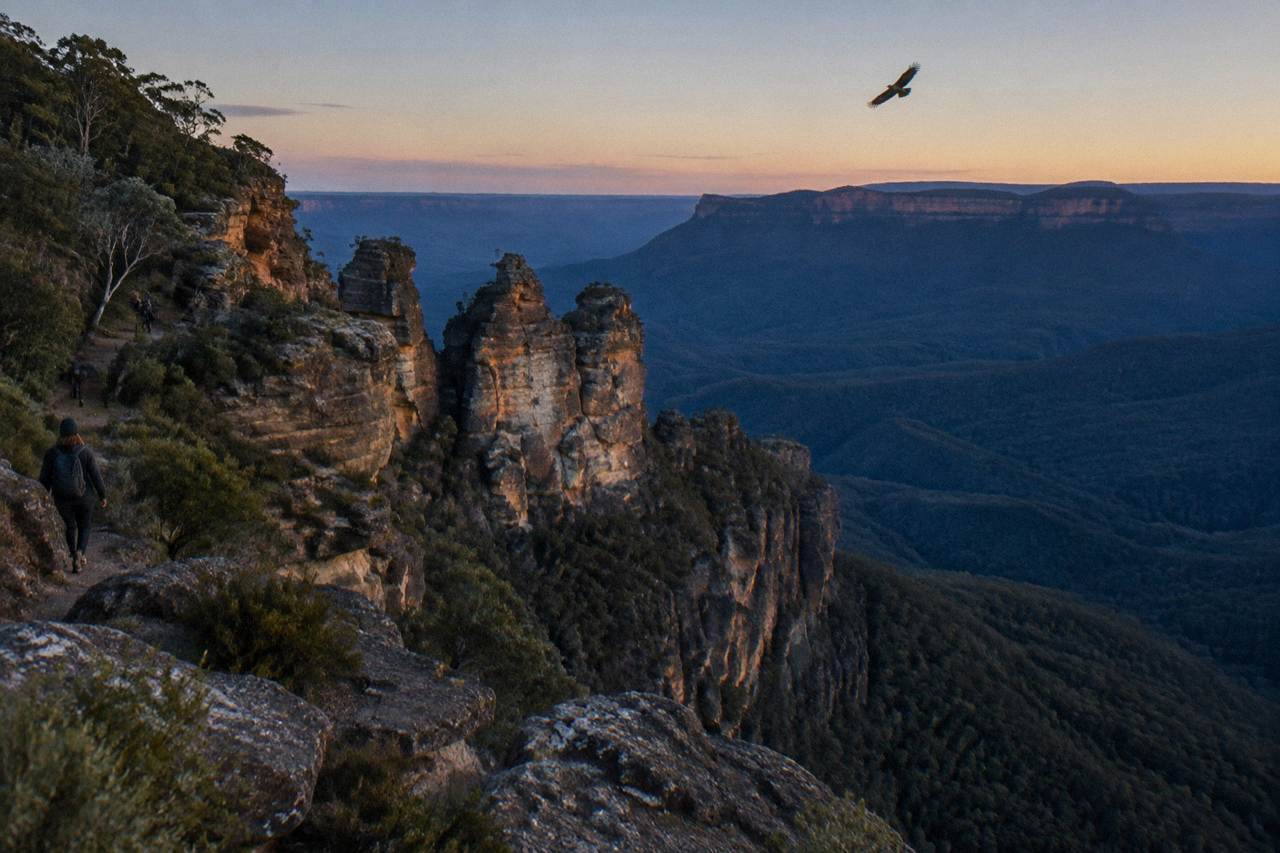
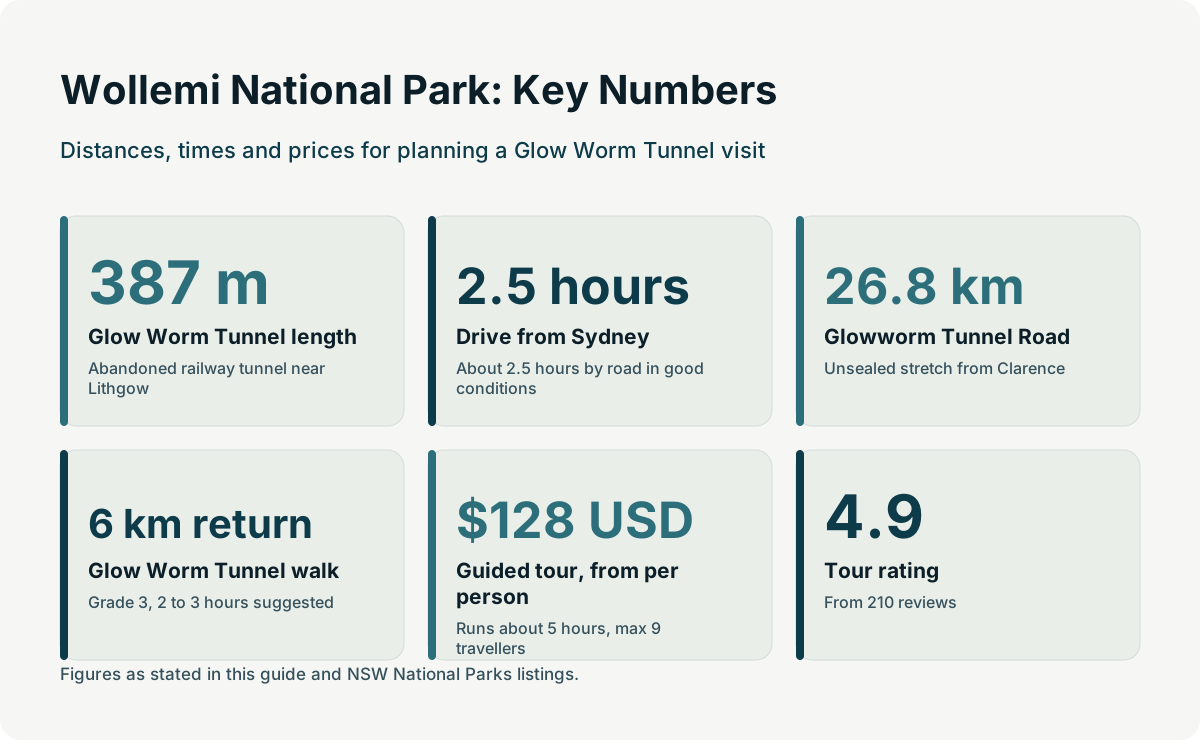
Wollemi National Park sits near Lithgow, about a 2.5 hour drive from Sydney, and holds the Glow Worm Tunnel, a 387 m abandoned railway tunnel where native glow worms are visible year round. The tunnel track is 6 km return, free to visit, and open with alerts covering a park fire ban until 31 March 2027 and single-lane road works from 11 October 2026.
Wollemi National Park is the vast sandstone and forest country that begins about 2.5 hours by road west of Sydney, and it holds the single most reliable place to see native glow worms in the wider Blue Mountains region: the Glow Worm Tunnel, a 387 m abandoned railway tunnel near Lithgow where the darkness is so complete that the colony glows even at midday. The park also protects the Wollemi pine, one of the world's rarest trees, discovered as recently as 1994 in a remote rainforest canyon, plus a shelf of industrial history at Newnes and a maze of pagoda rock formations that most visitors never reach. This guide sets out what is actually in the park from official sources, what is open and what is closed, how the access roads behave, and how to plan a visit around the season, the alerts and the glow worms themselves.
What Is Wollemi National Park And Where Is It?
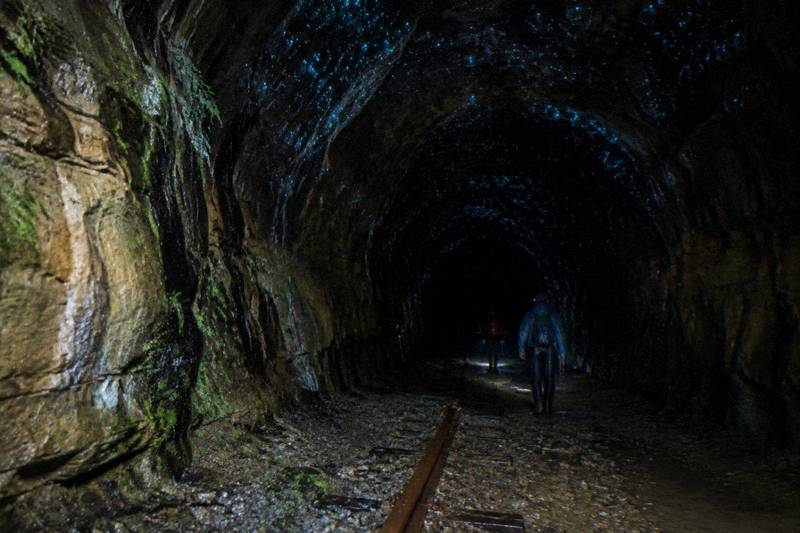
Wollemi National Park is a protected area of the Greater Blue Mountains World Heritage Area, centred on the country between the Blue Mountains plateau and the coal town of Lithgow, about a 2.5 hour drive from Sydney according to NSW National Parks. Its best known attraction is the Glow Worm Tunnel, an abandoned 387 m railway tunnel near Lithgow where native glow worms are visible year round because the tunnel stays dark even in daytime.
The park is named after the Wollemi pine, and that naming is deserved. The Wollemi pine was discovered in 1994 in a remote rainforest canyon inside the park, a tree previously known only from fossils and assumed extinct for millions of years. NSW National Parks notes the species grows in a remote rainforest canyon in the Greater Blue Mountains World Heritage Area, and the exact location of the wild stand is deliberately not publicised. The discovery made the park internationally significant overnight, and it remains the reason many people know the name Wollemi at all.
For glow worm visitors, the practical geography matters more than the botany. The tunnel sits on the Newnes Plateau side of the park, reached from Lithgow via Clarence and the Old Bells Line of Road, then 26.8 km along the unsealed Glowworm Tunnel Road. The park also has a second, completely separate access world: the Wolgan Valley side, reached via Wolgan Road through the valley to the Newnes campground and ruins. The two sides do not connect by road through the park, a fact that catches out plenty of first-time visitors who assume one entrance leads to everything.
NSW National Parks describes the Glow Worm Tunnel walking track as "just a 2.5hr drive from Sydney", which is honest in good conditions but assumes you are already comfortable with the final stretch of gravel. The park is administered locally from the Blue Mountains Heritage Centre at 270 Govetts Leap Road, Blackheath, open 9am to 4pm daily except Christmas Day, phone 02 4787 8877, which is the right first call for track and alert questions. Readers planning the wider region can compare the tunnel against the guided alternatives in our Blue Mountains glow worms overview.
What Can You Actually See And Do In The Park?
The park's visitable highlights are the Glow Worm Tunnel and its walking track, the Newnes industrial ruins and campground on the Wolgan Valley side, the Pagoda walking track approach, and the Donkey Mountain lookout over the Wolgan Valley, plus wild, untracked canyon country in between. There is no entry fee listed for the tunnel track or its carpark on any NSW National Parks page reviewed, and the tunnel itself is free to walk through.
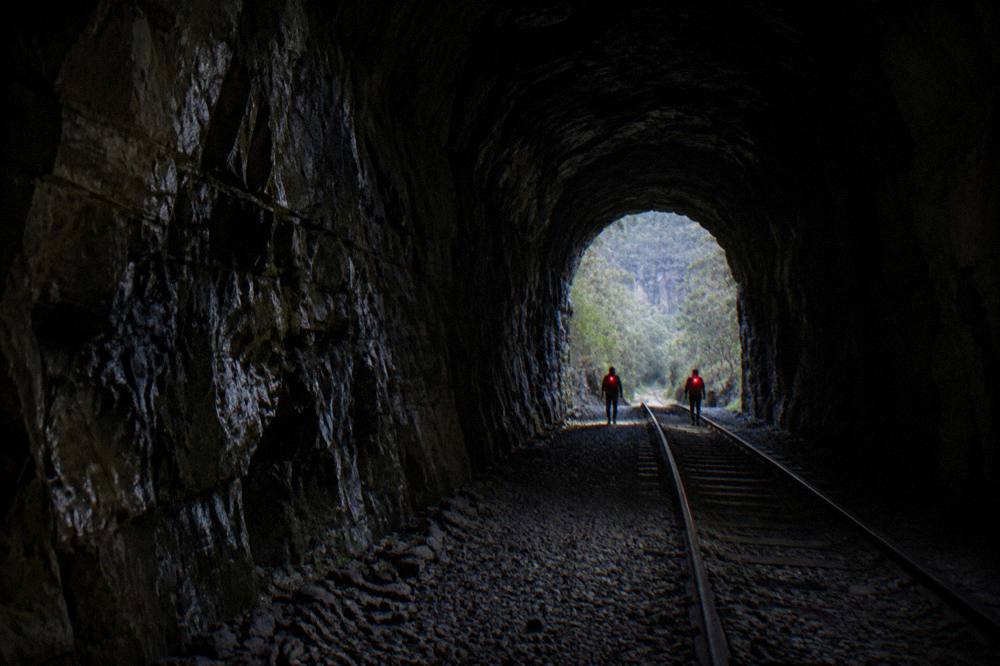
The tunnel is the headline. Built in the early 1900s as Tunnel No. 2 of the Wolgan Valley Railway, it served the Newnes mining operation, and when the railway closed the darkness moved in and the glow worms colonised the damp, still air. NSW National Parks says the tunnel is long enough that it gets dark enough to see glow worms during the day, which makes it one of the few glow worm sites that does not require a night visit. The full track is 6 km return, Grade 3, with 1.5 km from the carpark to the tunnel entrance and an optional 1.5 km beyond through Penrose Gorge to a lookout over Donkey Mountain and the Wolgan Valley.
The Newnes side rewards a second day. The Newnes Industrial Ruins walk wanders through the remains of the shale oil industry, including coke ovens, brick kilns, paraffin sheds, the 15 m Big Wall and the distinctive beehive kilns, all described in detail in our Newnes Hotel and ruins guide. Access is via Wolgan Road, a mix of sealed and unsealed surface where NSW National Parks recommends a 4WD, especially in wet weather. The Old Newnes Hotel survives mainly as a landmark people use to describe the ford crossing point.
For travellers who want glow worms but not the gravel, there is one bookable alternative: a guided night hike from Sydney that runs to a glow worm cave behind a waterfall elsewhere in the Blue Mountains, with hotel pickup, headlamps and a certified instructor included. It is a different site from the tunnel, and the operator does not publish the cave's location, but it is the only Sydney-pickup way to see glow worms with a guide.
The listing is rated 4.9 from 210 reviews, runs about 5 hours with a maximum of 9 travellers, and costs from $128 USD per person with free cancellation up to 24 hours before. The operator cancels for bad weather or if minimum numbers are not met, which is worth knowing before you build an itinerary around it.
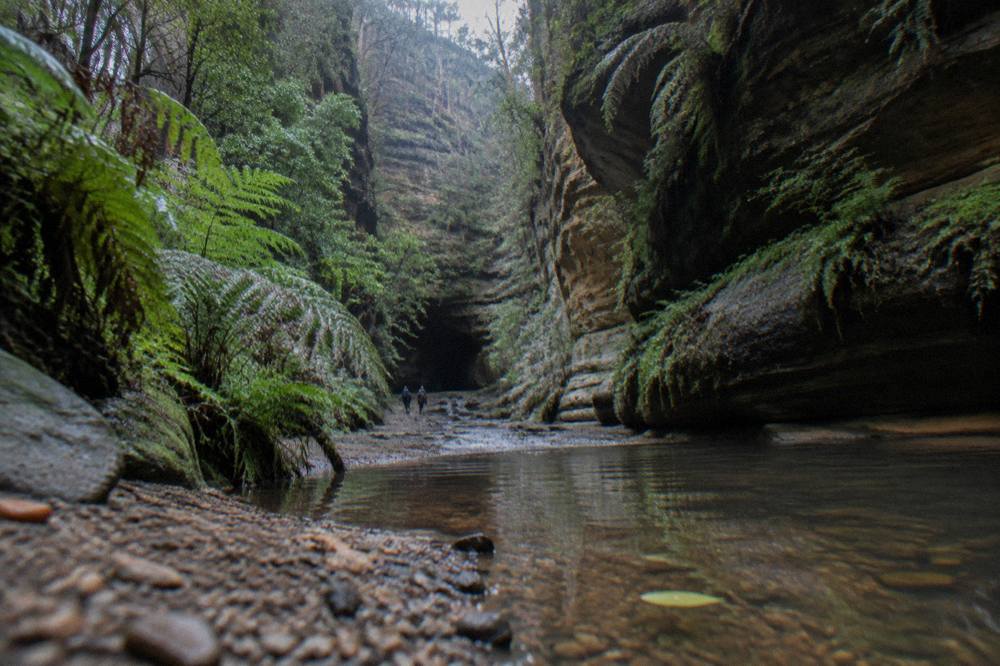
The table below pulls together the park's documented visitable spots and what each one involves, using only figures from the NSW National Parks pages.
| Spot | What it is | Access | Effort |
|---|---|---|---|
| Glow Worm Tunnel | 387 m abandoned railway tunnel with a resident glow worm colony | Glowworm Tunnel Road carpark, 1.5 km walk to the entrance | 6 km return, Grade 3, 2 to 3 hours suggested |
| Penrose Gorge lookout | View over Donkey Mountain and the Wolgan Valley | Continues 1.5 km past the tunnel | Steeper, not suitable for children per NPWS |
| Pagoda walking track | Alternative approach to the tunnel through pagoda rock country | Old Coach Road carpark | 4 km return per the NPWS story |
| Newnes Industrial Ruins walk | Shale oil ruins: coke ovens, kilns, paraffin sheds, Big Wall | Wolgan Road via Wolgan Valley, 4WD recommended when wet | Short walking track among the ruins |
| Newnes campground | Nearest camping to the tunnel side of the park | Wolgan Valley Road | Camping prohibited on the tunnel track itself |
Is The Glow Worm Tunnel Open, And What Alerts Apply To The Park?
The Glow Worm Tunnel walking track is listed by NSW National Parks as open, with a standing instruction to check current alerts before travelling. Three alerts currently apply to the area: a park fire ban across Wollemi National Park from 1 October 2026 to 31 March 2027, construction works at the Bungleboori precinct until December 2026, and a single-lane section on Glowworm Tunnel Road from 11 October 2026 with delays of up to 5 minutes.
The fire ban is the seasonal reality of a summer visit. Between 1 October 2026 and 31 March 2027 campfires and solid-fuel barbecues are prohibited across the park; gas and electric cookers remain allowed under conditions. It does not close walking tracks, but it changes what an overnight stay at Newnes campground looks like, and total fire ban days bring their own stricter rules.
The road works are more directly relevant to tunnel visitors. The Bungleboori precinct itself, in the adjoining Gardens of Stone State Conservation Area, is closed to visitors while construction runs until December 2026, and traffic on Glowworm Tunnel Road at its intersection with Lost City North and Maiyingu Marragu is reduced to a single lane from 11 October 2026. NSW National Parks advises driving with caution and following traffic controls, and the delay is modest, up to five minutes, but it is a reason not to cut your timing fine on a night walk out. Our regularly updated Glow Worm Tunnel open or closed page tracks this in more detail.
| Alert | Applies | What it means for visitors |
|---|---|---|
| Park fire ban, Wollemi National Park | 1 Oct 2026 to 31 Mar 2027 | No campfires or solid-fuel barbecues; gas and electric cookers allowed under conditions |
| Bungleboori precinct construction works | Until December 2026 | Bungleboori site closed to visitors; drive with caution and follow traffic controls |
| Single-lane section, Glowworm Tunnel Road | From 11 Oct 2026 | Delays up to 5 minutes at the Lost City North and Maiyingu Marragu intersection |
| Weather closures, tunnel to Newnes section | After heavy rain | Track may close for rockfall and flood risk; re-check alerts before travel |
Beyond the alerts, the weather writes the real rules. The Glow Worm Tunnel to Newnes track section may close during or after heavy rain because of rockfall and flood risk, and the unsealed Glowworm Tunnel Road itself is 2WD-accessible only in dry weather: NSW National Parks says 4WD is highly recommended at all times and required in wet conditions. If rain is in the forecast, the self-drive plan and the guided question both change, which is exactly the decision moment the box below addresses.
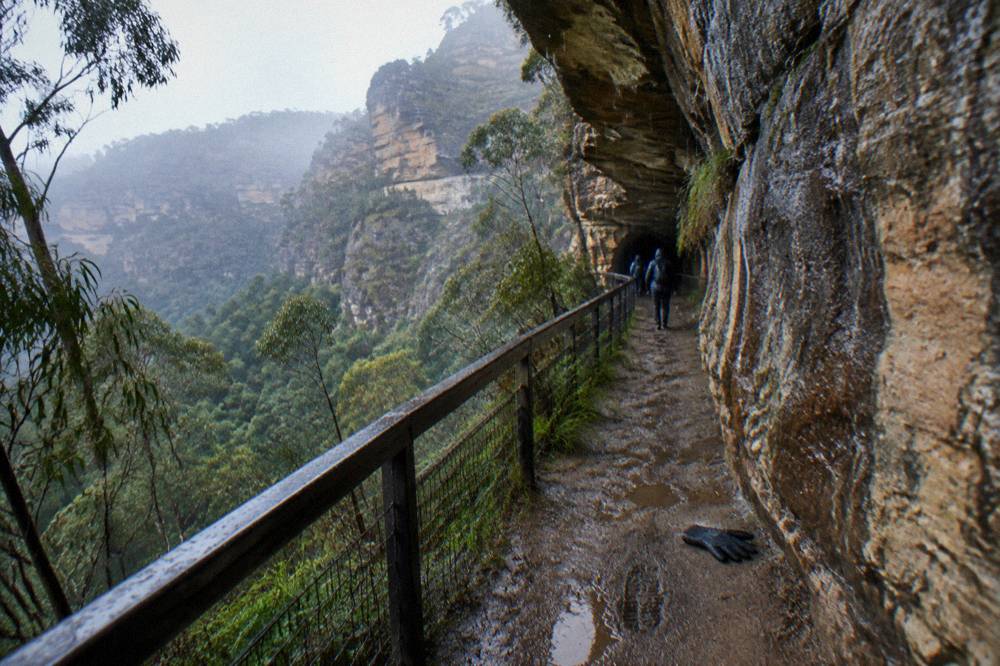
For the official picture, the NSW National Parks Glow Worm Tunnel walking track page carries the live status line and the alert list, and it is the page to re-read the week you travel. The park's own glow worm facts page is the source for the biology and the viewing rules summarised later in this guide.
The Wollemi Pine And Why The Park Is Famous
The Wollemi pine is one of the world's rarest and oldest tree species, known from fossils and long assumed extinct until a living stand was discovered in 1994 in a remote rainforest canyon inside Wollemi National Park, within the Greater Blue Mountains World Heritage Area. NSW National Parks confirms the discovery and the habitat but does not publicise the canyon's location, and no visitor track leads to the wild trees.
The story is genuinely remarkable. Before 1994 the Wollemi pine existed in the public record only as pollen and leaf fossils up to around 90 million years old, and botanists treated it as a long-gone relative of the modern hoop pine. Then a bushwalker found a small grove of strange, bubbly-barked trees in a canyon so remote that it had protected them from fire, logging and every other human pressure. Official park pages do not state a count, so treat any precise figure you see elsewhere with caution.
For visitors, the practical point is that you cannot go and see the wild pines. The location is kept secret to protect the stand from disease, especially the root rot pathogen carried on footwear, and there is no track, permit or tour that takes the public there. Propagated Wollemi pines are sold commercially and planted in botanic gardens, so seeing the species up close is possible, just not in its wild canyon.
What the pine does for the park is set its tone. Wollemi is not a manicured day-trip park with a visitor loop; it is a large, largely trackless wilderness that happens to contain a handful of accessible gems, and the pine is the proof of how much of it has never been disturbed. That character is worth holding in mind when you plan: the accessible highlights are real and rewarding, but they are the thin edge of a much wilder place.
Newnes, The Ruins And The Wolgan Valley Side
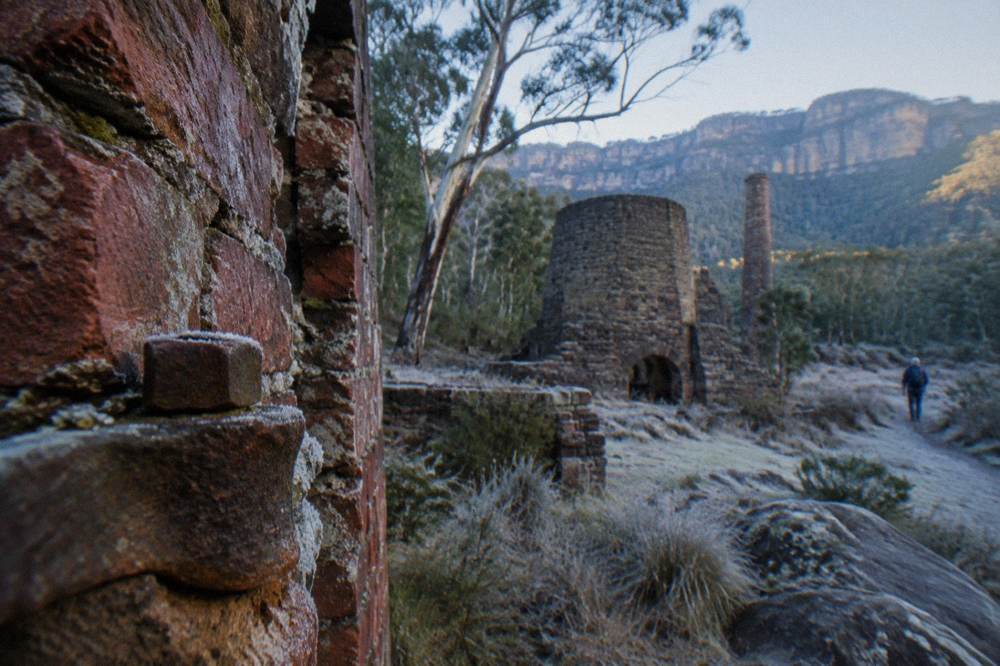
The Wolgan Valley side of the park holds the Newnes industrial ruins, the remains of a shale oil works that operated in the early 1900s, including coke ovens, brick kilns, paraffin sheds, a 15 m wall known as the Big Wall and the distinctive beehive kilns, reached by a short walking track from the Newnes area via Wolgan Road, where a 4WD is recommended especially in wet weather.
Newnes was once a substantial company town serving the Wolgan Valley shale oil industry, the same industry that built the railway and Tunnel No. 2 that later became the Glow Worm Tunnel. When the works closed the machinery was removed or scrapped, but the masonry stayed, and today the ruins are one of the more atmospheric heritage walks in the Greater Blue Mountains. The beehive kilns in particular photograph beautifully in late afternoon light, and the Big Wall gives a sense of the scale of the operation.
Access is the catch. Wolgan Road runs from the Castlereagh Highway turnoff through the Wolgan Valley, a mix of sealed and unsealed surface, and NSW National Parks recommends a 4WD especially when wet. The Old Newnes Hotel, on the approach, survives mainly as a landmark for describing the ford crossing point, and no official page reviewed states whether it is open to the public, so treat it as scenery rather than a stop. The Newnes campground, reached via Wolgan Valley Road, is the nearest legal camping to this side of the park, since camping is prohibited on the tunnel track.
The two sides of the park make a natural two-day itinerary: the ruins and campground in the Wolgan Valley one day, the tunnel and pagodas on the plateau the next. They cannot be combined in one loop by road, so plan accommodation accordingly, either the campground itself or a base in Lithgow. If you are weighing the self-drive effort against letting someone else handle the night logistics, our self-drive versus guided Glow Worm Tunnel comparison works through the trade-offs.
Getting To Wollemi National Park From Sydney
The Glow Worm Tunnel is about a 2.5 hour drive from Sydney per NSW National Parks, with the final approach via Clarence, the Old Bells Line of Road for 8.4 km, then 26.8 km along the unsealed Glowworm Tunnel Road, or alternatively via State Mine Gully Road from Lithgow, about 39 km of gravel. No public transport reaches the carpark, and parking at the end of the road is limited at peak times.
The drive has three distinct phases. The first is the run out of Sydney to Lithgow, motorway and highway most of the way, straightforward in any vehicle. The second is the plateau section: from Lithgow via the Zig Zag Railway country at Clarence, along the Old Bells Line of Road where trucks are frequent and a 40 km/h limit applies during working hours, then onto Glowworm Tunnel Road. The third is the gravel itself, 26.8 km of unsealed road passing through a 60 m single-lane tunnel just before the carpark, which is a memorable moment the first time you drive it.
Conditions decide everything on that last stretch. In dry weather a 2WD can make it, though NSW National Parks still calls 4WD highly recommended. In wet weather the road is 4WD only, no exceptions, and long vehicles are excluded outright. Mobile reception at the carpark is very limited, and the park service advises carrying the Emergency Plus app. Our detailed route and carpark guide for the Glow Worm Tunnel covers every turn, and the broader how to get to the Glow Worm Tunnel from Sydney page handles the Sydney end.
If that sounds like more car than you want on a night out, the guided alternative exists precisely for that traveller. The night hike picks up from Sydney accommodation in a window from about 7:50pm to 8:35pm, staggered because there is no fixed meeting point, and returns around 11pm to midnight per the operator. Transport, parking fees, water and a certified outdoor instructor are all included, and the group is capped at 9 travellers.
The operator is Wildscape Adventures, the tour runs in English, and it is graded for moderate fitness, not wheelchair accessible. It is a bush walk in the dark with headlamps to a cave with a waterfall where glow worms can be seen, plus a chance of other local wildlife, and the operator is plain that sightings are of wild animals in wild conditions.
When To Visit: Seasons, Weather And Glow Worm Timing
Glow worms are present in the tunnel year round, and the tunnel is dark enough for daytime viewing, so there is no bad month for the colony itself. NSW National Parks advises visiting during the week or in spring or autumn to avoid crowds and limited parking, and operators and travel press, opinion rather than official data, say displays are often stronger in warm, wet months and after rain.
The official advice is about people, not worms. The NPWS line is blunt: it is best to visit during the week or in spring or autumn, because it can be very busy and parking is limited during summer, weekends and holiday periods. That is the only seasonal guidance any official source gives, and no official source ranks months by glow worm brightness. Claims that December to March is peak season come from operators and the travel press, and they are plausible, since the larvae's insect prey is more active in warm wet weather, but they are opinion, not data.
The numbers that are data come from the Bureau of Meteorology. Katoomba, at 1,017 m elevation on the plateau edge, gives a sense of what nights feel like across the year, and the pattern is classic mountains: warm summers, genuinely cold winters with July mean minimums of 2.6 C, and reliable rainfall in every month. The full table is on our best time to see glow worms page.
| Month | Mean minimum (C) at Katoomba | Mean rainfall (mm) |
|---|---|---|
| January | 12.9 | 164.9 |
| February | 13.0 | 177.8 |
| March | 11.6 | 174.6 |
| April | 8.8 | 121.9 |
| May | 6.1 | 100.3 |
| June | 3.7 | 116.0 |
| July | 2.6 | 84.9 |
| August | 3.3 | 79.3 |
| September | 5.5 | 70.7 |
| October | 7.8 | 91.5 |
| November | 9.9 | 110.3 |
| December | 11.8 | 120.4 |
Two practical readings follow. Rain is evenly distributed, so wet-weather road closures are a risk in any month, not just winter, and the State Mine Gully and Glowworm Tunnel gravel should be checked against the forecast whatever the season. Winter nights are cold, near freezing on average in July, but the tunnel itself holds a stable temperature and the colony does not hibernate, so a properly dressed winter visit is quiet, dark and often excellent. The Bureau of Meteorology Katoomba climate averages are the source for the figures above.
Planning A Safe Visit: Rules, Gear And Glow Worm Etiquette
Bring water, sturdy shoes, a torch with a red-light option and warm layers, expect over 80 steps without handrails and an uneven, possibly wet tunnel floor, and follow the NSW National Parks viewing rules: stay on the path, keep noise down, shine your torch at the ground or use red light, never point a torch at the glow worms, and look but do not touch. There is no drinking water at the carpark and mobile reception is very limited.
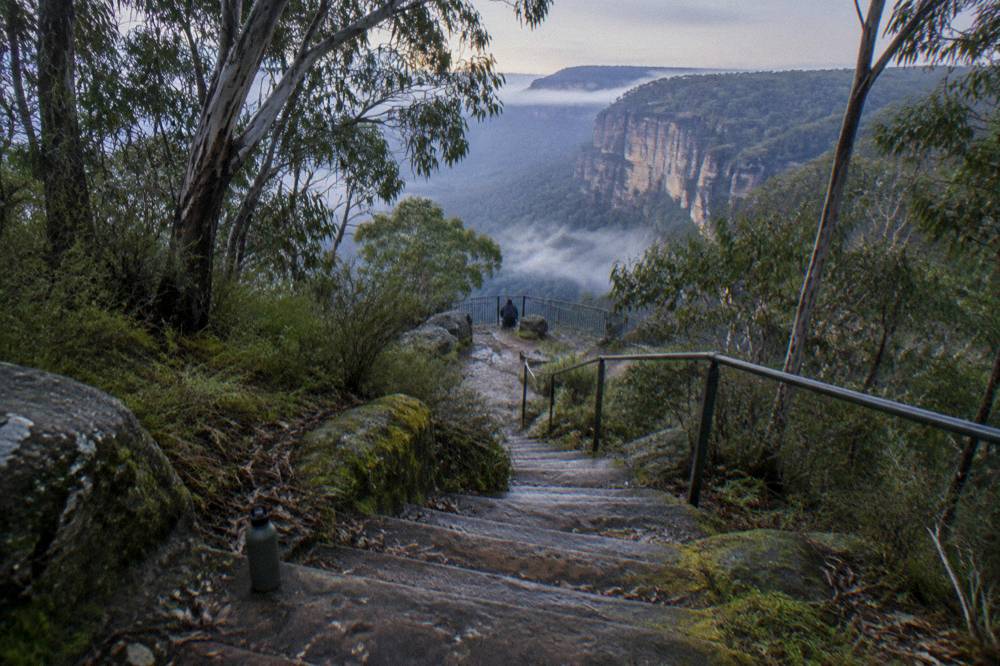
The track is Grade 3 and needs some bushwalking experience. From the carpark it drops about 30 stone steps to a bridge, then climbs about 30 narrow winding timber steps, with over 80 steps in total and none of them handrailed. There is a pinch point about 0.5 m wide after the bridge, a barrier with a 1 m gap at the trailhead, and no wheelchair or pram access anywhere on the route. The tunnel floor is uneven and rocky and may be wet, which is normal rather than a problem, but it rules out ordinary street shoes.
The glow worm rules matter more than the gear. NSW National Parks is explicit that glow worms can control their lights and will turn them off if disturbed, so noise and torch discipline are not politeness, they are the difference between seeing the colony and seeing a dark wall. Let your eyes adjust after you switch off, use red light or shine your torch at the ground, and never point a beam at the worms themselves. Touching is out entirely. The full reasoning, including why a disturbed colony can stay dark for a long time, is in our why you can't touch glow worms explainer.
Facilities at the carpark are minimal: two non-flush toilets, one ambulant, a single timber bench at the start, and nothing else. Camping is prohibited on the tunnel track, cycling is prohibited on the track and in the tunnel though it is allowed on Glowworm Tunnel Road, and pets are prohibited across the park with the usual assistance-animal exception. Smoking is also prohibited. None of this is enforced by rangers on every visit, but all of it is the condition on which the colony survives, and the colony is the whole reason the track exists.
For families, the carpark-to-tunnel section is achievable for many children, but NSW National Parks states plainly that the track beyond the lookout is not suitable for children, and the steps and pinch point set a real floor on who should attempt even the first section. Our Glow Worm Tunnel with kids page works through the judgement call in detail.
Guided Options Inside And Around The Park
The tunnel itself is a free, self-guided walk, and the only licensed guided tunnel operators on the files are Beyond The Blacktop, which lists its own adult guided tunnel tour at $210 with departures from Katoomba Station or the Zig Zag Railway at Clarence, and Red Lantern Tours, which runs a licensed full-day tunnel tour from Penrith with pricing on request; Wolgan Valley Eco Tours' listings show no availability.
The self-guided walk remains the default for most visitors, because the track is well formed, signed and free. A licensed guide adds interpretation, red-light gear handled for you, and a schedule built around the best viewing conditions, at a price. Beyond The Blacktop's own page lists the adult guided tour at $210, child $159, senior $189, and $275 adult combined with Dry Canyon, currency not stated, running about 5 hours with departures from Katoomba Station or Clarence, with no Sydney hotel pickup. Red Lantern's full-day tour meets at Penrith and drives in via the Newnes Plateau, with pricing available on request per the NSW National Parks listing.
The Sydney-pickup option is a different product again: not the tunnel, but a guided night hike to a glow worm cave behind a waterfall, with all transport from your accommodation included. For a visitor without a car, or anyone who has read the gravel-road section above and decided against it, this is the practical route to glow worms in the Blue Mountains, and the listing carries a 4.9 rating from 210 reviews with the caveat that the operator cancels for bad weather or unmet minimum numbers.
Whichever way you go, the honest framing is the same one NSW National Parks uses for the tunnel: the worms are wild, the site is free, and the guided products buy logistics and knowledge rather than a guaranteed sighting. Bookings on the night hike can be cancelled free up to 24 hours before, which matters in a park where weather calls the shots. The broader decision between driving yourself and paying for a guide is compared in our booking a glow worm tour guide.
Putting A Wollemi Trip Together
A well-shaped Wollemi visit takes two days: the plateau side for the Glow Worm Tunnel and pagodas, the Wolgan Valley side for Newnes and the campground, with Lithgow as the practical base. Check the alerts and the road forecast before committing, carry red light and water, and treat spring or autumn weekdays as the sweet spot NSW National Parks itself recommends.
Day one, the plateau. Drive out from Sydney, or take the regular daily train to Katoomba in about 2 hours and hire a car there, and give the gravel its due respect. Walk the 6 km return to the tunnel, spend unhurried time inside letting your eyes adjust, and push on to the Penrose Gorge lookout if legs and daylight allow. If the sky is clear and the moon thin, come back after dark, when the colony is at its most theatrical and the daytime crowds are gone.
Day two, the valley. Take Wolgan Road into the Wolgan Valley, walk the industrial ruins, and either camp at Newnes or return to Lithgow. The two halves of the park are different in almost every way, plateau pagodas against valley rainforest, and the pairing is what makes Wollemi more than a one-tunnel stop. This is the country that hid a living fossil for millions of years, and even the signed corners of it repay slow travel.
For most Sydney visitors the decision point is simple. If you have a suitable car, a dry forecast and a spare day, the free tunnel walk is one of the best value wildlife experiences in New South Wales. If any of those three is missing, the guided night hike from Sydney covers the gap, and it is the only bookable glow worm experience with hotel pickup on this site's roster. Either way, the colony will be there, lights on, waiting quietly in the dark.
The park, in the end, is bigger than any itinerary. But the tunnel, the ruins and the pine give it three anchors no other park in the region can match, and a visitor who plans around the alerts, the gravel and the glow worm rules will see the best of all three. More on the wider glow worm picture across the state is in our where to see glow worms in NSW roundup, and the month-by-month ribbon on the homepage of Blue Mountains Glow Worms adds the seasonal view.
Common Questions About Wollemi National Park
Is Wollemi National Park worth visiting?
Yes, if you go for the right things. The Glow Worm Tunnel is a genuinely rare experience, a free walk into a dark 387 m railway tunnel with a resident glow worm colony visible year round, and the Newnes industrial ruins and Wolgan Valley add a second, very different day. The park is remote, the access roads are partly unsealed, and there is no public transport to the main sites, so it rewards visitors with a car and a plan rather than those expecting a turn-up-and-see park.
How far is Wollemi National Park from Sydney?
NSW National Parks describes the Glow Worm Tunnel, the park's main drawcard, as about a 2.5 hour drive from Sydney, with the final 26.8 km along the unsealed Glowworm Tunnel Road. Katoomba, on the park's south-eastern edge, is about 1.5 to 2 hours from Sydney by road or about 2 hours by regular daily train from Sydney Central. Allow extra time for the gravel section and for the single-lane road works in place from 11 October 2026.
Can you see the Wollemi pine in the wild?
No. The wild stand discovered in 1994 grows in a remote rainforest canyon whose location is deliberately kept secret to protect the trees, and there is no track, tour or permit that takes the public there. Propagated Wollemi pines are sold commercially and grown in botanic gardens, so the species can be seen up close, just not in its wild home inside the park.
Does it cost anything to visit Wollemi National Park?
No entry, parking or permit fee is listed for the Glow Worm Tunnel track or its carpark on any NSW National Parks page reviewed, and the NPWS story calls the tunnel a free spectacle. Camping at Newnes campground carries its own booking arrangements, and guided tours, from the Sydney night hike at from $128 USD per person to the licensed tunnel operators, are paid products on top of free park access.
Are there glow worms outside the tunnel in Wollemi National Park?
The tunnel is the park's famous glow worm site, and NSW National Parks notes the Blue Mountains region holds many colonies, mostly in caves and disused mines, without publishing locations. NPWS and operator pages do not describe glow worms at specific walkable spots like the Grand Canyon Track, Govetts Leap or Wentworth Falls, and the wild colonies are generally in inaccessible canyon country. The tunnel is the one you can reliably visit.
What is the best time of year to visit Wollemi National Park?
NSW National Parks advises visiting during the week or in spring or autumn, when crowds and parking pressure are lower than in summer and holiday periods. Glow worms are present in the tunnel year round and the tunnel is dark enough for daytime viewing, so there is no closed season for the colony. Note the park fire ban from 1 October 2026 to 31 March 2027, which prohibits campfires and solid-fuel barbecues, and check alerts and the unsealed road conditions before any winter or wet-weather drive.