Newnes Hotel And The Industrial Ruins Walk In Wollemi National Park
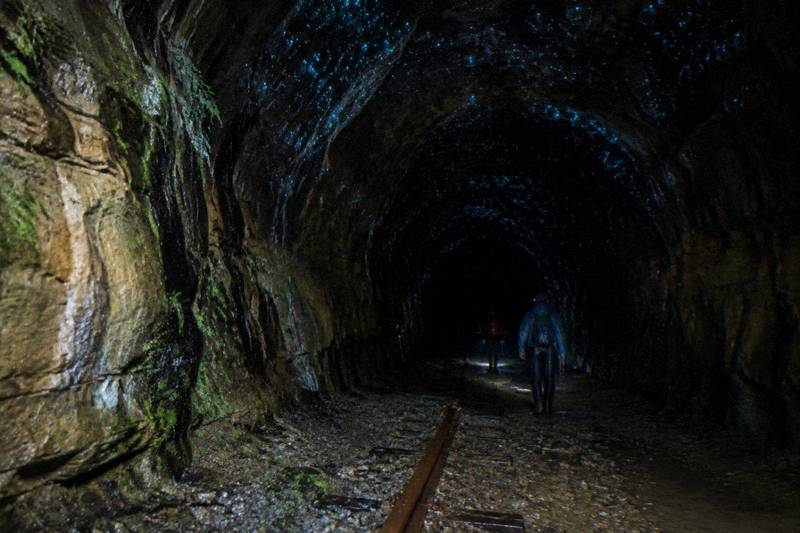
Newnes is one of the strangest places in the Greater Blue Mountains: a shale oil ghost town in Wolgan Valley whose coke ovens and beehive kilns still stand, and whose abandoned railway tunnel is now the Glow Worm Tunnel, a documented glow worm colony in New South Wales.
Short answer
The Newnes Industrial Ruins walk is a short, free walk in Wollemi National Park past the remains of a 1900s shale oil works: coke ovens, brick kilns, paraffin sheds, a 15 m Big Wall and beehive kilns. Access is by Wolgan Road, partly unsealed, with 4WD recommended in wet weather. The Old Newnes Hotel survives only as a ford crossing landmark, and the works' railway tunnel is now the Glow Worm Tunnel.
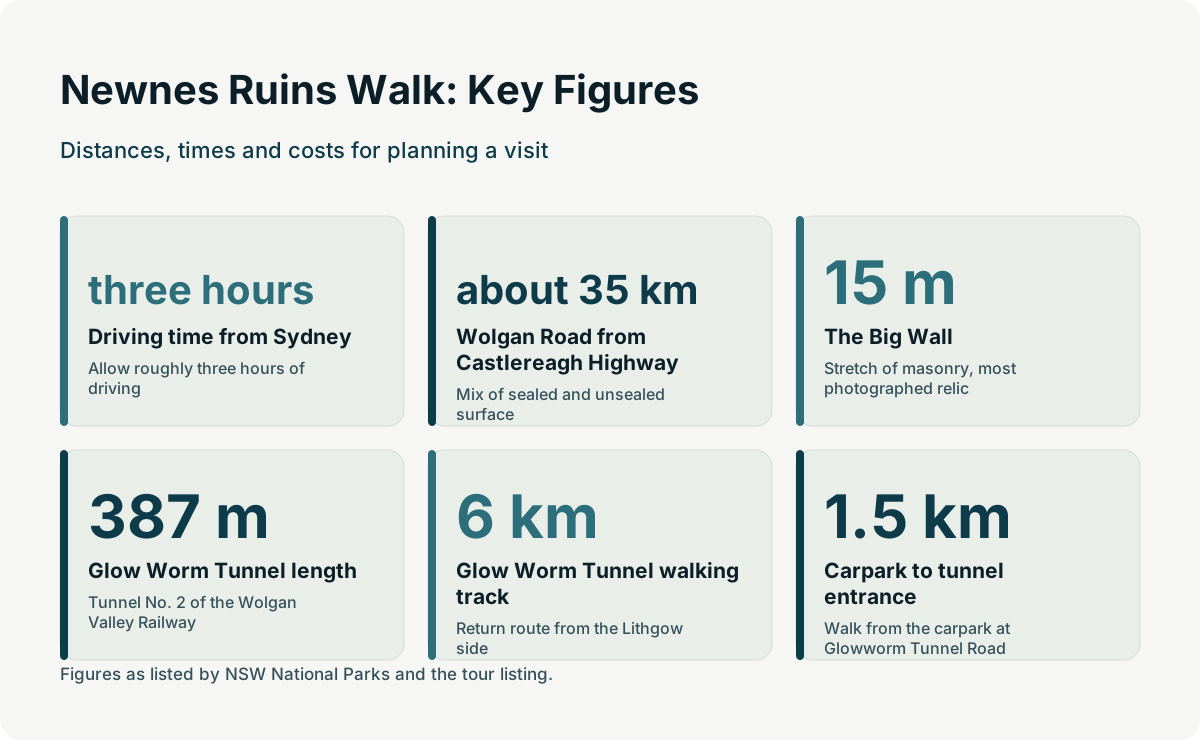
Newnes sits at the bottom of Wolgan Valley, a dead-end gorge hemmed in by sandstone walls about three hours' drive from Sydney beyond Lithgow. A hundred years ago it was a company town of thousands of workers and families, built around a shale oil works whose chimneys and kilns still stand in the paddocks today. NSW National Parks describes the Newnes Industrial Ruins walk as a gentle wander past the coke ovens, brick kilns, paraffin sheds and beehive kilns of that works, with a 15 m wall of crumbling masonry locals call the Big Wall. The same valley holds the works' old railway tunnel, and that tunnel is now the Glow Worm Tunnel. This guide covers the ruins, the road in, the Old Newnes Hotel and how it all connects to the glow worms, plus the one guided way to see them at night without driving yourself.
What Is The Newnes Industrial Ruins Walk?
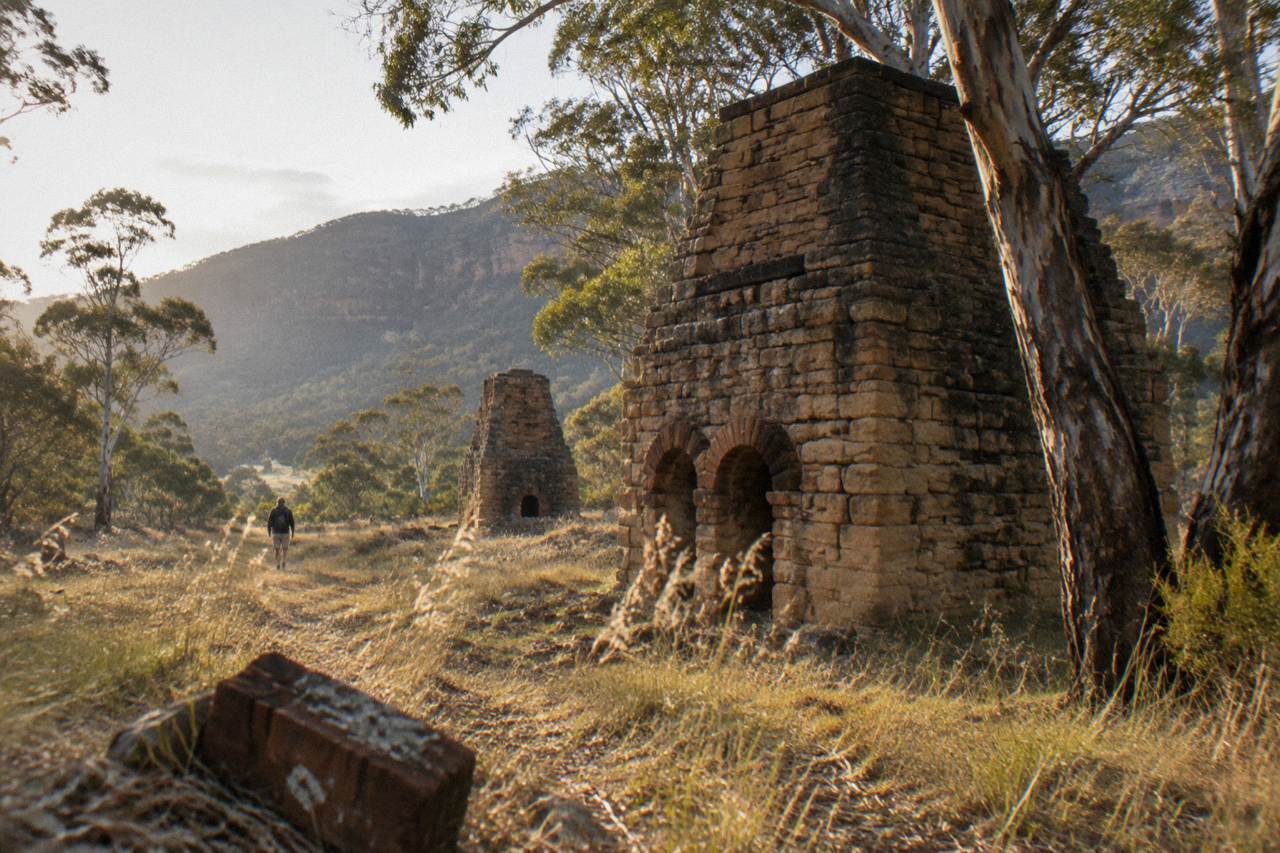
The Newnes Industrial Ruins walk is a short, free heritage walk in Wollemi National Park past the standing remains of the Newnes shale oil works, which operated in the Wolgan Valley in the early 1900s. NSW National Parks lists the visible relics as coke ovens, brick kilns, paraffin sheds, the 15 m Big Wall and beehive kilns, all within an easy walk of the Newnes campground and the Wolgan River. No entry or permit fee is listed.
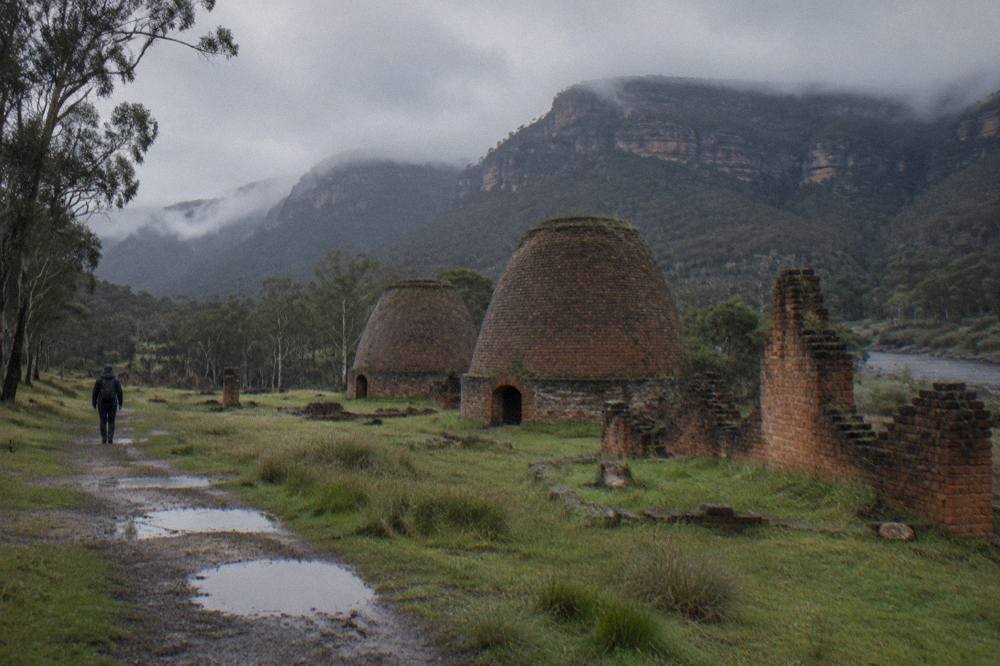
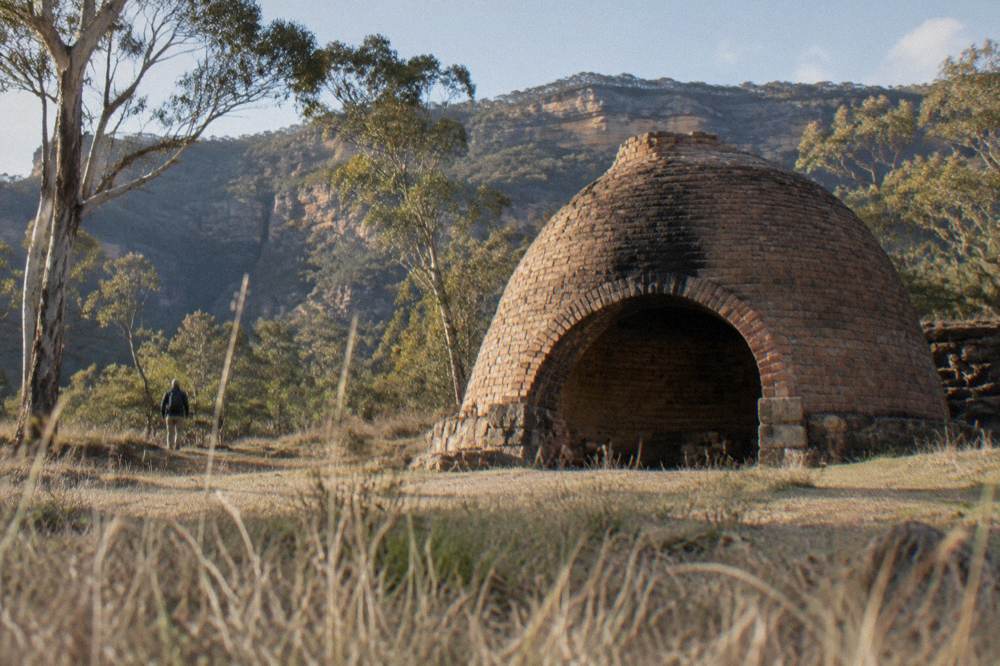
The ruins are what is left of one of Australia's more improbable industrial ventures. The Commonwealth Oil Corporation built a shale oil extraction and refining complex at Newnes because the valley held rich oil shale seams, and for a few years the works and its company town were home to a couple of thousand workers and their families. When the operation moved to a new site, the town emptied and the buildings were stripped or left to the weather. What survives is mostly the masonry: the beehive-shaped kilns that baked the shale, the coke ovens, and long walls that once held retorts and storage sheds.
The walk itself is not a bushwalk in the usual sense. It is closer to an open-air museum without the museum: interpretive signs point out the main structures, but you are free to wander among the walls and kilns, and much of the atmosphere comes from how abruptly the industry ends and the bush begins. NSW National Parks notes the site sits on the floor of the Wolgan Valley beside the river, so the walk is flat, short and suitable for most visitors, a contrast to the steep gorge country that fills the rest of Wollemi National Park. If you are planning a wider trip around the region, the Wollemi National Park guide covers the park's other corners, including the rainforest canyon where the Wollemi pine was discovered in 1994.
| Ruin | What it was | What you see today |
|---|---|---|
| Beehive kilns | Domed kilns that baked oil shale | The best preserved structures on site, brick domes still standing |
| Coke ovens | Ovens that converted shale by-products into coke | Rows of low brick chambers |
| Paraffin sheds | Storage for refined wax and oils | Crumbling walls and floor slabs |
| The Big Wall | A large retaining and process wall | A 15 m stretch of masonry, the site's most photographed relic |
| Brick kilns | Kilns firing bricks for the works | Partial walls and footings |
Where Is Newnes And How Do You Drive In?
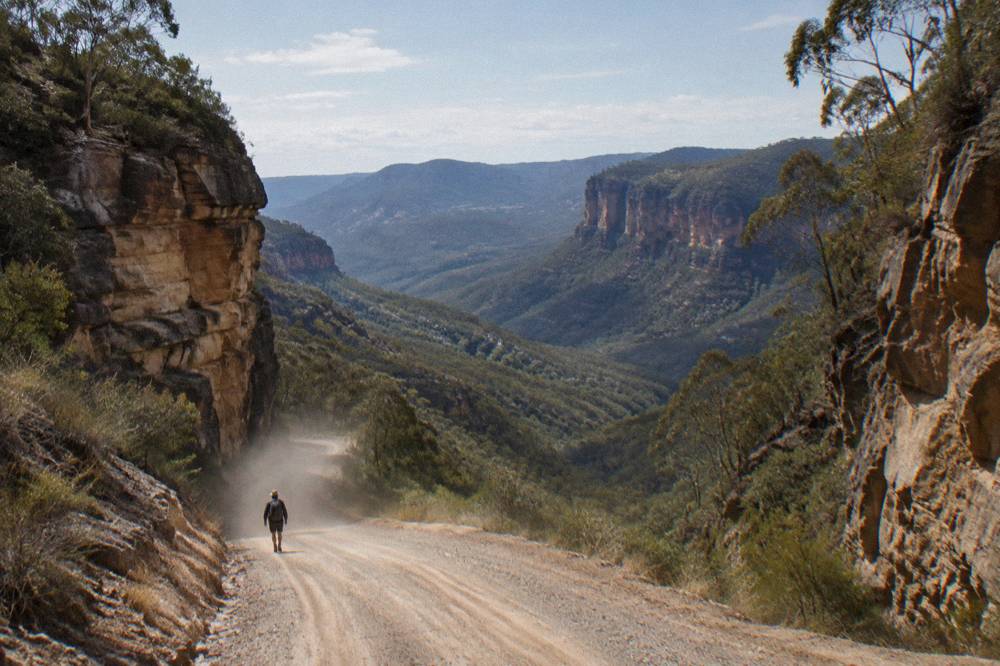
Newnes is reached by Wolgan Road, which turns off the Castlereagh Highway near Lithgow and runs about 35 km to the valley floor; the road is a mix of sealed and unsealed surface, and NSW National Parks recommends a 4WD, especially in wet weather. There is no public transport to Newnes or to the Glow Worm Tunnel carpark on the other side of the plateau. Allow roughly three hours of driving from Sydney.
The drive in is half the reason people make the trip. Wolgan Road drops into the valley along a winding alignment with cliff walls on both sides, and the last stretch runs beside the Wolgan River to the Newnes campground and the ruins. The surface is sealed for part of the way and unsealed gravel for the rest, and the condition of the gravel depends heavily on recent weather. In dry conditions a careful 2WD driver can complete the run, but after rain the unsealed sections deteriorate quickly, which is why the 4WD recommendation exists. River crossings and fords on the valley floor add another reason to check conditions rather than assume.
Two practical notes from the current park alerts are worth folding into your plans. First, a park fire ban applies across Wollemi National Park from 1 October 2026 to 31 March 2027, so campfires and solid fuel barbecues are out during the warmer months. Second, if you plan to combine Newnes with the Glow Worm Tunnel on the same trip, construction works at the Bungleboori precinct on the Newnes Plateau side are running until December 2026, and Glowworm Tunnel Road is reduced to a single lane at one intersection from 11 October 2026, with delays of up to five minutes. The Glow Worm Tunnel road and car park guide covers that side of the plateau in detail, and the official NSW National Parks visitor information for the ruins walk carries the live alerts.
If all of that sounds like a lot of logistics for one evening of glow worms, there is a simpler route: the one bookable night hike from Sydney, which picks you up from your hotel and handles the driving entirely.
The listing is the Glow Worm Cave Night Hike From Sydney, from $128 USD per person, rated 4.9 from 210 reviews. It runs about five hours in total, with staggered hotel pickups between about 7:50pm and 8:35pm and a return around 11pm to midnight, and it takes a maximum of nine travellers on a guided bush walk with red-light headlamps to a cave behind a waterfall where native glow worms live. Note that this hike goes to a cave in the Blue Mountains, not to the Newnes railway tunnel itself; the tunnel is a free self-guided walk, and the hike is the bookable, Sydney-pickup way to see glow worms in the dark. Cancellation is free up to 24 hours before, and the operator cancels for bad weather or if minimum numbers are not met, which matters because glow worms are wild and displays are never guaranteed.
What Can You See On The Ruins Walk?
The walk passes the beehive kilns, coke ovens, brick kilns, paraffin sheds and the 15 m Big Wall, all relics of the shale oil works, plus the Wolgan River flats and the entrance to the gorge that leads toward the old railway alignment. The ruins are unfenced and free to explore, and NSW National Parks describes the site as one of the most evocative industrial heritage landscapes in the Greater Blue Mountains World Heritage Area.
Walking among the kilns, the scale of the operation is the first thing that lands. The beehive kilns are not small brick ovens; they are walk-in domes, and there are enough of them, along with the oven rows and the Big Wall, to fill an hour or more of wandering. The paraffin shed walls and the scattered footings give a sense of how much built structure once stood here, and the interpretive signs fill in the story: the works struggled with transport costs, which is exactly why the railway and its tunnels were driven through the plateau in the first place. That transport problem is the thread that ties the whole valley together, from the ruins to the hotel to the glow worms.
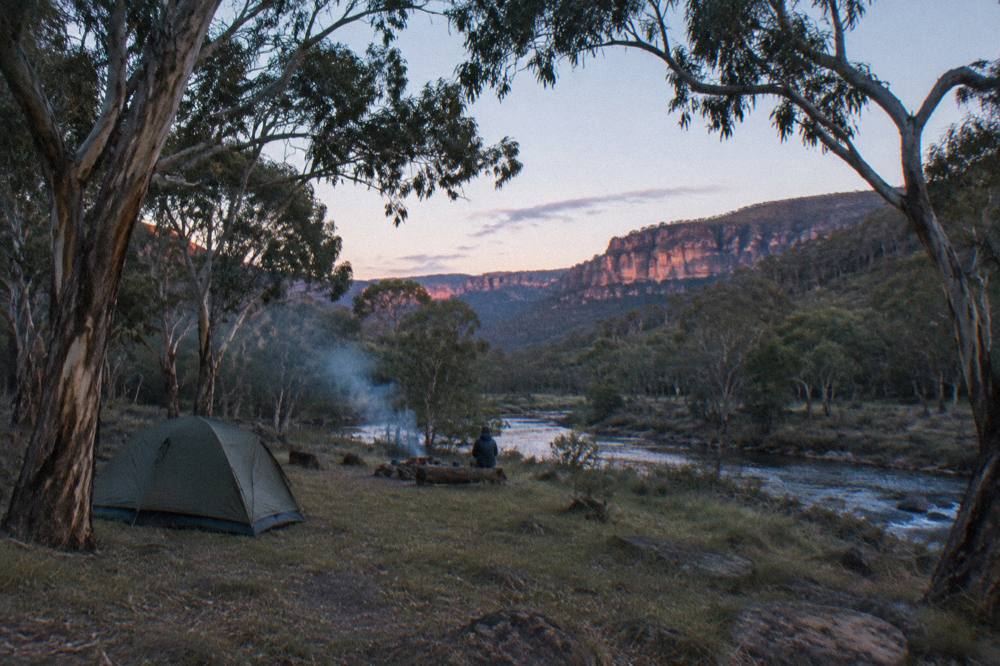
The second thing that lands is the silence. Newnes today is a campground, a few cabins and a lot of empty paddock, and the valley's dead-end geography means there is almost no through traffic. Very limited mobile reception is a recurring theme in this part of the park, and NSW National Parks advises carrying the Emergency Plus app for that reason. Give the ruins an hour, the river flats another, and you will still have time for the longer walk up the gorge if your legs are keen. For the practical side of that bigger day, the Glow Worm Tunnel walking track guide covers the 6 km return route from the plateau side, and the Newnes to Glow Worm Tunnel article breaks down the walking distances.
The Old Newnes Hotel: What Is It Today?
The Old Newnes Hotel appears in official park information only as an access landmark and a ford crossing point on the way to the ruins and the campground. No NPWS page makes any claim about it being open, and no hours, facilities or booking details are published for it. Treat it as a signpost and a river crossing on Wolgan Road, not as an attraction with a door you can knock on.
This is worth stating plainly because "newnes hotel" searches often turn up nostalgic photos of a timber pub standing alone in the valley, and it is easy to assume there is a functioning hotel, or at least a museum, at the end of the road. The verified picture is thinner. NSW National Parks mentions the Old Newnes Hotel only in passing, as a landmark near the ford crossing on the access route, and the operator pages and news coverage say nothing about current opening status. The original hotel served the mining town and outlasted it for decades as a lonely wayside pub before closing; what remains today is a private relic, and the honest advice is to confirm anything beyond the landmark role with local sources before you plan a visit around it. Other pages covering the same trip are gathered on Blue Mountains Glow Worms.
The ford is the practical takeaway. Wolgan Road crosses the Wolgan River near the hotel site, and river levels after rain decide whether the crossing is passable. That is one more reason the 4WD recommendation exists, and one more reason to check conditions rather than trust last week's travel blog. If your real goal is a place to sleep near the glow worms, the park's own Newnes campground, reached via Wolgan Valley Road, is the documented option on the valley floor, while Katoomba, about 1.5 to 2 hours from Sydney by road, holds most of the region's hotels and is the pickup zone for the guided night hike. The Blue Mountains day trip from Sydney guide maps out where to base yourself.
Newnes And The Glow Worm Tunnel: The Railway Connection
The Glow Worm Tunnel was built in the early 1900s as Tunnel No. 2 of the Wolgan Valley Railway, the line constructed to haul shale oil out of the Newnes works across the Newnes Plateau. The 387 m tunnel is dark enough for its glow worm colony to be visible during the day, and NSW National Parks lists no entry fee for the walking track that reaches it. The ruins and the tunnel are two ends of one industrial story.
The works needed a way to move refined product to the main rail network at Clarence, and the answer was a railway clawed through the plateau, including two tunnels. When the works closed, the line was abandoned, and the tunnels were left to the dark and the damp. That turned out to be perfect glow worm habitat: NSW National Parks explains that the species here, Arachnocampa richardsae, the larva of a fungus gnat, needs sheltered, humid, still air with darkness and running water nearby, and an abandoned railway tunnel in a rainforest gully supplies all of it. The tunnel was likely colonised by adults from nearby gullies, and its stable conditions gave the colony a permanent home. The NPWS story describes "hundreds of blue-green tail lights" along its walls.
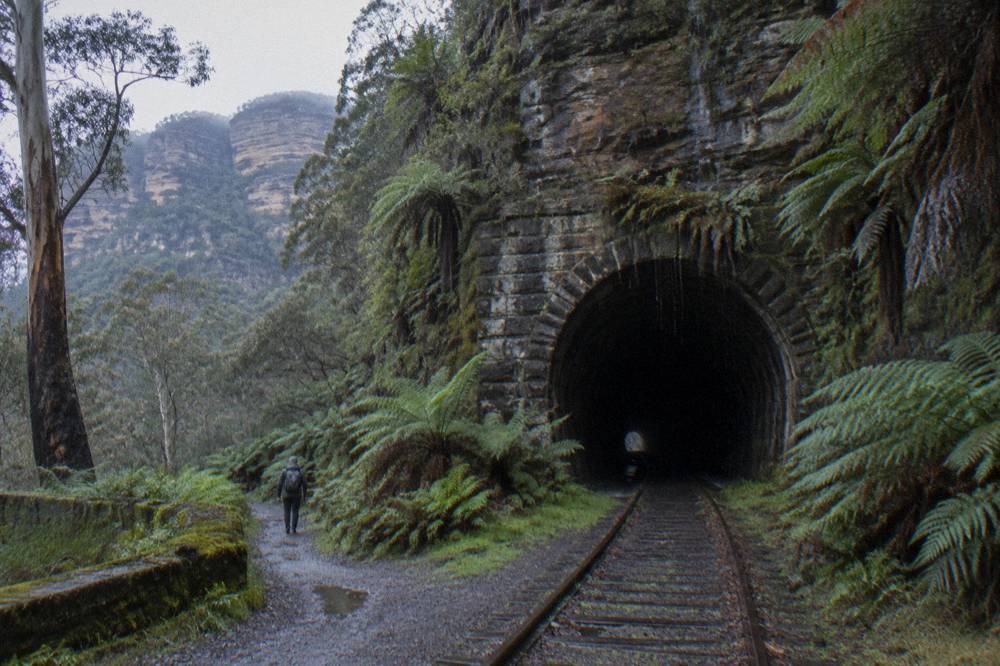
The key fact for planning is that you can walk to the tunnel from either side of the plateau, and the Newnes side is the longer, wilder option. From the Lithgow side, the standard route is the 6 km return Glow Worm Tunnel walking track, starting at the carpark at the end of Glowworm Tunnel Road, with a 1.5 km walk from the carpark to the tunnel entrance. The park lists it as Grade 3, with over 80 steps without handrails and a pinch point half a metre wide, so it is not a pram or wheelchair walk. There is no fee listed on any of the track or alerts pages, and the official NSW National Parks track page is the place to check the current status line, which reads "Open, check current alerts".
If you would rather see glow worms after dark with someone else doing the driving and the light discipline, the guided night hike is the one bookable option that runs from Sydney. You can Check availability on the live listing; it goes to a cave behind a waterfall, not to the Newnes tunnel, and the operator keeps the location unpublished.
What To Know Before You Visit Newnes
Plan for a self-sufficient day: no drinking water is provided at the tunnel end of the plateau, mobile reception is very limited across Wollemi National Park, and the park fire ban from 1 October 2026 to 31 March 2027 rules out campfires in the warmer months. The ruins walk itself is free and flat, but the drive in is long, partly unsealed and weather-dependent. Check the NPWS alerts page the day before you travel.
The pattern that catches visitors out is assuming Newnes works like a normal tourist site. It does not. There is no kiosk, no reliable phone signal, no fuel after Lithgow, and the road in can close your plans with a single storm. The ruins and the campground sit on the valley floor, the tunnel carpark sits on the plateau, and the two are connected by a long drive around either Clarence or the Wolgan Valley side, not by a short walk. People who try to do the ruins, the tunnel and the beehive kilns in one rushed afternoon usually end up seeing less than people who pick one side and do it properly.
| Question | Newnes ruins side (Wolgan Valley) | Glow Worm Tunnel side (plateau) |
|---|---|---|
| Main access road | Wolgan Road, off the Castlereagh Highway | Glowworm Tunnel Road, via Clarence or State Mine Gully Road |
| Road surface | Mixed sealed and unsealed | Unsealed gravel |
| Vehicle advice | 4WD recommended, especially when wet | 2WD possible in dry weather, 4WD only when wet |
| Walk to the main sight | Short flat walk among the ruins | 6 km return, Grade 3, 80+ steps |
| Entry fee | None listed | None listed |
| Facilities | Campground at Newnes | Two non-flush toilets, no drinking water |
For glow worm etiquette, the park's guidance is consistent on both sides of the plateau: stay on the path, keep noise to a minimum, let your eyes adjust when you turn off your torch, and shine any torch at the ground or use a red-light mode, because glow worms can control their lights and will turn them off if disturbed, and a torch pointed straight at them can damage their bioluminescence. Look but do not touch. The guided hike supplies headlamps with a red-light mode for exactly this reason, which is one of the quiet advantages of going with an instructor rather than fumbling with a phone light. The what to bring guide has the full packing list.
Should You Visit Newnes Self-Guided Or With A Tour?
Self-guided is the only way to see the Newnes ruins themselves: the walk is free, and no tour listed on this site visits the ruins. For glow worms, the choice is between the free self-guided tunnel walk, a direct operator tunnel tour departing from Katoomba or Clarence, and the Sydney-pickup night hike to a waterfall cave. Your decision hinges on whether you have a suitable vehicle and whether you want to drive at night.
The self-guided route rewards preparation. You need a vehicle you are confident on gravel with, a full tank from Lithgow, water, and a plan for the alerts. In exchange you get the ruins at your own pace, the tunnel in daylight, and the freedom to linger. The trade-off is that the tunnel's daytime darkness is also its crowd window: NSW National Parks says it is best to visit during the week or in spring or autumn, because summer weekends and holiday periods bring crowds and limited parking. Glow worms are present year round, and operators and travel press say displays are often stronger in warm, wet months and after rain, though that is operator and press opinion rather than official data.
| Season | Katoomba mean minimum temperature | What it means for a Newnes trip |
|---|---|---|
| Summer (Dec to Feb) | About 12.9 to 13.0 C | Warmest nights, but the busiest period at the tunnel and the fire ban months |
| Autumn (Mar to May) | About 6.1 to 11.6 C | One of the two seasons NSW National Parks recommends, with thinner crowds |
| Winter (Jun to Aug) | About 2.6 to 3.7 C | Cold nights, quiet tracks, viable glow worm viewing year round |
| Spring (Sep to Nov) | About 5.5 to 9.9 C | The other recommended season, mild days and manageable parking |
The guided options each solve a different problem. Beyond The Blacktop, a licensed NPWS Parks Eco Pass operator, runs guided tunnel tours departing from Katoomba Station or the Zig Zag Railway at Clarence, about five hours, with its own page listing an adult guided tour at $210 (child $159, senior $189) and $275 adult with Dry Canyon, currency not stated on the page, and no Sydney hotel pickup. Wolgan Valley Eco Tours, which once ran tunnel hikes from the valley, shows no availability on its booking listings. And the night hike from Sydney, from $128 USD per person, is the only option that collects you from your accommodation and returns you the same night, which is why it dominates for visitors without a car. The self-drive versus guided comparison works through the full decision.
One last planning note for the evening itself: the night hike's pickup window runs about 7:50pm to 8:35pm from Sydney hotels, staggered because there is no fixed meeting point, so have your confirmation handy and be ready early. The listing is flagged "often sells out", so if a particular date matters, book it before you lock in the rest of the itinerary. And because the operator cancels for bad weather, keep a flexibly refundable backup plan for the evening; the night versus day glow worm tours guide explains why the timing choice matters more than most people expect.
Common Questions About Newnes Hotel And The Ruins
Is the Old Newnes Hotel open?
No official source makes any claim about it being open. NSW National Parks mentions the Old Newnes Hotel only as an access landmark and a ford crossing point on Wolgan Road, with no hours, facilities or booking details published. Treat it as scenery on the way in, and confirm anything else with local sources before planning around it.
How do I get to the Newnes Industrial Ruins?
Drive Wolgan Road from the Castlereagh Highway near Lithgow, about 35 km into Wolgan Valley. The road is a mix of sealed and unsealed surface, and NSW National Parks recommends a 4WD, especially in wet weather. There is no public transport to Newnes.
Is there a fee for the Newnes ruins or the Glow Worm Tunnel?
No entry, parking or permit fee is listed on the NSW National Parks pages for the ruins walk or the Glow Worm Tunnel track. The NPWS story calls the tunnel a year-round spectacle that is free.
Can you walk from Newnes to the Glow Worm Tunnel?
Yes, the old railway alignment connects the two, and the Glow Worm Tunnel to Newnes section is a recognised walking route. However, NSW National Parks warns that this section may close during or after heavy rain because of rockfall and flood risk, so check alerts before attempting it.
Is the Glow Worm Tunnel the same as the tunnel on the night hike from Sydney?
No. The bookable night hike goes to a cave behind a waterfall at an unpublished Blue Mountains location, not to the Newnes railway tunnel. The tunnel is a free self-guided walk; the hike is the Sydney-pickup option for seeing glow worms after dark.
When is the best time to visit Newnes?
Glow worms are present year round. NSW National Parks suggests visiting during the week or in spring or autumn to avoid crowds and limited parking at the tunnel. Operators and travel press say displays are often stronger in warm, wet months and after rain, but that is opinion, not official data.