Is The Glowworm Tunnel Closed?
The current NPWS status of the Glow Worm Tunnel near Lithgow, the 2026 alerts that affect access, rain closures, and how to re-check before you drive out.
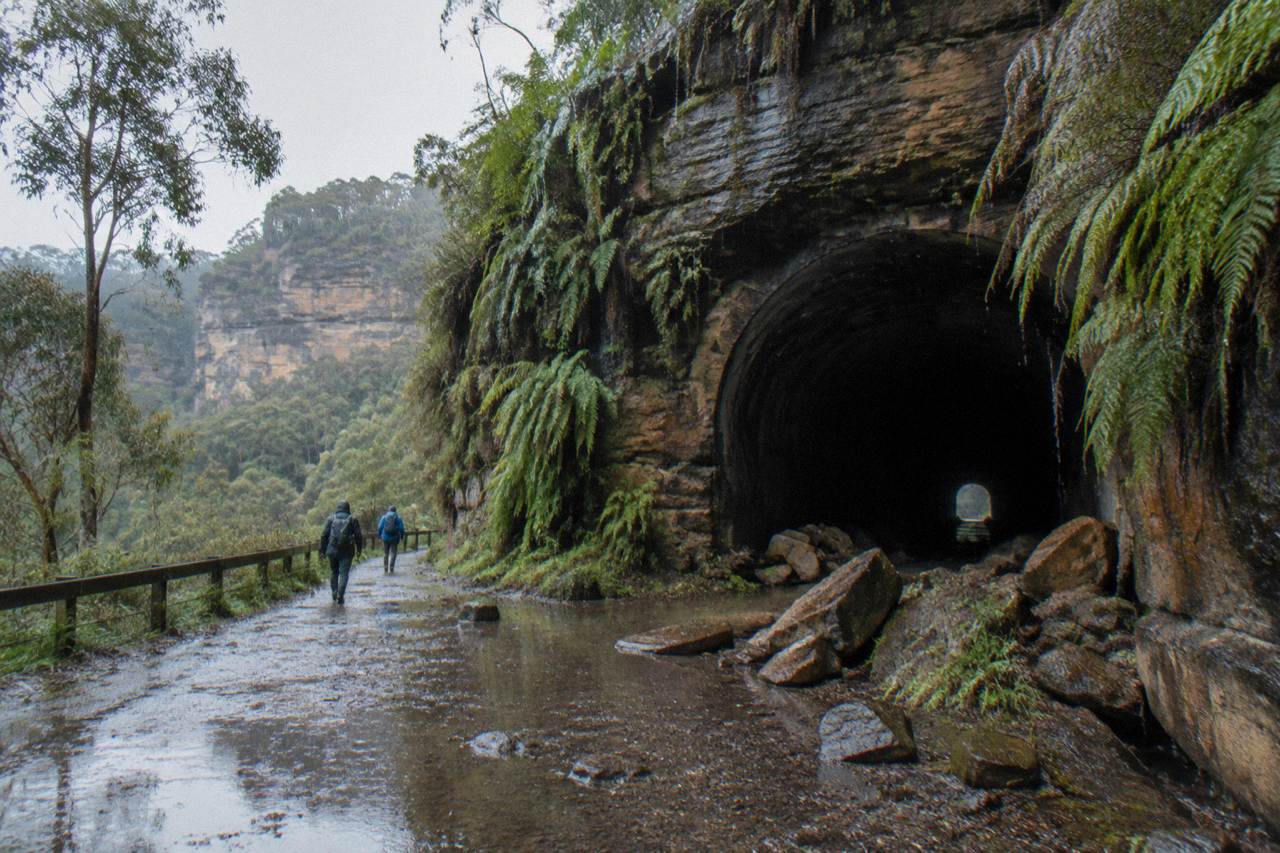
Is The Glowworm Tunnel Closed?
No, the Glow Worm Tunnel walking track in Wollemi National Park is not closed. NSW National Parks lists its status as "Open, check current alerts", and no current alert closes the track, the tunnel or Glowworm Tunnel Road itself. Three nearby alerts are active: a park fire ban running to 31 March 2027, construction at the Bungleboori precinct until December 2026, and a single-lane section on Glowworm Tunnel Road from 11 October 2026. Once you've confirmed the track is open, our honest review of Wollemi National Park covers what else the park offers, from the Newnes ruins to the road conditions.
That one-line status, "Open, check current alerts", is the official answer, and it is worth unpacking what it actually means for a visitor. The track is not gated, staffed or ticketed. There is no ranger at the carpark turning people away, and no booking system for the tunnel itself. The status line simply reflects how NSW National Parks manages every walking track in the state: the default is open, and closures are published as alerts when fire danger, weather damage, road works or safety works make a section unsafe.
So the honest reading is this. On any given day the tunnel is almost certainly walkable, but the conditions around getting there, a long unsealed road, a fire ban season, and a construction zone on the approach, are what actually decide whether your trip works. This article runs through the current alerts, the rain rule, and the fastest ways to re-check the status before you leave Sydney. For the wider picture of the route itself, the Glow Worm Tunnel walking track guide covers the 6 km return walk, the 387 m tunnel and what the track is actually like underfoot.
The tunnel is a 2.5 hour drive from Sydney per NSW National Parks, and the last stretch is unsealed gravel that ranges from "fine in a 2WD in dry weather" to "4WD only" after rain. That means a status check is not a formality. It is the difference between a straightforward day trip and a long drive to a closed single-lane road with nowhere to turn a hire car around comfortably.
What The Current NPWS Alerts Say
Three active alerts touch the Glow Worm Tunnel area right now. The first is a park fire ban across Wollemi National Park from 1 October 2026 to 31 March 2027, which bans campfires and solid-fuel stoves. The second is construction at the Bungleboori precinct until December 2026, with that site closed to visitors. The third is a single-lane traffic arrangement on Glowworm Tunnel Road from 11 October 2026, with delays of up to 5 minutes.
The fire ban is the broadest of the three. It applies across Wollemi National Park for the whole warmer half of the year, and it means no campfires and no solid-fuel barbecues anywhere in the park, including at the Newnes campground that some visitors pair with a tunnel visit. Gas and electric cookers are still permitted under conditions. If your plan involved an evening fire near Newnes after walking the tunnel, that plan needs to change until the ban lifts at the end of March 2027.
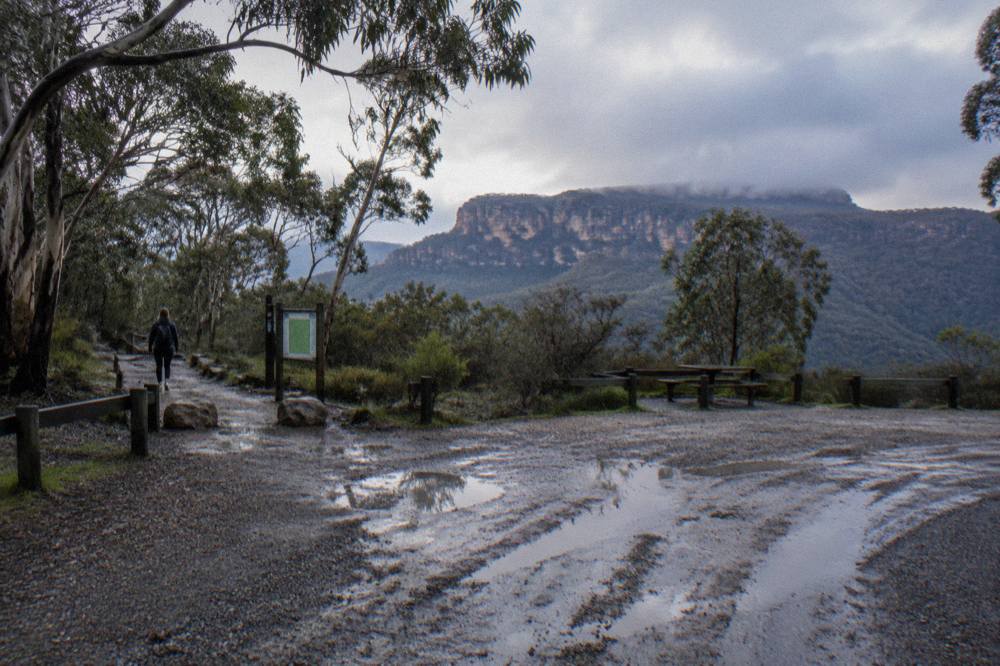
The Bungleboori works are the easiest to misread. The Bungleboori precinct itself, in the neighbouring Gardens of Stone State Conservation Area, is closed to visitors until December 2026. That is a separate site from the tunnel, but drivers approaching along Glowworm Tunnel Road pass through the affected area, and the alerts page asks visitors to drive with caution and follow traffic controls. The single-lane arrangement sits at the intersection with Lost City North and Maiyingu Marragu, and the posted expectation is a delay of up to 5 minutes. That is a nuisance, not a closure.
Here is the alert picture in one place:
| Alert | What it covers | Effect on a tunnel visit |
|---|---|---|
| Park fire ban, Wollemi National Park | 1 Oct 2026 to 31 Mar 2027, whole park | No campfires or solid-fuel stoves; gas and electric cookers allowed under conditions |
| Bungleboori precinct construction | Until December 2026, Gardens of Stone SCA | The Bungleboori site is closed; drive with caution and follow traffic controls on the approach |
| Single-lane traffic, Glowworm Tunnel Road | From 11 Oct 2026, at the Lost City North and Maiyingu Marragu intersection | Delays up to 5 minutes; the road stays open |
| Track status | Glow Worm Tunnel walking track | Listed "Open, check current alerts"; no closure in the current alerts |
The alerts are published on the NSW National Parks alerts pages, and the authority link for the live version is the official Glow Worm Tunnel walking track page, which carries the status line and links through to every current alert. The Bungleboori and single-lane items were last reviewed in late September, and the parks service re-reviews these weekly, which is exactly why the status line says "check current alerts" rather than promising a fixed condition.
Why Heavy Rain Can Close Sections Anyway
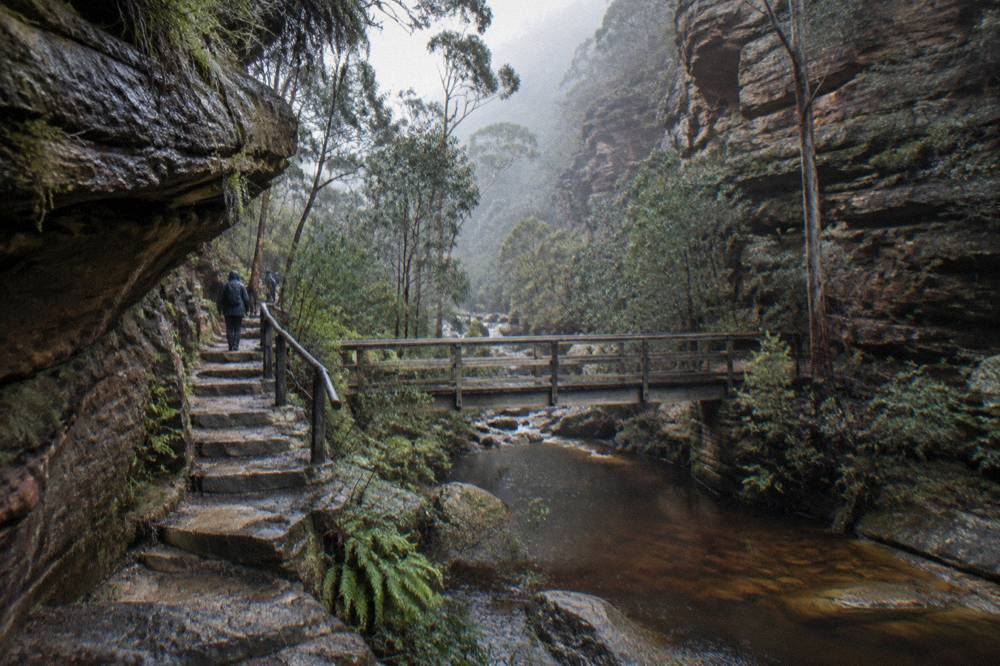
Even with the track listed as open, the section from the tunnel through Penrose Gorge toward Newnes can close during or after heavy rain because of rockfall and flood risk. The parks service flags this specific section on the track's visitor information. The 1.5 km walk from the carpark to the tunnel entrance is the part most visitors do, and it is not named in the rain closure note, but the terrain is steep, stepped and often wet underfoot.
The geology explains the rule. The route down to the tunnel crosses a bridge and climbs narrow winding timber steps, more than 80 steps in total, none with handrails along the steepest stretch. There is also a pinch point about half a metre wide after the bridge, and a barrier with a one-metre gap at the trailhead. Sandstone country sheds material after sustained rain, and the gorge section funnels floodwater. A closure here is usually precautionary and temporary, lifted once an inspector has walked the line, but the parks service does not publish a reopening schedule in advance.
Rain matters for the drive in as much as the walk. Glowworm Tunnel Road is unsealed gravel for its final stretch, and the parks service's own guidance is that a 2WD is possible in dry weather, a 4WD is highly recommended generally, and access is by 4WD only when the road is wet. A day of rain can therefore close your trip practically, by making the approach road unsuitable for your car, even while the official track status still reads open. The practical check for drivers is covered in detail in can you drive to the Glow Worm Tunnel, including the two routes in from Lithgow and what the 60 m single-lane road tunnel just before the carpark does to your planning.
For anyone weighing the self-drive against a guided night out, this weather sensitivity is the real dividing line. The bookable alternative on this site, the Glow Worm Cave Night Hike From Sydney, is a different experience in a different place: a guided bush walk after dark to a glow worm cave behind a waterfall, with hotel pickup from Sydney, headlamps with a red-light mode, and a certified outdoor instructor. It runs from $128 USD per person, about 5 hours end to end, and the operator cancels for bad weather too. Neither option defeats a storm, but one of them removes the unsealed-road decision entirely, and you can Check availability alongside the night hike from Sydney guide if the forecast looks mixed.
How To Check The Status Before You Go
The fastest reliable check is the official Glow Worm Tunnel walking track page, which carries the live status line and links every current alert. The second check is the weather radar for the Lithgow and Newnes Plateau area, because rain drives both the road condition and the rockfall closures. The third is a phone call: the Blue Mountains Heritage Centre at Blackheath is open 9am to 4pm daily except Christmas Day on 02 4787 8877. Once you've confirmed the track is open, the full town-side guide to the Glow Worm Tunnel trip covers where to eat, park, and stay around Lithgow before you head out.
Do those three in order and you will rarely be caught out. The track page takes thirty seconds and is the source every other article paraphrases, so read it directly rather than trusting a summary, including this one, over the live listing. The radar matters because the alerts lag reality: a closure after a storm appears on the page once someone has inspected the track, which can be a day or more after the rain has stopped. If the forecast shows a heavy band crossing the plateau the day before your visit, treat that as a warning even while the status still reads open.
Mobile reception at the carpark is very limited, and the parks service recommends the Emergency Plus app for anyone walking the track, which is worth downloading before you leave Sydney rather than in the carpark where the signal lives or dies by the ridge line. Reception in Lithgow itself is normal, so a last check over lunch in town is realistic. A few habits make the whole exercise easier:
- Check the track page the evening before and again on the morning of the visit, since alerts are often reviewed overnight.
- If rain has fallen in the previous 48 hours, assume the wet-road rules apply to Glowworm Tunnel Road regardless of what a 2WD did last month.
- Read the alert text, not just the headline, because the Bungleboori closure and the single-lane arrangement sit in the detail.
- Call the Heritage Centre if anything reads ambiguously; the office covers this track and can speak to the day's conditions.
The same discipline applies to timing. NSW National Parks suggests visiting during the week or in spring or autumn, because summer weekends and holiday periods bring crowds and limited parking at the carpark, and a full carpark at the end of a gravel road is its own kind of closure. Building one spare day into a Blue Mountains trip means a rain closure costs you a shuffle, not the whole visit.
What A Closure Actually Changes For Visitors
A closure of the tunnel track, when it happens, removes the free self-guided walk and nothing else. The glow worms themselves do not migrate; they are a permanent colony of Arachnocampa richardsae larvae living on the tunnel walls, present year round because the 387 m tunnel stays dark enough for viewing even at midday. A closure is a safety call about rockfall, flood or fire danger, not a sign that the colony has gone.
That distinction matters for planning. People sometimes read "closed" and picture the attraction being lost, when the realistic risk is a postponed date. The colony is anchored to the tunnel's stable, humid, pitch-dark interior, which is exactly the habitat the species needs: sheltered, still air, darkness and running water nearby. The larvae spend 6 to 9 months in their glowing stage before pupating and emerging as fungus gnats that live only about 3 days, so the population turns over constantly and independently of visitor access.
The other thing a closure changes is the shape of your day. If the track is shut and you have already driven the 2.5 hours from Sydney, the surrounding area still has plenty: the Newnes industrial ruins walk with its coke ovens, brick kilns and 15 m Big Wall, the pagoda formations, and the lookouts over the Wolgan Valley. None of those glow, but they fill a day that the tunnel cannot. The practical write-up of the area is in the Wollemi National Park guide, and the ruins themselves get their own treatment in the Newnes Hotel and ruins article.
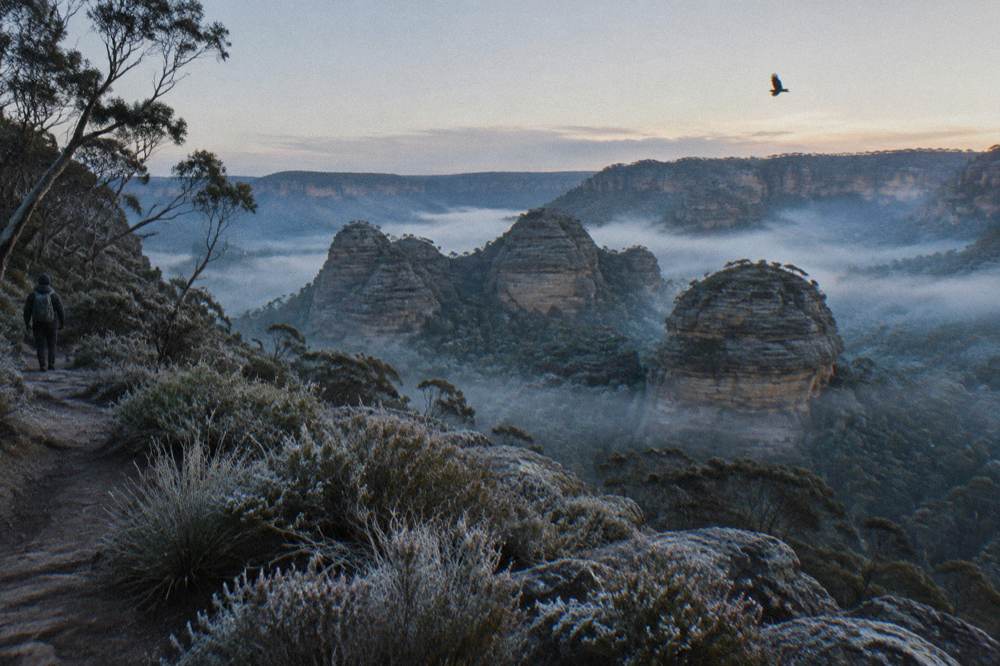
There is also a seasonal nuance worth knowing when you re-book. Operators and travel press add, as opinion rather than official data, that displays often look stronger in warm, wet months and after rain, while the parks service itself only commits to the week-versus-weekend and spring-or-autumn advice. The month-by-month ribbon on the homepage of Blue Mountains Glow Worms pulls that picture together, and the fuller treatment lives in the best time to see glow worms.
For travellers who would rather not build a trip around a status page at all, the guided night hike is the simpler structure: one booking, one pickup window between about 7:50pm and 8:35pm from your Sydney accommodation, and an operator who makes the weather call for you and cancels with notice if conditions are wrong. Free cancellation applies up to 24 hours before, so a shaky forecast does not lock you in.
The Short Version Before You Drive
Check the track page, check the radar, and go expecting the tunnel to be open. The 2026 alerts change the drive, not the destination: a fire ban to March 2027, Bungleboori works to December 2026, and a five-minute single-lane delay on the approach road. Only sustained heavy rain realistically closes the walk, and even then the closure is usually temporary and section-specific.
That is the whole checklist in three lines. The status line exists precisely because conditions in sandstone country move faster than any article can, and the parks service refreshes its alerts weekly. Anyone planning the trip around school holidays or a summer weekend should add the parking constraint to the calculus, since a full carpark 1.5 km from the tunnel turns an open track into a long walk before the walk.
Common Questions About The Glowworm Tunnel
Is The Glowworm Tunnel Closed?
No. The walking track is listed as "Open, check current alerts" by NSW National Parks. Active alerts include a park fire ban to 31 March 2027, Bungleboori construction until December 2026, and a single-lane stretch on Glowworm Tunnel Road from 11 October 2026, but none of these close the tunnel itself.
Can rain close the Glow Worm Tunnel track?
Yes. The section from the tunnel through Penrose Gorge toward Newnes can close during or after heavy rain because of rockfall and flood risk. The 1.5 km walk from the carpark to the tunnel entrance is the part most visitors do. After rain, Glowworm Tunnel Road is 4WD only per the parks service.
Is there an entry fee or opening hours for the tunnel?
No fee is listed on any of the NSW National Parks pages for the track, the carpark or the tunnel, and no opening hours are published. The track is walkable in daylight, and the tunnel is dark enough inside to see glow worms during the day.
How do I check the current status on the day?
Read the official Glow Worm Tunnel walking track page for the live status and alerts, check the weather radar for the Newnes Plateau, and if anything is unclear call the Blue Mountains Heritage Centre in Blackheath on 02 4787 8877, open 9am to 4pm daily except Christmas Day.
Does a closure mean the glow worms are gone?
No. The colony of Arachnocampa richardsae lives permanently on the tunnel walls year round. Closures are safety decisions about rockfall, flooding or fire danger, not signs that the glow worms have disappeared.