Is Wollemi National Park Worth Visiting?
An honest verdict on Wollemi National Park: the Glow Worm Tunnel walk, the Newnes shale oil ruins, the Wollemi pine, road access, current alerts and fire bans, and who the park really suits.
Is Wollemi National Park Worth Visiting?
Yes, for a specific kind of visitor. Wollemi rewards people who want dark tunnels, industrial ruins and quiet sandstone country more than cafes and lookouts, and it asks for a working car and some planning in return. There is no entry fee listed for its headline walk, the Glow Worm Tunnel track, and the tunnel glows year round. If your trip is really about glow worms with minimal logistics, the guided cave hike from Sydney covers that.
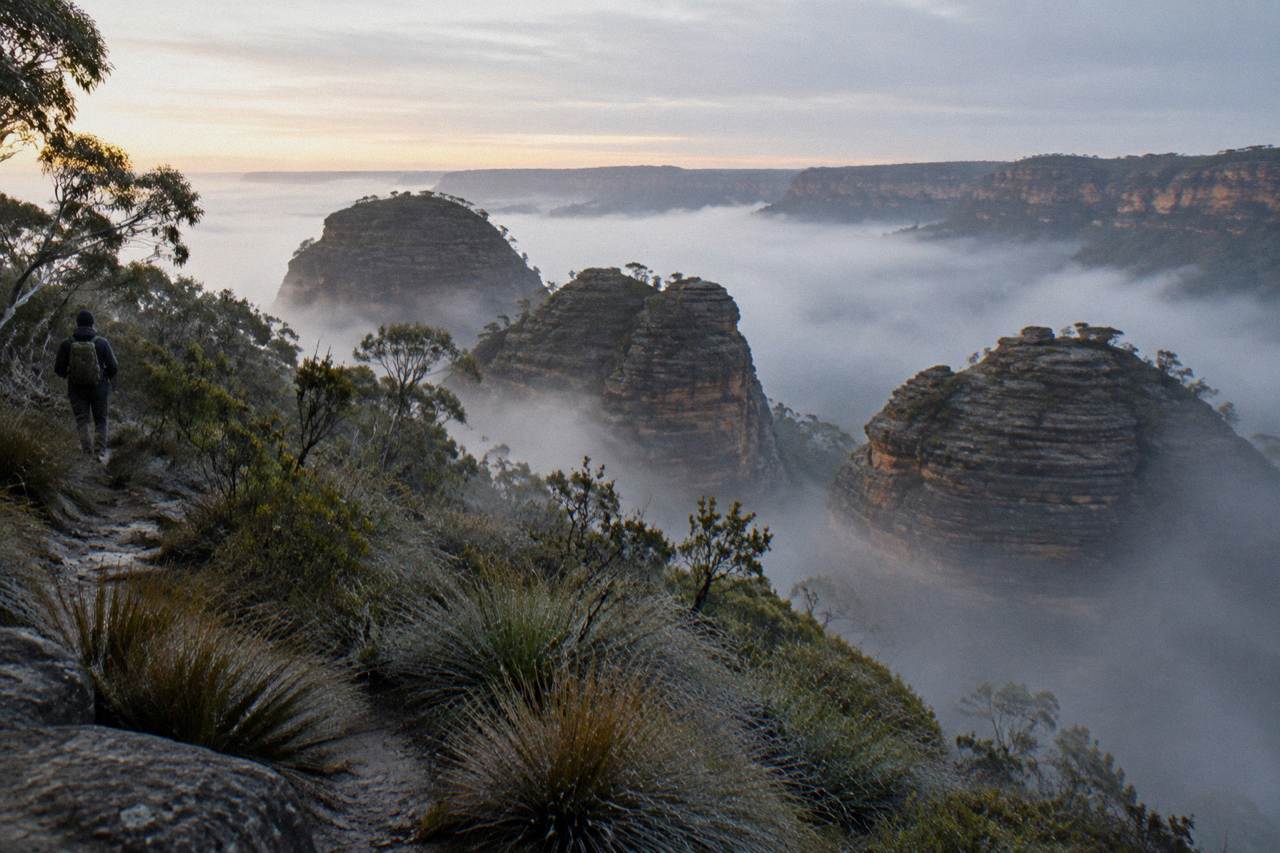
The honest framing first. Wollemi National Park sits west of the Blue Mountains around Lithgow, and it is not Katoomba. There are no Scenic World rides, no strip of dessert cafes, no rail station at the door of the main attraction. What it has is a 387 m abandoned railway tunnel where the walls light up with native glow worms, a gorge walk to a lookout over Donkey Mountain, the crumbling remains of the Newnes shale oil works, and a conservation story that made global headlines when a tree thought extinct turned up alive in a remote rainforest canyon. If that tunnel has you curious about other free glow worm spots, our guide to free glow worm viewing around the Blue Mountains covers what the Wollemi walk really costs to reach.
NSW National Parks describes the Glow Worm Tunnel walking track as "just a 2.5hr drive from Sydney", which is true in good conditions and understates the last stretch: the final kilometres run on unsealed gravel that turns into a 4WD-only proposition after rain. The park suits travellers with a vehicle, a torch with a red-light mode, and a tolerance for limited mobile reception. It suits families less well on the far side of the track, and it does not suit anyone expecting signage and facilities on the scale of the more famous Blue Mountains walks.
For glow worm seekers, Wollemi is the real thing. The species here, Arachnocampa richardsae, is the larva of a fungus gnat, and the tunnel's stable, dark, humid conditions gave it a permanent colony, one the Blue Mountains Glow Worms site covers in depth in its Glow Worm Tunnel Newnes guide. The park's other drawcards, the ruins and the pagoda country, are covered below, along with the current alerts that shape any visit this season.
What Can You Actually See And Do In Wollemi?
Three things carry a Wollemi trip: the Glow Worm Tunnel walk, a 6 km return Grade 3 track that reaches a 387 m tunnel glowing with native larvae; the Newnes Industrial Ruins walk among coke ovens, brick kilns and a 15 m shale wall; and the pagoda sandstone country around the tunnel road. Glow worms are visible year round, and the tunnel is dark enough to see them during the day.
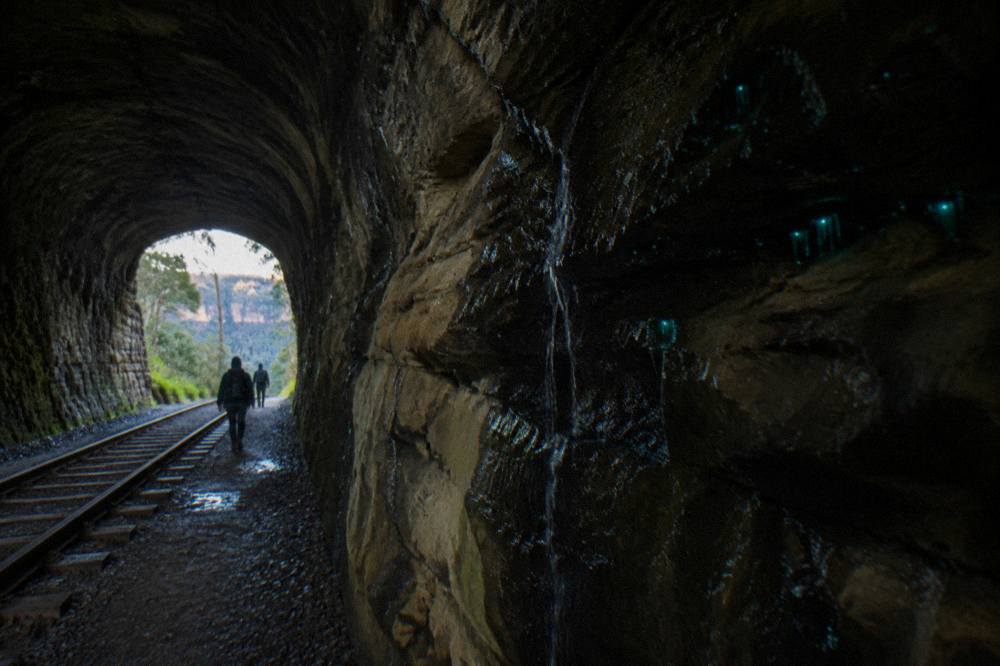
The Glow Worm Tunnel track starts at the carpark at the end of Glowworm Tunnel Road and runs 1.5 km to the tunnel entrance. NSW National Parks grades it Grade 3 with short steep hills, suggests two to three hours for the return trip, and recommends some bushwalking experience. The tunnel was built in the early 1900s for the Newnes mining railway, and because it is long, the interior stays dark enough in daylight for the glow worms to switch on. The track continues another 1.5 km through Penrose Gorge to a lookout over Donkey Mountain and the Wolgan Valley, though NSW National Parks notes the section beyond the lookout is not suitable for children.
The walk has real obstacles worth knowing about before you commit: over 80 steps without handrails, including about 30 stone steps down to a bridge and about 30 narrow winding timber steps back up, a pinch point roughly half a metre wide after the bridge, and an uneven, sometimes wet tunnel floor. There is no wheelchair or pram access, no drinking water, and very limited mobile reception. The park service advises downloading the Emergency Plus app before you go. The payoff is a tunnel wall studded with what the NPWS story calls "hundreds of blue-green tail lights", visible any month of the year.
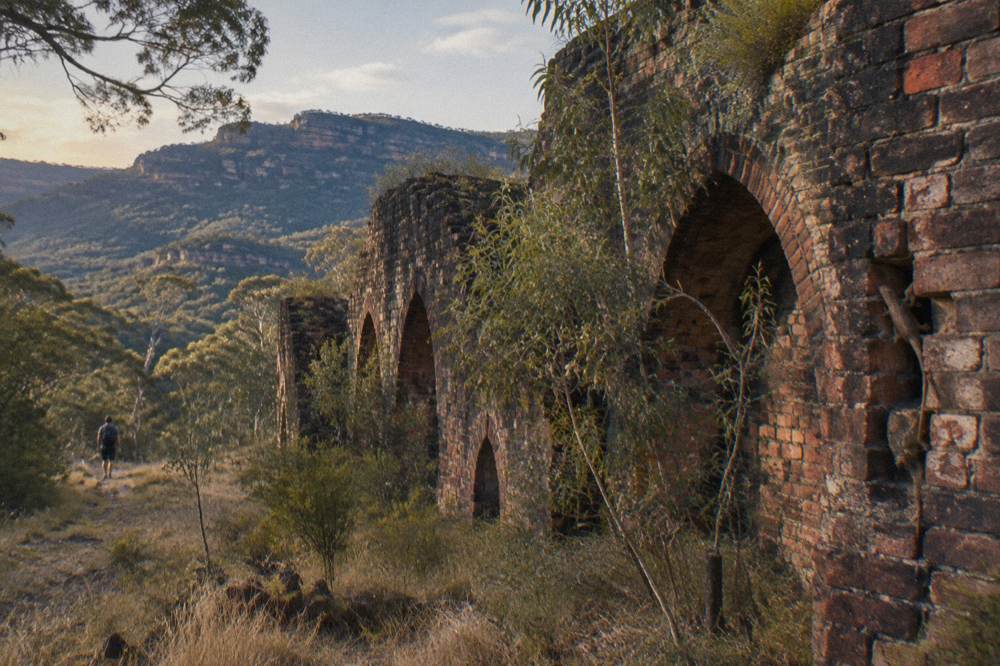
The second drawcard, the Newnes Industrial Ruins walk, is a different mood entirely. NSW National Parks describes remnants of the shale oil industry: coke ovens, brick kilns, paraffin sheds, crumbling walls, beehive kilns and a 15 m retaining wall known as the Big Wall. The Old Newnes Hotel survives mainly as an access landmark on the Wolgan Road approach, a route that mixes sealed and unsealed sections and is another surface where a 4WD is recommended in wet weather. Our Newnes Hotel and ruins guide walks through what survives and what the walk involves.
| Attraction | What it is | Effort | Best conditions |
|---|---|---|---|
| Glow Worm Tunnel track | 6 km return walk to a 387 m tunnel with a permanent glow worm colony | Grade 3, 80+ steps, 2 to 3 hours | Any time of year; tunnel is dark enough by day |
| Penrose Gorge lookout | 1.5 km past the tunnel, views over Donkey Mountain and Wolgan Valley | Steeper, not for children | Dry weather, clear day |
| Newnes Industrial Ruins walk | Shale oil ruins: coke ovens, kilns, the 15 m Big Wall | Easy to moderate | Dry weather for the unsealed Wolgan Road approach |
| Pagoda country off Glowworm Tunnel Road | Sandstone pagoda formations and lookouts | Short stops from the road | Dry weather; 4WD if wet |
One point of disambiguation, because it matters for planning: the bookable night hike this site features, the Glow Worm Cave Night Hike From Sydney, does not go to the Wollemi tunnel. It is a guided bush walk to a cave behind a waterfall at an undisclosed Blue Mountains location, with hotel pickup from Sydney and headlamps supplied in red-light mode. The tunnel, by contrast, is a free, self-guided walk with no fee listed by NSW National Parks. Both are honest ways to see glow worms; they are simply different products for different levels of self-sufficiency.
How Hard Is It To Get There?
Getting to Wollemi takes a car and about 2.5 hours from Sydney to the tunnel carpark, per NSW National Parks, with the final stretch on unsealed gravel that is passable in a 2WD only in dry weather and requires a 4WD when wet. There is no public transport to the carpark at all, and parking at the end of the road is limited at peak times.
The standard approach from Lithgow runs via Clarence and the Zig Zag Railway area, along Old Bells Line of Road for 8.4 km, then 26.8 km up Glowworm Tunnel Road, passing through a 60 m single-lane road tunnel just before the carpark. An alternative route uses State Mine Gully Road, gravel that becomes Glowworm Tunnel Road, about 39 km all up. Trucks frequently use Old Bells Line of Road and there is a 40 km/h limit during working hours, so the drive is slower than the map suggests. NSW National Parks states plainly that the unsealed section is 2WD possible in dry weather, 4WD highly recommended, and 4WD only in the wet, with no long vehicles allowed.
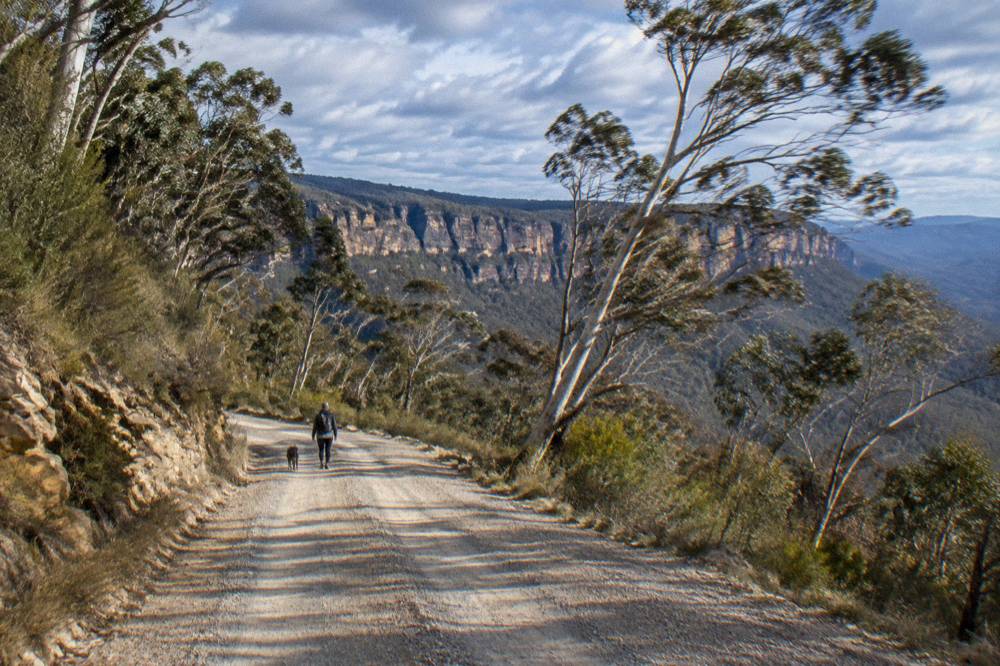
That access reality is the main reason the answer to "is it worth it" is not a universal yes. A traveller without a car, or one visiting in a hire 2WD during a wet week, cannot reliably reach the tunnel. NSW National Parks suggests visiting during the week or in spring or autumn to avoid crowds and the limited parking of summer weekends and holiday periods, which is also when the gravel is most likely to be dry. Our how to get to the Glow Worm Tunnel from Sydney guide covers the routes turn by turn, and the Glow Worm Tunnel road and car park guide deals with the parking situation in detail.
For anyone who cannot or does not want to drive at night on gravel, the guided option flips the logistics. The night hike from Sydney picks up from city accommodation in a staggered window from about 7:50pm to 8:35pm, with no fixed meeting point, and returns around 11pm to midnight per the operator. It runs from $128 USD per person, is rated 4.9 from 210 reviews, caps groups at nine travellers, and includes transport, parking fees, water and a certified outdoor instructor. Free cancellation applies up to 24 hours before, and the listing is flagged as often selling out. It is a genuine alternative for visitors whose real goal is glow worms rather than Wollemi specifically.
The Wollemi Pine And Why The Park Matters
Wollemi's claim to scientific fame is the Wollemi pine, a tree known from fossils and thought long extinct until 1994, when a living stand was discovered in a remote rainforest canyon inside the park within the Greater Blue Mountains World Heritage Area. It is the rarest of the park's stories and the one that puts a routine bushwalk in a global context.
The Wollemi pine grows in a remote rainforest canyon in the Greater Blue Mountains World Heritage Area, and NSW National Parks records its discovery in 1994 as one of the great botanical finds of the century. The canyon's location is kept secret to protect the surviving trees, so you will not visit the stand itself, and that is the point: the park's value here is conservation, not access. Visitors who know the story walk the Glow Worm Tunnel track differently, through country that still hides things science has not finished cataloguing.
The glow worms are part of the same story. The species in this region, Arachnocampa richardsae, is the larval stage of a small fungus gnat, not a worm at all. It spends six to nine months as a larva, glowing from a transparent rear end to lure prey into sticky silk snares, then just 14 days in a cocoon and about three days as an adult whose only jobs are mating and egg-laying. The tunnel was likely colonised by adults flying in from nearby rainforest gullies, and its stable darkness gave the colony a permanent home. NSW National Parks asks visitors to keep noise down, stay on the path, and shine torches at the ground or use red light, because glow worms switch their lights off when disturbed. The what are glow worms guide unpacks the biology in full.
Closures, Fire Bans And Current Alerts
Wollemi's alerts change often, and three matter right now: a park fire ban from 1 October 2026 to 31 March 2027, construction works at the Bungleboori precinct until December 2026, and a single-lane section on Glowworm Tunnel Road from 11 October 2026 with delays up to five minutes. The Glow Worm Tunnel track itself is listed as open, with the standing advice to check current alerts before travelling.
The track page carries the status "Open, check current alerts", and the local alerts page is the place to verify on the morning of a trip. The fire ban prohibits campfires and solid-fuel stoves across the park through to the end of March 2027, with gas and electric cookers allowed under conditions. Camping is prohibited at the tunnel anyway; the nearest campground is at Newnes via Wolgan Valley Road. The Glow Worm Tunnel to Newnes track section may also close during or after heavy rain because of rockfall and flood risk.
| Alert | Applies | What it means for visitors |
|---|---|---|
| Park fire ban, Wollemi National Park | 1 Oct 2026 to 31 Mar 2027 | No campfires or solid-fuel stoves; gas and electric cookers allowed under conditions |
| Bungleboori precinct construction works | Until December 2026 | Bungleboori site closed to visitors; drive with caution and follow traffic controls |
| Single-lane section, Glowworm Tunnel Road | From 11 Oct 2026 | Delays up to 5 minutes at the Lost City North and Maiyingu Marragu intersections |
| Rain closures on the tunnel to Newnes section | After heavy rain | Possible closure for rockfall and flood risk; check alerts before travelling |
The Honest Verdict For Glow Worm Visitors
Wollemi is worth visiting if glow worms are the point and you can handle the drive: the tunnel is free, glows year round, and is dark enough to enjoy in daylight. It is not worth forcing if you have no car, if rain has closed the gravel, or if you only want a guided night experience, in which case the Sydney-pickup cave hike answers the same itch in about five hours. If you're wondering how far the glow worms actually are from the city, the closest glow worm tunnel to Sydney covers the drive and the cave hike alternative in detail.
Split the verdict by traveller. Self-sufficient visitors with a 2WD and a dry forecast get the best value in the park: a free walk, a genuine glow worm colony, industrial ruins, and pagoda country that most Sydney day-trippers never see. Families can do the tunnel section but should treat the beyond-lookout track as off-limits for children, per NSW National Parks. Anyone on a tight schedule, or arriving by train to Katoomba, should be honest with themselves: there is no public transport to the carpark, and the alternatives are a long, cautious drive or a tour. If glow worms are your main reason for the trip, our Jenolan Caves verdict for glow worm seekers explains what that site actually offers and where the worms really live.
For the guided-experience traveller, the comparison is simpler. The one bookable night product this site carries is the Glow Worm Cave Night Hike From Sydney, from $128 USD per person, rated 4.9 from 210 reviews, with a maximum of nine travellers, headlamps in red-light mode supplied, and hotel pickup and drop-off inside the roughly five-hour window. It is not the tunnel, and it does not claim to be: it is a guided walk to a cave behind a waterfall where native glow worms can be seen, with a chance of other wildlife along the way. Glow worms are wild animals and the operator cancels for bad weather or unmet minimum numbers, so no sighting is guaranteed anywhere, tunnel or cave.
That caveat is the same one NSW National Parks makes about the tunnel itself: the colony is permanent, but the experience depends on visitors behaving, keeping lights low and voices down. Weigh the two options on logistics rather than on glow worm quality. If you want the ruins, the canyon story and a self-guided adventure, Wollemi earns its drive. If you want a night glow worm display with someone else handling the driving, the guided hike does that from Sydney, and the Blue Mountains glow worm tour guide compares the choices in detail.
Common Questions About Wollemi National Park
Is Wollemi National Park Worth Visiting?
Yes, for visitors with a car who want glow worms, ruins and quiet sandstone country. The Glow Worm Tunnel track is free, glows year round, and is dark enough for daytime viewing. It is a poor fit for travellers without a vehicle or in wet weather, when the unsealed access road becomes 4WD-only.
How far is Wollemi National Park from Sydney?
NSW National Parks describes the Glow Worm Tunnel track as a 2.5 hour drive from Sydney. The final kilometres run on unsealed gravel, passable in a 2WD in dry weather and requiring a 4WD when wet. There is no public transport to the carpark.
Can you see glow worms at the tunnel during the day?
Yes. The tunnel is 387 m long, so the interior stays dark enough for the glow worms to glow even at midday. NSW National Parks says the tunnel "gets dark enough to see glow worms during the day", making it one of the few glow worm sites that works on a daytime schedule.
Does it cost anything to visit the Glow Worm Tunnel?
No entry or parking fee is listed on the NSW National Parks track, visitor info or alerts pages. The walk is free and self-guided. The guided night hike from Sydney is a separate, paid product at from $128 USD per person with hotel transport included.
Is the Glow Worm Tunnel walk suitable for kids?
Partly. The 1.5 km walk to the tunnel entrance is manageable for many children, but the track includes over 80 steps without handrails and a pinch point about half a metre wide, and NSW National Parks states the section beyond the gorge lookout is not suitable for children.
What is the Wollemi pine?
A tree known only from fossils until 1994, when a living stand was discovered in a remote rainforest canyon inside Wollemi National Park within the Greater Blue Mountains World Heritage Area. The canyon's location is kept secret to protect the surviving trees, so it is not a visitor site.