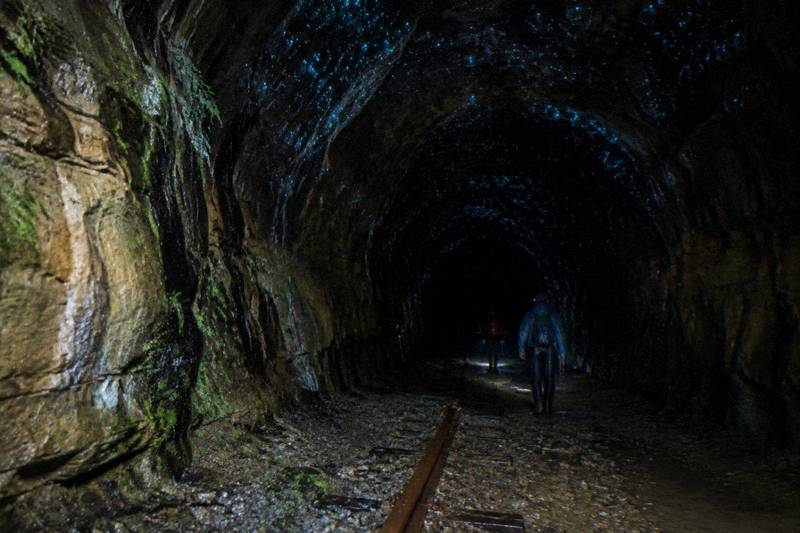
Glow Worm Tunnel Newnes: The Complete Visitor Guide
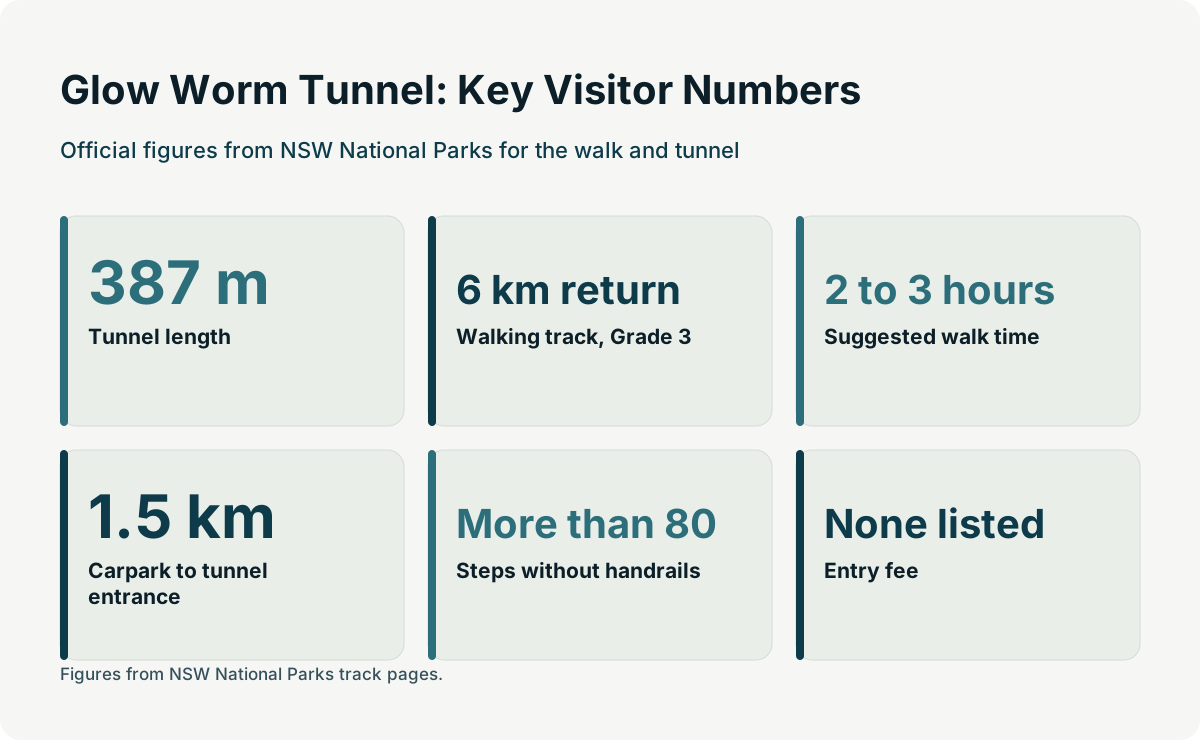
The Glow Worm Tunnel at Newnes is a 387 metre abandoned railway tunnel in Wollemi National Park whose permanent darkness lets a colony of native glow worms shine even at midday. Here is what NSW National Parks actually publishes about the walk, the road in, the costs and the rules.
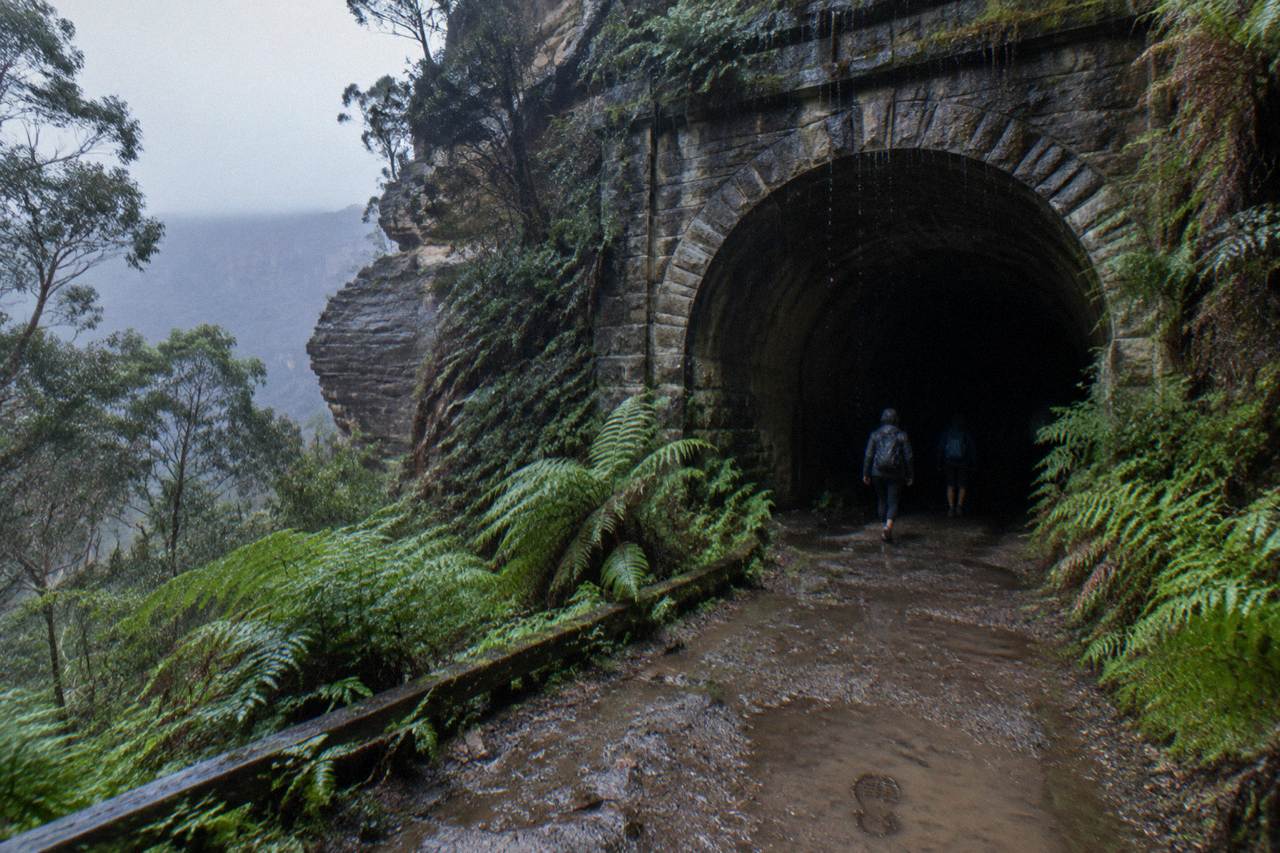
Short answer
The Glow Worm Tunnel is a free, self-guided walk in Wollemi National Park near Lithgow: 6 km return, Grade 3, about 2.5 hours drive from Sydney, with no entry fee listed. The 387 m tunnel is dark enough to show glow worms during the day. Access is by unsealed road, 4WD recommended when wet.
A railway built in the early 1900s to serve the Newnes shale oil works left behind something no engineer planned: a 387 metre tunnel so long and so permanently dark that a colony of native glow worms moved in and never left. NSW National Parks lists the track as open, and the tunnel itself costs nothing to enter, with no fee listed on any of the park pages. This guide pulls together what the official sources actually say about the walk, the unsealed road in, the seasonal patterns and the rules that keep the colony glowing.
What Is The Glow Worm Tunnel At Newnes?
The Glow Worm Tunnel is Tunnel No. 2 of the former Wolgan Valley Railway, built in the early 1900s to carry shale from the Newnes mining and oil works. It is 387 metres long, and because it stays pitch black inside, a permanent colony of glow worms, the larvae of the fungus gnat Arachnocampa richardsae, can be seen there even at midday. NSW National Parks lists no entry fee. Since the access road into Wolgan Valley is unsealed and can be rough after rain, many visitors prefer a guided option, and our guide to 4WD tours to the Glow Worm Tunnel through Wolgan Valley explains what those trips include.
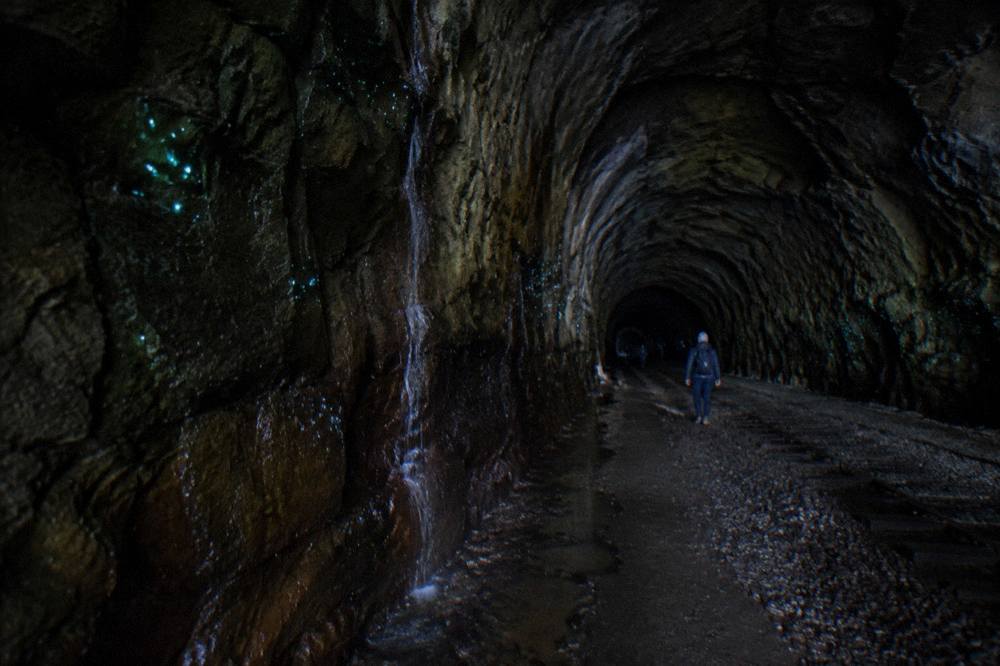
The tunnel sits in Wollemi National Park, near Lithgow, on the western edge of the Greater Blue Mountains World Heritage Area. The railway it served is long gone, but the bore remains, and its stable, sheltered conditions turned out to be almost perfect glow worm habitat. The park service notes that glow worms need darkness, still humid air and running water nearby, and the tunnel delivers all three. Adults likely colonised it from the surrounding rainforest gullies, and the colony has held on ever since. If you're curious what those glowing dots actually become, our guide on what a glow worm turns into explains the fly behind the light.
The insects themselves are worth understanding before you go. A glow worm is not a worm at all: it is the larval stage of a small fungus gnat, spending six to nine months in that glowing form before two weeks in a cocoon and a final three days as an adult fly whose only jobs are mating and egg-laying. The blue-green light comes from a chemical reaction in the larva's transparent rear end, and it is a hunting lure. The larvae hang sticky silk snares from their nests and pull in the small flying insects that follow the light. NSW National Parks explains the full life cycle on its glow worms page.
| Fact | Figure | Source note |
|---|---|---|
| Location | Wollemi National Park, near Lithgow | NPWS track page |
| Tunnel length | 387 m | NPWS |
| Built | Early 1900s, Newnes mining railway | NPWS |
| Walk | 6 km return, Grade 3, 2 to 3 hours suggested | NPWS |
| Carpark to tunnel entrance | 1.5 km | NPWS |
| Entry fee | None listed | NPWS pages |
| Track status | Open, check current alerts | NPWS |
The broader region holds many glow worm colonies, mostly in caves and disused mines, but this tunnel is the one the park service actively promotes, and the only one in the area you can walk into without a guide or a boat. For the wider picture across the state, see the where to see glow worms in NSW guide, and for the science behind the light, what glow worms actually are.
How To Get To The Tunnel From Sydney
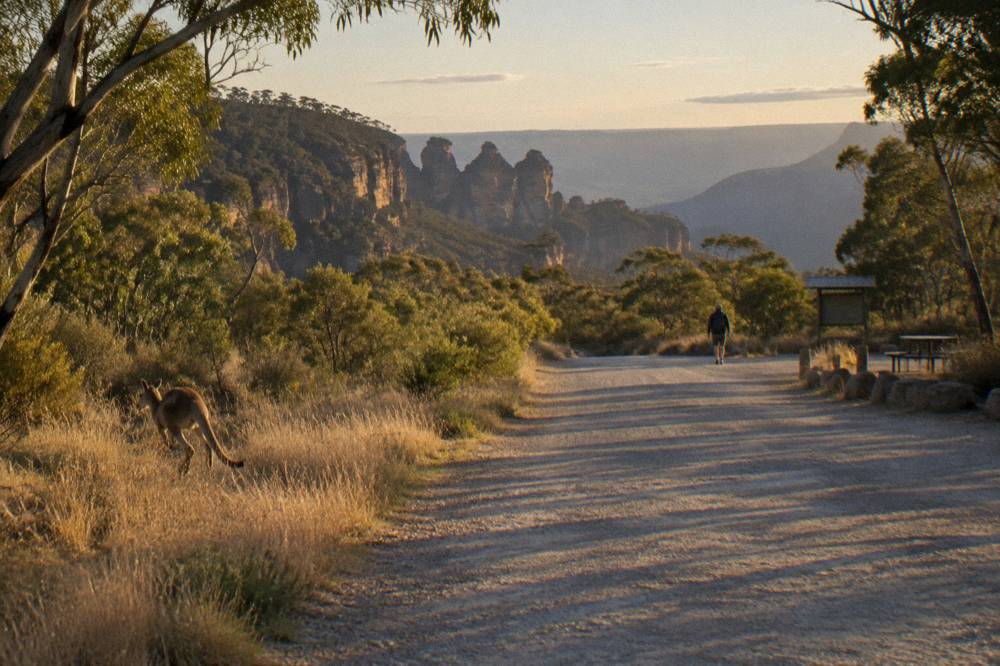
NSW National Parks describes the Glow Worm Tunnel as about a 2.5 hour drive from Sydney, and there is no public transport to the carpark at all. The final approach is on unsealed gravel road: a 2WD can manage in dry weather, but the park service recommends a 4WD, and says access is by 4WD only when the road is wet. Parking at the end is limited, and the busiest periods are summer weekends and holidays.
Two road routes reach the carpark at the end of Glowworm Tunnel Road. From Lithgow, the signposted way runs via Clarence and the Zig Zag Railway, along Old Bells Line of Road for 8.4 km, then 26.8 km up Glowworm Tunnel Road, passing through a 60 metre single-lane tunnel shortly before the carpark. The alternative is State Mine Gully Road out of Lithgow, gravel for most of its roughly 39 km, becoming Glowworm Tunnel Road. Trucks frequently use Old Bells Line of Road and there is a 40 km/h limit during working hours, so drive with care.
| Route | Distance and surface | Condition notes |
|---|---|---|
| Via Clarence and Old Bells Line of Road | 8.4 km sealed, then 26.8 km unsealed | Trucks frequent, 40 km/h limit during work hours, single-lane 60 m tunnel before carpark |
| Via State Mine Gully Road, Lithgow | About 39 km, mostly gravel | Signposted from Lithgow, becomes Glowworm Tunnel Road |
| From the Old Coach Road carpark | Pagoda walking track, 4 km return | Shorter alternative per the NPWS story page |
| Public transport | None to the carpark | Private vehicle only |
The road situation matters for timing. A wet week can turn the gravel into something a regular car should not attempt, and the park service is blunt about it: 4WD only in wet weather. Check the alerts before you set out, because the current list includes construction works at the nearby Bungleboori precinct running until December 2026, with the Bungleboori site itself closed to visitors, and single-lane traffic on Glowworm Tunnel Road at the Lost City North intersection from 11 October 2026, with delays up to 5 minutes. There is also a park fire ban across Wollemi National Park from 1 October 2026 to 31 March 2027, covering campfires and solid fuel stoves. The is the Glow Worm Tunnel open post tracks these alerts in plain language.
For a Sydney-based visitor without a car, or without a car happy on gravel at night, the honest position is this: the tunnel is a self-drive destination, and the bookable, Sydney-pickup way to see glow worms in the dark is a different thing entirely, a guided night hike to a glow worm cave behind a waterfall, run by an operator who does not publish the cave's location. The two are not the same product, and this guide treats them separately below.
The hike is a small-group evening trip, from $128 USD per person, with hotel pickup in Sydney between roughly 7:50pm and 8:35pm and a return around 11pm to midnight per the operator. It carries a 4.9 rating from 210 reviews, takes a maximum of 9 travellers, and supplies headlamps with a red-light mode, the same courtesy the tunnel rules ask of every visitor. The full breakdown, including what the walk itself involves, is in the Glow Worm Cave night hike from Sydney tour page, and you can also read the glow worm tour from Sydney guide for the comparison in depth.
Walking The Track: Distance, Steps And Difficulty
The Glow Worm Tunnel walking track is a 6 km return walk, Grade 3, with the park service suggesting 2 to 3 hours and some bushwalking experience. It is 1.5 km from the carpark to the tunnel entrance, then optionally another 1.5 km through Penrose Gorge to a lookout over Donkey Mountain and the Wolgan Valley. There are more than 80 steps without handrails and no wheelchair or pram access.
The numbers deserve respect because the track is harder than the flat distance suggests. About 30 stone steps lead down to a bridge, and roughly 30 narrow winding timber steps climb back out, none of them with handrails. After the bridge there is a pinch point half a metre wide. The tunnel floor itself is uneven and rocky and may be wet, which is exactly the condition the glow worms like. The park service says the section beyond the lookout is not suitable for children, and the whole track asks for short steep hills and a bit of experience.
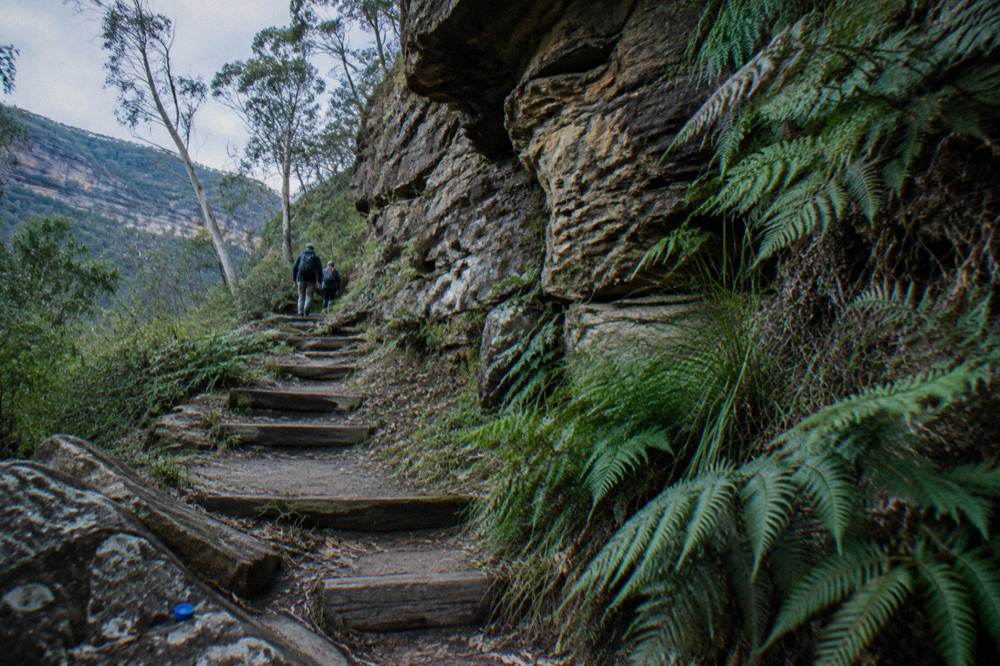
Inside the tunnel, upgrades have evened the surface and added a handrail, which helps in the dark. The experience is unusual among glow worm sites: because the bore is long enough to be pitch black at midday, you do not need nightfall or a long drive home afterwards. The trade-off is that you share a narrow space with whoever else came that day, which is why the park service suggests weekdays, spring or autumn, and why the night versus day viewing question is worth thinking through before you choose a date.
If the steps, the gravel road or the two and a half hour drive make you pause, that is a reasonable reaction, and it is the main reason the guided night hike exists. It takes moderate fitness too, and it is also not wheelchair accessible, but it removes the driving entirely: pickup and drop-off at your Sydney accommodation, a certified outdoor instructor, water and parking fees included, and free cancellation up to 24 hours before. The listing is flagged as often selling out, which matters if you are planning around a specific weekend.
Rules For Protecting The Glow Worms
The official rules are simple and strict: stay on the path, keep noise to a minimum, shine your torch at the ground or use a red-light setting, never point a torch at the glow worms, and look but do not touch. Glow worms can switch their lights off when disturbed, and bright light can damage their bioluminescence. Let your eyes adjust in the dark before you judge the display.
These rules are not decoration. A colony that turns its lights off for the hour you are there is a colony you will not see, and the park service is explicit that disturbance does exactly that. The practical version: walk in with your torch aimed down, switch to red light if you have it, then stand still and wait. The display builds as your eyes adapt, and the park service's own description of hundreds of blue-green tail lights suggests the wait is worth it.
| Rule | What NSW National Parks says |
|---|---|
| Noise | Keep it to a minimum, glow worms are sensitive to sound |
| Torches | Shine at the ground, or use a red-light option, the least disruptive |
| Direct light | Never point a torch at the glow worms, it can damage their bioluminescence |
| Touching | Look but do not touch |
| Path | Stay on the track |
| Eyes | Turn off your torch and let your eyes adjust |
| Camping, pets, cycling, smoking | All prohibited on the track and in the tunnel |
The sensitivity is biological, not bureaucratic. The light is the larva's hunting tool, and a larva that keeps switching it off is burning energy without catching prey. The why you cannot touch glow worms post covers the biology in more detail, but the short version is that every torch beam pointed at the wall is a cost to the colony. If you want to photograph them, the glow worm tunnel photography guide works through what is known, and what is not, about camera use there.
When Is The Best Time To Visit?
Glow worms are present in the tunnel year round, and no official source ranks the months by brightness. NSW National Parks advises visiting during the week or in spring or autumn, because summer weekends and holidays bring crowds and limited parking. Operators and travel press say displays are often stronger in warm, wet months and after rain, but that is opinion, not data.
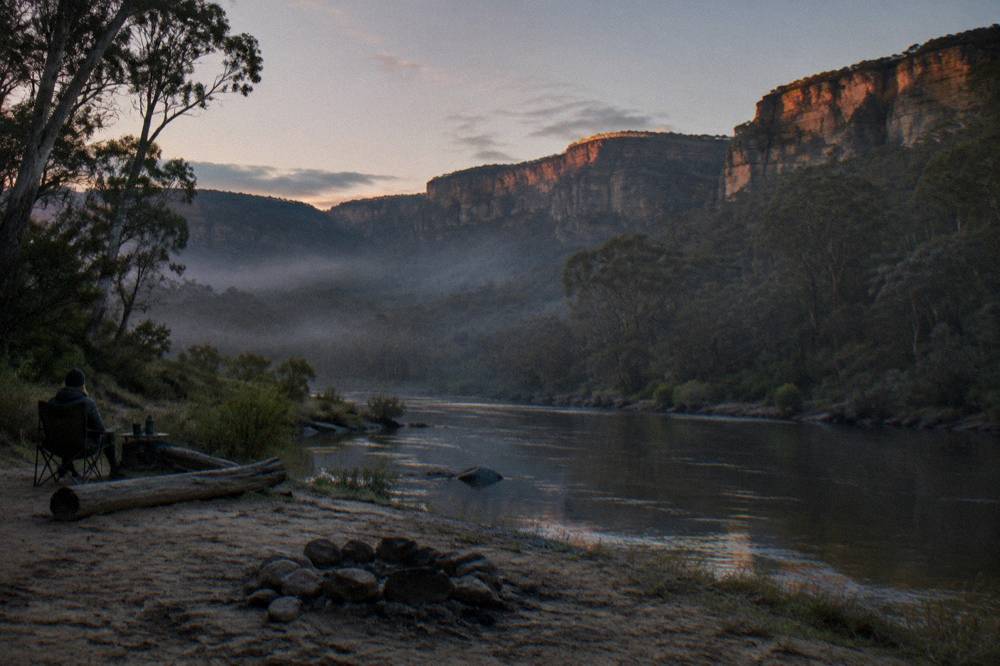
The honest framing matters here. Plenty of articles promise a best month, and none of them can cite an official ranking, because no park service or research body publishes one. What the data does show is climate: Katoomba's mean minimum temperatures run from 13.0 degrees in February down to 2.6 degrees in July, and mean rainfall peaks in the first three months of the year, with February the wettest at 177.8 mm on average. Wet, still, mild nights are the conditions operators describe as best, and the Bureau of Meteorology's Katoomba (Farnells Rd) climate statistics let you read the pattern yourself.
| Month | Mean minimum (C) | Mean rainfall (mm) |
|---|---|---|
| January | 12.9 | 164.9 |
| February | 13.0 | 177.8 |
| March | 11.6 | 174.6 |
| April | 8.8 | 121.9 |
| May | 6.1 | 100.3 |
| June | 3.7 | 116.0 |
| July | 2.6 | 84.9 |
| August | 3.3 | 79.3 |
| September | 5.5 | 70.7 |
| October | 7.8 | 91.5 |
| November | 9.9 | 110.3 |
| December | 11.8 | 120.4 |
The timing question splits by visitor type. Families with school-age children should read the Glow Worm Tunnel with kids guide before committing, because the steps and the pinch point shape what is realistic. Photographers chasing the strongest display lean toward the warm, wet months on operator advice, labelled as such, while visitors who want the tunnel nearly to themselves will find a weekday winter morning the quietest option the climate table supports. The month-by-month ribbon on Blue Mountains Glow Worms pulls these threads together for the region as a whole.
For the guided night hike, the same biology applies, and the operator cancels for bad weather, which is worth knowing when you pick a date. Wet weather that closes the gravel road to the tunnel is, from the glow worms' point of view, good weather, and the hike's cave behind a waterfall sits in that same damp, sheltered habitat. The best time to see glow worms in the Blue Mountains guide compares the seasons for both experiences side by side.
Costs, Facilities And What To Expect On Site
The tunnel has no entry fee listed on any park page, and the NPWS story calls it a free year-round spectacle. On site there are two non-flush toilets, one ambulant, a single timber bench at the start, and no drinking water. Mobile reception is very limited, and the park service recommends the Emergency Plus app. Camping, cycling on the track, pets and smoking are all prohibited, with the nearest campground at Newnes.
Free does not mean effortless. The 6 km return walk plus the tunnel time plus the unsealed drive means you should carry water even though none is available on site, dress for the temperature at 1,000 metres of elevation rather than at sea level, and plan your daylight. Very limited mobile reception is the detail people forget: download offline maps before you leave Lithgow, and tell someone your route. The park service's own visitor info for the track, at the official Glow Worm Tunnel walking track page, is the page to re-read the week you go.
The guided night hike sits at the other end of the cost and effort scale, and the comparison is fair to spell out. The tunnel asks for your own vehicle, your own planning and your own red-light torch; the hike, from $128 USD per person, folds transport, an instructor, water and parking fees into one booking with hotel pickup and drop-off. Neither option charges anything to the glow worms themselves, which is why the etiquette in the next section applies to both. If you are weighing the two, the price and inclusions are listed in full on the operator's live listing.
The wider Newnes area rewards the drive. The Newnes Hotel and industrial ruins guide covers the coke ovens, brick kilns, paraffin sheds and the 15 metre Big Wall of the old shale oil works, reached via Wolgan Road through the Wolgan Valley, a separate route from the plateau road. The Old Newnes Hotel survives mainly as an access landmark and a ford crossing point. Note the access split: the ruins and campground sit at the valley end of Wolgan Road, which is mixed sealed and unsealed with 4WD recommended in wet weather, while the tunnel carpark sits at the end of Glowworm Tunnel Road on the plateau side.
Planning Your Visit: Alerts, Weather And The Guided Alternative
Check the NPWS alerts page in the week you travel: the current list shows the track open, the Bungleboori precinct closed for works until December 2026, single-lane delays on Glowworm Tunnel Road from 11 October 2026, and a park fire ban from 1 October 2026 to 31 March 2027. The Glow Worm Tunnel to Newnes section can close during or after heavy rain. The Blue Mountains Heritage Centre in Blackheath, 02 4787 8877, is the contact for track questions. For a fuller picture of current closures and what they mean for your visit, see our guide on whether the Glow Worm Tunnel is open right now.
The self-guided tunnel walk and the guided night hike serve different visitors, and the honest comparison is short. The tunnel is free, viewable in daylight and reachable by anyone with a suitable vehicle and moderate fitness. The night hike is from $128 USD per person, picks you up in Sydney, takes you to a different kind of site, a cave behind a waterfall rather than a railway tunnel, and runs after dark with a certified instructor and red-light headlamps. Neither guarantees sightings, because glow worms are wild animals responding to conditions, and both can be affected by weather. The self-drive versus guided guide works through the decision in full.
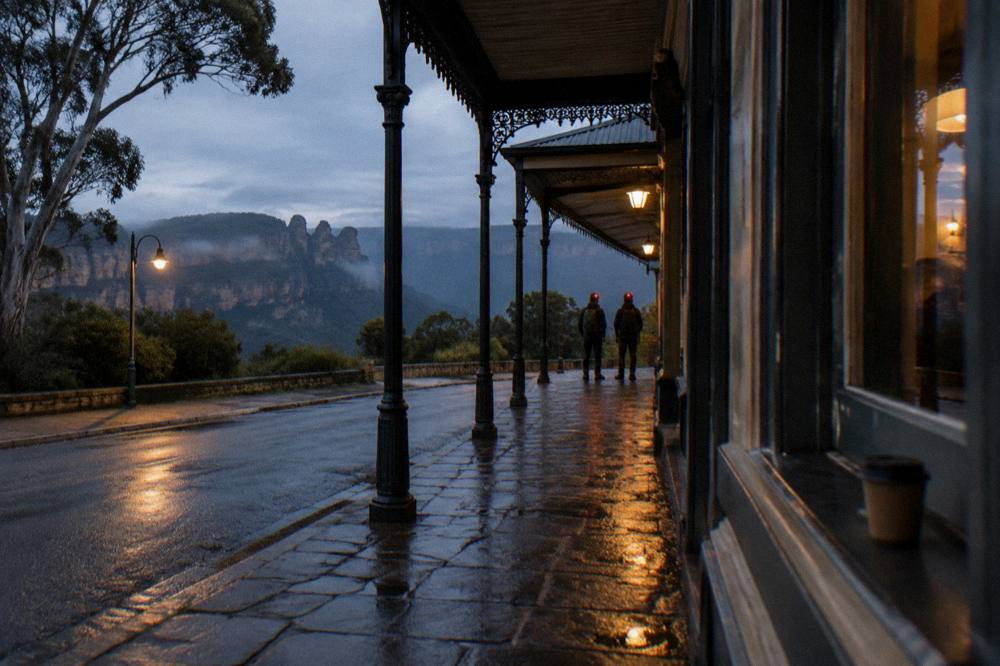
For practical planning on the hike, the essentials are: about 5 hours door to door, pickup between roughly 7:50pm and 8:35pm from Sydney accommodation with no fixed meeting point, a maximum of 9 travellers, moderate fitness required, and free cancellation up to 24 hours before. The operator cancels for bad weather or if minimum numbers are not met, and the listing is flagged as often selling out. The what to bring guide covers packing for the self-guided walk, and most of it, warm layers, water, sturdy shoes, a red-light torch, transfers to the hike too.
Whichever way you go, the etiquette is the same, and it is the one thing that decides whether the next visitor sees anything. Quiet feet, red light, torches aimed at the ground, no touching, and patience while your eyes adjust. The tunnel has been glowing since the railway closed, and the colony has held on through everything the plateau has thrown at it. A little care from each visitor is what keeps it that way, in a disused railway bore that turned out to be better at its second job than its first.
Common Questions About The Glow Worm Tunnel At Newnes
Is the Glow Worm Tunnel at Newnes free to visit?
Yes. No entry, parking or permit fee is listed on any of the NSW National Parks pages for the track, and the park service's own story describes it as a free year-round spectacle. The costs are your fuel, your time and a suitable vehicle for the unsealed access road.
Can you see the glow worms during the day?
Yes. The tunnel is 387 metres long and dark enough inside that NSW National Parks says glow worms can be seen during the day. No night visit is required, which is what makes this site unusual among glow worm locations.
How long is the walk to the Glow Worm Tunnel?
The full track is 6 km return, Grade 3, with the park service suggesting 2 to 3 hours. It is 1.5 km from the carpark to the tunnel entrance, and there is an optional further 1.5 km through Penrose Gorge to a lookout over Donkey Mountain and the Wolgan Valley.
Can a regular car drive to the Glow Worm Tunnel carpark?
In dry weather, a 2WD can make the unsealed road, though NSW National Parks recommends a 4WD. In wet weather the park service says access is by 4WD only. Parking at the end of the road is limited, and there is no public transport to the carpark.
Is the Glow Worm Tunnel the same as the bookable night hike from Sydney?
No. The night hike from Sydney goes to a different site, a glow worm cave behind a waterfall, whose location the operator does not publish. It is not a tour of the Newnes tunnel. The tunnel is a free self-guided walk; the hike is a guided small-group trip with hotel pickup, from $128 USD per person.
When is the best time of year to visit the tunnel?
Glow worms are present year round and no official source ranks the months. NSW National Parks suggests weekdays, spring or autumn to avoid crowds and limited parking. Operators and travel press say displays are often stronger in warm, wet months and after rain, but that is opinion rather than official data.