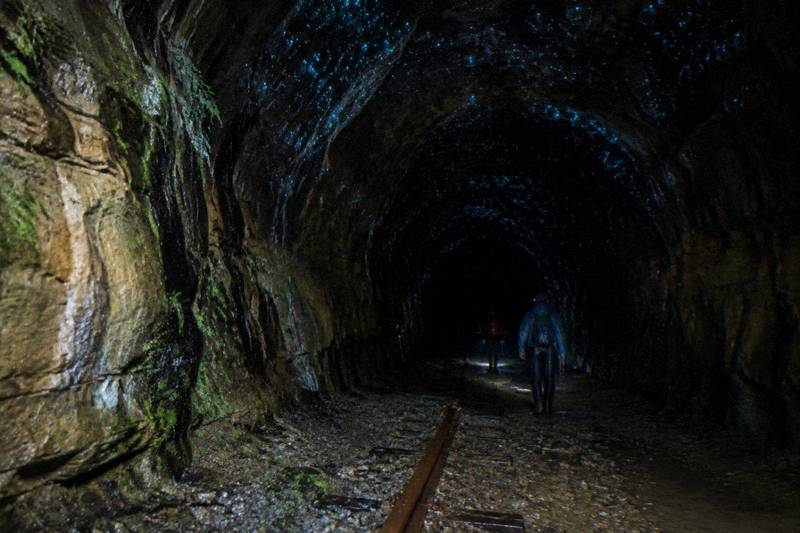
What Are Glow Worms And Why Do They Glow?
Glow worms are not worms at all. They are the larvae of a small fungus gnat fly, and the light they produce is a lure: a trap built from silk that catches the insects they eat.
Short answer
Glow worms in the Blue Mountains and Wollemi National Park are the larvae of the fungus gnat Arachnocampa richardsae. They produce a blue-green bioluminescent light from a transparent rear end to lure prey into sticky silk snares. The larval stage lasts 6 to 9 months, while the adult fly lives only about 3 days.
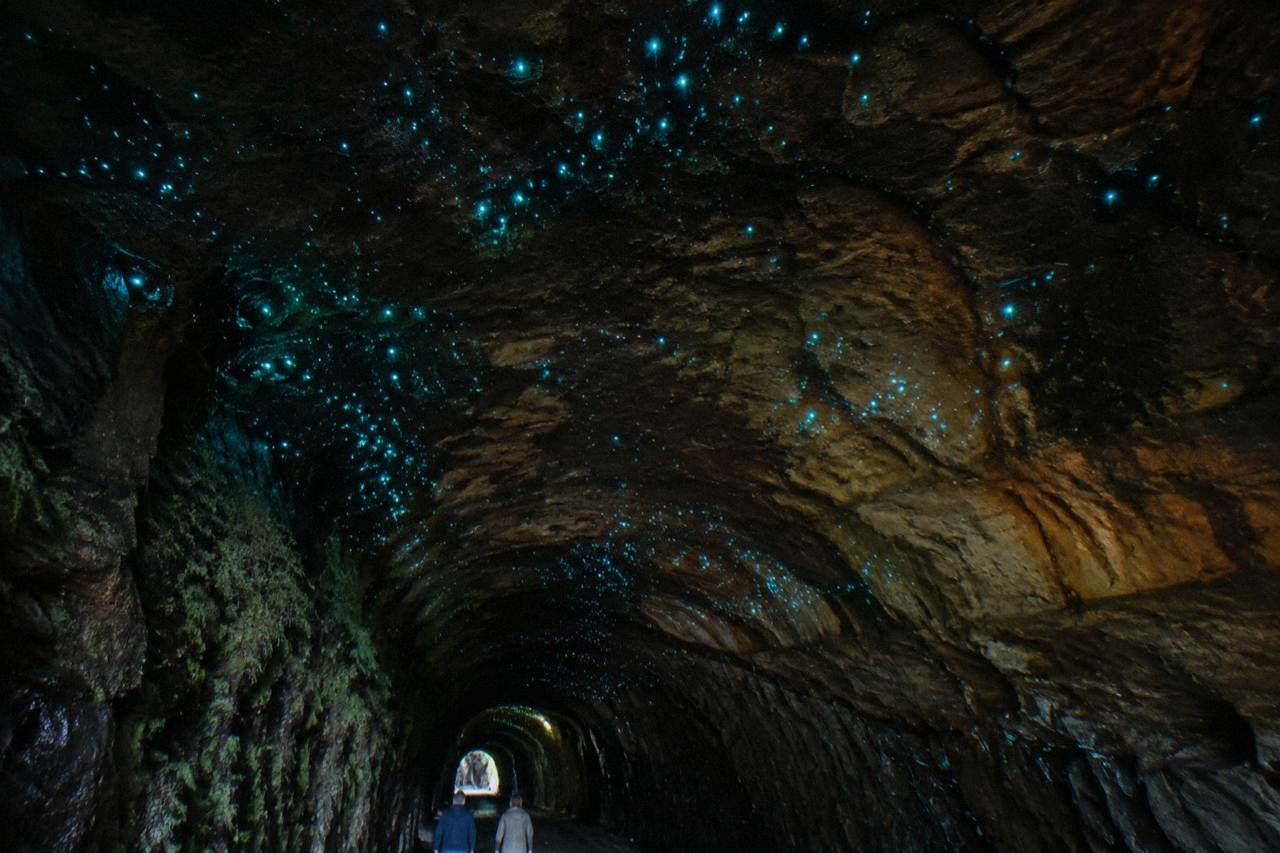
Glow worms are not worms. That single fact unsettles most first-time visitors who stand in a dark tunnel watching hundreds of tiny blue-green lights and imagine some kind of luminous earthworm coating the ceiling. The truth is stranger and, once you know it, far more interesting: each of those lights belongs to the larva of a small fly, a fungus gnat, and the glow is not decoration. It is a hunting lure, a trap built from silk and hung from the ceiling of caves, overhangs and abandoned railway tunnels across the Blue Mountains region.
The species found here is Arachnocampa richardsae, and NSW National Parks records it in Wollemi National Park among other central NSW sites. This guide walks through what glow worms actually are, how the light works, the strange compressed life cycle that ends in a three-day adult, the habitat these insects need, and where around the Blue Mountains you can realistically go to see them, from the famous abandoned railway tunnel near Lithgow to the guided cave hike that runs out of Sydney at night.
What Are Glow Worms, Exactly?
Glow worms are the larval life stage of small flying insects, a species of fungus gnat named Arachnocampa richardsae, not worms at all. NSW National Parks lists the species in Wollemi National Park, and the larvae grow to only a few centimetres while producing a blue-green light display.
The name is a leftover from an era before anyone had worked out what the glowing creatures actually were. Early visitors to caves and tunnels in the Blue Mountains saw soft points of light and reached for the most familiar word available. The larva looks like a small brown maggot, unremarkable in daylight, and it spends its glowing months anchored to a ceiling or wall inside a silk tube. Only the rear end matters for the show: it is transparent, and a chemical reaction inside it shines straight through.
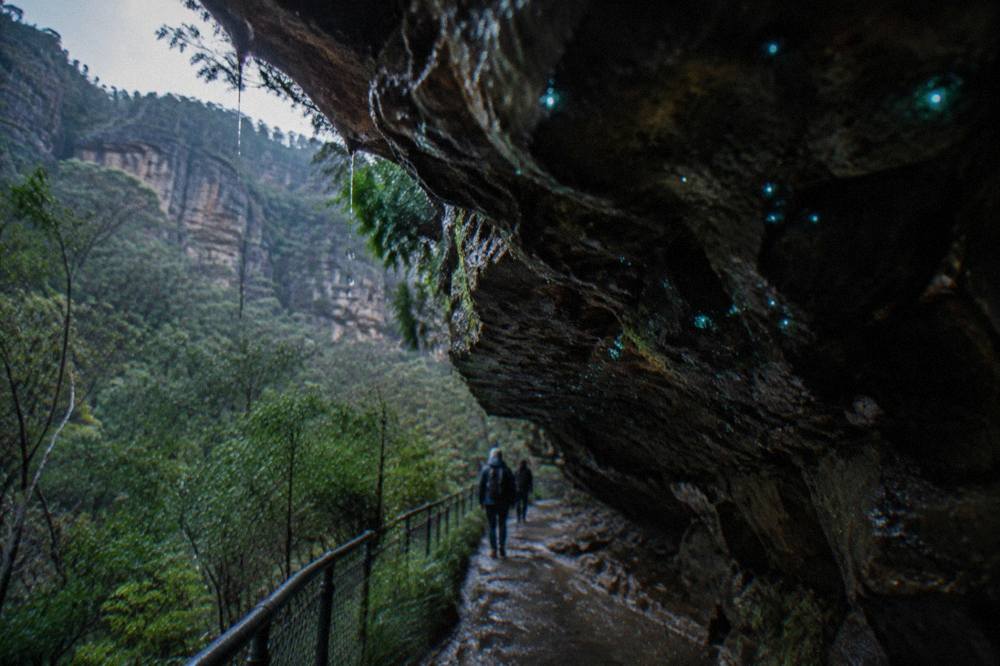
The adult form makes the story odder still. After months of larval life, the glow worm pupates and emerges as a gnat, a delicate flying insect that looks roughly like a large mosquito. It does not eat in any meaningful way, it does not glow, and it lives about three days. Everything that makes a glow worm interesting happens in the larval stage, which is why every glow worm display you will ever stand under is a nursery rather than a swarm.
The Blue Mountains Glow Worms region is one of the most accessible places in Australia to see this species, because the terrain that suits it, deep sandstone gorges, wet caves and disused tunnels, is everywhere here. If you are planning around the region rather than a single site, the Blue Mountains glow worms guide maps the known spots, and the wider picture across the state is covered in where to see glow worms in NSW.
Why Do Glow Worms Glow?
The glow is a hunting lure produced by bioluminescence, a chemical reaction in the larva's transparent rear end. NSW National Parks describes how the light draws small flying insects toward sticky silk threads called snares, which hang from the larva's nest; prey that sticks is pulled in and eaten.
The mechanism is efficient and slightly chilling. A larva sits inside a silk tube it has secreted from its mouth, and from that nest it dangles several long snares, each a thread studded with sticky droplets like a fishing line set with hooks. The blue-green light at its rear end is the bait. Mosquitoes, moths and other small insects that follow the light blunder into a snare and stick fast, and the larva hauls the line up and consumes the catch at its leisure. NSW National Parks notes the larvae can take prey as large as a cockroach.
The colour reads as blue-green to the human eye in the dark of a tunnel, and the NPWS story on the Wollemi colony describes "hundreds of blue-green tail lights" along the ceiling. The light itself is cold: almost none of the energy behind it is wasted as heat, which matters for a creature that must stay hidden and moist while it waits.
The glow also encodes a warning for visitors, which is the reason for every torch and noise rule you will read on a park sign. Glow worms can control their lights and will switch them off when disturbed, and a colony that has been shouted at, torch-lit or touched can go dark for the night. A display you extinguish is a display the next visitor does not get, and a larva that keeps switching off wastes energy it needs to grow. The rules are not bureaucratic fuss; they are the minimum a colony needs to keep feeding.
How Long Do Glow Worms Live?
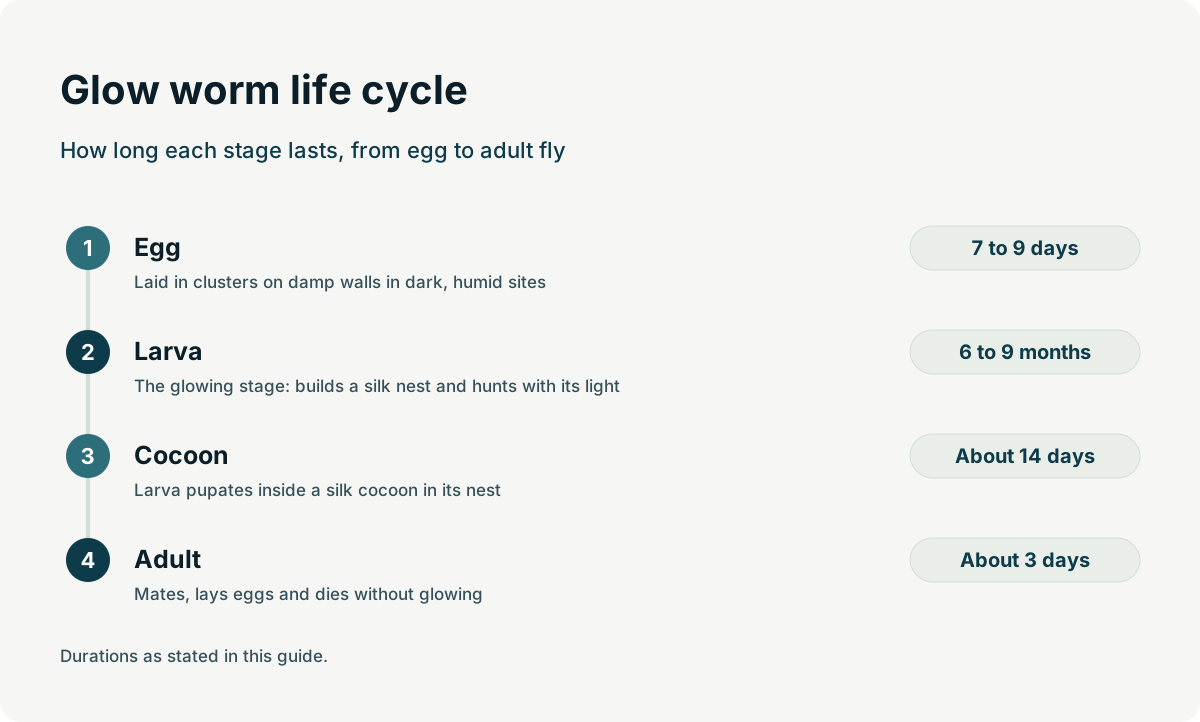
The life cycle is short and unevenly weighted: eggs hatch in 7 to 9 days, the larva spends 6 to 9 months in its glowing stage, the cocoon lasts about 14 days, and the adult fly lives roughly 3 days, long enough only to mate and lay eggs.
Every figure in that answer comes from NSW National Parks' own species page, and the imbalance is the point. Nearly the entire lifespan is the larva, the hunter with the light. The adult has no functioning digestive apparatus to speak of and exists to reproduce: it mates, it scatters eggs into a damp, dark crevice, and it dies within days. If the eggs land somewhere sheltered and humid with running water nearby, a new colony begins.
| Stage | Duration | What happens |
|---|---|---|
| Egg | 7 to 9 days | Laid in clusters on a damp ceiling or wall in a dark, humid site |
| Larva | 6 to 9 months | The glowing stage: builds a silk nest, hangs snares, hunts with its light |
| Cocoon | About 14 days | The larva pupates inside a silk cocoon on the wall of its nest |
| Adult | About 3 days | A fungus gnat fly; it mates, lays eggs and dies without glowing |
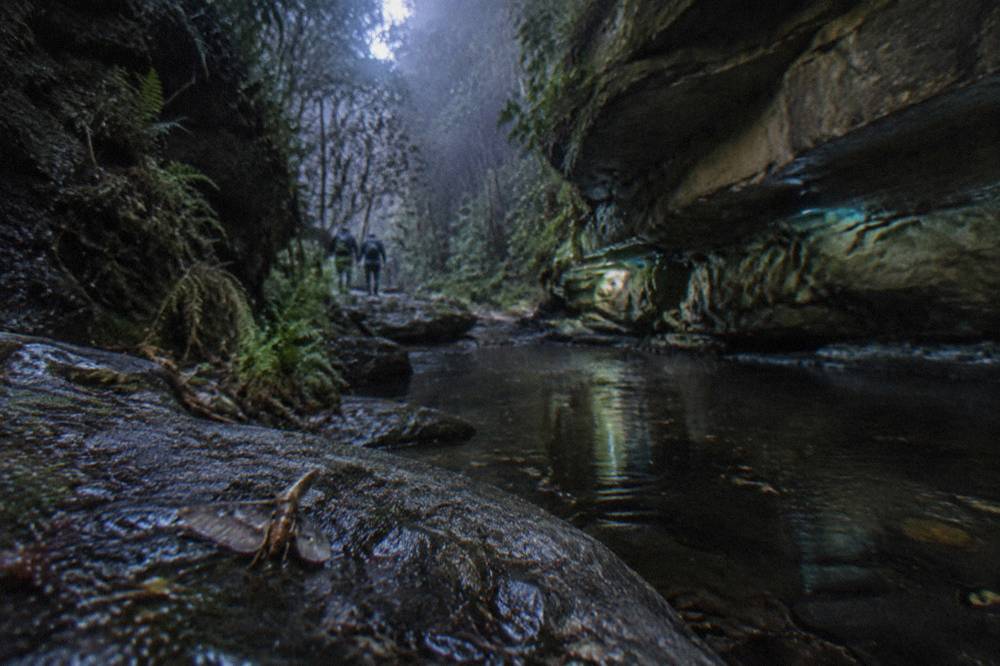
The larval months are not idle. A larva that eats well grows and moults; a larva that goes hungry dims, because the glow is powered by the energy reserves the insect is spending. That is why habitat quality shows up directly in the brightness of a colony: a wet tunnel over running water with a steady supply of insects produces a ceiling of lights, while a dry or disturbed site produces a handful of faint ones. Colonies are dynamic, waxing and waning with food and moisture, not fixed installations.
Where Do Glow Worms Live?
Glow worms need darkness, humidity, shelter from airflow and running water nearby, which is why they colonise caves, overhangs, rainforest gullies and abandoned tunnels. NSW National Parks lists all four as typical habitat, and the Blue Mountains region holds many colonies, mostly in caves and disused mines.
The requirements sound simple but together they are rare. Darkness is obvious: the light is a lure, and it only works where the background is black. Humidity and still air keep the larva from drying out, since it is essentially a soft-bodied creature hanging in the open for months. Running water serves two purposes: it keeps the air permanently moist and it carries in the small flying insects that form the prey base. A sandstone gorge with a creek, a waterfall cave or a leaky disused tunnel ticks every box.
| Habitat type | Why glow worms colonise it | Blue Mountains examples |
|---|---|---|
| Caves and disused mines | Permanent darkness, stable humidity, damp walls | Many colonies across the region per NSW National Parks |
| Rock overhangs and waterfall caves | Constant moisture and sheltered air | The guided night hike visits a cave behind a waterfall |
| Rainforest gullies | Deep shade, still humid air, creek-borne insects | Gullies of the Grose Valley and Blue Mountains canyons |
| Abandoned railway tunnels | Pitch black, dripping walls, no airflow | The 387 m Glow Worm Tunnel in Wollemi National Park |
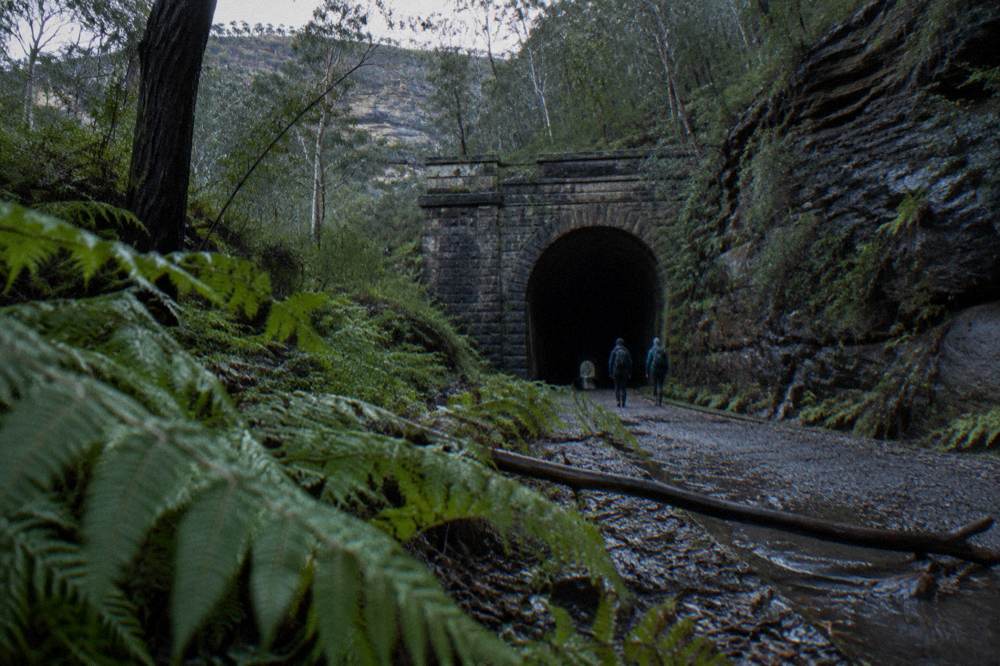
The tunnel near Lithgow is the famous case study. Built in the early 1900s for the Newnes mining railway, it is 387 m long and dark enough in its middle that glow worms can be seen during the day, a quirk of the site that NSW National Parks highlights. The tunnel was likely colonised by adult gnats flying in from nearby rainforest gullies, and because conditions inside never change, the colony became permanent. That single fact explains most of this site's popularity: it is one of the few places where a wild light display is available on a daytime walk.
The guided alternative reaches a different kind of habitat: a cave behind a waterfall, reached on foot in the dark. Waterfall caves are classic glow worm real estate, dripping, humid and washed with the sound of running water, and the night hike from Sydney, run by Wildscape Adventures, supplies headlamps with a red-light mode for the walk in. The operator does not publish the cave's location, and the tour caps groups at 9 travellers, which suits a site that goes dark when disturbed.
Why Can't You Touch Glow Worms?
You should not touch glow worms because the larvae are fragile, and because any disturbance makes them switch their lights off, as NSW National Parks states. The agency's viewing rules are to stay on the path, keep noise down, shine your torch at the ground or use red light, and look but do not touch.
The reasoning is biological, not just etiquette. A larva hanging in its silk nest is soft-bodied and easily crushed, and the snares it has spent energy building are destroyed by a passing hand. Worse, the light itself is the harm pathway: NSW National Parks warns that pointing a torch at glow worms can damage their bioluminescence and makes them turn their lights off, and a colony that has been disturbed stays dark, sometimes for the rest of the night. Every rule on the signs traces back to that one behaviour.
The practical version of the rules, the one that preserves the display for you and everyone after you:
| Rule | Reason |
|---|---|
| Stay on the path | Larvae and snares sit on walls and ceilings at hand height |
| Keep noise to a minimum | Vibration and sound make larvae switch off their lights |
| Shine torches at the ground, or use red light | White light pointed at the colony damages the bioluminescence |
| Let your eyes adjust before expecting the full show | Full dark adaptation takes many minutes |
| Look but do not touch | A touched larva can be killed, and its snares are destroyed |
Note what is not on that list: any flash photography ban. NSW National Parks' pages for the tunnel set no photography rule either way, so this guide does not invent one. If you want the practical side of photographing the colony, from long exposures to red-light technique, the glow worm tunnel photography guide covers it in detail, and the deeper biology of why the lights go off is worth reading before you visit with a camera.
The guided hike builds the rules into the experience. Headlamps with a red-light mode are supplied, the group is capped at 9, and the walk is led by a certified outdoor instructor who manages light and noise on the way in. For families weighing whether the experience suits children, the glow worm tunnel with kids guide covers the self-guided side, and the glow worm tunnel safety guide covers the track itself, which includes over 80 steps without handrails.
Where Can You See Glow Worms Around The Blue Mountains?
Two reliable options exist: the self-guided Glow Worm Tunnel in Wollemi National Park, a free 6 km return walk where the 387 m tunnel is dark enough for daytime viewing, and the guided night hike from Sydney, from $128 USD per person, which visits a glow worm cave behind a waterfall. Glow worms are wild, so no sighting is guaranteed.
The tunnel is the region's signature site. NSW National Parks describes it as a 2.5 hour drive from Sydney, near Lithgow, with the track starting at the carpark at the end of Glowworm Tunnel Road and 1.5 km of walking to reach the tunnel entrance. No entry fee is listed on any of the agency's pages for the track. The catch is access: the road in is unsealed, 2WD is possible in dry weather, 4WD is highly recommended, and when it is wet the agency says access is by 4WD only. There is no public transport to the carpark at all.
The guided hike covers a different set of needs entirely. It runs about 5 hours, picks up from Sydney accommodation in a staggered window from about 7:50pm to 8:35pm, and returns around 11pm to midnight per the operator. It suits travellers without a car, anyone uneasy about walking in the bush at night, and anyone who wants a small group rather than a public carpark. The listing carries a 4.9 rating from 210 reviews, free cancellation up to 24 hours before, and it is flagged as often selling out. The full logistics, including what to wear and what the walk involves, are in the glow worm tour from Sydney guide, and the trade-offs are laid out in self drive vs guided glow worm tunnel options.
Be equally clear about what is not on the list. NSW National Parks and operator pages do not describe glow worms at Jenolan Caves, the Grand Canyon Track at Blackheath, Govetts Leap, Wentworth Falls, Leura or Blackheath generally; the Grand Canyon Track is a 6.3 km Grade 3 loop with no glow worm mention on its park pages. The nearest other documented tunnel, Helensburgh, is in the Illawarra south of Sydney, a different place from the Wollemi tunnel, and no official page describing a glow worm tunnel there was found. If a blog promises glow worms at a lookout near Katoomba, ask for the source.
Do Glow Worms Have A Best Season?
Glow worms are present year round, and NSW National Parks makes no official ranking of months. The agency simply suggests visiting during the week or in spring or autumn to avoid crowds and limited parking; operators and travel press say displays are often stronger in warm, wet months, which is opinion, not data.
The year-round presence is a fact of biology, not marketing. The larval stage lasts 6 to 9 months, so at any given moment a colony holds larvae of many ages, some glowing brightly, some newly hatched, some about to pupate. There is no migration, no emergence event, no single week when the show happens. What changes through the year is the viewing: ambient darkness, moisture, crowd levels and road conditions all move with the seasons.
| Month | Mean minimum at Katoomba (C) | Mean rainfall (mm) |
|---|---|---|
| January | 12.9 | 164.9 |
| February | 13.0 | 177.8 |
| March | 11.6 | 174.6 |
| June | 3.7 | 116.0 |
| July | 2.6 | 84.9 |
| October | 7.8 | 91.5 |
Those Katoomba figures come from the Bureau of Meteorology's climate statistics for the Farnells Rd station at 1,017 m elevation, and they frame the two seasonal arguments. The operator-and-press view favouring warm, wet months, roughly December to March, is plausible: humidity and insect activity both rise, and rain is said to increase how many larvae glow. The counter-view favours the darker, quieter months: fewer visitors, longer nights and no summer crowds at the carpark. NSW National Parks itself lands on the practical middle ground, the week or spring or autumn, and that advice is about parking and crowds, not brightness. The month-by-month ribbon on the homepage works through this in detail.
One seasonal note matters more than brightness: fire and weather closures. A park fire ban applies across Wollemi National Park from 1 October 2026 to 31 March 2027, and the Glow Worm Tunnel to Newnes track section can close during or after heavy rain because of rockfall and flood risk. Winter visits are quieter but colder, with Katoomba's mean minimum dipping to 2.6 C in July, so pack accordingly. Whatever the month, check the current alerts before you drive out; the is the glow worm tunnel open guide explains what to look for.
The night hike, for its part, sidesteps most of the seasonal planning. It runs year round, cancels for bad weather, and handles the driving, the parking and the light discipline for you. Whether that convenience is worth the price against a free self-guided walk is genuinely arguable, and it depends on whether you have a car, a clear night and a tolerance for walking unlit bush track alone. Both routes lead to the same species doing the same thing: a fungus gnat larva, hanging in the dark, fishing with light.
Common Questions About Glow Worms
What are glow worms?
Glow worms are the larval life stage of small flying insects called fungus gnats. In the Blue Mountains and Wollemi National Park the species is Arachnocampa richardsae. The larva produces a blue-green bioluminescent light from its transparent rear end to lure prey into sticky silk snares, and it spends 6 to 9 months in this stage before becoming a short-lived adult fly.
Are glow worms actually worms?
No. They are larvae, the immature stage of a fly. The name came from early visitors who saw the glowing lights and assumed a worm was responsible. The adult insect is a fungus gnat that lives about 3 days, mates, lays eggs and dies without glowing at all.
What makes glow worms glow?
Bioluminescence: a chemical reaction inside the larva's body that produces light, shining through a transparent rear end. NSW National Parks describes it as a lure for prey, drawing small flying insects toward sticky silk threads the larva hangs from its nest. The light is cold and costs the larva energy, which is why disturbed colonies switch it off.
Why can't you touch glow worms?
The larvae are soft-bodied and easily damaged, and their silk snares are destroyed by touch. NSW National Parks also warns that disturbing glow worms makes them turn their lights off, and that pointing a torch at them can damage their bioluminescence. The rule is look but do not touch, stay quiet, and keep torch light on the ground or use red light.
What does a glow worm turn into?
A fungus gnat fly. After the 6 to 9 month larval stage, the glow worm spins a cocoon and pupates for about 14 days, then emerges as an adult that lives roughly 3 days. The adult does not glow and barely eats; its only roles are mating and laying eggs.
Where can you see glow worms in the Blue Mountains?
The best documented site is the Glow Worm Tunnel in Wollemi National Park near Lithgow, a free 6 km return walk where the 387 m tunnel is dark enough for daytime viewing. The other option is a guided night hike from Sydney, from $128 USD per person, which visits a glow worm cave behind a waterfall. Glow worms are wild, so sightings cannot be guaranteed.