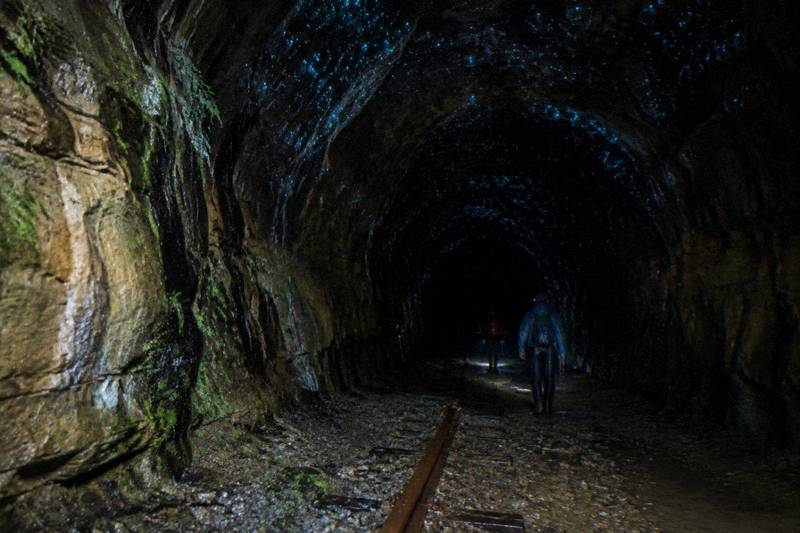
Glow Worm Tunnel With Kids: A Family Suitability Guide
The Glow Worm Tunnel is one of the few places in New South Wales where children can stand inside a pitch-black railway tunnel and watch native glow worms shine from the walls. The walk is short but not entirely easy, and the track beyond the lookout is not recommended for children at all. Here is what the official track information actually says about taking kids.
Short answer
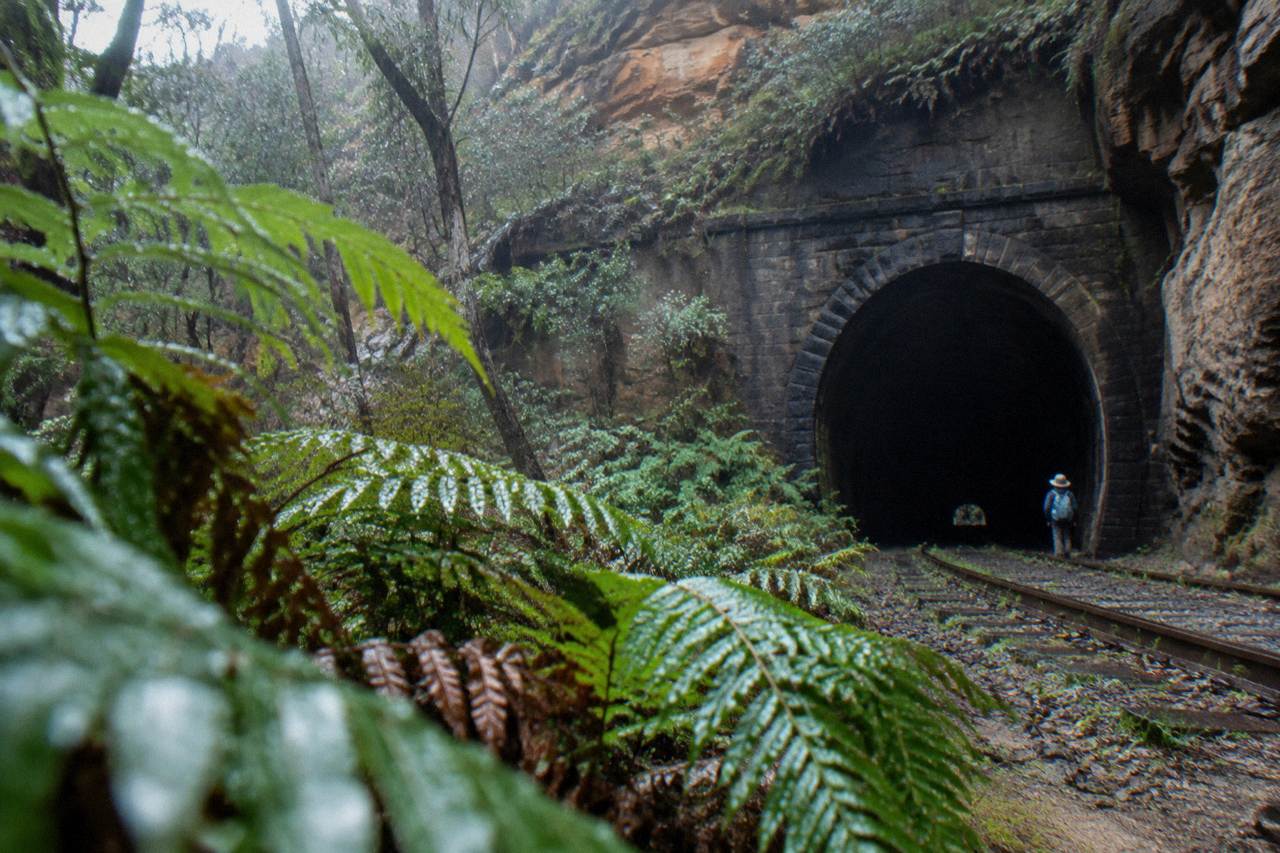
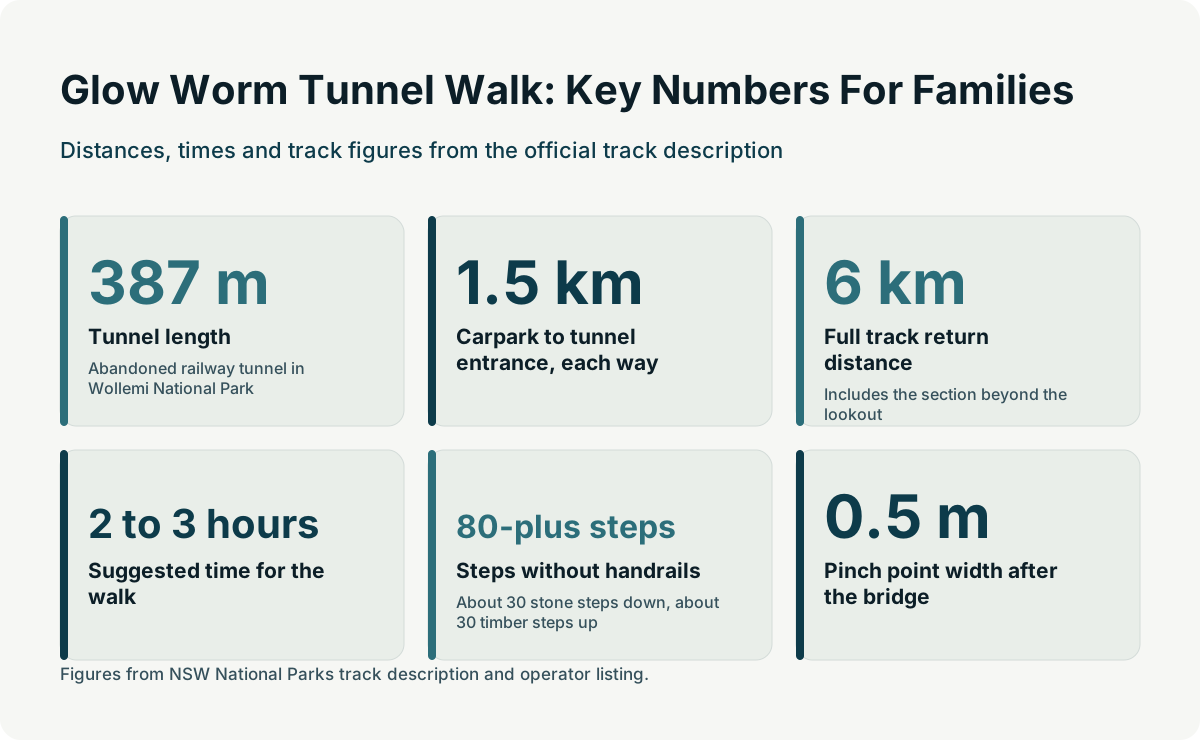
The Glow Worm Tunnel walk is 6 km return, Grade 3, with over 80 steps without handrails, a 0.5 m pinch point, and a wet uneven tunnel floor. NPWS says no prams or wheelchairs, and the track beyond the lookout is not suitable for children. Confident walkers aged roughly eight and up manage the tunnel itself; the guided night hike from Sydney is a separate, moderate-fitness option.
The Glow Worm Tunnel near Lithgow is a 387 m abandoned railway tunnel in Wollemi National Park, and its darkness is strong enough that the glow worms inside can be seen during the day. That makes it an appealing family outing: no late-night drive, no special equipment, and a walk that NSW National Parks rates as manageable with some bushwalking experience. But the track has real obstacles, and parts of it are genuinely unsuitable for small children. This guide works through the official track information, age by age, and explains the one guided night alternative that picks up from Sydney hotels. Before you commit to a date, our guide to staying safe in the Glow Worm Tunnel covers the darkness, damp conditions and remoteness you'll want to prepare for.
Is The Glow Worm Tunnel Walk Suitable For Kids?
The tunnel itself is a realistic outing for confident walking children, but the track is Grade 3 with over 80 steps without handrails, a narrow pinch point, and a wet rocky tunnel floor. NSW National Parks states there is no wheelchair or pram access, and that the track beyond the lookout is not suitable for children. Families should treat the tunnel entrance as the destination and turn back there with younger kids.
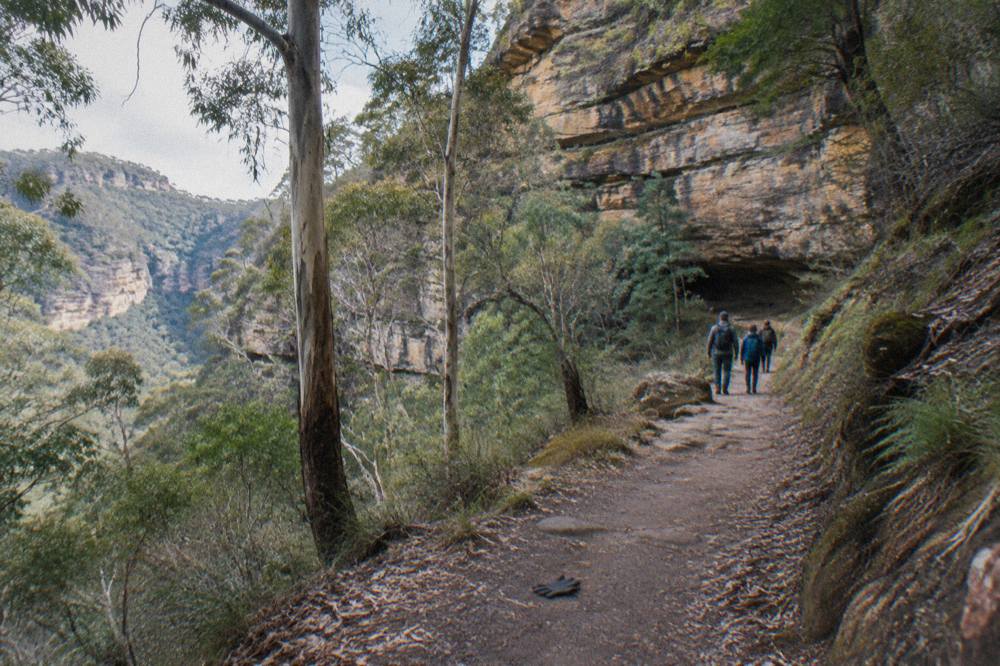
The walk from the carpark to the tunnel entrance is 1.5 km each way, and the full track is listed as a 6 km return with a suggested time of 2 to 3 hours. The first section is relatively gentle, but the descent to the tunnel involves about 30 stone steps down to a bridge, then about 30 narrow winding timber steps back up. None of those steps have handrails. After the bridge there is a pinch point only 0.5 m wide, which is worth knowing in advance if you carry a child on your hip or have a nervous walker in the group.
The tunnel floor is uneven, rocky and may be wet even in dry weather, because the tunnel drips. Footwear with grip matters more here than fitness. The good news is that the tunnel has been upgraded with an evened surface and a handrail inside, so once you are actually in the tunnel the footing is better than the approach track.
NSW National Parks describes the walk in full on its Glow Worm Tunnel walking track page, and it is worth reading the alerts section of that page before you set off. Temporary closures after heavy rain do happen on the section toward Newnes because of rockfall and flood risk. Our Glow Worm Tunnel Newnes walking guide covers the full route in more detail.
What The Track Is Really Like, Feature By Feature
The official track description lists five features that matter to families: 80-plus steps without handrails, a 0.5 m pinch point, a 1 m gap in a barrier at the trailhead, a wet uneven tunnel floor, and no drinking water anywhere on the track. Each one is manageable for a prepared family and a genuine problem for an unprepared one.
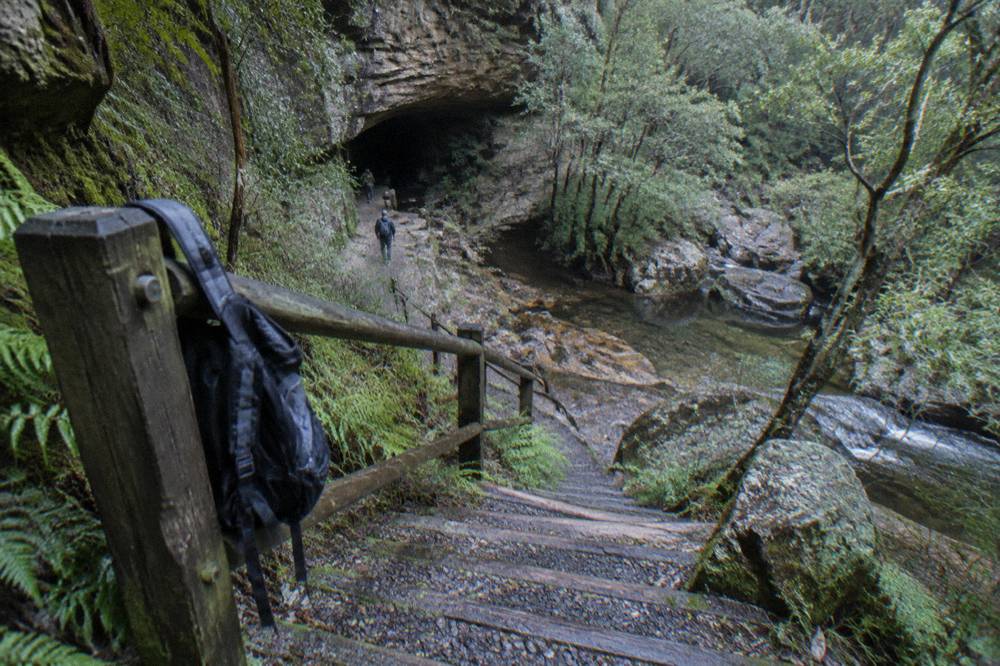
Here is how the track's obstacles stack up for a family visit.
| Track feature | What it means for families | Workaround |
|---|---|---|
| About 30 stone steps down to a bridge | Fine for most school-age kids, hard for toddlers | Carry toddlers, or stop at the top |
| About 30 narrow winding timber steps back up | No handrails, tiring for small legs | Rest breaks, one adult behind the child |
| 0.5 m wide pinch point after the bridge | Tight for carriers and wide backpacks | Go single file, pass packs over first |
| 1 m gap in a barrier at the trailhead | A squeeze for adults, fine for children | Nothing needed, just expect it |
| Wet, rocky tunnel floor | Slip risk for everyone | Closed shoes with grip, hold the inside handrail |
| Track beyond the lookout | NPWS: not suitable for children | Turn around at the tunnel or lookout |
The barrier gap at the trailhead is the sort of detail that surprises people: it exists to stop vehicles, and a 1 m opening means adults with large packs need to take them off. Beyond the tunnel, the track continues 1.5 km through Penrose Gorge to a lookout over Donkey Mountain and the Wolgan Valley. That section is the part NSW National Parks flags as unsuitable for children, and the full 6 km return figure includes it. Families who turn back at the tunnel are walking about 3 km return instead, which most children of eight or nine can handle with breaks.
There is very limited mobile reception on the track, and the official visitor information suggests the Emergency Plus app. Download it before you leave Lithgow. There are two non-flush toilets at the carpark, one ambulant, and no drinking water, so carry more than you think you need.
If the self-guided walk sounds like more logistics than your family wants on a single day, there is a guided option that removes the drive entirely. The night hike from Sydney picks up from accommodation in the city, supplies headlamps with a red-light mode, and takes a maximum of nine travellers to a glow worm cave behind a waterfall. It is a different experience from the tunnel: a bush walk in the dark with a certified outdoor instructor, rather than a daytime tunnel visit.
Which Ages Can Manage The Walk?
There is no published minimum age for the track, so the honest answer is ability-based rather than age-based. As a planning guide: babies and toddlers need a carrier, not a pram, because prams are not possible on the steps. The section beyond the lookout is not suitable for children, per NSW National Parks.
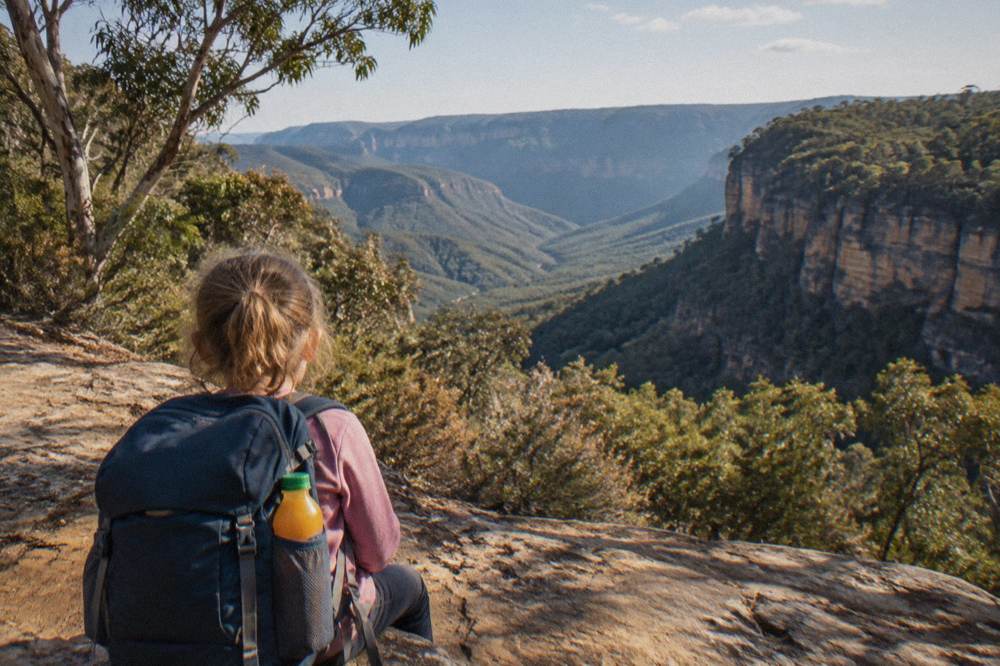
The table below is a planning guide built from the official track features, not a rule from any authority. Every child is different, and the numbers reflect the physical demands described on the track pages: unrailed steps, a pinch point, and uneven wet ground.
| Age group | Tunnel itself (3 km return) | Beyond the lookout | Notes |
|---|---|---|---|
| Under 3 | Possible in a carrier | No | No pram access; carrier needed for steps |
| 3 to 5 | Possible with 1:1 supervision | No | Hold hands on steps; short legs tire fast |
| 6 to 8 | Yes for most | No | Count the steps as a game; carry water |
| 9 to 12 | Yes | Not advised by NPWS for children | Full 6 km return achievable with breaks |
| Teens | Yes | Yes if experienced | Treat as a Grade 3 bushwalk |
One honest caveat about the guided night hike: the operator's listing states moderate fitness and no wheelchair access, but no age limit appears in the available information, so check the listing directly and ask before booking if your children are young. The hike runs about 5 hours in total including transport, with pickup from about 7:50pm to 8:35pm and return around 11pm to midnight per the operator, which is late for many children and worth weighing honestly.
For families who want the guided experience without the unsealed-road drive, the night hike from Sydney is the one bookable glow worm product in the region with hotel pickup. It is listed from $128 USD per person, rated 4.9 from 210 reviews, capped at nine travellers, and cancellable free up to 24 hours before departure. The operator cancels for bad weather or if minimum numbers are not met, which is worth knowing when you are planning around children's bedtimes.
Glow Worm Safety Rules To Teach Children Before You Go
NSW National Parks gives four rules that matter for kids: stay on the path, keep noise to a minimum, shine your torch at the ground or use red light, and never point a torch at the glow worms because it can damage their bioluminescence and makes them switch their lights off. Look but do not touch. Children who learn these rules beforehand get a better display, because disturbed glow worms go dark.
The science behind the rules is worth explaining to children, because it turns a list of prohibitions into something fascinating. The glow worms in this tunnel are Arachnocampa richardsae, the larval stage of a fungus gnat fly, not worms at all. Their light comes from a chemical reaction in a transparent rear end, and it exists to lure prey: small flying insects follow the glow into sticky silk snares that hang from the larva's nest. NSW National Parks covers the species and its behaviour on its glow worms animal page.
The lights-off response is the key fact for families. Glow worms can control their glow and will turn it off if disturbed, and a group of noisy visitors can dim a whole wall. Tell children the tunnel is like a library for bugs: quiet voices, torches on the floor, and the reward is a ceiling and walls of small blue-green lights. A cheap red-light torch each, or headlamps with a red mode, turns the rules into equipment the kids operate themselves.
No official flash photography rule was found on the NSW National Parks pages, so state that honestly: there is no published restriction, but the torch guidance points the same way, and a bright flash at a glowing wall is a good way to end the show. Our glow worm tunnel photography guide covers low-light technique in more detail.
The guided night hike builds these rules into the experience rather than leaving them to parents: the operator supplies headlamps with a red-light mode as standard, and a certified outdoor instructor leads the group. For families with children old enough for a late night, having someone else carry the safety brief, the equipment and the navigation is a genuine load off.
What To Pack For A Family Tunnel Visit
Pack for a Grade 3 bushwalk with no water and no shade inside the tunnel: closed shoes with grip for everyone, at least a litre of water per person, red-light torches, snacks, warm layers for standing still in a cold tunnel, and a first aid kit. There is no drinking water on the track, very limited mobile reception, and the only toilets are non-flush ones at the carpark.
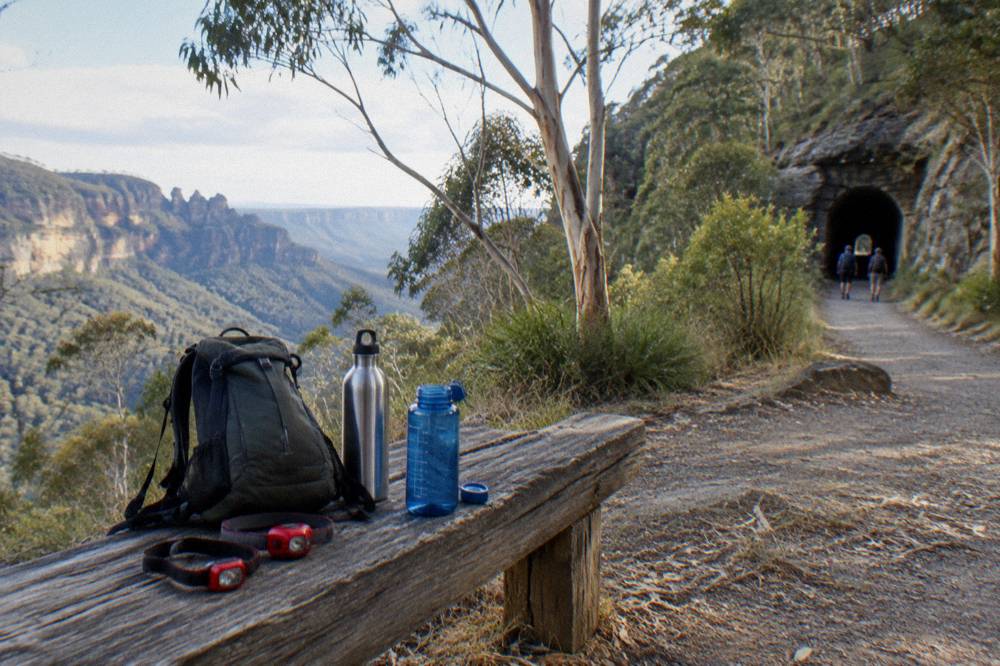
The tunnel interior stays cold and damp regardless of the weather outside, and children who were sweating on the steps will cool fast once they stop moving in the dark. A fleece each is not overkill. Katoomba's mean minimum temperatures give a sense of the region's range: from 12.9 degrees in January down to 2.6 degrees in July, and the tunnel area is similar or cooler at night.
| Item | Why it matters here |
|---|---|
| Closed shoes with grip | Wet, rocky, uneven tunnel floor |
| Red-light torch per person | The least disruptive light for the glow worms |
| Water, 1 L or more each | No drinking water anywhere on the track |
| Warm layer each | Tunnel is cold; kids cool fast when still |
| Snacks | 2 to 3 hours suggested for the walk |
| First aid kit and Emergency Plus app | Very limited mobile reception |
| Sun protection for the walk in | The approach track is exposed in places |
Camping, cycling on the track, pets and smoking are all prohibited, so leave the dog and the bikes at home; assistance animals are the exception. If your packing question is broader than this one walk, our what to bring for the tunnel guide covers the full checklist for the tunnel and the surrounding plateau roads.
Getting There With Children: The Drive Is Part Of The Plan
The tunnel is about a 2.5 hour drive from Sydney, and the last stretch is unsealed: NSW National Parks says 2WD is possible in dry weather, 4WD is highly recommended, and access is by 4WD only when it is wet. Parking at the end of Glowworm Tunnel Road is limited, and there is no public transport to the carpark at all. With kids, the road is often the deciding factor, not the walk.
The two road approaches both start from Lithgow. The main route runs via Clarence and the Zig Zag Railway area along Old Bells Line of Road for 8.4 km, then a long unsealed stretch of Glowworm Tunnel Road, passing through a 60 m single-lane tunnel just before the carpark, which children tend to love. The alternative is State Mine Gully Road, a gravel road that becomes Glowworm Tunnel Road after about 39 km. Trucks use Old Bells Line of Road frequently, with a 40 km/h limit during working hours, so drive with care.
Two current works affect the drive. Construction at the Bungleboori precinct runs until December 2026, and from 11 October 2026 Glowworm Tunnel Road is reduced to a single lane at the intersection with Lost City North and Maiyingu Marragu, with delays of up to five minutes possible. A park fire ban also applies across Wollemi National Park from 1 October 2026 to 31 March 2027, which matters if you were planning sausages at the carpark: campfires and solid fuel barbecues are prohibited, gas and electric cookers are allowed under conditions. Check the NPWS local alerts page the day before you go, because these alerts change.
For families without a suitable vehicle, or without a driver willing to face a long gravel road with tired children at the end of the day, this is where the comparison tips toward a guided option. Our road and car park guide has the full route detail, and the self-drive versus guided comparison walks through the trade-offs honestly.
The guided night hike sidesteps the whole road question: a small van handles the transport, parking fees are included, and the group is capped at nine travellers, so nobody's children are the only children on a coach. Pickup is staggered from Sydney accommodation between about 7:50pm and 8:35pm, which means no fixed meeting point to find in the dark.
When To Take Kids: Timing, Crowds And Seeing The Glow
Glow worms are present in the tunnel year round, and because the 387 m tunnel is dark enough inside, daytime viewing works, which is the whole reason the tunnel suits families. NSW National Parks recommends visiting during the week or in spring or autumn, and warns that summer weekends and holidays bring crowds and limited parking. Operators and travel press say displays are often stronger in warm, wet months and after rain, but that is opinion, not official data.
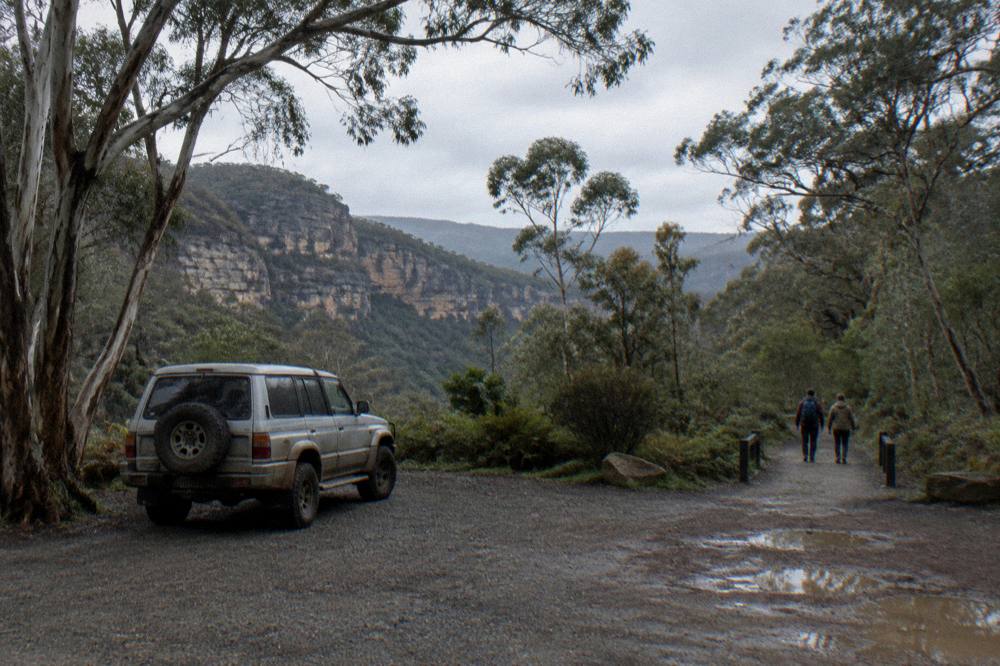
The practical family translation is simple: a weekday morning in spring or autumn is the sweet spot. You get the parking, the cooler walking temperatures, and a better chance of standing in the tunnel with just your family rather than a queue. Arrive early even in the shoulder seasons, because the carpark is the bottleneck, and a mid-morning arrival in January can mean parking far back down the road with children in tow.
Let eyes adjust inside the tunnel: the official advice is to turn torches off and wait. Children are usually better at this than adults, and the wait is part of the magic. The NPWS story about the tunnel describes hundreds of blue-green tail lights along the walls. Keep the light and noise rules and the display stays intact for the next family.
The tunnel's darkness is also why the after-dark question matters less here than at other glow worm sites. Our night versus day glow worm comparison covers this in detail, but the short version for families: you do not need a night visit to see glow worms at the tunnel, and a daytime visit is far easier with children.
For families who cannot make the drive work, the guided night hike from Sydney remains the alternative: hotel pickup in the evening, a small group of no more than nine, headlamps supplied, and a chance of other wildlife along the way. The listing is flagged as often selling out, so if a school-holiday date matters to your family, book it rather than assume.
The Honest Verdict For Families
The Glow Worm Tunnel is one of the most child-friendly glow worm experiences in New South Wales, not because the track is easy, but because the glow worms are visible in daylight and the walk can be shortened to about 3 km return by turning back at the tunnel. Confident walkers from about age six, prepared families, and weekday visits add up to a memorable outing. The unrailed steps and the unsealed road are the two real constraints.
Weigh it up as two separate challenges. The walk is a Grade 3 bushwalk with obstacles a prepared family handles: steps, a pinch point, wet rock. The drive is a long commitment: 2.5 hours from Sydney, then a long unsealed stretch of Glowworm Tunnel Road that demands 4WD in wet weather. Families with a capable car and confident kids should go self-guided on a weekday morning. Families without the car, or with a tight schedule from Sydney, should look at the guided night hike, accept the late finish, and let someone else handle the road.
Either way, teach the four rules before you go: quiet voices, torches down, red light where possible, look but do not touch. Children who follow them get the full show, and the glow worms of Blue Mountains Glow Worms keep their lights on for the next family through the door.
Common Questions About The Glow Worm Tunnel With Kids
Is the Glow Worm Tunnel walk suitable for kids?
Partly. The tunnel itself is reachable by a 1.5 km walk each way from the carpark, and confident walkers from about age six manage it with supervision. The track is Grade 3 with over 80 steps without handrails, a 0.5 m pinch point, and a wet uneven tunnel floor. NSW National Parks states there is no pram or wheelchair access, and that the track beyond the lookout is not suitable for children.
Can you take a pram to the Glow Worm Tunnel?
No. NSW National Parks lists no wheelchair or pram access, because of the unrailed steps, the narrow pinch point after the bridge, and the rocky tunnel floor. Babies and toddlers need to be carried in a carrier, and the 1 m gap in the barrier at the trailhead also rules out wheeled gear.
Can children see glow worms during the day at the tunnel?
Yes. The tunnel is 387 m long and dark enough inside that glow worms can be seen during the day, which is exactly why it suits families. Let eyes adjust with torches off, keep noise down, and the blue-green lights appear along the walls.
Is there a minimum age for the guided night hike from Sydney?
No age limit appears in the available information. The listing states moderate fitness and no wheelchair access, and the tour runs about 5 hours with pickup from about 7:50pm to 8:35pm and return around 11pm to midnight per the operator. Check the listing and ask the operator directly before booking with young children.
Is the Glow Worm Tunnel track dangerous for children?
It is a Grade 3 bushwalk, not a paved path. The specific hazards are over 80 steps without handrails, a 0.5 m pinch point, an uneven wet tunnel floor, and very limited mobile reception. With grip-soled shoes, one adult per young child on the steps, and a decision to turn back at the tunnel, most families complete it without incident.
Do you need to book or pay to visit the Glow Worm Tunnel with kids?
No fee, permit or booking is listed on the NSW National Parks pages for the track or its access roads. The walk is self-guided. The costs families do face are fuel, food, and optionally a guided tour: the night hike from Sydney is listed from $128 USD per person.