Glow Worm Tunnel Safety: Hazards, Closures And How To Prepare
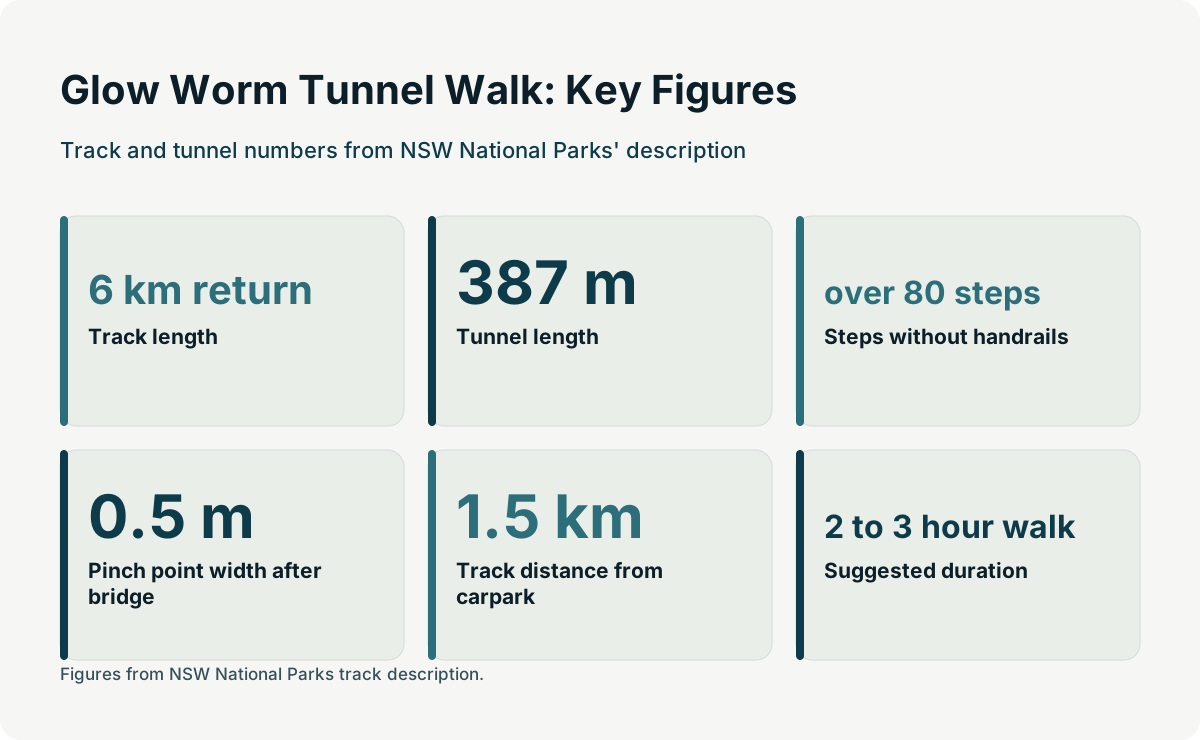
The Glow Worm Tunnel walk is a free, unguided 6 km return track with a dark wet tunnel floor, more than 80 steps without handrails, a 0.5 m pinch point, no drinking water and almost no mobile reception. Here is every hazard NSW National Parks documents, and what to do about each one.
Short answer
The Glow Worm Tunnel track is a 6 km return Grade 3 walk near Lithgow with over 80 unrailed steps, a 0.5 m pinch point, an uneven rocky tunnel floor that may be wet, no drinking water and very limited mobile reception. NSW National Parks lists it as open with current alerts; it can close after heavy rain and a park fire ban runs 1 October 2026 to 31 March 2027.
Is The Glow Worm Tunnel Walk Dangerous?
The Glow Worm Tunnel walk is a Grade 3 track that NSW National Parks describes as needing some bushwalking experience, and the real risks are specific and manageable: an uneven, rocky, sometimes wet tunnel floor, more than 80 steps without handrails, a 0.5 m pinch point after a bridge, almost no mobile reception, no drinking water and a long unsealed road to reach the carpark. The track is 6 km return, suggested at 2 to 3 hours, with short steep hills. It is not a stroll, and it is not wheelchair or pram accessible. Children can do the walk to the tunnel, but NSW National Parks says the track beyond the lookout over Donkey Mountain is not suitable for children.
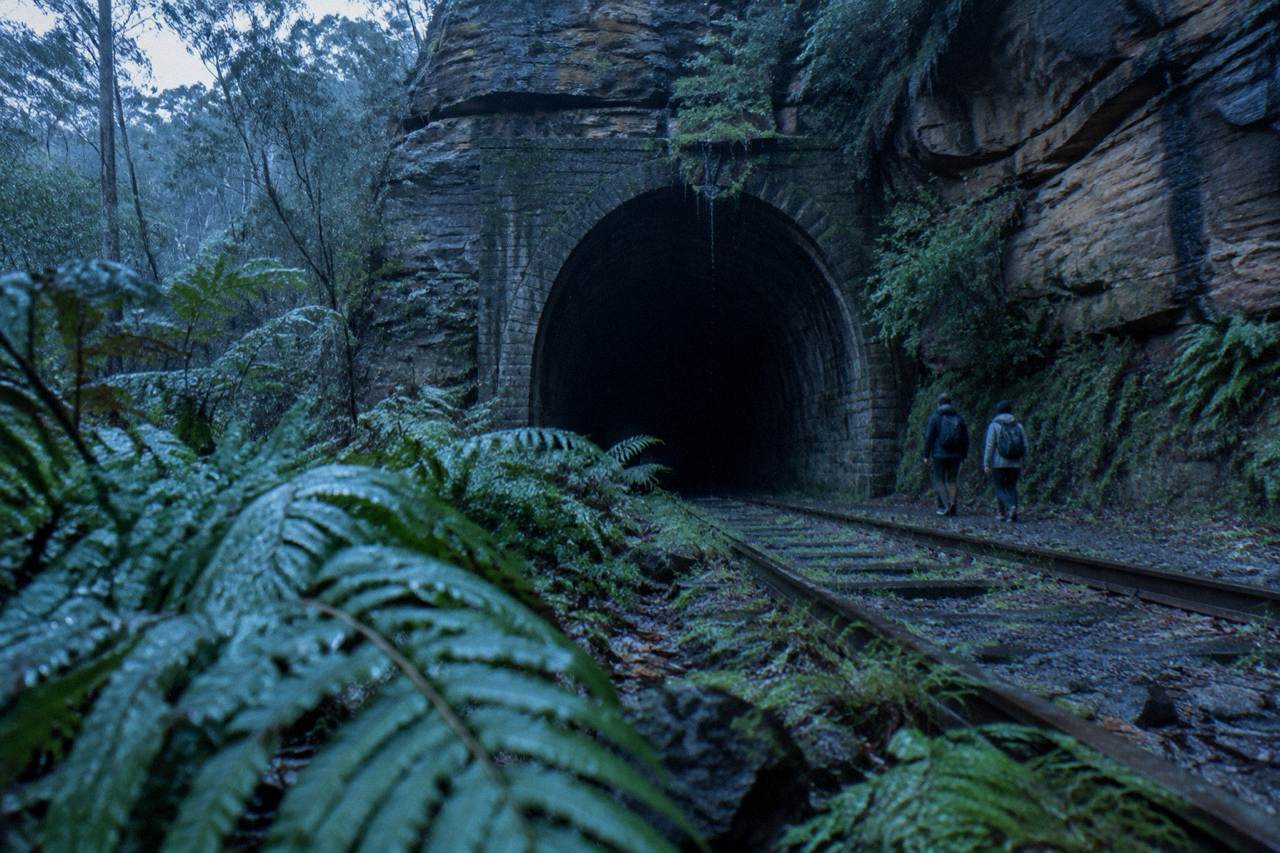
The honest framing is that the hazards on this walk are well documented on the official track pages. The tunnel itself, 387 m long and built in the early 1900s for the Newnes mining railway, has had its surface evened and a handrail added inside, which helps a great deal with the single biggest hazard: walking in near-total darkness on uneven rock. What the upgrades did not fix is everything outside the tunnel, and that is where most of the preparation matters.
The track is operated through the Blue Mountains Heritage Centre office at 270 Govetts Leap Road, Blackheath, open 9am to 4pm daily except Christmas Day, phone 02 4787 8877. That office is the right place to call when the alerts pages leave a question unanswered, and the official Glow Worm Tunnel track page is the source to check the morning you go. The status line there reads "Open, check current alerts", which is not a formality: closures for weather, fire and road works do happen, and they are posted as alerts rather than by changing the walk's grade.
For a fuller picture of what the walk involves, the Glow Worm Tunnel walking track guide covers the route itself, and the Glow Worm Tunnel Newnes guide covers the country the track sits in. This page stays on one subject: what can hurt you, and what to do about it.
The Dark Tunnel Floor And Why Torches Matter
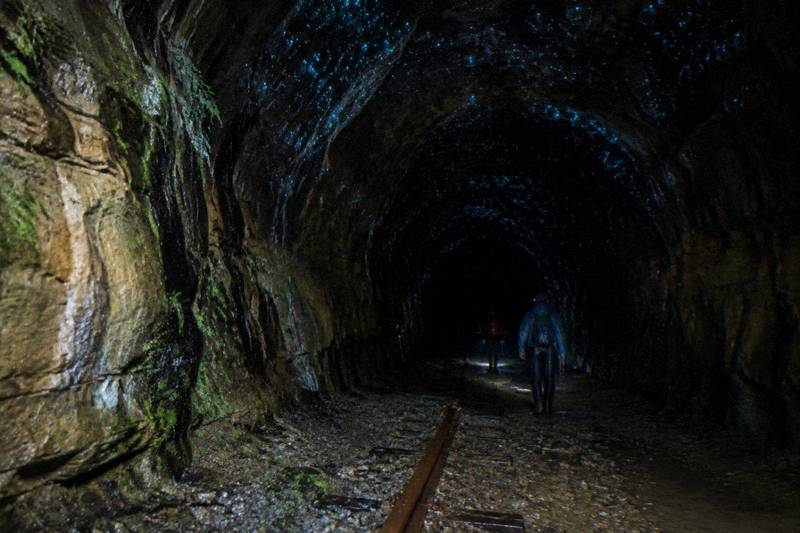
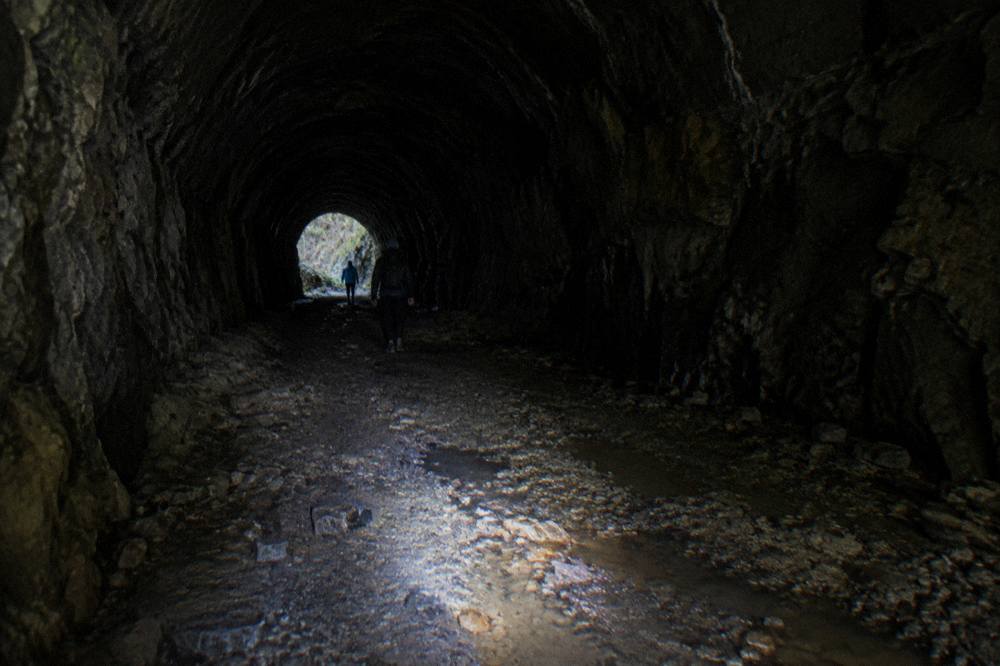
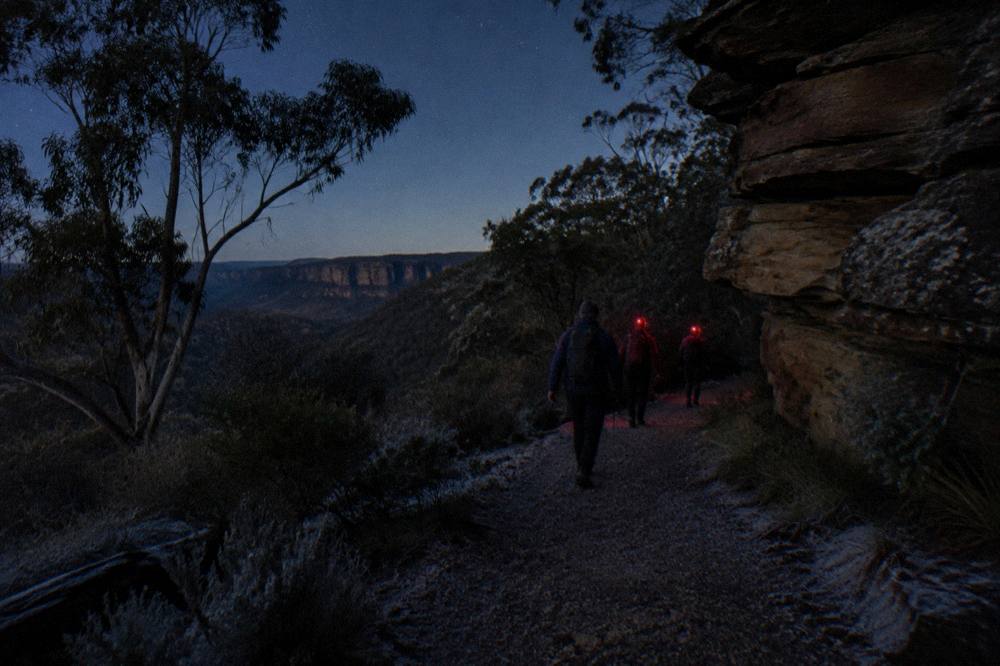
Inside the 387 m tunnel the floor is uneven and rocky and may be wet, and because the tunnel is long it gets dark enough that you cannot see your feet without a torch; NSW National Parks advises shining the torch at the ground or using a red-light option, staying on the path and keeping noise to a minimum so the glow worms keep their lights on. The darkness is not a design flaw, it is the reason the glow worms are there. A colony of Arachnocampa richardsae larvae, the young of a small fungus gnat, lives on the tunnel walls and glows from a transparent rear end to lure prey into silk snares. They need that darkness, and visitors need a torch to move through it safely.
The torch rules serve two purposes at once. Pointed at the ground, a torch shows you where to put your feet on rocky, possibly wet stone. A red-light mode does the same job while disturbing the glow worms least, because, as NSW National Parks puts it, glow worms can control their lights and will turn them off if disturbed. The NPWS story on the tunnel is blunter still: do not point a torch at the glow worms, since it can damage their bioluminescence and makes them switch off. Look, but do not touch.
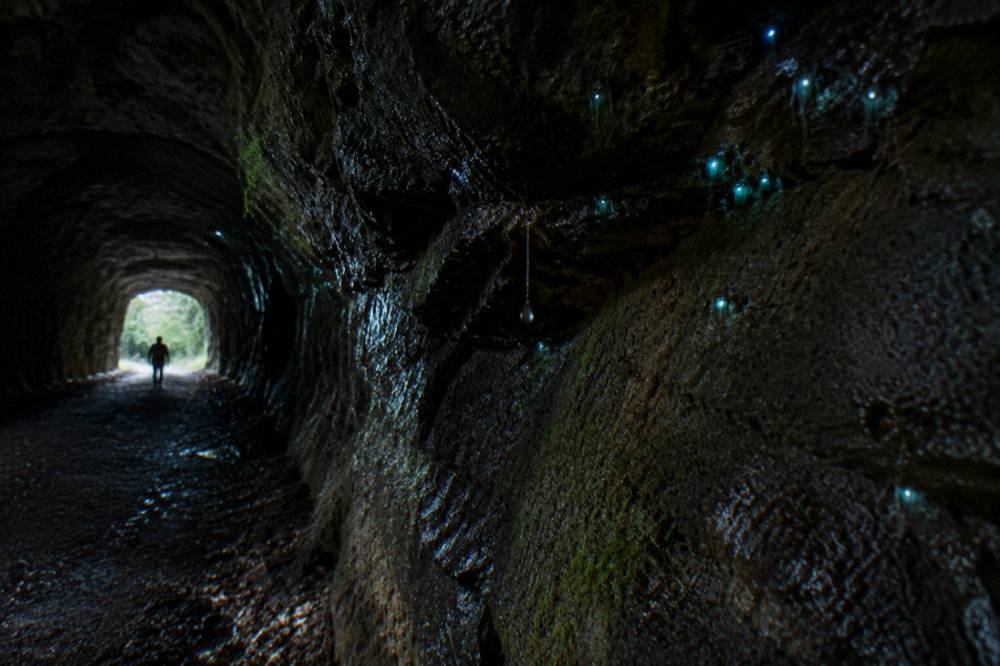
Practically, this means every person in your group carries their own torch, not one shared between three. Headlamps beat handheld torches inside the tunnel because both hands stay free for the internal handrail and for balance on the uneven floor. Carry spare batteries or a spare phone torch. Let your eyes adjust when you turn a torch off to look at the worms: full adjustment takes some minutes, and the payoff is a wall of small blue-green lights rather than a dim hint of them.
If you want to photograph the colony, the Glow Worm Tunnel photography guide covers technique. One note belongs here because it is a safety point: NSW National Parks publishes no flash rule for this tunnel, so do not invent one, but a sudden flash in a dark tunnel is a good way to both disturb the colony and wreck your own night-adjusted eyes. The operator of the Sydney night hike issues headlamps with a red-light mode for exactly this reason.
Steps, Pinch Points And The Barrier Gaps
The track has over 80 steps without handrails, roughly 30 stone steps down to a bridge and about 30 narrow winding timber steps back up, plus a pinch point 0.5 m wide after the bridge and a trailhead barrier with a 1 m gap; these are the fixed features that catch people out, and none of them are visible from the carpark. The numbers come from NSW National Parks' own track description, and they are the reason the walk carries a Grade 3 rating with short steep hills rather than the easy grade the flat 6 km distance suggests.
A 0.5 m pinch point deserves a plain explanation. It is a spot where the track narrows to about half a metre wide, shortly after the bridge, and a walker with a full backpack, a child on shoulders or a wide stance has to slow down and turn sideways to pass. Anyone with mobility limits, and anyone carrying a pram, should treat this as the hard boundary of the walk. NSW National Parks states plainly that there is no wheelchair or pram access. The barrier at the trailhead with its 1 m gap is the first of these filters, and it is there to stop vehicles, not to test walkers.
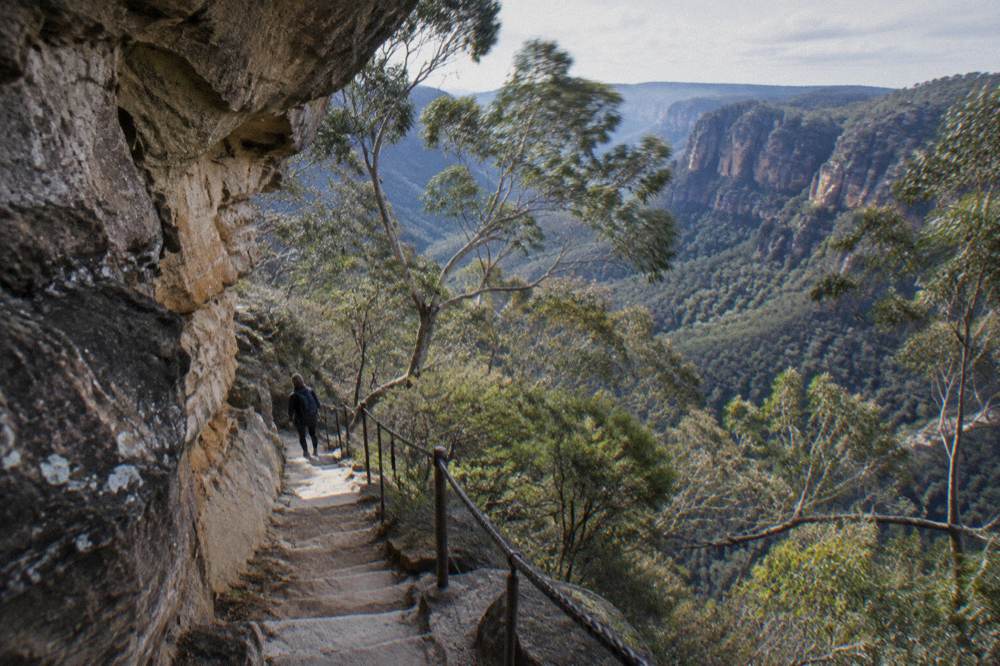
The steps are the other fixed hazard. Stone steps down to the bridge, then narrow timber steps winding back up, all without handrails, mean the walk demands attention on the way out and more on the way back, when legs are tired and the light is lower. The standard advice holds: shoes with grip, not thongs or smooth-soled sneakers, and a pace set by the least steady member of the group. If you are walking with children, the Glow Worm Tunnel with kids guide covers the decision in detail, including where to turn around if the steps or the dark tunnel are too much for the smallest walkers.
No Reception, No Drinking Water, No Facilities
The carpark and track have very limited mobile reception, no drinking water and only two non-flush toilets, so NSW National Parks advises carrying the Emergency Plus app and treating everything you need, including water, as something you bring yourself. The Emergency Plus app works because it can relay your location to emergency services even where ordinary calls struggle, and on a track 1.5 km from the carpark at the tunnel and up to 3 km at the far lookout, that margin matters. Download it before you leave Lithgow or Sydney, because there is no reliable signal to download it with at the trailhead.
Water is the other quiet hazard. There is none on the track, and a 2 to 3 hour walk on a warm afternoon, particularly the climb back up the timber steps, uses more fluid than most people expect. The Blue Mountains plateau sits above 1,000 m, and the Bureau of Meteorology's Katoomba station records a January mean maximum of 23.4 C but a July mean maximum of only 9.5 C, so the same walk can be a heat question or a cold question depending on the month. Carry more water than feels necessary in summer, and warm layers in winter, when the mean minimum at Katoomba sits between 2.6 and 3.7 C from June to August. Everything else covered here is indexed on Blue Mountains Glow Worms.
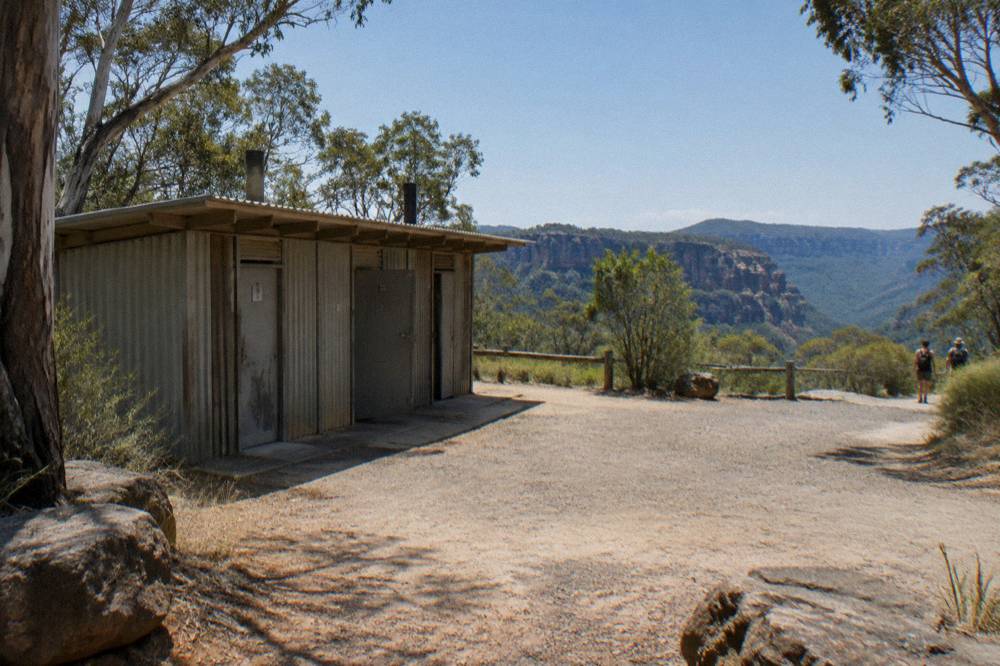
The facilities list from NSW National Parks is short, and it is worth seeing laid out in full, because every absence on it is a packing instruction:
| Facility at the carpark or track | What is there | What is not there |
|---|---|---|
| Toilets | 2 non-flush toilets, one ambulant | No flush facilities, no baby change |
| Drinking water | None anywhere on the track | Bring all water for the walk |
| Seating | One timber bench at the start | No seating along the track or in the tunnel |
| Rubbish service | None | Carry out everything you carry in |
| Mobile reception | Very limited | Emergency Plus app advised |
| Camping | Prohibited on track and tunnel | Nearest campground at Newnes via Wolgan Valley Road |
| Pets | Prohibited, assistance animals excepted | No exceptions for ordinary dogs |
| Parking | Limited spaces at peak times | No overflow areas, no long vehicles |
Whatever you carry in, you carry out. Pets are prohibited on the track and in the tunnel, with assistance animals excepted, and camping is prohibited too, with the nearest campground at Newnes via Wolgan Valley Road. Smoking is not permitted, which matters more than it sounds in fire season, as the next section explains.
The Unsealed Road Is Part Of The Safety Story
Glowworm Tunnel Road and State Mine Gully Road are unsealed gravel, reachable by 2WD in dry weather but 4WD only when wet, with no long vehicle access, a 60 m single-lane tunnel just before the carpark and limited parking at the end, so the drive in is a genuine part of the risk assessment, not an afterthought. From Lithgow the route runs via Clarence and the Zig Zag Railway, Petra Avenue, then 8.4 km of Old Bells Line of Road and 26.8 km of Glowworm Tunnel Road, or via State Mine Gully Road, about 39 km of gravel. Trucks use Old Bells Line of Road frequently, with a 40 km/h limit during working hours, and the drive demands caution accordingly.
The wet-weather rule is the one that catches visitors. A 2WD that manages the gravel comfortably on a dry day can become stranded or slide on the same road after rain, and NSW National Parks' advice escalates from 2WD possible in dry weather, to 4WD highly recommended, to access by 4WD only when the road is wet. There is no public transport to the carpark at all, and no shuttle service, so a self-drive visit means committing to the road conditions you actually find, not the ones you hoped for. The Glow Worm Tunnel road and car park guide covers the routes in detail.
The road rules from NSW National Parks, condensed:
| Road condition | NSW National Parks advice | Practical meaning |
|---|---|---|
| Dry weather | 2WD access possible | Standard car is fine, drive to conditions |
| Damp or dusty | 4WD highly recommended | Consider turning back in a 2WD |
| Wet weather | Access by 4WD only | Do not attempt in a 2WD |
| Long vehicles | No long vehicle access | Campervans and caravans excluded |
| Old Bells Line of Road | Trucks frequently operate, 40 km/h limit in working hours | Expect heavy vehicles, keep left |
| Single-lane 60 m tunnel | Just before the carpark | Slow, lights on, listen for oncoming traffic |
Two current works alerts sit on this road. Construction at the Bungleboori precinct, in the adjoining Gardens of Stone area, runs until December 2026 and the Bungleboori site itself is closed to visitors. From 11 October 2026, Glowworm Tunnel Road at the intersection with Lost City North and Maiyingu Marragu is reduced to a single lane with delays of up to five minutes. Neither closes the track, but both change the drive, and the official alerts page is where the current wording lives.
Fire Bans, Rain Closures And Reading The Alerts
A park fire ban applies across Wollemi National Park from 1 October 2026 to 31 March 2027, prohibiting campfires and solid-fuel stoves, and the Glow Worm Tunnel to Newnes track section may close during or after heavy rain because of rockfall and flood risk, so the two checks before any visit are the fire status and the weather in the previous 48 hours. The fire ban runs on a fixed seasonal schedule, reviewed in September 2026, and it exists because the Newnes Plateau is dry eucalypt country where a cigarette or a campfire cooker can matter enormously. Gas and electric cookers remain allowed under conditions, but there is no cooking reason to be on this track anyway.
The rain closure is the subtler risk. NSW National Parks states that the Glow Worm Tunnel to Newnes section may close during or after heavy rain due to rockfall and flood risk, and Penrose Gorge, which the track follows beyond the tunnel, is exactly the kind of confined drainage where flood water arrives fast. If the Bureau of Meteorology shows heavy rain in the days before your visit, check the alerts, and if the closure is in force, the walk to the tunnel entrance and back, 3 km return from the carpark, is generally the part that remains. The Bureau's Katoomba climate averages show why this matters most in the warm months: mean rainfall runs 164.9 mm in January and 177.8 mm in February, against 70.7 mm in September.
The habit that ties all of this together is reading the alerts on the morning you walk, not the week before. The status line on the track page reads "Open, check current alerts", and the alerts page is reviewed and updated by NPWS staff on a rolling basis, as the September 2026 review dates on the current notices show. Weather closures, fire bans and road works all appear there first. The is the Glow Worm Tunnel open guide and the Glow Worm Tunnel safety companion piece on what to bring both dig into the packing side of the same question.
Hazard And Response: The Full Table
Every hazard NSW National Parks documents on this track has a specific, cheap response, and the table below pairs them so nothing on the walk should come as a surprise: torch discipline for the dark, gripped shoes for the steps, carried water, the Emergency Plus app, and a weather and alerts check before leaving the sealed road. Read it once the night before you go. None of the responses require special equipment beyond a torch, decent shoes, water and a phone.
| Hazard | What NSW National Parks says | Your response |
|---|---|---|
| Dark tunnel, uneven rocky floor, may be wet | Torch shone at the ground or red-light option; stay on the path | One torch per person, headlamp preferred, spare battery |
| Over 80 steps without handrails | About 30 stone steps down, about 30 timber steps up | Gripped footwear, slow pace, set pace by least steady walker |
| 0.5 m pinch point after the bridge | Documented track feature | Turn sideways, no wide packs, no prams |
| Trailhead barrier with 1 m gap | Documented track feature | Nothing wider than 1 m passes; no wheelchair or pram access |
| Very limited mobile reception | Emergency Plus app advised | Download before leaving; know your group's position |
| No drinking water | None on the track | Carry all water; more in summer, warm layers in winter |
| Unsealed roads, wet-weather 4WD rule | 2WD dry only, 4WD when wet, no long vehicles | Check rain in prior 48 hours; turn back if wet and 2WD |
| Fire ban 1 Oct 2026 to 31 Mar 2027 | Campfires and solid-fuel stoves prohibited | No smoking, no cooking on track, check alerts |
| Track may close after heavy rain | Glow Worm Tunnel to Newnes section, rockfall and flood risk | Check alerts morning of walk; skip gorge section if flagged |
| Glow worms turn lights off if disturbed | Keep noise to a minimum, look but do not touch | Quiet voices, red light, no touching, no torch pointed at worms |
Two rows deserve a second read. The wet-weather road rule is the one most likely to end a trip before it starts, and the reception row is the one most likely to matter if something goes wrong. Everything else on the table is preparation you can do at home. For the seasonal angle, the best time to see glow worms guide covers when displays and crowds line up, and NSW National Parks suggests visiting during the week or in spring or autumn to avoid the summer and holiday crowding that also strains the limited parking.
Going With A Guide Versus Going Alone
The self-guided tunnel walk is free, with no entry, parking or permit fee listed by NSW National Parks, while the bookable alternative on this site is a Sydney-pickup night hike to a glow worm cave behind a waterfall, run by Wildscape Adventures, which includes a certified outdoor instructor, headlamps with a red-light mode, transport in a small van, parking fees and water, and the operator cancels for bad weather. The two experiences are different products in different places, and the safety comparison is really a comparison of who carries the risk.
On a self-guided walk, you carry it: your torches, your navigation, your road judgement, your weather call, your first aid. That is entirely reasonable for an experienced party with the table above in mind, and the track is well marked and well described. What a guided product changes is the fixed set of things you no longer have to judge: the operator picks the night, supplies the lighting, knows the route, and makes the cancellation call when weather turns. The hike runs about 5 hours with evening hotel pickup and drop-off from Sydney accommodation in a pickup window of about 7:50pm to 8:35pm, staggered rather than at a fixed meeting point, and returns around 11pm to midnight per the operator. It is from $128 USD per person, rated 4.9 from 210 reviews, capped at a maximum of 9 travellers, needs moderate fitness and is not wheelchair accessible. Free cancellation applies up to 24 hours before, and the listing is flagged as often selling out.
The comparison, side by side:
| Self-guided tunnel walk | Guided night hike from Sydney | |
|---|---|---|
| Cost | No fee listed by NSW National Parks | From $128 USD per person |
| Location | Glow Worm Tunnel, Wollemi National Park, near Lithgow | A glow worm cave behind a waterfall; location not published by the operator |
| Getting there | Own vehicle, unsealed road, 2.5 hr drive from Sydney | Hotel pickup and drop-off, about 7:50pm to 8:35pm window |
| Lighting | Bring your own torch, red-light mode preferred | Headlamps with red-light mode supplied |
| Leadership | None; you navigate and decide | Certified outdoor instructor, maximum 9 travellers |
| Weather call | You make it; check alerts and road conditions | Operator cancels for bad weather or if minimum numbers are not met |
| Fitness | Grade 3, some bushwalking experience recommended | Moderate fitness, not wheelchair accessible |
| Cancellation terms | No booking to cancel | Free cancellation up to 24 hours before |
One honest caveat on the guided option: the operator does not publish the cave's location, and the hike does not go to the Glow Worm Tunnel. Glow worms are wild animals and sightings are never guaranteed on either product; the operator cancels for bad weather or if minimum numbers are not met, which is itself a safety feature. The self-drive versus guided guide works through the full decision, and the site's comparison of night versus day glow worm tours covers the timing side. For the bookable hike, check the live listing for current dates and availability.
If Something Goes Wrong Out There
If an injury or breakdown happens, the priorities in order are warmth and shelter, the Emergency Plus app for location relay, and the Blue Mountains Heritage Centre office on 02 4787 8877 for non-emergency track questions, with emergency calls going to 000 as always; the walk's remoteness means help is not minutes away, so prevention carries the day. The nearest serious medical facilities are in Lithgow, and the carpark sits roughly 2.5 hours by road from Sydney per NSW National Parks, on gravel for the last stretch. That distance is the quiet reason every row in the hazard table matters.
Prevention on this track is mostly slow decisions. Do not start the walk in failing light if you are not equipped for dark. Do not attempt the road in a 2WD after rain. Do not let the group split up in the tunnel, where sound carries strangely and people get separated faster than they expect. Keep the group together on the unrailed steps, where a twisted ankle on the far side of the bridge is a slow, careful walk out rather than a quick one. A basic first aid kit with a bandage capable of supporting an ankle is the single most useful item beyond the torch and water.
The wider context is worth knowing. Wollemi National Park is remote, forested country in the Greater Blue Mountains World Heritage Area, best known as the home of the Wollemi pine, discovered in 1994 in a remote rainforest canyon. The Wollemi National Park guide covers the park's scale and character. Glow worms themselves are harmless to people, as the are glow worms harmful guide explains: they are the larvae of fungus gnats, they catch mosquitoes and moths in silk snares, and their light is a chemical reaction in a transparent rear end, not anything that stings or burns.
Prepared well, the Glow Worm Tunnel is one of the most accessible wild glow worm experiences in New South Wales, and its hazards are the documented, ordinary kind: darkness, uneven stone, unrailed steps, a remote road and a fire-prone season. Check the alerts, carry the water, point the torch at the ground, and the worst thing likely to happen is that the glow worms switch off for a minute until the group quiets down.
The two ways to see glow worms in this region, in the end, are the free self-guided tunnel walk and the guided night hike from Sydney, and both reward preparation over improvisation.
Common Questions About Glow Worm Tunnel Safety
Is the Glow Worm Tunnel walk safe for children?
The walk to the tunnel entrance, 3 km return from the carpark, is achievable for many children with supervision, but NSW National Parks states the track beyond the lookout over Donkey Mountain is not suitable for children. The tunnel's dark floor, the unrailed steps and the 0.5 m pinch point all demand close attention with young walkers.
Can you walk through the Glow Worm Tunnel in the dark?
Yes, and a torch is required: the 387 m tunnel gets dark enough to see glow worms even during the day. NSW National Parks advises shining the torch at the ground or using a red-light option, staying on the path and keeping noise to a minimum, because disturbed glow worms switch their lights off.
Is there mobile reception at the Glow Worm Tunnel?
Reception is very limited at the carpark and on the track. NSW National Parks advises carrying the Emergency Plus app, which relays your location to emergency services. Download it before leaving Lithgow or Sydney.
Is the Glow Worm Tunnel track closed when it rains?
The track is listed as open with current alerts, but the Glow Worm Tunnel to Newnes section may close during or after heavy rain because of rockfall and flood risk. The unsealed access road also becomes 4WD only in wet weather. Check the alerts page on the morning of your walk.
Do you need a permit or pay a fee for the Glow Worm Tunnel?
No entry, parking or permit fee is listed on the NSW National Parks track, visitor info or alerts pages. The walk is free and self-guided.
Is the Glow Worm Tunnel wheelchair or pram accessible?
No. NSW National Parks states there is no wheelchair or pram access: the track has over 80 steps without handrails, a 0.5 m pinch point after the bridge and a trailhead barrier with a 1 m gap, on an uneven surface that may be wet.