Glow Worms NSW: Where To Actually See Them
NSW has two main glow worm experiences with solid documentation behind them: a free, self-guided walk through an abandoned railway tunnel in Wollemi National Park, and a small-group night hike from Sydney to a glow worm cave behind a waterfall. Everything else you read about needs a caveat.
Short answer
The two documented glow worm experiences in NSW are the Glow Worm Tunnel in Wollemi National Park, a free 6 km return walk about 2.5 hours from Sydney, and the Glow Worm Cave Night Hike From Sydney, from $128 USD per person with hotel pickup. No official source documents glow worms at Jenolan Caves, Katoomba, Leura or Blackheath.
Where Can You See Glow Worms In NSW?
The short, honest answer is that NSW has two glow worm experiences with official documentation behind them: the Glow Worm Tunnel in Wollemi National Park, a free self-guided walk about 2.5 hours from Sydney, and a bookable night hike from Sydney to a glow worm cave behind a waterfall, from $128 USD per person. Every other named site either has no official glow worm record or sits outside the Blue Mountains entirely.
Glow worms in this region are the larvae of a fungus gnat, Arachnocampa richardsae, and NSW National Parks documents them in caves, overhangs, rainforest gullies and abandoned tunnels across the Blue Mountains and Wollemi country. The catch for a planner is that "many colonies exist" and "you can reliably visit one" are different claims. The parks service names exactly one glow worm site on its public track pages in this region: the Glow Worm Tunnel near Lithgow, on the Newnes Plateau. That is the anchor of any NSW glow worm trip. For the wider picture beyond NSW, the complete guide to glow worm sites across Australia covers Queensland's famous colonies and other spots worth the drive.
Beyond the tunnel, the second documented option is commercial rather than public: a guided night hike run by Wildscape Adventures, which collects guests from Sydney hotels in the evening and walks them, with red-light headlamps, to a cave behind a waterfall where native glow worms live. The operator does not publish the cave's location, which is standard practice for protecting wild colonies. It is rated 4.9 from 210 reviews and takes about five hours door to door.
Then there is a long tail of claims. Jenolan Caves, the Helensburgh tunnel in the Illawarra, the Grand Canyon Track at Blackheath, Govetts Leap, Wentworth Falls: all of these get described as glow worm spots somewhere on the internet. When the official sources are checked, none of them documents glow worms at those places. This guide separates what is documented from what is rumour, because the difference decides whether you drive two and a half hours or waste an evening. Jenolan is the one place on that list where the claim deserves a closer look, and our guide to glow worms at Jenolan Caves covers exactly what you can expect to see underground.
The Glow Worm Tunnel At Newnes: The Most Documented Site
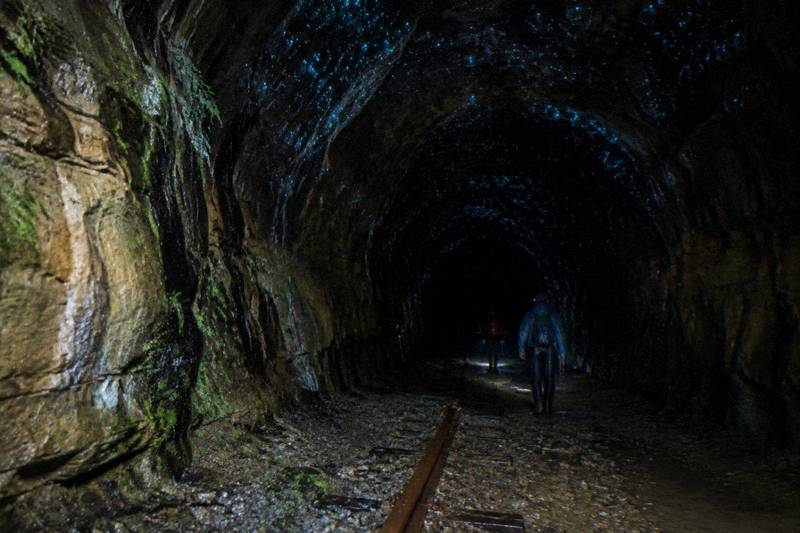
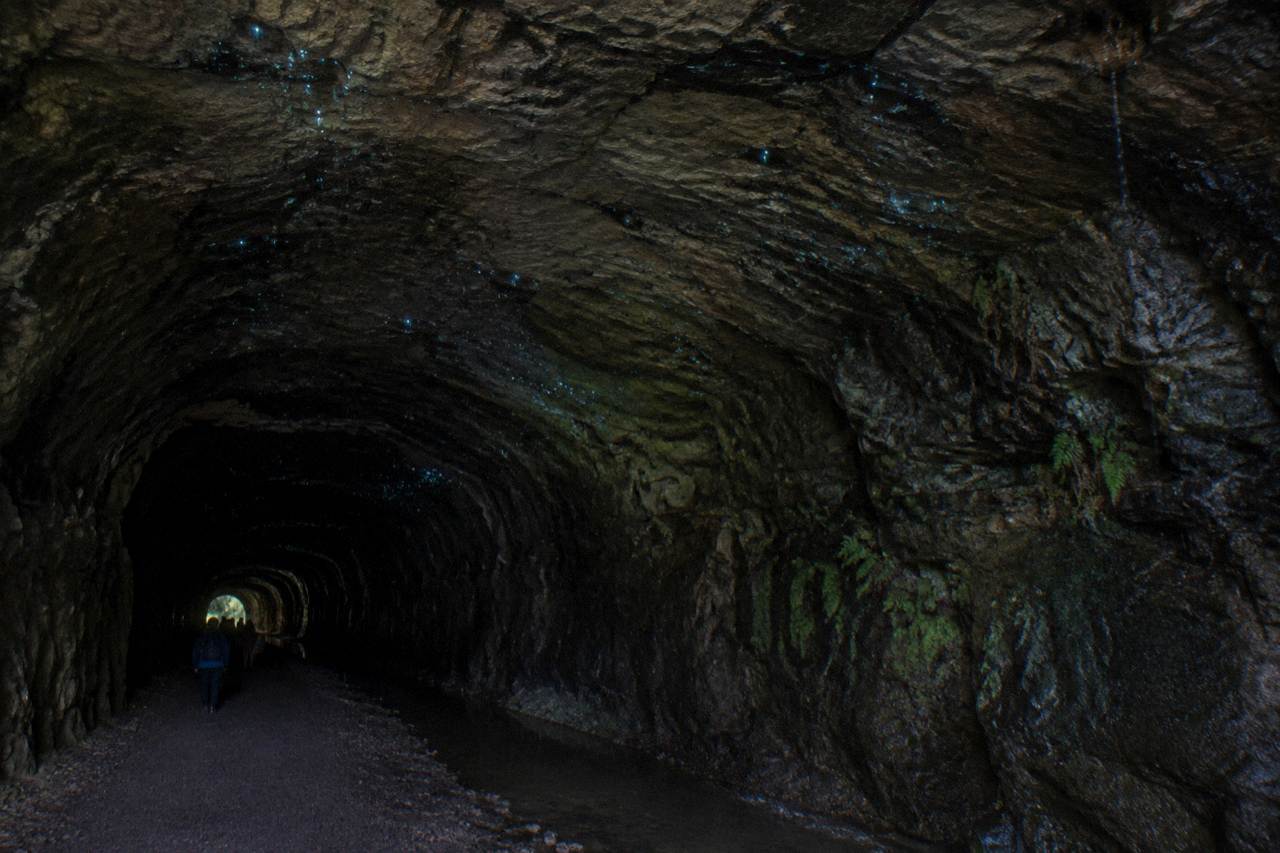
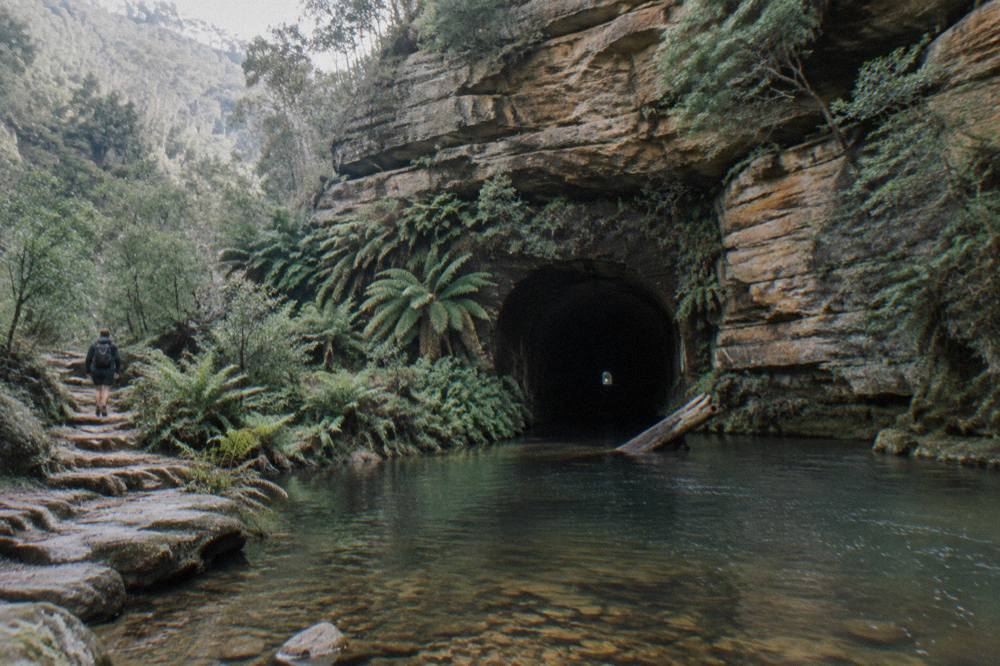
The Glow Worm Tunnel in Wollemi National Park is the one NSW glow worm site fully documented by the parks service: a 387 m abandoned railway tunnel, reached by a 6 km return walk, with no entry fee listed and glow worms visible even during the day because the tunnel stays pitch black. It is about a 2.5 hour drive from Sydney, and the final approach is on unsealed gravel roads.
The tunnel was built in the early 1900s for the Newnes mining railway, and its stable, humid, lightless interior gave glow worms exactly the sheltered habitat they need: darkness, still moist air and running water nearby to bring prey. The parks service notes that the Blue Mountains region holds many colonies, mostly in caves and disused mines, and this tunnel is the one the agency actively promotes, including a self-guided audio tour option. The walk from the carpark at the end of Glowworm Tunnel Road is 1.5 km to the tunnel entrance, with the full track listed at 6 km return, Grade 3, suggested two to three hours.
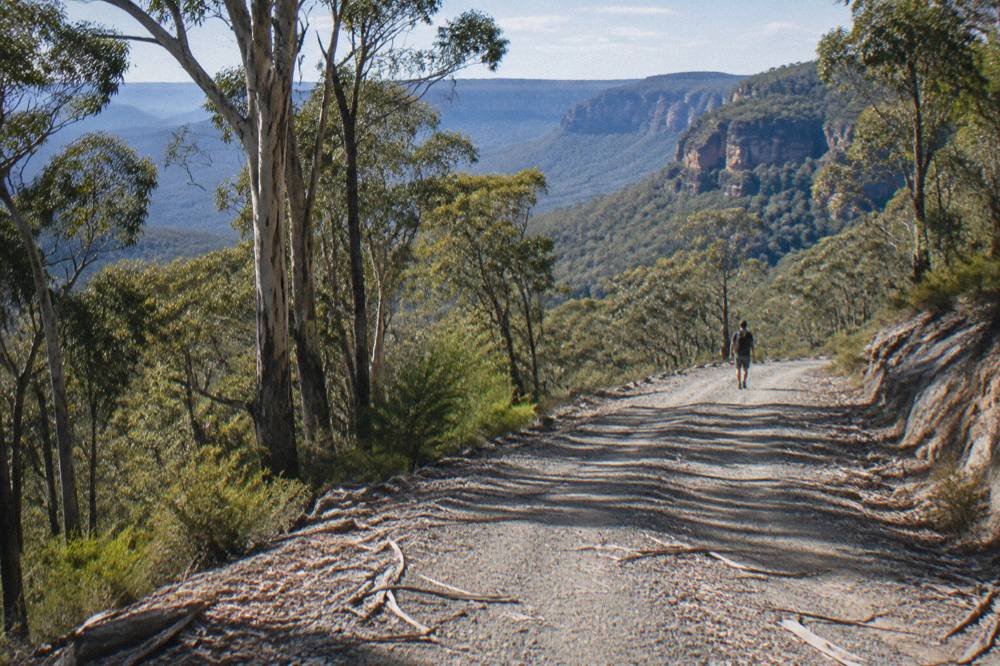
The honest caveats are about access, not the worms. The last stretch of road is unsealed gravel: a 2WD is possible in dry weather, the parks service recommends a 4WD, and after rain the road is 4WD only. Parking at the end is limited and the agency says the site is very busy in summer, on weekends and in holiday periods, recommending weekdays or spring and autumn instead. There is no drinking water, very limited mobile reception, and over 80 steps without handrails along the track, so it is not a pram or wheelchair walk. The full approach details, including the two road routes from Lithgow, are covered in the Glow Worm Tunnel road and car park guide.
Self-driving is the only way in: no public transport reaches the carpark, and no shuttle service connects Sydney to the tunnel. If driving yourself on gravel at night does not appeal, the bookable alternative is the small-group night hike from Sydney described next, and the tunnel's own story, history and walking track are covered in depth in the Newnes glow worm tunnel guide.
The Bookable Night Hike To A Glow Worm Cave
The one glow worm tour bookable from Sydney on this site is the Glow Worm Cave Night Hike: about 5 hours, from $128 USD per person, hotel pickup between roughly 7:50pm and 8:35pm, back between 11pm and midnight, maximum nine travellers, rated 4.9 from 210 reviews. It goes to a cave behind a waterfall, not the Wollemi tunnel, and the operator does not publish the cave's location.
This is the product to pick when the tunnel's unsealed roads, fire-ban season or total absence of public transport make a self-drive trip impractical. The listing describes a guided bush walk in the dark using headlamps in red-light mode, the least disruptive option for the worms, led by a certified outdoor instructor, with a chance of other local wildlife along the way. Transport in a small van, parking fees and water are included. Moderate fitness is required and the tour is not wheelchair accessible. Free cancellation applies up to 24 hours before, and the operator cancels for bad weather or if minimum numbers are not met, which is worth knowing before you build a whole Sydney evening around it.
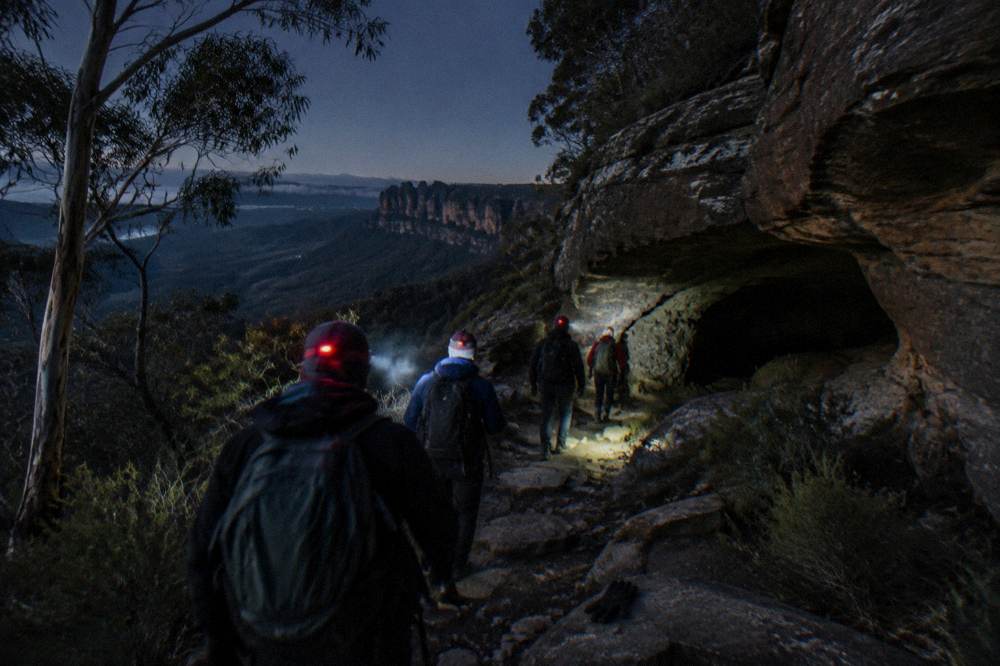
One framing matters for honesty: glow worms are wild animals, and neither the tunnel nor the cave comes with a sighting guarantee. What the tour adds over a solo tunnel visit is a guide, gear, transport and the simple fact that you do not have to drive 2.5 hours home on gravel after midnight. The listing is flagged as often selling out, which is consistent with a nine-traveller maximum. Full detail on what the evening involves is in the Blue Mountains glow worm tour guide.
Places With No Documented Glow Worms
Katoomba, Leura, Blackheath, the Grand Canyon Track, Govetts Leap, Wentworth Falls and Jenolan Caves all get described as glow worm spots online, but no NSW National Parks or operator source documents glow worms at any of them. The official Jenolan Caves site mentions no glow worms at all, and no evening glow worm walk near the Katoomba-area lookouts exists on any parks or operator page found.
This is the section that saves people the most wasted time. The Grand Canyon Track at Blackheath is a genuinely excellent 6.3 km loop, Grade 3, three to four hours, but its parks service pages say nothing about glow worms. The same is true of the Govetts Leap and Wentworth Falls pages. When a blog claims a night walk from Katoomba to see glow worms, there is no official walk behind the claim; the locally promoted glow worm site in this whole region is the Wollemi tunnel. For the detail on that specific comparison, see Grand Canyon walk versus the glow worm tunnel.
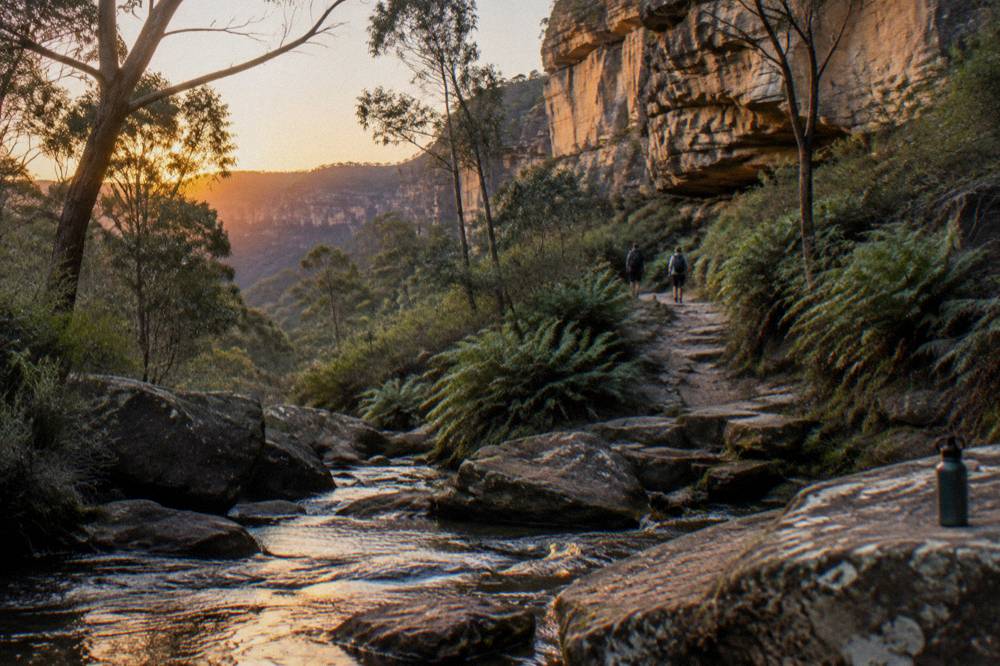
The table below puts the rumour sites against the record, so the pattern is easy to check before you plan around any of them.
| Claimed glow worm site | What the official record says |
|---|---|
| Grand Canyon Track, Blackheath | NPWS lists a 6.3 km loop, Grade 3, with no glow worm mention |
| Govetts Leap, Wentworth Falls, Leura | NPWS and operator pages do not describe glow worms there |
| Jenolan Caves | Official site mentions no glow worms; no tour listing found mentions them |
| Helensburgh tunnel | In the Illawarra, not the Blue Mountains; no official glow worm page found |
| Katoomba night walks | No NPWS or operator evidence of evening glow worm walks near Katoomba |
Jenolan Caves deserves its own line because it is the most common conflated name. The caves are famous, spectacular and worth a visit on their own terms, but the official Jenolan site's cave descriptions and wildlife sections mention cave crickets and rock-wallabies, not glow worms, and no tour listing for Jenolan found mentions them either. The honest position is in the Jenolan Caves and glow worm tours guide: if Jenolan is on your list, go for the limestone, and see glow worms at the tunnel or on the night hike instead.
If you want a glow worm evening in the Blue Mountains without driving to Wollemi, the night hike is the only option with documentation behind it. You can Check availability on the operator's live listing, alongside the fuller night hike from Sydney guide.
What About Helensburgh And Other Tunnel Claims?
The Helensburgh tunnel is in the Illawarra region south of Sydney, not the Blue Mountains, and no NSW National Parks, council or museum page describing a glow worm tunnel there was found. It is a different place from the Wollemi tunnel, a past tour listing for it is not live, and anyone considering a visit should confirm access with the local council before going anywhere near it.
Helensburgh keeps its place in this guide because the two tunnels keep getting confused in search results. The disambiguation is simple: the Wollemi tunnel near Lithgow is the one with parks service track pages, alerts, an audio tour and a documented colony. Helensburgh is an old rail tunnel in the Illawarra with a persistent glow worm reputation and no official glow worm page behind it. The full comparison, including why the confusion persists, is in Helensburgh versus Newnes glow worm tunnels.
The same scepticism applies to smaller commercial claims around the Blue Mountains. Operators around Mt Tomah and Bilpin have run glow worm overhang tours on private property; one such operator's site currently lists its tours as temporarily closed, and prices found for these are unverified. Beyond The Blacktop, a licensed parks operator, runs guided tours to the Wollemi tunnel itself from Katoomba Station or the Zig Zag Railway at Clarence, listing an adult guided tunnel tour at $210 on its own page, currency not stated, about five hours, with no Sydney hotel pickup. These exist; they are simply not what this site sells, and their status varies.
The pattern to notice: every solid glow worm claim in NSW traces back to either a parks service page or a live operator listing. When a claim traces back to a forum post, a stock photo or a travel listicle with no source, treat it as unverified. The practical NSW shortlist is the tunnel, the night hike, and nothing else you can currently book with confidence.
Comparing Access, Cost And Effort
The tunnel is free but demands a car, gravel-road confidence and a 6 km return walk; the night hike costs from $128 USD per person but includes hotel pickup, gear and a guide; the direct Katoomba-based tunnel tour lists at $210 adult on the operator's own page with no Sydney pickup. Choosing between them is mostly a choice about driving, not about glow worms.
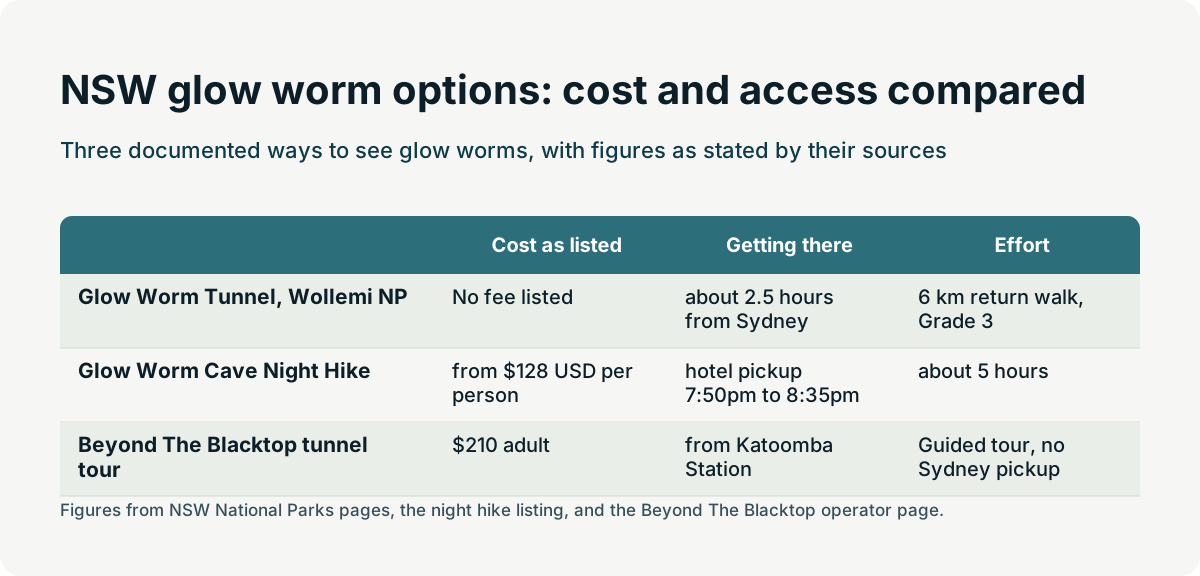
The table below is the decision compressed. Costs are stated exactly as their sources state them: the tunnel has no fee listed on any parks service page, the night hike is from $128 USD per person, and the Beyond The Blacktop figures are the operator's own prices with currency not stated.
| Option | Documented by | Cost as listed | Getting there | Effort |
|---|---|---|---|---|
| Glow Worm Tunnel, Wollemi NP | NSW National Parks track pages | No fee listed | Self-drive, about 2.5 hours from Sydney, final stretch unsealed gravel | 6 km return walk, Grade 3, over 80 steps |
| Glow Worm Cave Night Hike | Live operator listing, 4.9 from 210 reviews | From $128 USD per person | Hotel pickup about 7:50pm to 8:35pm, back 11pm to midnight | Moderate fitness, about 5 hours total |
| Beyond The Blacktop tunnel tour | Operator's own page, licensed NPWS operator | $210 adult, currency not stated | Meets at Katoomba Station or Clarence, no Sydney pickup | About 5 hours, guided tunnel walk |
| Mt Tomah / Bilpin area tours | Operator sites, status varies | Unverified, some listed closed | Self-drive to meeting point near Mt Tomah | Short walks, medium fitness |
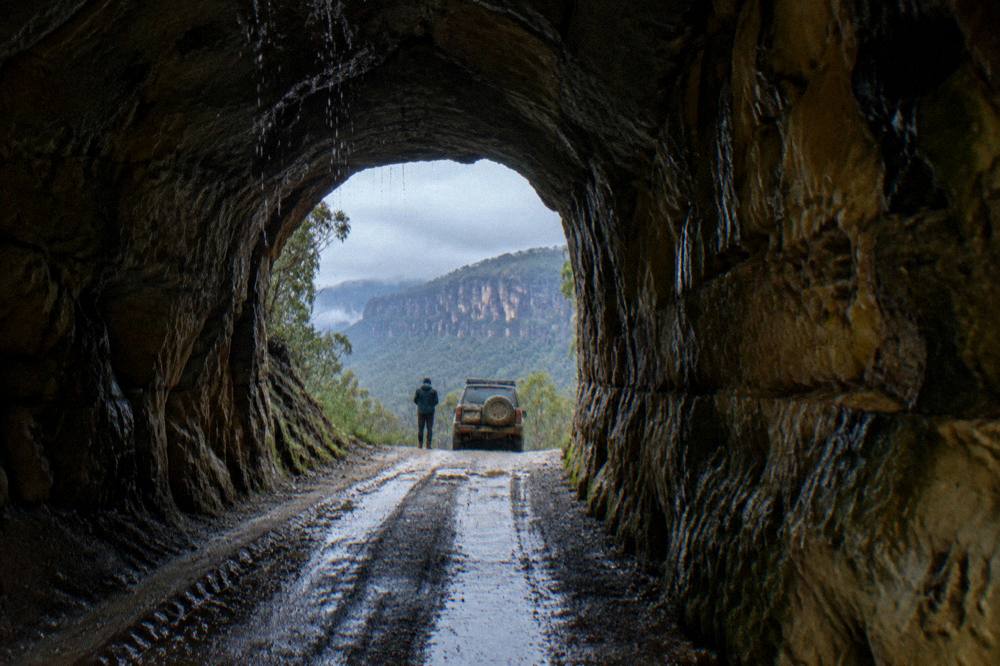
Access is where the tunnel earns its caveats. From Lithgow the route runs via Clarence and Old Bells Line of Road, then 26.8 km of Glowworm Tunnel Road through a single-lane tunnel just before the carpark, or via State Mine Gully Road, about 39 km of gravel. In dry weather a 2WD can do it; in wet weather the parks service says 4WD only, and the tunnel-to-Newnes track section can close during or after heavy rain because of rockfall and flood risk. The night hike removes every one of those variables, which is precisely its value.
Budget travellers should note the tunnel's no-fee status is not a typo: the parks service pages list no entry, parking or permit fee, and the agency's own story calls it a year-round free spectacle. The full budget picture, including free viewing spots and what money actually buys on a paid tour, is in free glow worm spots and budget Blue Mountains trips.
When To Go And How To Behave
Glow worms are present year round, and the tunnel is dark enough to see them during the day, so there is no bad season, only bad conditions. NSW National Parks recommends weekdays or spring and autumn to avoid crowds and limited parking; operators and travel press say displays are often stronger in warm, wet months and after rain, which is opinion, not official data.
The official advice is about people, not worms: summer weekends and holidays bring crowds and a full carpark, so the agency suggests the working week, spring or autumn. The seasonal claims you will see elsewhere, that December to March glows best, that rain boosts the display, that moonlight dims it, come from operators and travel press rather than any official ranking, and no official source ranks months by brightness. What the Bureau of Meteorology data does show is that Katoomba, at 1,017 m, is cold at night: mean minimums run from about 2.6 C in July to about 13 C in January, so pack for the season either way. The month-by-month ribbon on Blue Mountains Glow Worms pulls this together in one view.
Behaviour matters more than timing. The parks service's viewing rules are simple and specific: stay on the path, keep noise to a minimum, let your eyes adjust after switching off your torch, shine any torch at the ground or use a red-light mode, and never point a light at the glow worms, because light can damage their bioluminescence and disturbed worms simply switch off. Look but do not touch. The night hike builds this into its design, issuing headlamps with a red-light mode from the start. The biology behind the rules, including why a touched or disturbed colony goes dark, is explained in what are glow worms, Arachnocampa.
| Rule | Reason |
|---|---|
| Use red light or shine torches at the ground only | Direct light can damage bioluminescence and the worms switch off |
| Keep noise down | Glow worms are disturbed by sound and go dark |
| Stay on the path | Protects the habitat and the silk snares hanging from it |
| Let eyes adjust before judging a display | Full dark adaptation takes 20 minutes or more |
| Look, do not touch | Physical disturbance can end the display for everyone |
Two closure notes for planning. The park fire ban runs from 1 October 2026 to 31 March 2027, which affects campfires and solid-fuel stoves, not glow worm viewing, but it flags the fire season you are travelling in. And the Glowworm Tunnel Road single-lane section at the Lost City North intersection from 11 October 2026 adds delays up to five minutes, minor on its own, worth knowing on a long gravel drive. Check the parks service alerts page before any tunnel trip; conditions there change weekly.
The night hike sidesteps seasonality differently: it runs evenings year round, weather permitting, and the operator cancels rather than runs a bad night. That cancellation policy is the real seasonal advantage of a guided option in a place where glow worms are wild and weather decides everything.
Common Questions About Seeing Glow Worms In NSW
Where can you see glow worms in NSW?
Two options are properly documented: the Glow Worm Tunnel in Wollemi National Park, a free 6 km return walk about 2.5 hours from Sydney, and the Glow Worm Cave Night Hike from Sydney, from $128 USD per person with hotel pickup. No official source documents glow worms at Jenolan Caves, Katoomba, Leura or Blackheath.
Is there a glow worm tunnel in Sydney?
No. The nearest documented tunnel is the Wollemi one near Lithgow, about 2.5 hours from Sydney by road per NSW National Parks. The Helensburgh tunnel sometimes named in searches is in the Illawarra south of Sydney, and no official page describes it as a glow worm tunnel.
Can you see glow worms in the Blue Mountains during the day?
Yes, at the tunnel. The 387 m tunnel is dark enough inside that NSW National Parks says glow worms can be seen during the day. Elsewhere, open-air sites need full darkness, and eyes need 20 minutes or more to adjust.
Are there glow worms at Jenolan Caves?
No official mention exists. The Jenolan Caves site describes limestone formations and wildlife such as cave crickets and rock-wallabies, and no tour listing for Jenolan found mentions glow worms. See the caves for the limestone; see glow worms at the tunnel or on the night hike.
How much does it cost to see glow worms in NSW?
The tunnel walk has no fee listed on any NSW National Parks page. The bookable night hike is from $128 USD per person. A licensed operator running guided tunnel tours from Katoomba lists $210 adult on its own page, currency not stated.
What is the best time of year to see glow worms in NSW?
Glow worms are present year round. NSW National Parks recommends visiting during the week or in spring or autumn to avoid crowds and limited parking. Claims that displays are stronger in warm, wet months are operator and press opinion, not official data.