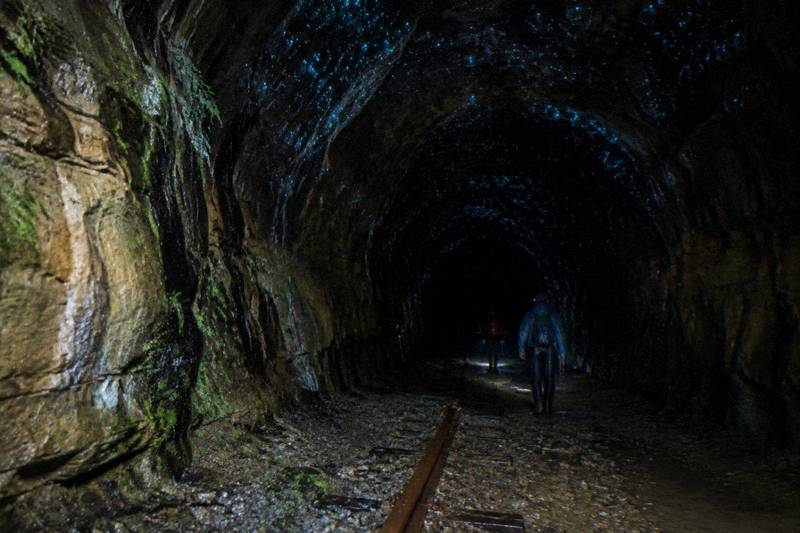
Grand Canyon Walk Blue Mountains: Track Facts, Glow Worm Truth And Planning Guide
The Grand Canyon Track at Blackheath is one of the Blue Mountains' most walked loops, and one of its most misunderstood. NSW National Parks describes a 6.3 km Grade 3 circuit through sandstone cliffs and rainforest, with no mention of glow worms anywhere on its pages. This guide separates the walk itself from the glow worm question, and compares it with the places where glow worms are actually documented.
Short answer
The Grand Canyon Track at Blackheath is a 6.3 km loop walk, Grade 3, taking 3 to 4 hours according to NSW National Parks. No NPWS page mentions glow worms on the track, and no evening glow worm walk there was found. Glow worms are documented at the Glow Worm Tunnel in Wollemi National Park and on a guided Sydney night hike to a cave behind a waterfall.
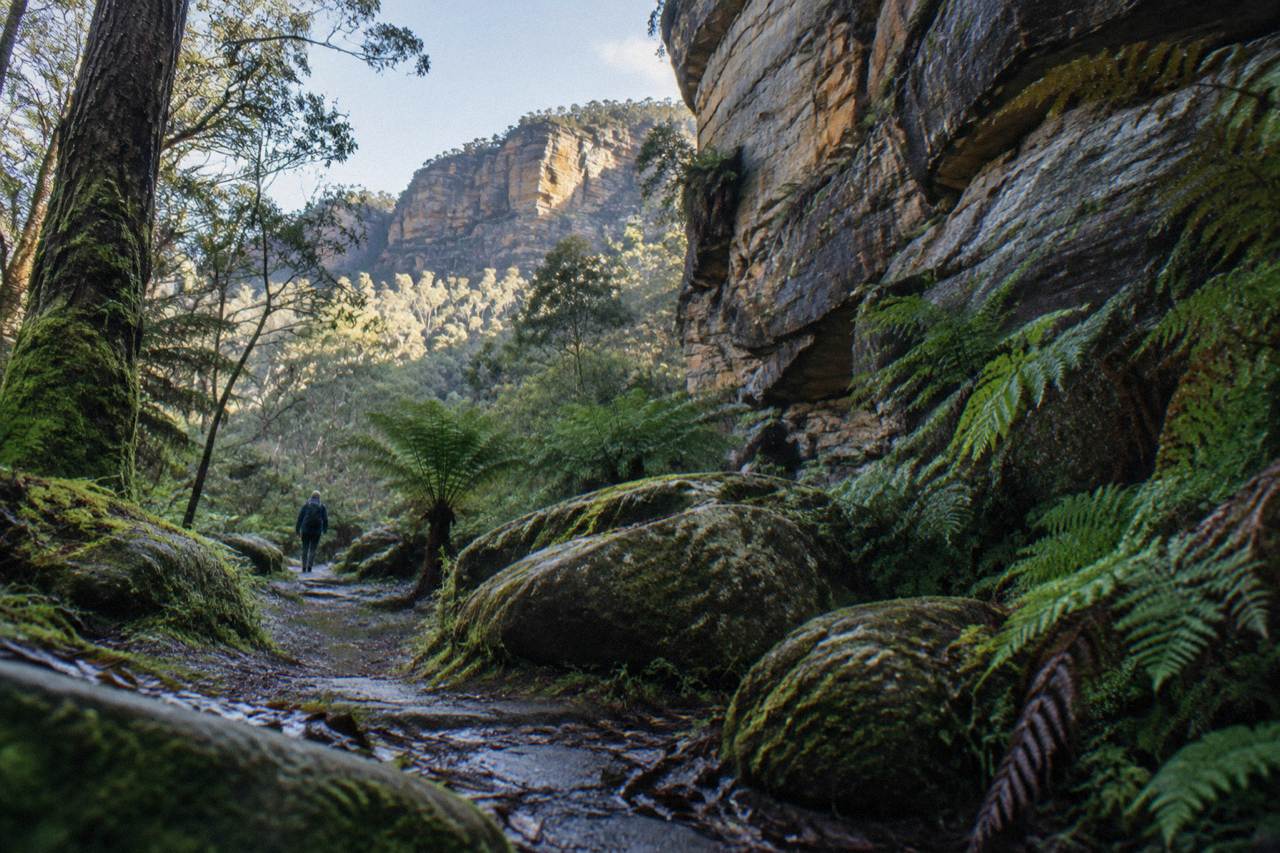
Sandstone walls, a creek-side rainforest floor, and a ladder of stairs cut into the cliff: the Grand Canyon Track at Blackheath is the walk most people picture when they imagine the Blue Mountains. It is also the walk most often tangled up, in online chatter, with glow worms. The two things are separate. NSW National Parks describes the track in careful detail on its own pages, and none of those pages mentions glow worms at all. If you're weighing whether you can fit all this into a single day from the city, our guide to doing the Blue Mountains as a day trip from Sydney covers the travel times and why glow worms call for an evening plan of their own.
How Long Is The Grand Canyon Walk In The Blue Mountains?
The Grand Canyon Track is a 6.3 km loop that takes 3 to 4 hours to complete, graded Grade 3 by NSW National Parks, which recommends some bushwalking experience for it. The track begins and ends at the Grand Canyon Track entrance on Evans Lookout Road near Blackheath, and the loop direction can be walked either way, with most walkers descending into the canyon first and climbing out at the end.
Those figures come straight from the NSW National Parks track pages, which list the walk at 6.3 km, 3 to 4 hours, Grade 3. The same pages describe a track that passes through a canyon of layered sandstone, along Greaves Creek, past fern-filled gullies and below the Neates Canyon interface. It is a loop, which is part of its popularity: you finish where you started, no car shuffle required.
Blackheath itself sits at the top of the plateau, about 1.5 to 2 hours from Sydney by road and about 2 hours by regular daily train from Sydney Central according to NSW National Parks' Katoomba area visitor information. That makes the Grand Canyon Track one of the most reachable serious walks in the upper mountains, and on a fine weekend it shows. The carpark at the Evans Lookout Road entrance fills early.
The Blue Mountains Heritage Centre at 270 Govetts Leap Road, Blackheath, is open 9am to 4pm daily except Christmas Day, on 02 4787 8877, and is the local office for track conditions. Checking alerts before any Blue Mountains walk is worthwhile, because rain closes tracks here more often than most visitors expect, and the canyon sections flood.
For context on the wider region, including where glow worms fit into it, see the Blue Mountains glow worm region guide on this site.
Is The Grand Canyon Track Difficult?
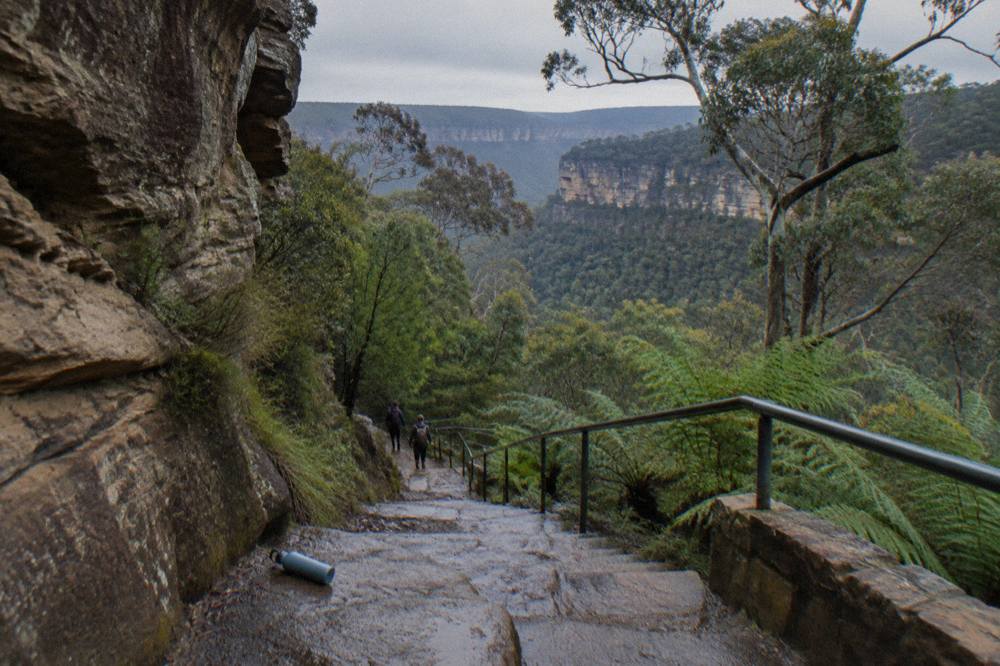
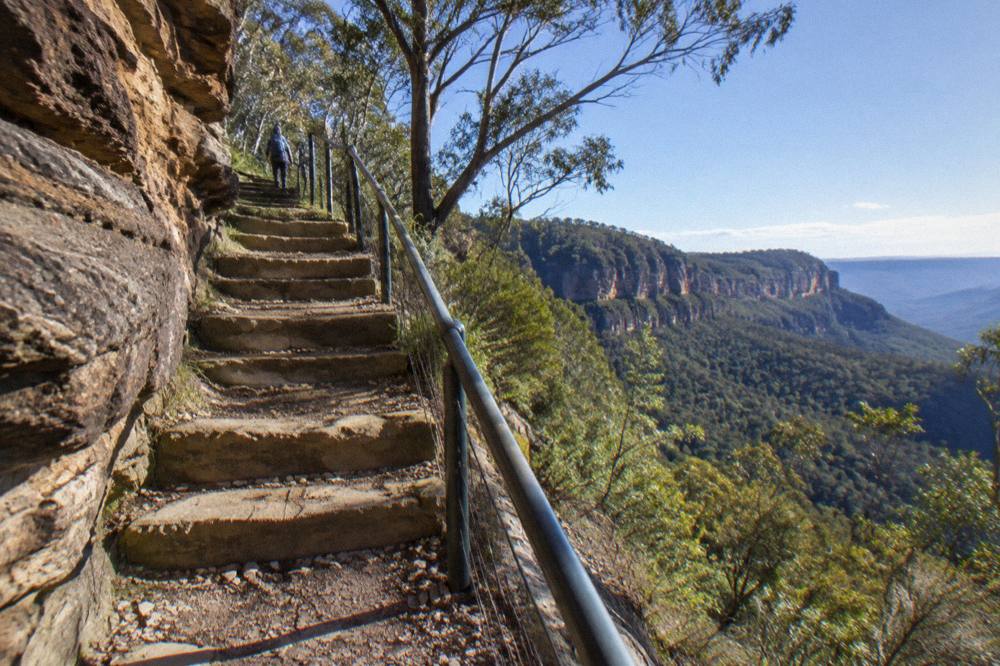
Grade 3 means the track suits most people with reasonable fitness, but it is not a flat stroll: NSW National Parks notes steep sections, stairs and uneven surfaces, and the walk descends into a canyon and climbs back out. Allow the full 3 to 4 hours, wear proper shoes, and treat the canyon floor as slippery after rain. It is not suitable for prams, and anyone wary of stairs should plan for a sustained climb near the end.
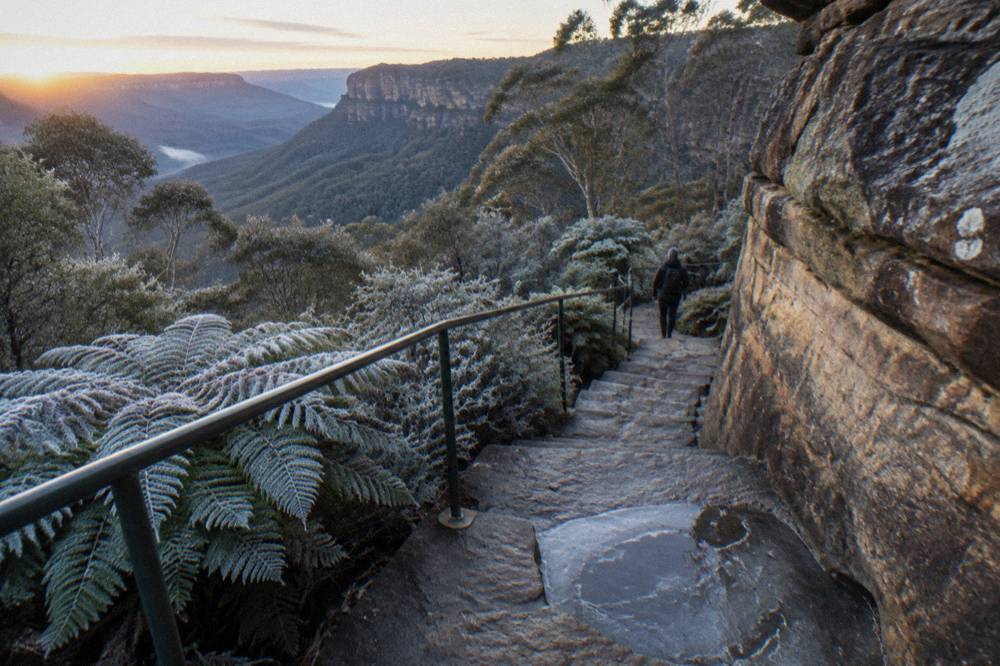
The honest description is that the Grand Canyon Track earns its reputation in two halves. The descent through the sandstone, with stone steps and sections carved into the cliff face, is dramatic but forgiving. The climb back out is where walkers feel it, a sustained stair climb that reverses most of the elevation lost on the way down. Water and a snack are not optional extras here.
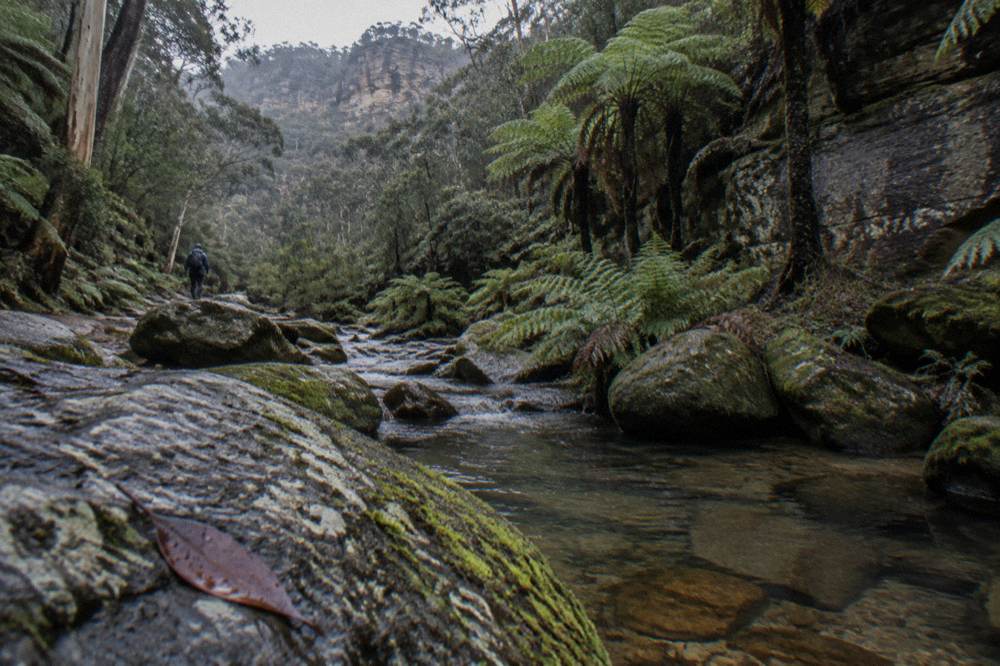
The canyon floor is a different climate from the lookout above. It is shaded, damp, and often muddy even when the plateau is dry, because the walls hold moisture and the creek keeps the gully humid. That humidity is exactly the kind of habitat glow worms favour in this region, which is worth remembering later in this guide, because habitat suitability and documented presence are two different things, and only one of them should shape your plans.
Weather matters more than most day visitors assume. The Bureau of Meteorology's Katoomba station, at 1,017 m elevation, records a mean minimum of 2.6 degrees Celsius in July and 12.9 in January, with mean monthly rainfall peaking at 177.8 mm in February. A winter walk can be close to freezing on the plateau before the sun clears the ridgelines, and a summer walk can end in a storm. Check the forecast, not the season label.
If a canyon night walk with glow worms is the actual goal, the bookable option is a different experience altogether: the guided night hike from Sydney, which picks up from city hotels and supplies headlamps with a red-light mode. More on that below, where the comparison table sets the two walks side by side.
Can You See Glow Worms On The Grand Canyon Walk?
NPWS and operator pages do not describe glow worms on the Grand Canyon Track. The official track pages, the area pages and the NPWS glow worm information make no mention of the species there, and no evening or self-guided glow worm walk near Blackheath, including this track, was found on any official page. The walk is a superb daytime canyon circuit, but planning it as a glow worm experience is planning around something no source documents.
That answer surprises people, because the logic sounds right. Glow worms, the NPWS glow worm page explains, live in dark, damp caves, overhangs, gullies and abandoned tunnels, in sheltered, humid spots with still air and running water nearby. The Grand Canyon Track has a humid, shaded gully with a creek running through it. Surely glow worms are there? Before you plan a night walk around that assumption, our guide to where Blue Mountains glow worms actually live explains why the habitat checklist alone isn't enough.
Habitat is not a sighting. The species documented in this region, Arachnocampa richardsae, is the larval stage of a fungus gnat, not a worm, and it glows from a transparent rear end to lure prey into sticky silk snares. NSW National Parks lists Wollemi National Park as a place this animal is found, and its glow worm materials point to the Glow Worm Tunnel there as the flagship site. The Grand Canyon Track appears on none of those pages, and the absence is consistent across every official source.
Plenty of visitors arrive in Blackheath hoping to combine a famous canyon walk with a famous light show in one evening. The honest position, based on the official record, is that the two experiences live in different places: the Grand Canyon Track for the daytime canyon, and either the Glow Worm Tunnel in Wollemi National Park or a guided night hike for the glow worms. The full biology is covered in the glow worm species explained guide on this site.
The one bookable glow worm experience that leaves from Sydney is the night hike to a cave behind a waterfall, run by Wildscape Adventures, rated 4.9 from 210 reviews on its listing, from $128 USD per person, about 5 hours door to door with hotel pickup between about 7:50pm and 8:35pm. It is a small-group walk, maximum 9 travellers, with a certified outdoor instructor, and the operator does not publish the cave's location. Glow worms are wild animals and the operator cancels for bad weather, so it is never a guaranteed sighting, but it is the documented, guided way to see them in the dark on a Sydney-pickup trip.
Where Are Glow Worms Actually Documented Near Blackheath?
Two places in the wider Blue Mountains region have glow worms documented on official or operator pages: the Glow Worm Tunnel in Wollemi National Park, near Lithgow, where NSW National Parks describes a permanent colony in a 387 m disused railway tunnel, and the waterfall cave visited by the Sydney night hike. Nothing near Blackheath, including Govetts Leap, Wentworth Falls, Leura and the Grand Canyon Track, has glow worms on any official page. If you're weighing up whether the free tunnel walk or the paid night hike suits you better, the full guide to free glow worm viewing around the Blue Mountains covers the real costs and timing of each option.
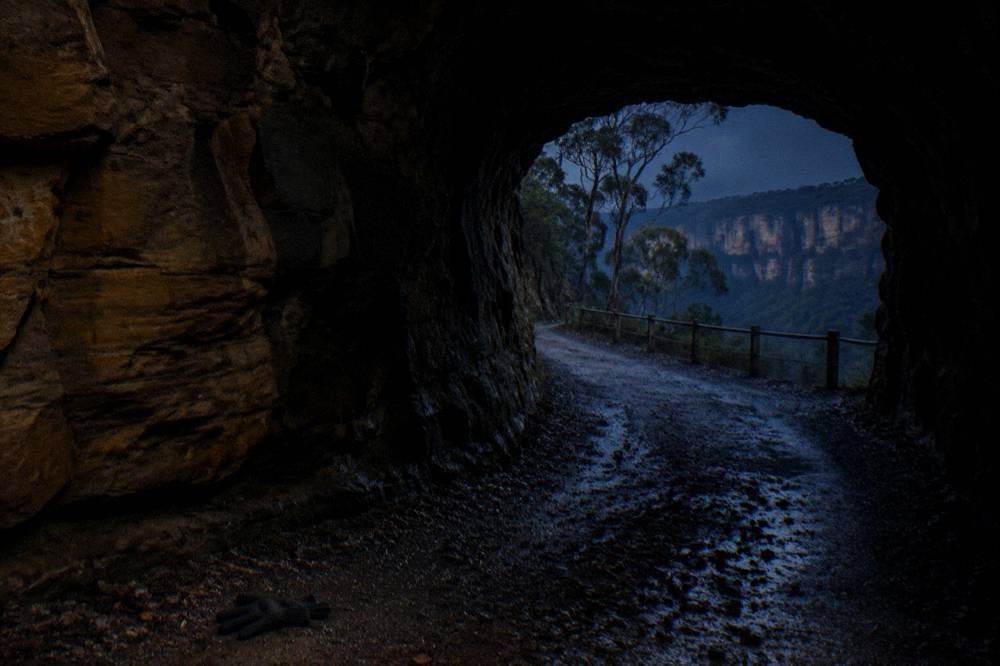
The Glow Worm Tunnel is the region's flagship. The tunnel was built in the early 1900s for the Newnes mining railway, is 387 m long, and because it is long and unlit it gets dark enough to see glow worms during the day, which is unusual. The walking track to it is 6 km return from the carpark at the end of Glowworm Tunnel Road, with a 1.5 km walk to the tunnel entrance, and NSW National Parks grades it Grade 3 with over 80 steps without handrails. It is about a 2.5 hour drive from Sydney, and the access road is unsealed: 2WD is possible in dry weather, 4WD is recommended, and in wet weather the road is 4WD only.
The tunnel walk and the Grand Canyon Track are often compared, and the comparison is fair, because both are Grade 3 canyon-and-stairs walks of similar length. The differences are access and purpose. The Grand Canyon Track starts minutes from Blackheath village on a sealed road. The tunnel starts at the end of 26.8 km of unsealed Glowworm Tunnel Road off Old Bells Line of Road, with limited parking and no drinking water at the trailhead. The full access picture, including the single-lane road works on Glowworm Tunnel Road from 11 October 2026 and the Bungleboori construction until December 2026, is covered in the Glow Worm Tunnel walking track guide.
The second documented place is the cave behind a waterfall on the Sydney night hike. The operator keeps its location unpublished, which is a deliberate protection for a wild colony, and the experience is built around it: a guided bush walk in the dark with headlamps in red-light mode, a chance of other wildlife, and a return to Sydney around 11pm to midnight per the operator. The listing is flagged as often selling out, because the group cap is 9 travellers and the pickup van is small.
Grand Canyon Track Vs Glow Worm Tunnel: Which Walk Suits You?
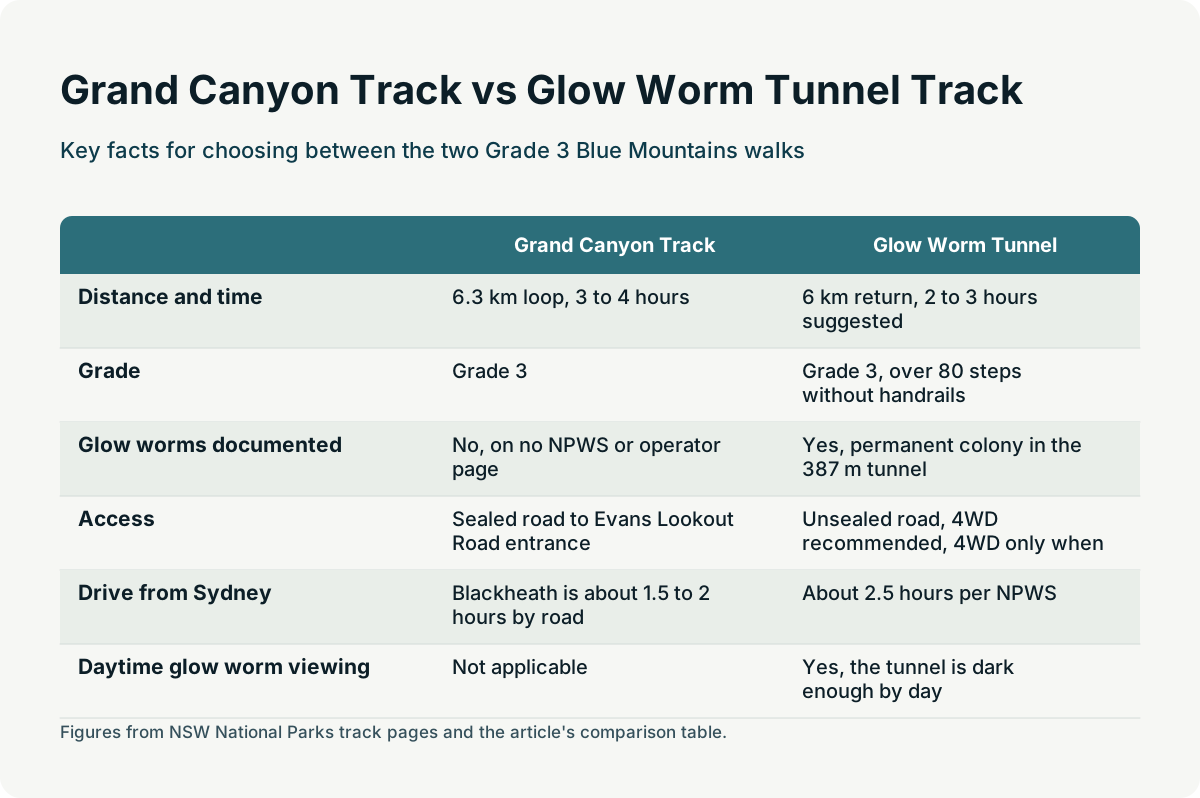
Choose the Grand Canyon Track if you want a dramatic canyon loop close to Blackheath with village facilities nearby and no unsealed driving. Choose the Glow Worm Tunnel if seeing glow worms is the point and you can handle an unsealed road and a more remote trailhead. Both are Grade 3, 6 km class walks with stairs, but only one of them has a documented colony of glow worms at the end.
| Grand Canyon Track, Blackheath | Glow Worm Tunnel Track, Wollemi NP | |
|---|---|---|
| Distance and time | 6.3 km loop, 3 to 4 hours | 6 km return, 2 to 3 hours suggested |
| Grade | Grade 3 | Grade 3, over 80 steps without handrails |
| Glow worms documented | No, on no NPWS or operator page | Yes, permanent colony in the 387 m tunnel |
| Access | Sealed road to Evans Lookout Road entrance | Unsealed Glowworm Tunnel Road, 4WD recommended, 4WD only when wet |
| Drive from Sydney | Blackheath is about 1.5 to 2 hours by road | About 2.5 hours per NPWS |
| Daytime glow worm viewing | Not applicable | Yes, the tunnel is dark enough by day |
| Facilities | Blackheath village nearby | Two non-flush toilets, no drinking water, very limited mobile reception |
| Fees | None listed | None listed by NPWS |
One planning note that follows from the table: the tunnel is the only one of the two where glow worms can be seen during daylight hours, because the tunnel itself is pitch black inside. That makes it a genuinely different proposition from any open-air walk, where glow worms are effectively invisible until full dark. The trade-offs of a day versus night visit are covered in the night versus day glow worm viewing guide.
If driving an unsealed road or managing stairs without handrails is a problem, the guided options change the maths. Beyond The Blacktop's own page lists a guided tunnel tour at $210 adult, currency not stated, departing Katoomba Station or the Zig Zag Railway at Clarence, about 5 hours, with no Sydney hotel pickup. The Sydney night hike from $128 USD per person includes hotel pickup, transport, parking fees, water and a certified outdoor instructor, with free cancellation up to 24 hours before. Those are different products for different travellers, and both are honest answers to the same underlying question.
What Should You Actually Expect On The Grand Canyon Track?
Expect a well-maintained, popular loop with constructed stairs, cliff-carved passages, a rainforest creek section and a sustained climb out, walked by a wide range of people and busy on weekends and holidays. Expect no glow worms, no night walk infrastructure, and no official source describing either. The track is a daytime walk, and the experience is the canyon itself, which is genuinely one of the best short walks in the region.
The walk's character is worth a few sentences, because the numbers undersell it. The descent passes through layered sandstone with overhangs, then drops into a gully of tree ferns and creek-side rainforest that feels closer to a temperate rainforest than to the dry plateau above. Sections of track are cut directly into the cliff face, with the canyon walls rising on both sides. Greaves Creek runs along the floor, and after rain the whole canyon takes on a heavier, greener mood.
Popularity is the other thing to expect. NSW National Parks' advice for the region's busy walks applies here: visit during the week or in spring or autumn if you can, because summer, weekends and holiday periods bring crowds and limited parking. That advice is written for the Glow Worm Tunnel on the official pages, but the same logic holds for any Blackheath track with a single entrance carpark, and the Grand Canyon Track is the most walked of them.
What to bring is straightforward bushwalking kit: proper shoes with grip, water, sun protection for the exposed sections at the top, and a layer for the canyon floor, which stays cool and damp even on warm days. A torch is not required for the walk itself, but anyone tempted to linger toward dusk should remember there is no official night use of this track and no lighting anywhere on it. The full packing approach for canyon and tunnel walks is in the what to bring guide.
For visitors whose real interest is the dark rather than the daylight canyon, the guided night hike covers that ground properly: a headlamp with a red-light mode supplied, a certified outdoor instructor leading a maximum of 9 travellers, and a cave behind a waterfall as the destination. It is a different kind of walk entirely, run after dark on terrain chosen for glow worms rather than scenery.
When Is The Best Time To Walk The Grand Canyon Track?
Spring and autumn are the comfortable seasons for the Grand Canyon Track, and weekdays are quieter than weekends at any time of year. Glow worms, by contrast, are present year round in this region, with NSW National Parks suggesting spring or autumn visits to its tunnel site for crowd reasons rather than seasonal ones, and operators and travel press saying displays often look stronger in warm, wet months, which is opinion rather than official data.
The temperature spread tells the walking story. Katoomba's mean minimums run from 2.6 degrees Celsius in July to 13.0 in February, with mean maximums of 9.5 in July and 23.4 in January, and mean monthly rainfall ranging from 70.7 mm in August to 177.8 mm in February. In practice that means cold, crisp winter days with the clearest views, and warm summer days with the highest chance of an afternoon storm and a wet canyon floor.
| Month | Mean minimum (C) | Mean rainfall (mm) | What it means for the walk |
|---|---|---|---|
| January | 12.9 | 164.9 | Warm but storm-prone, start early |
| February | 13.0 | 177.8 | Wettest month, slippery canyon floor |
| April | 8.8 | 121.9 | Comfortable, autumn colour on the plateau |
| July | 2.6 | 84.9 | Cold, often clear, frost on early starts |
| August | 3.3 | 79.3 | Driest stretch, cold but stable |
| October | 7.8 | 91.5 | Mild, spring wildflowers, busier weekends |
The figures come from the Bureau of Meteorology's climate averages for the Katoomba (Farnells Rd) station at 1,017 m elevation. They are long-term averages, not a forecast, so check the live forecast and any NPWS alerts before setting out, because canyon tracks close after heavy rain.
On the glow worm side of the ledger, no official source ranks months by brightness. What can be said plainly is that glow worms are present year round, that the tunnel is dark enough to see them in daytime, and that operators and the travel press say warm, wet conditions and low moonlight tend to make displays look stronger. That last part is opinion, labelled as such, and it is the full extent of what the sources support. The month-by-month ribbon on the homepage of Blue Mountains Glow Worms pulls the same verified data together in one place.
How Do You Combine The Grand Canyon Walk With A Glow Worm Experience?
The clean combination is the Grand Canyon Track by day from a Blackheath base, then either a self-drive trip to the Glow Worm Tunnel as a second outing, or the guided night hike from Sydney on a separate evening. The night hike leaves from Sydney hotels with pickup from about 7:50pm to 8:35pm and returns around 11pm to midnight, so it works as its own evening rather than a bolt-on after a full day of walking.
The reason the two do not stack into one day is geography. Blackheath and the tunnel trailhead are on different sides of the plateau, roughly an hour apart by road once the unsealed section is factored in, and the tunnel walk itself is a 2 to 3 hour return walk. Adding a 3 to 4 hour canyon walk on top of the drive and the tunnel walk makes for a very long day on rough surfaces.
The Sydney night hike solves the stacking problem differently, by removing the driving entirely. Pickup is from Sydney accommodation in a staggered window from about 7:50pm to 8:35pm, there is no fixed meeting point, and the whole trip runs about 5 hours with transport, headlamps with a red-light mode, parking fees, water and a certified outdoor instructor included. It visits a cave behind a waterfall, not the tunnel, and the operator does not publish the location. With a maximum of 9 travellers per departure, it is a small-group experience by design.
A realistic two-day plan for a Sydney visitor looks like this:
| Day | Morning | Afternoon | Evening |
|---|---|---|---|
| Day 1 | Train or drive to Blackheath, about 2 hours | Grand Canyon Track, 3 to 4 hours | Dinner in Blackheath, early night |
| Day 2 | Drive to Glow Worm Tunnel trailhead, about 2.5 hours from Sydney | Tunnel walk, 6 km return, 2 to 3 hours | Return via Lithgow |
| Alternative | Grand Canyon Track from Sydney as a day trip | Return to the city | Night hike pickup from your hotel, about 5 hours door to door |
The alternative row is the lowest-effort version: a daytime canyon walk, back in Sydney by evening, then the guided night hike from your own hotel. It trades the tunnel for the cave, and for many visitors that trade is worth it, because the tunnel requires an unsealed road that is 4WD only in wet weather, while the night hike requires only a pair of walking shoes and a readiness for the dark. The broader comparison, including self-drive costs and guided pricing, is set out in the self-drive versus guided tunnel guide.
Common Questions About The Grand Canyon Walk Blue Mountains
How long is the Grand Canyon walk in the Blue Mountains?
The Grand Canyon Track is a 6.3 km loop taking 3 to 4 hours, graded Grade 3 by NSW National Parks, which recommends some bushwalking experience. It starts and finishes at the Evans Lookout Road entrance near Blackheath.
Can you see glow worms on the Grand Canyon Track?
NPWS and operator pages do not describe glow worms on the Grand Canyon Track. The official track pages make no mention of them, and no evening glow worm walk near Blackheath was found. Glow worms in this region are documented at the Glow Worm Tunnel in Wollemi National Park and at the waterfall cave visited by the Sydney night hike.
Is the Grand Canyon Track hard?
It is a Grade 3 walk with steep sections, stairs and a sustained climb out of the canyon. Most people with reasonable fitness manage it, but it is not suitable for prams, and the canyon floor is often slippery. Allow the full 3 to 4 hours.
Where is the closest place to Blackheath with documented glow worms?
The Glow Worm Tunnel in Wollemi National Park, near Lithgow, about a 2.5 hour drive from Sydney and roughly an hour from Blackheath by road once the unsealed Glowworm Tunnel Road is included. The tunnel has a permanent colony in a 387 m disused railway tunnel, dark enough to see glow worms during the day.
Is there a guided tour that includes glow worms from Sydney?
Yes. The night hike from Sydney, run by Wildscape Adventures, picks up from city hotels in a window from about 7:50pm to 8:35pm, runs about 5 hours, and visits a cave behind a waterfall where native glow worms live. It is rated 4.9 from 210 reviews on its listing, from $128 USD per person, with a maximum of 9 travellers and free cancellation up to 24 hours before.
Does the Grand Canyon Track cost anything?
No fee is listed for the Grand Canyon Track. The Blue Mountains Heritage Centre at Blackheath, the local office for track conditions, is open 9am to 4pm daily except Christmas Day.
The Grand Canyon Track deserves its fame on its own terms: a compact, dramatic, well-built canyon loop within easy reach of Sydney. It is not a glow worm experience, and no official source says it is. For the light show, the documented options are the tunnel at Newnes or the guided cave hike from Sydney, and planning around that distinction is the difference between a good trip and a disappointed one.