Where Can I See Glow Worms For Free In The Blue Mountains?
The honest answer to where you can see glow worms for free around Sydney and the Blue Mountains: the Wollemi tunnel walk, what it really costs to reach, and when the paid night hike earns its price.
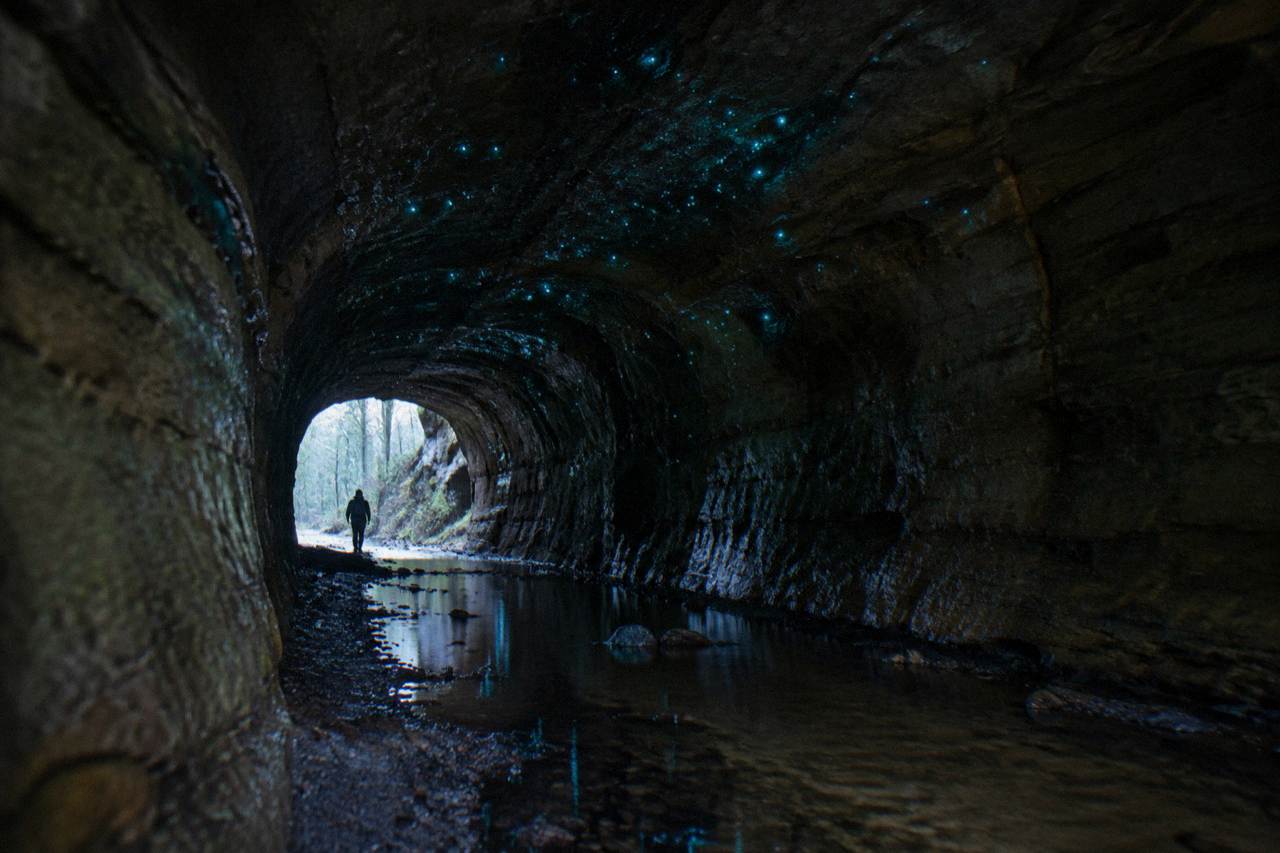
Where Can I See Glow Worms For Free?
Yes, you can see glow worms around the Blue Mountains without paying an entry fee. The free option is the Glow Worm Tunnel in Wollemi National Park near Lithgow, a 6 km return walk on a track NSW National Parks lists with no fee attached. No other verified free glow worm site sits within day-trip range of Sydney, and the tunnel needs a 2.5 hour drive each way on partly unsealed roads. If the long drive puts you off, our guide to the best Blue Mountains tour from Sydney explains which guided option suits glow worm seekers versus scenery lovers.
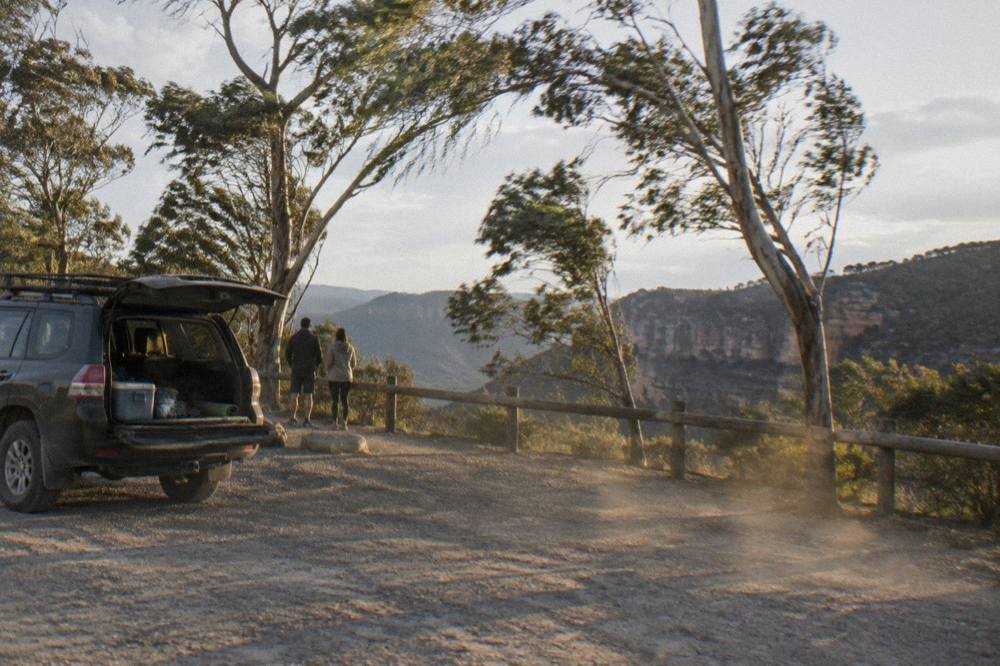
The tunnel is the answer almost every local gives, and it is genuinely free. NSW National Parks lists no entry, parking or booking fee for the walking track, and the park service's own story about the site describes a year-round spectacle that costs nothing to walk into. The catch is that "free" applies at the tunnel mouth, not to the journey. The carpark sits at the end of Glowworm Tunnel Road, an unsealed gravel road where a 2WD is possible in dry weather but a 4WD is recommended, and required once it rains. There is no public transport to the carpark at all.
What you get for nothing is substantial. The tunnel is 387 m long, built in the early 1900s for the Newnes mining railway, and because it is long and unlit it stays dark enough for the glow worms to be visible even in the middle of the day. The insects themselves, Arachnocampa richardsae, are the larval stage of a fungus gnat, and their blue-green light comes from a transparent rear end. Hundreds of them line the tunnel roof once your eyes adjust. The walk from the carpark to the entrance is 1.5 km each way, and the full track is 6 km return if you continue through Penrose Gorge to a lookout over Donkey Mountain and the Wolgan Valley. If you're curious whether these glowing larvae occur anywhere else, the answer to whether glow worms are native to Australia explains where this species fits among the country's other glow worm populations.
Free also means self-guided. Nobody meets you at the carpark with a headlamp or a red-light torch, so you bring your own and follow the park service's viewing rules: stay on the path, keep noise down, shine your torch at the ground or use a red-light mode, and never point a beam directly at the glow worms. Disturbed glow worms simply switch their lights off, which spoils the display for everyone behind you. The full planning picture, including the road conditions and what to pack, is in the Glow Worm Tunnel walking track guide.
For readers who would rather not drive 2.5 hours each way on gravel after dark, the one bookable alternative is the Glow Worm Cave Night Hike From Sydney, from $128 USD per person, with hotel pickup and drop-off and a certified outdoor instructor. It goes to a different site, a cave behind a waterfall whose location the operator keeps private, and it is the only tour this site carries. Free and paid are not rivals here, they are two different trips, and the rest of this article separates them honestly.
The Free Tunnel Walk: What It Is And What It Asks Of You
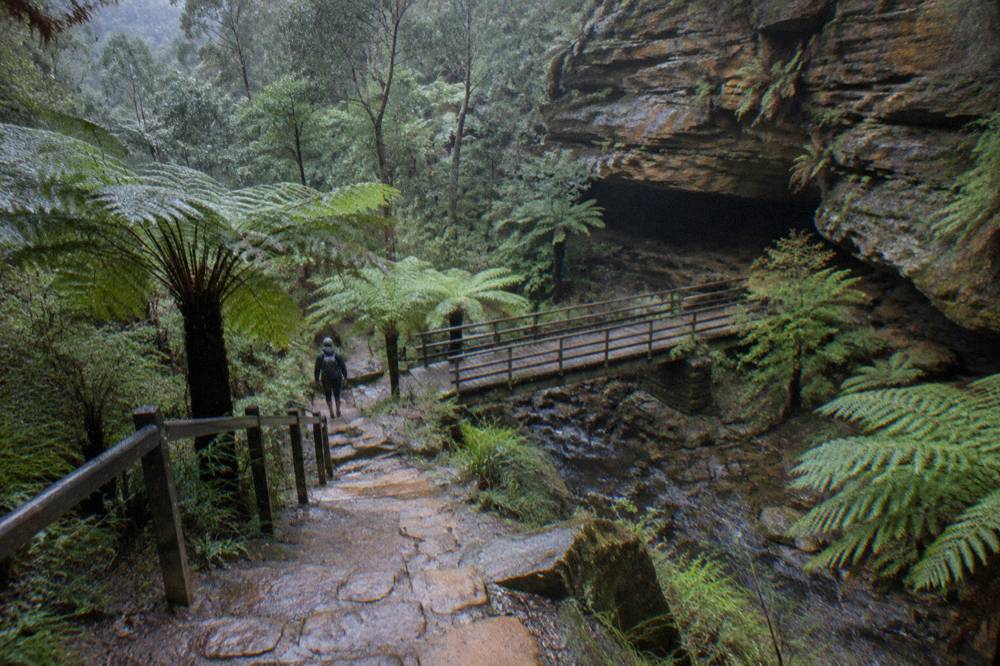
The free walk is a Grade 3 track: 6 km return, suggested 2 to 3 hours, with over 80 steps that have no handrails, a pinch point half a metre wide, and an uneven, sometimes wet tunnel floor. NSW National Parks recommends some bushwalking experience. It is not wheelchair or pram accessible, and the section beyond the lookout is not suitable for children.
Grade 3 sounds gentle, and most of it is, but the details matter if you are packing light because the trip is free. About 30 stone steps lead down to a bridge, then about 30 narrow winding timber steps climb back up, and a barrier at the trailhead has a one metre gap. Inside the tunnel the surface has been evened out and a handrail added, but rock and moisture remain. Facilities are minimal: two non-flush toilets, one timber bench, no drinking water, and very limited mobile reception, which is why the park service suggests carrying the Emergency Plus app.
Timing shapes the free experience more than most visitors expect. NSW National Parks says it is best to visit during the week or in spring or autumn, because summer weekends and holiday periods bring crowds and limited parking. The glow worms themselves are present year round, and no official source ranks one month over another for brightness. Operators and travel press often claim displays are stronger in warm, wet months and after rain, but that is opinion, not park service data, and this site labels it as such. What the official record does show is climate: Katoomba's mean minimum runs from 2.6C in July to 13.0C in February, so a free winter visit is quiet but genuinely cold at night.
| Item | The free tunnel walk | The paid night hike |
|---|---|---|
| Entry or tour price | No fee listed by NSW National Parks | From $128 USD per person |
| Getting there | Self-drive, about 2.5 hours from Sydney, unsealed final section | Hotel pickup and drop-off, window about 7:50pm to 8:35pm |
| Time on site | 6 km return, suggested 2 to 3 hours | About 5 hours door to door |
| Group size | Whoever is on the track | Maximum 9 travellers |
| Lighting | Bring your own torch, red light preferred | Headlamps with red-light mode supplied |
| Cancellation | Not applicable, just check alerts | Free cancellation up to 24 hours before |
One more free-walk caveat deserves its own sentence. The track status currently reads "Open, check current alerts", and the alerts page is worth reading the week you go, because conditions on the plateau change. The park service's track and visitor info pages are the primary source for both.
What Free Actually Costs: Fuel, Time And Road Conditions
The tunnel charges no fee, but reaching it consumes a full day. It is about a 2.5 hour drive from Sydney each way, the final stretch is unsealed gravel that demands a 4WD in wet weather, and no public transport reaches the carpark. Fuel, a hire car if you need one, and meals on the road are the real price of free.
Two routes reach the carpark, both via Lithgow. The first runs through Clarence past the Zig Zag Railway onto Old Bells Line of Road for 8.4 km, then Glowworm Tunnel Road for 26.8 km, passing through a 60 m single-lane tunnel just before the carpark. The second uses State Mine Gully Road, gravel that becomes Glowworm Tunnel Road, about 39 km all up. Old Bells Line of Road carries frequent trucks, so the free trip involves patient driving, not just distance. A shorter walking option exists from the Old Coach Road carpark via the Pagoda track, 4 km return, which trades some road time for more track time.
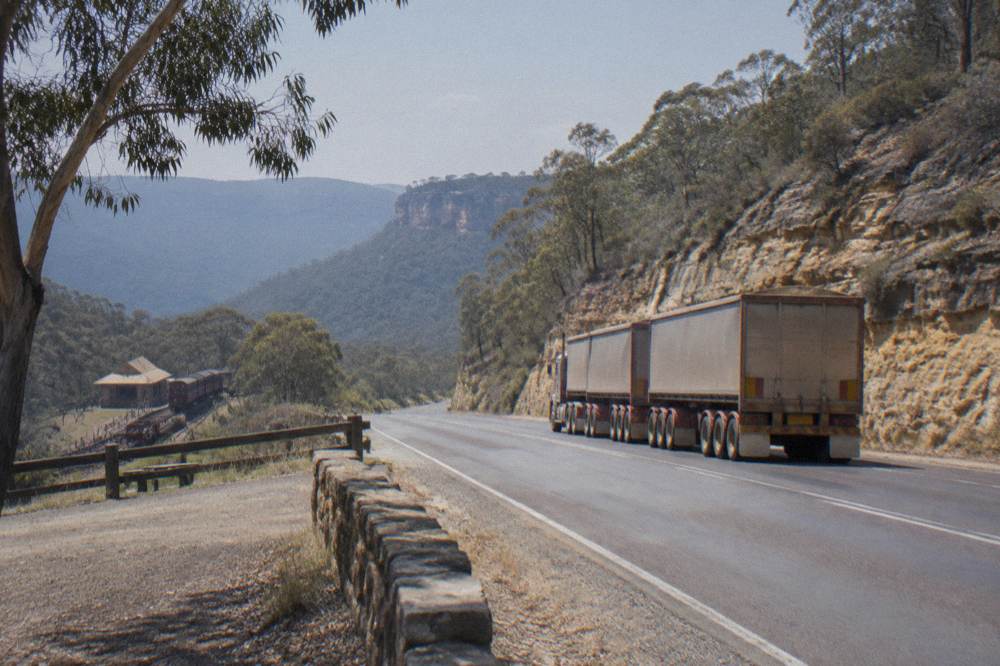
Current works add friction that a free-spots article from a few years ago would not mention. Construction at the Bungleboori precinct runs until December 2026 and that site is closed to visitors, while Glowworm Tunnel Road at the intersection with Lost City North and Maiyingu Marragu drops to a single lane from 11 October 2026, with delays up to 5 minutes. None of this closes the track itself, but it reshapes the drive. A park fire ban also applies across Wollemi National Park from 1 October 2026 to 31 March 2027, which matters if your free day trip was going to end with a campfire dinner. The practicalities of parking and the road itself are covered in full in can you drive to the Glow Worm Tunnel.
Free Versus Paid: When The Night Hike Earns Its Price
The paid option costs from $128 USD per person and removes every friction the free walk imposes: no 2.5 hour drive, no gravel road, no self-guiding in the dark. It runs about 5 hours with pickup between roughly 7:50pm and 8:35pm, caps groups at 9, and is rated 4.9 from 210 reviews. Free wins on price, paid wins on everything you would otherwise spend on getting there safely at night.
The honest comparison is not "free good, paid bad". A Sydney visitor without a car cannot do the free walk at all, since no train or bus reaches the carpark, and a visitor with a 2WD hire car should think hard about the gravel section after rain. The night hike, run by Wildscape Adventures, picks up at Sydney accommodation, supplies headlamps with a red-light mode, includes parking fees, water and a certified outdoor instructor, and drops guests back between around 11pm and midnight per the operator. It visits a cave behind a waterfall, not the tunnel, and the operator does not publish the location. If glow worms are just one item on your after-dark list, our guide to night activities in the Blue Mountains covers spotlighting tours, self-guided tunnel visits and other evening options in the same plain terms.
Two caveats keep this section honest. Glow worms are wild animals at both sites, so no tour or free walk can promise a sighting, and the operator cancels for bad weather or if minimum numbers are not met. The listing is flagged as often selling out. Free cancellation applies up to 24 hours before, so the decision is reversible. Readers weighing the full trade-off point by point will find it in the self drive versus guided comparison.
For context on the paid tunnel market, because the free walk is not the only alternative: Beyond The Blacktop, a licensed operator running tours from Katoomba Station or the Zig Zag Railway at Clarence, lists its own guided tunnel tour at $210 for an adult, with a Dry Canyon option at $275, currency not stated on the operator's page, about 5 hours with no Sydney hotel pickup. That price sits well above the night hike and still requires getting yourself to Katoomba. Smaller operators around Mt Tomah and Bilpin exist, but their status varies and this site does not publish their unverified prices.
Other Free And Cheap Glow Worm Claims, Checked
Most "free glow worm spot" lists recycle the same few names, and most of them do not survive checking. Jenolan Caves' official site mentions no glow worms at all, no official source describes a Helensburgh glow worm tunnel, and no NSW National Parks or operator page documents glow worms at the Grand Canyon Track, Govetts Leap, Wentworth Falls, Leura or Blackheath.
Start with Jenolan, because it appears on more listicles than anywhere else. The official Jenolan Caves site describes limestone formations, cave crickets and rock-wallabies, and makes no mention of glow worms in any cave description or wildlife section. No booking listing found for Jenolan mentions them either. Jenolan is a spectacular paid cave visit, but it is not a free or paid glow worm site, and the Jenolan Caves and glow worm tours guide covers that disentangling in detail.
Helensburgh is the other recurring name. It sits in the Illawarra region south of Sydney, a different part of the state from both the Blue Mountains and the Wollemi tunnel, and no NSW National Parks, council or museum page describing a glow worm tunnel there exists. A past tour listing for it is not live. Anyone considering the area should confirm access with the local council before travelling, and treat any blog claiming a glowing Helensburgh tunnel as unverified. The Helensburgh versus Newnes comparison lays out the evidence gap.
Then there are the Blue Mountains lookouts and walks. The Grand Canyon Track at Blackheath is a real and beautiful 6.3 km loop, 3 to 4 hours, Grade 3, but the park service pages for it mention no glow worms. The same absence holds for Govetts Leap, Wentworth Falls, Leura and Blackheath generally: no official or operator source describes glow worms there, and no evening glow worm walk near those towns exists on any park service or operator page. The where to see glow worms in NSW roundup keeps the honest list in one place.
How To Do The Free Walk Properly
A good free visit needs a dry-weather window, your own red-light torch, water, and a plan for no phone reception. Arrive outside peak weekends, allow 2 to 3 hours on the track, and read the park service's alerts page the week you travel. The walk costs no money, but it repays preparation the way any remote track does.
The packing list is short but strict. Bring more water than feels necessary because none is available at the carpark, bring a torch with a red-light mode or a red filter, and bring warm layers for the wait while your eyes adjust, which can take 20 minutes or more after full dark, though inside the tunnel daytime viewing works because the 387 m length keeps the middle pitch black. Sturdy shoes matter for the uneven, sometimes wet floor. The what to bring guide has the full checklist, and families should read the tunnel with kids guide before committing, since the track beyond the lookout is not suitable for children.
Behaviour inside decides whether the free display delivers. The park service's rules are simple and non-negotiable: stay on the path, keep noise to a minimum, let your eyes adjust after switching off your torch, shine any torch at the ground only, and look but do not touch. Glow worms turn their lights off when disturbed, and the biology explains why patience wins, the larvae spend 6 to 9 months in that glowing stage and live only about 3 days as adults, so a colony spooked by a bright beam tonight is a dark wall tomorrow. The glow worm photography guide covers what is and is not known about camera use, since no official flash rule was found.
Common Questions About Free Glow Worm Viewing
Where Can I See Glow Worms For Free?
The Glow Worm Tunnel in Wollemi National Park near Lithgow is the one verified free glow worm site within reach of Sydney. NSW National Parks lists no entry or parking fee for the 6 km return walking track. It is about a 2.5 hour drive from Sydney, with an unsealed final road section.
Is the Glow Worm Tunnel really free?
Yes. No entry, parking, booking or permit fee appears on any of the NSW National Parks track, visitor info or alerts pages for the site, and the park service's own story describes it as free. Your costs are fuel, food and vehicle hire if you need one.
Can you see glow worms for free at Jenolan Caves?
No glow worm mention appears anywhere on the official Jenolan Caves site, and no booking listing found for Jenolan mentions them either. Jenolan is a paid cave attraction with no documented glow worm colony.
Can I get to the free tunnel by public transport?
No. No public transport service reaches the Glowworm Tunnel carpark. Access is by private vehicle on Glowworm Tunnel Road, which is unsealed gravel, passable in a 2WD in dry weather and 4WD-only when wet.
When is the best time to visit the free tunnel?
Glow worms are present year round and the tunnel is dark enough for daytime viewing. NSW National Parks recommends visiting during the week or in spring or autumn, because summer weekends and holidays bring crowds and limited parking. No official source ranks months by brightness.
Is the paid night hike better than the free walk?
They are different trips. The free walk costs nothing but demands a 2.5 hour drive each way and self-guiding. The night hike, from $128 USD per person, picks up at Sydney hotels, supplies red-light headlamps and a certified instructor, and visits a different glow worm cave behind a waterfall. Choose by transport, not by price alone.
Free gets you to real glow worms, and the Wollemi tunnel is the proof. For travellers who want the lights without the gravel, Blue Mountains Glow Worms keeps the one Sydney-pickup night hike, from $128 USD per person, alongside the free walk's full planning detail.