Are Glow Worms Native To Australia?
Yes: the glow worms of the Blue Mountains and Wollemi National Park are a native Australian species, Arachnocampa richardsae, a fungus gnat larva that glows to catch prey in dark, wet places.
Are Glow Worms Native To Australia?
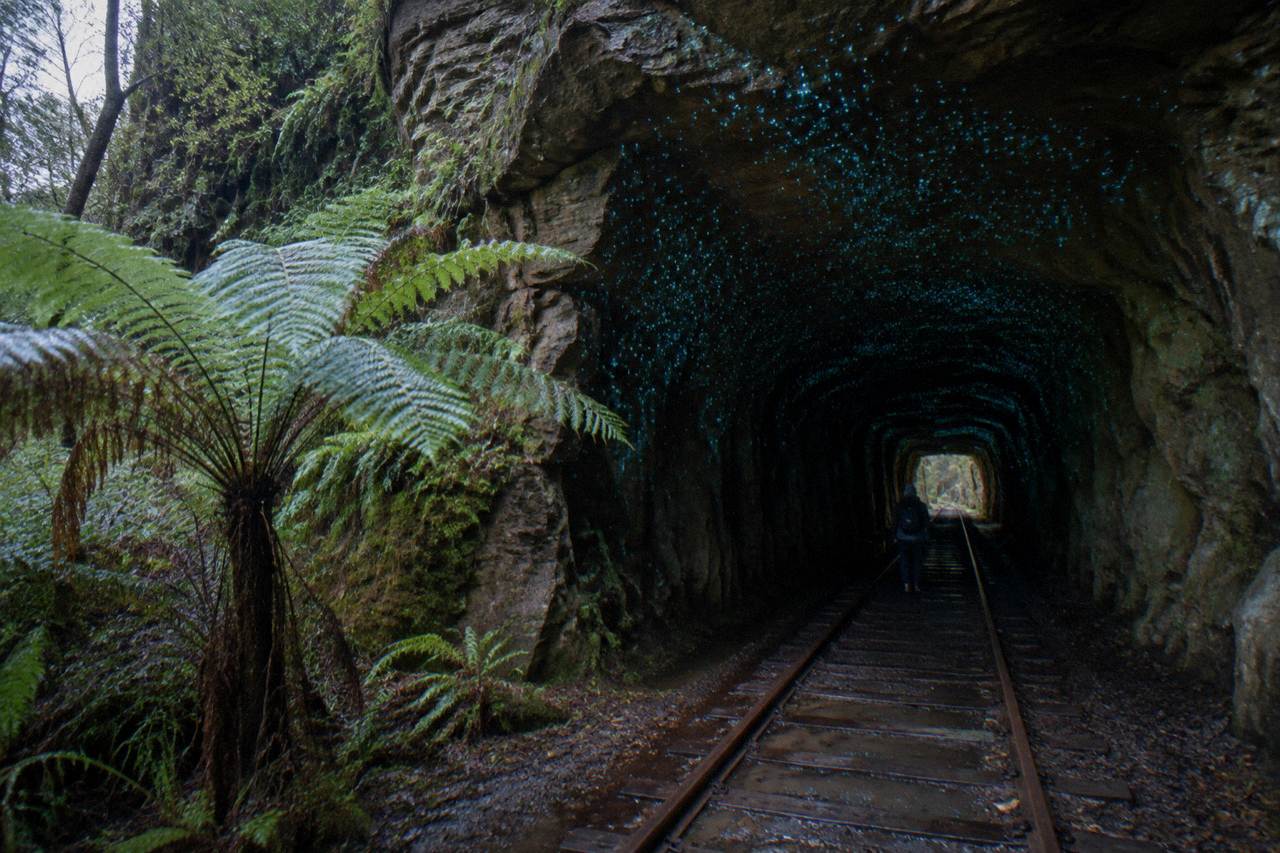
Yes, the glow worms found in the Blue Mountains and Wollemi National Park are native to Australia. NSW National Parks identifies them as Arachnocampa richardsae, a species that occurs naturally in central New South Wales, including the Grose Valley, Hazelbrook and the Newnes railway tunnel. They are not an introduced animal and not an import from New Zealand; they are a local insect whose larvae have been glowing in dark, wet gullies and caves. If you'd like to see these native larvae glowing for yourself, our guide to the best glow worm spots in Australia covers where to find them.
The name causes the confusion. "Glow worm" is a common name applied to several unrelated animals around the world, and in some countries it refers to beetles, the larvae of firefly relatives that also produce light. The Australian animals are something different altogether: the larval stage of a small flying insect called a fungus gnat. NSW National Parks says so plainly on its glow worm facts page, describing them as "the larval life stage of small flying insects" whose adult form is a fungus gnat that lives only about 3 days. So a "glow worm" is not a worm at all, and the ones glowing on the roof of the tunnel near Lithgow are a native fly in its juvenile phase. Knowing they are fly larvae rather than worms, many visitors still wonder about safety, and the answer to whether glow worms can hurt you is reassuring.
The species question matters for more than trivia. Because Arachnocampa richardsae is a native animal tied to specific habitat, its colonies respond to local conditions: damp air, still air, darkness and running water nearby. That is why the Blue Mountains region holds many colonies, mostly in caves and disused mines, according to the NPWS. The same agency lists Wollemi National Park as a place where this exact animal is found, which is as official a confirmation of nativeness as you can get. The famous Glow Worm Tunnel, an abandoned railway tunnel inside Wollemi National Park, is simply a human-made structure that happened to offer perfect conditions, and the native larvae moved in and stayed. Since these native colonies need such specific conditions to thrive, you might wonder how hard it actually is to spot one in the wild, and the guide to finding glow worms around the Blue Mountains explains exactly where and when to look.
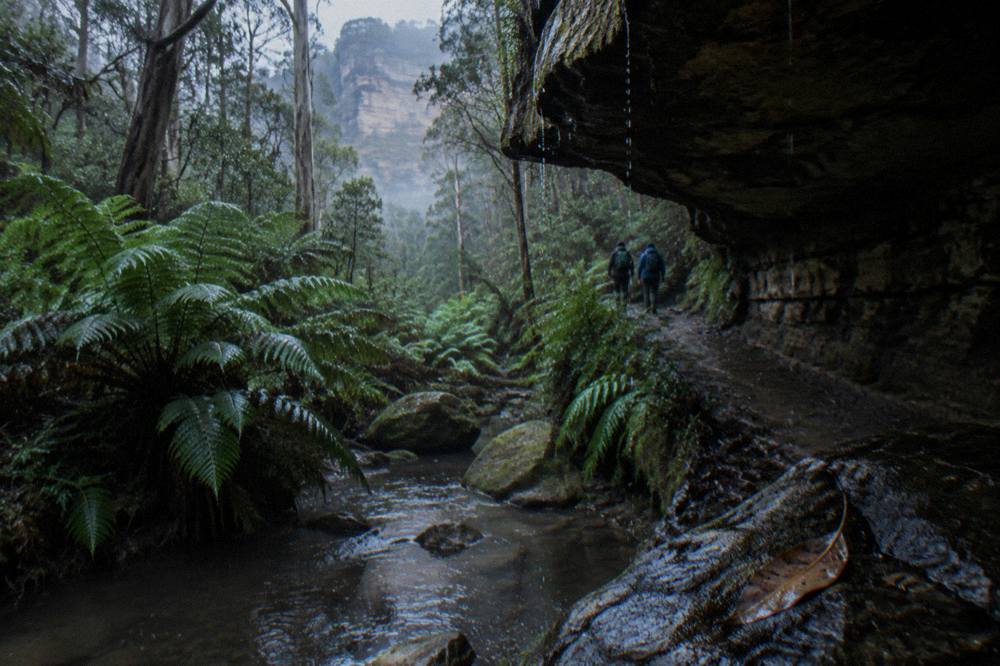
If reading about a native light show in the dark makes you want to see one, there is a bookable way to do it without driving yourself anywhere. The one tour this site covers, the Glow Worm Cave Night Hike From Sydney, picks up from Sydney hotels in the evening and takes a small group, maximum 9 travellers, on a guided bush walk to a cave behind a waterfall where native glow worms can be seen.
What Exactly Is A Native Glow Worm?
A native Australian glow worm is the larva of a fungus gnat fly, scientifically named Arachnocampa richardsae in this region. It produces a blue-green bioluminescent light from its transparent rear end, hangs sticky silk snares to catch flying prey, spends 6 to 9 months in the larval stage, and lives as an adult fly for only about 3 days. Every part of that life cycle happens in the dark, humid habitats of eastern Australia.
The biology is genuinely strange, and it is worth understanding before you go looking for them. The glow is a chemical reaction, bioluminescence, happening in the larva's rear end, which is transparent enough for the light to shine through. NSW National Parks describes the light as a lure: small flying insects such as mosquitoes and moths follow the glow toward sticky threads called snares that dangle from silk nests, get stuck, and are pulled in by the glow worm's mouth and eaten. The light that looks magical to us is a hunting trap, and a larva glows to attract its dinner. The NPWS story about the Wollemi tunnel describes "hundreds of blue-green tail lights" and notes the larvae can trap insects as big as a cockroach.
The life cycle is short and brutal, and the stages are documented precisely by NSW National Parks:
| Life stage | Duration | What happens |
|---|---|---|
| Egg | 7 to 9 days | Laid by the short-lived adult female in damp, dark habitat |
| Larva (the glowing stage) | 6 to 9 months | Glows to lure prey into silk snares, the stage visitors come to see |
| Cocoon (pupa) | About 14 days | The larva transforms inside a silk cocoon |
| Adult fungus gnat | About 3 days | Mates and lays eggs, then dies; does not glow like the larva |
Adults do not glow the way larvae do and do not eat in any meaningful sense; they exist to reproduce. If you want the full transformation story, the companion piece on Blue Mountains Glow Worms about what a glow worm turns into walks through each stage, and the site's guide to the Arachnocampa richardsae species goes deeper on the science.
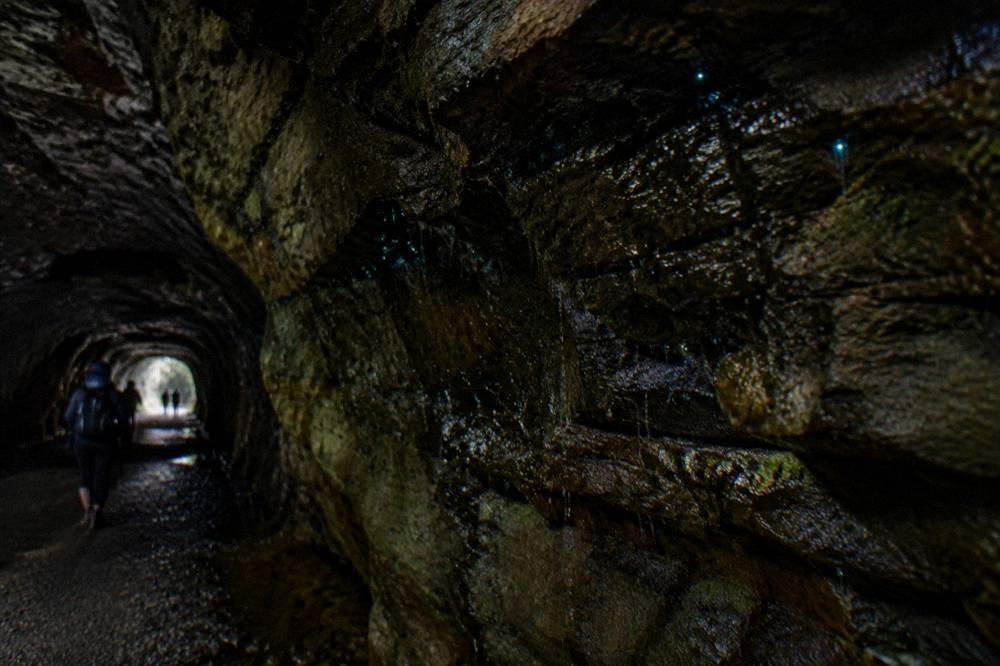
The habitat requirements explain where you will and will not find them. NSW National Parks says the best glow worm homes are sheltered and humid, with limited air flow, darkness, still moist air and running water nearby, which is why they live in caves, overhangs, rainforest gullies and abandoned tunnels. The Glow Worm Tunnel near Lithgow fits the brief perfectly: a 387 m railway tunnel, dark enough in its middle for the larvae to be visible even at midday, with the damp and shelter a permanent colony needs. The agency believes the tunnel was likely colonised by adults flying in from nearby rainforest gullies, whose stable conditions then allowed a permanent population to establish.
Here is the practical upshot for anyone hoping to see a native colony on a schedule rather than by luck. The species is present year round, so there is no season when the tunnel is empty of glow worms, and the tour operator's own listing runs in every month, subject to weather.
Where Do These Native Glow Worms Live?
Arachnocampa richardsae lives in dark, damp, sheltered places across central New South Wales: caves, rock overhangs, rainforest gullies and abandoned tunnels. NSW National Parks lists the species in Wollemi National Park, and taxonomic references record it at sites including the Blue Mountains, the Grose Valley, Hazelbrook and the Newnes railway tunnel. Human-made tunnels and old mines simply replicate the cave conditions the species already used.
The distribution is a habitat story more than a geography story. Wherever the mountains hold permanent moisture, darkness and still air, the larvae can establish, and the Greater Blue Mountains region is full of such spots. The NPWS notes that the Blue Mountains region holds many colonies, mostly in caves and disused mines, which is why a single abandoned railway tunnel near Lithgow became the most famous glow worm site in the state. The tunnel, built in the early 1900s for the Newnes mining railway as Tunnel No. 2 of the Wolgan Valley line, was not designed as wildlife habitat, but its length, damp and constant darkness suited the native larvae exactly.
That is worth repeating as an information-gain point, because most first-page explanations skip it: the glow worms in the tunnel are not a separate population that evolved there. They are the same native species found in surrounding rainforest gullies, and adults likely flew in and colonised the tunnel because it offered better shelter than a natural overhang. A human structure became one of the best glow worm homes in New South Wales by accident. You can read the full background in the site's guide to the tunnel at Newnes, including how the 387 m length creates daytime darkness.
The habitat rules also tell you where glow worms are not documented. NPWS and operator pages do not describe glow worms at the Grand Canyon Track at Blackheath, at Govetts Leap, Wentworth Falls, Leura or Jenolan Caves, and the official Jenolan Caves site makes no mention of them at all. That does not mean the species is rare; it means colonies cluster where the specific conditions hold, and those places are mostly caves, mines and tunnels rather than open lookouts. For the documented sites across the state, the answer on which NSW glow worm sites have official backing keeps to the places with official backing.
Are Glow Worms Found Outside Australia?
Yes, glow worms in the broad sense exist outside Australia, but they are different animals. The genus Arachnocampa occurs in Australia and New Zealand, and New Zealand's famous Waitomo caves hold a different Arachnocampa species. Europe's "glow worms" are beetle larvae, unrelated to the Australian fungus gnats. So the Blue Mountains and Wollemi populations are native Australian insects, not a copy of something found elsewhere, and Arachnocampa richardsae itself is a NSW species.
The comparison helps sharpen what "native" means here. The Australian and New Zealand glow worms are cousins within the same genus, both fungus gnat larvae glowing to lure prey into silk snares, but they are distinct species adapted to their own countries. The European glow worm is a different story altogether: it is a beetle, a relative of fireflies, whose flightless female glows low in the grass on summer nights. When a traveller from Britain or Germany asks whether our glow worms are "the same thing", the honest answer is that they share a nickname and a trick, bioluminescence, but not a family tree.
For the Australian species specifically, the record is local and clear. NSW National Parks names Arachnocampa richardsae as the animal found in Wollemi National Park, and supporting taxonomic work records it at central NSW sites including the Blue Mountains, the Grose Valley, Hazelbrook and the Newnes railway tunnel. The agency's glow worm page also points out that this sort of habitat, caves, overhangs, gullies and abandoned tunnels, is exactly where the species lives, which is why the protection of those dark, damp places matters more to the animal than any national boundary does. You can read the official species account on the NSW National Parks glow worm page.
Where Can You See Native Glow Worms Near Sydney?
The best-documented native colony near Sydney is the Glow Worm Tunnel in Wollemi National Park, about a 2.5 hour drive from the city, reached by a 6 km return walking track with no entry fee listed. The bookable alternative is the Glow Worm Cave Night Hike From Sydney, from $128 USD per person, which picks up from city hotels in the evening and guides a maximum of 9 travellers to a wild colony behind a waterfall.
The self-guided route is free in the sense that no fee appears on any of the NPWS track, visitor-info or alerts pages, but it is not effortless. The walk is 6 km return, Grade 3, suggested at 2 to 3 hours, with 1.5 km from the carpark to the tunnel entrance, and the access road is unsealed: a 2WD can manage in dry weather, 4WD is recommended, and after rain the road is 4WD only. There are over 80 steps without handrails and a pinch point half a metre wide, so it is not a pram or wheelchair trip. The site's guide to the Glow Worm Tunnel walking track covers the full route, and the piece on driving to the tunnel covers the road and parking reality, including the single-lane delays of up to 5 minutes on Glowworm Tunnel Road from 11 October 2026.
The guided route trades money for simplicity. The night hike from Sydney picks up from hotel accommodation in a window of about 7:50pm to 8:35pm, staggered rather than at a fixed meeting point, and returns around 11pm to midnight per the operator. Transport in a small van, parking fees, water and a certified outdoor instructor are included, along with headlamps in red-light mode, the least disruptive way to walk in the dark near glow worms. The tour is rated 4.9 from 210 reviews, runs about 5 hours, needs moderate fitness, and is not wheelchair accessible. Free cancellation applies up to 24 hours before, and the operator cancels for bad weather or if minimum numbers are not met, which is worth knowing because glow worms are wild animals and no sighting is guaranteed. The listing is flagged as often selling out.
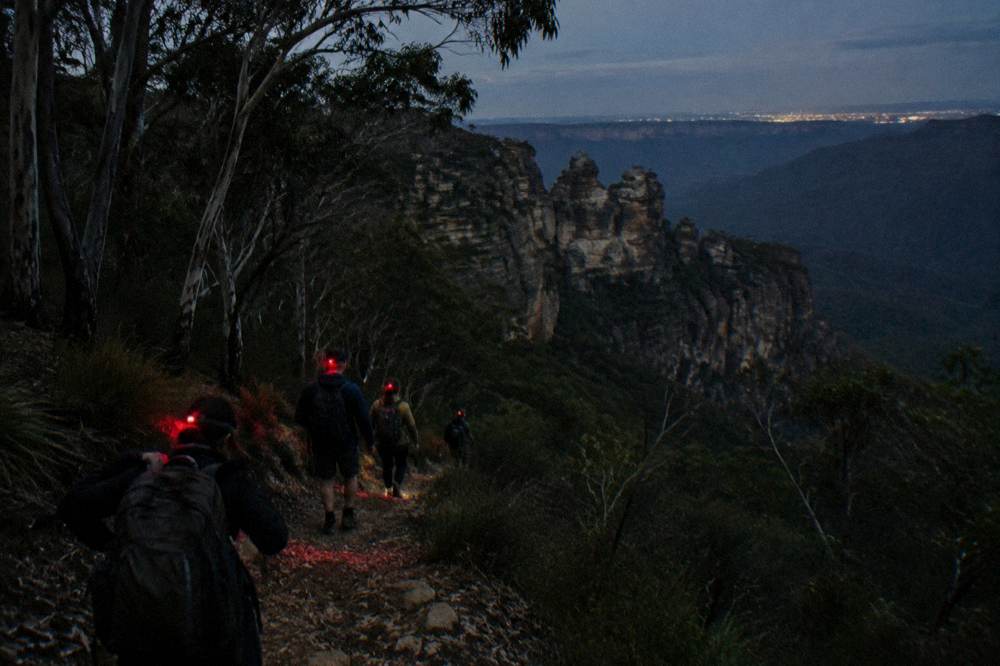
Two honest caveats belong here. First, the night hike does not go to the Glow Worm Tunnel; the operator does not publish the cave's location, and it is a different experience from the Lithgow tunnel walk. Second, neither option is a Jenolan Caves trip: the official Jenolan site mentions no glow worms, and the site's piece on Jenolan Caves and glow worms explains what that park does offer instead.
For anyone weighing the two routes side by side, here is how the documented facts stack up:
| Glow Worm Tunnel (self-guided) | Night Hike From Sydney (guided) | |
|---|---|---|
| Cost | No fee listed by NSW National Parks | From $128 USD per person |
| Getting there | About a 2.5 hour drive, unsealed road, 4WD recommended when wet | Evening hotel pickup from Sydney, about 7:50pm to 8:35pm |
| Effort | 6 km return, Grade 3, over 80 steps without handrails | Guided bush walk in the dark, moderate fitness, maximum 9 travellers |
| Lighting | Bring your own torch, red light preferred | Headlamps with red-light mode supplied |
| Guarantee | Wild colony, present year round, no sighting promised | Wild colony, operator cancels for bad weather |
Both routes respect the same rules, and both depend on the same wild animals. If the guided option suits your trip better, the operator's live listing shows current dates and availability.
Why Do Native Glow Worms Switch Their Lights Off?
Glow worms can control their bioluminescence and will turn their lights off if disturbed, which NSW National Parks states directly. Noise, torch light pointed at the larvae and physical contact all count as disturbance. That is why the official viewing rules ask visitors to stay on the path, keep noise to a minimum, shine torches at the ground or use red light, and look but do not touch. A colony that feels threatened simply goes dark.
The mechanism is defensive and practical. The light costs the larva energy and exists to catch prey, so when a bright torch beam or a loud group makes glowing risky or pointless, the animal shuts it down. The NPWS story about the Wollemi tunnel is blunt about torches: pointing one directly at the glow worms can damage their bioluminescence and makes them turn their lights off, which is why the guidance is to light the ground, use a red-light option where you have one, and let your eyes adjust in the dark before expecting the full display. The night hike from Sydney supplies headlamps with a red-light mode for exactly this reason, so guests do not have to bring their own compliant lighting.
The same sensitivity explains the etiquette around touching. No official photography or flash rule was found on the NPWS pages, but the "look but don't touch" line is official, and the reason is biological: the larvae hang in delicate silk nests built for catching prey, and a finger or a bumped nest is a genuine disturbance to an animal that took months to reach that stage. The site's article on why you cannot touch glow worms unpacks the full reasoning, and the photography guide covers how to photograph a colony without wrecking the display you came for.
Respecting the switch-off behaviour is also the difference between a good sighting and a wasted trip. A group that arrives loud, waves white torch beams at the ceiling and handles the surroundings can darken a whole wall of larvae in minutes, and the lights do not come back the instant the noise stops. Give the colony quiet, darkness and a few minutes, and the blue-green points return. It is the single most useful thing a visitor can know about a native animal that has no other defence than hiding its own light.
If the plan is to see them with someone who handles the logistics, the night hike remains the one bookable option this site covers, and availability is best checked on the operator's live listing.
Common Questions About Glow Worms In Australia
Are Glow Worms Native To Australia?
Yes. The glow worms of the Blue Mountains and Wollemi National Park are Arachnocampa richardsae, a native Australian fungus gnat larva named by NSW National Parks. They are not introduced and are not related to the European glow worm, which is a beetle larva. New Zealand has its own Arachnocampa species in the Waitomo caves, a cousin rather than the same animal.
What kind of animal is an Australian glow worm?
It is the larval stage of a small flying fungus gnat, not a worm. The larva glows blue-green from a transparent rear end, hunts with sticky silk snares, and spends 6 to 9 months in that stage. The adult fly lives about 3 days, just long enough to mate and lay eggs.
Where can I see native glow worms near Sydney?
The best-documented colony is the Glow Worm Tunnel in Wollemi National Park, about a 2.5 hour drive from Sydney, on a 6 km return walking track with no fee listed. The bookable alternative is the Glow Worm Cave Night Hike From Sydney, from $128 USD per person, with evening hotel pickup and a maximum of 9 travellers.
Are Australian glow worms the same as New Zealand's?
They are relatives, not the same species. Both are Arachnocampa fungus gnat larvae that glow to lure prey, but Australia's Blue Mountains and Wollemi populations are Arachnocampa richardsae, while New Zealand's famous Waitomo colonies belong to a different species of the same genus.
Do Australian glow worms glow all year?
Yes, the species is present year round, and the 387 m tunnel near Lithgow is dark enough inside to show the colony even in daytime. NSW National Parks suggests visiting during the week or in spring or autumn to avoid crowds and limited parking. Operators and travel press say displays are often stronger in warm, wet months and after rain, but that is opinion, not official data.
Why do glow worms turn their lights off?
Glow worms can control their light and switch it off when disturbed by noise, torch beams or contact. NSW National Parks asks visitors to stay on the path, keep quiet, shine torches at the ground or use red light, and look but do not touch, so the colony keeps glowing for the people who come next.
If a native light show in the dark is the goal, these are the current ways to book it.