How Rare Is It To See A Glowworm?
Glow worms are not rare insects, but seeing one takes the right dark, damp place. Here is where they live, why they switch off, and how to actually find them around the Blue Mountains.
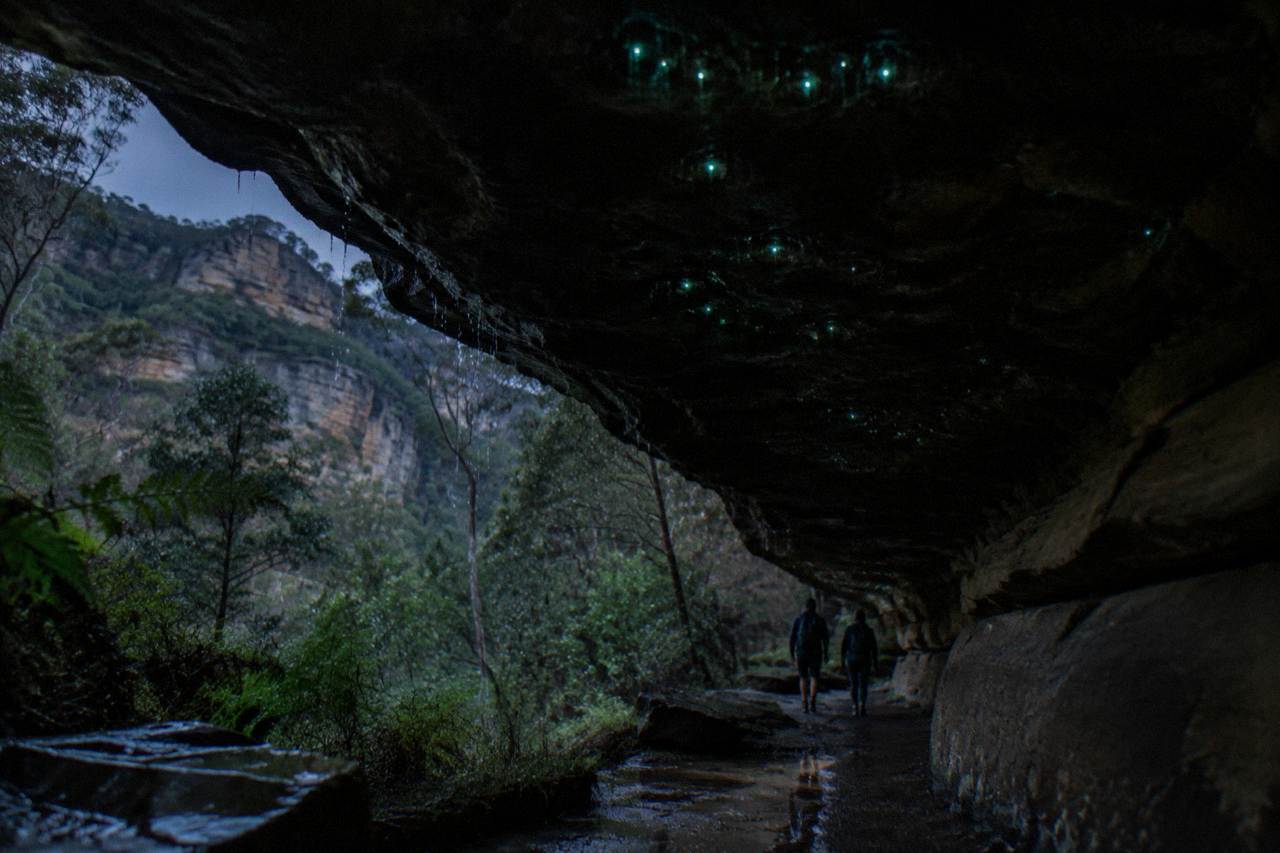
How Rare Is It To See A Glowworm?
Seeing a glow worm is not rare if you stand in the right place, and nearly impossible if you stand anywhere else. The insect itself, Arachnocampa richardsae, is widespread through the Blue Mountains and Wollemi regions, and NSW National Parks describes the Blue Mountains as holding many colonies, mostly in caves and disused mines. What is rare is the habitat they need: sheltered, humid darkness with still air and running water nearby, which most of the landscape does not provide. Finding the right spot is only half the battle, since picking the best season for a glow worm visit makes a real difference to the experience.
The question sounds like it should have a number attached, and it does not. No official source publishes a population count for glow worms in New South Wales, and none ranks sites or months by brightness. What the sources do give is a habitat description, and that description does most of the answering. A glow worm larva spends six to nine months in one spot, hanging from a damp rock ceiling, glowing to lure prey into silk snares. It cannot move somewhere drier or brighter. Where the conditions hold, a colony can persist for decades; where they do not, there are simply no glow worms, no matter how many people walk past. If the glowing larvae themselves make you nervous, the answer to whether glow worms can hurt you explains what they actually do and where the real danger lies.
That is why the experience feels rare to most visitors. The average person has never stood inside a pitch-black abandoned railway tunnel or behind a waterfall at midnight. The glow worms were always there. The darkness was what was missing.
The practical version of the question, then, is not "how many glow worms exist" but "how hard is it to get yourself into a room with one." Around Sydney and the Blue Mountains the answer is: easier than most people think, with one free, walk-in tunnel and one guided night hike from the city. The rest of this article explains where colonies actually live, why they switch their lights off, and what gives you the best odds.
For a traveller who wants the sighting guaranteed by logistics rather than luck, the guided route is the simplest answer. The listing on this site, the Glow Worm Cave Night Hike From Sydney, picks up from Sydney hotels in the evening and walks a small group, at most nine travellers, into a cave behind a waterfall where a native colony lives. It is the bookable way to put yourself in front of the habitat without owning a headlamp or a 4WD.
Where Glow Worms Actually Live
Glow worms live in dark, damp, sheltered places with running water nearby: caves, overhangs, rainforest gullies and abandoned tunnels. NSW National Parks lists these exact conditions, still moist air, darkness and a food supply washed in by water, as what makes a good glow worm home. That combination is genuinely uncommon, which is why colonies cluster in a handful of easy to describe site types rather than spreading across the bush.
The habitat logic is worth understanding because it predicts where you will and will not find them. A larva glows to attract small flying insects into sticky silk threads it secretes from its mouth. Those prey insects breed in damp places, so running water is the pantry. The silk snares and the larva itself dry out in moving air, so the site must be sheltered and humid. And the light only works as a lure in darkness, so an exposed, moonlit cliff face is useless even if it is damp. Stack all three requirements and the shortlist gets short fast.
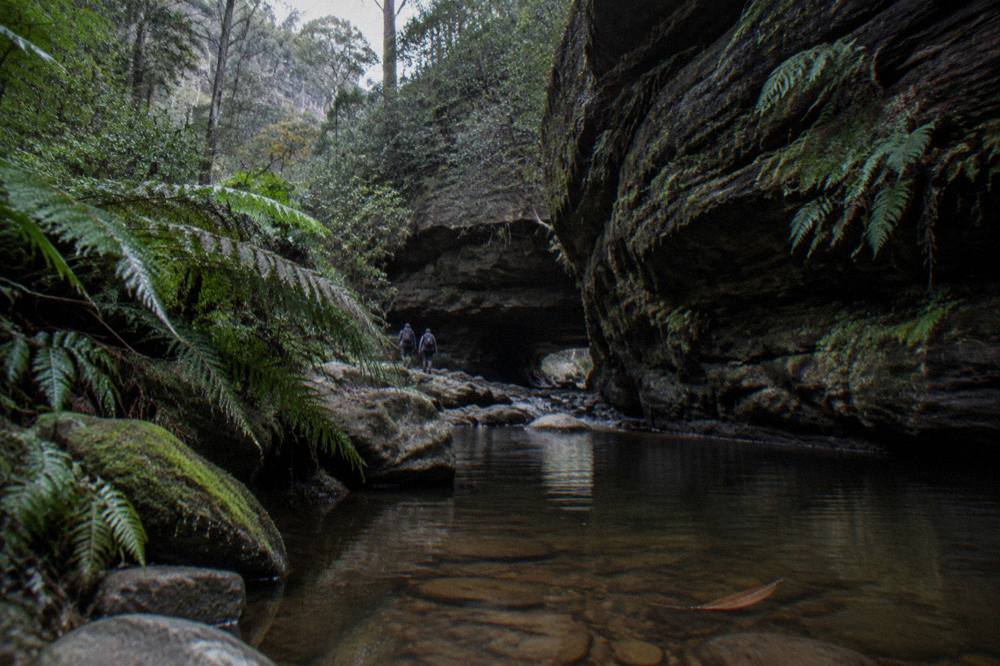
This is also why disused human structures work so well. The Glow Worm Tunnel near Lithgow, a 387 m railway tunnel built in the early 1900s for the Newnes mining line, is pitch black in its middle even at midday, stays humid, and sits above damp gullies that supplied the founding adults. NSW National Parks explains that the tunnel was likely colonised by adults from nearby rainforest gullies, and that its stable conditions gave the colony a permanent foothold. An old mine adit or a cave works the same way: ready-made darkness with a water source.
| Habitat requirement | Why the glow worm needs it | What fails without it |
|---|---|---|
| Darkness | The light is a hunting lure; it only works in the dark | Lights stay on but attract nothing, colony starves |
| High humidity, still air | Larvae and silk snares dry out in moving air | Snares collapse, larvae die or move on at adult stage |
| Running water nearby | Breeds the small insects the snares catch | No prey, no colony |
| Sheltered surface to hang from | Larvae anchor nests to rock or earth ceilings | Nowhere to build a snare web |
The same logic tells you where not to look. NPWS and operator pages do not describe glow worms at Govetts Leap, Wentworth Falls, Leura or the Grand Canyon Track at Blackheath, which is a 6.3 km Grade 3 loop with no glow worm mention on its official pages. Open lookouts and well-lit valley walks fail the darkness test. The official Jenolan Caves site makes no mention of glow worms either, despite the caves being famous; the formations there are the attraction, not bioluminescence. Absence of evidence is not proof of absence, but nothing official points a visitor there for glow worms, and this site's Jenolan guide covers that question directly.
How Common Are Glow Worms In The Blue Mountains?
In the Blue Mountains region, glow worms are reasonably common in the sense that many colonies exist, mostly in caves and disused mines, according to NSW National Parks. They are uncommon in the sense that most of those colonies sit in remote canyons, caves and disused mines, rather than beside a public track. The region is one of the better places in Australia to see one, which is exactly why tour operators base themselves here.
The distinction matters. A visitor asking about rarity is usually asking whether their one evening in the mountains will produce a sighting. The honest answer splits in two: the worms are not rare, and the accessible sites are few. The free, public, self-guided option is the Glow Worm Tunnel walking track in Wollemi National Park, a 6 km return Grade 3 walk where the tunnel is dark enough for daytime viewing. The guided options include a Sydney-pickup night hike to a cave colony and, at the tunnel end, a licensed operator running guided walks from Katoomba or Clarence. Beyond those, the region's other colonies sit in canyon ceilings and old mine workings that casual visitors will never reach. More of these guides are collected on Blue Mountains Glow Worms.
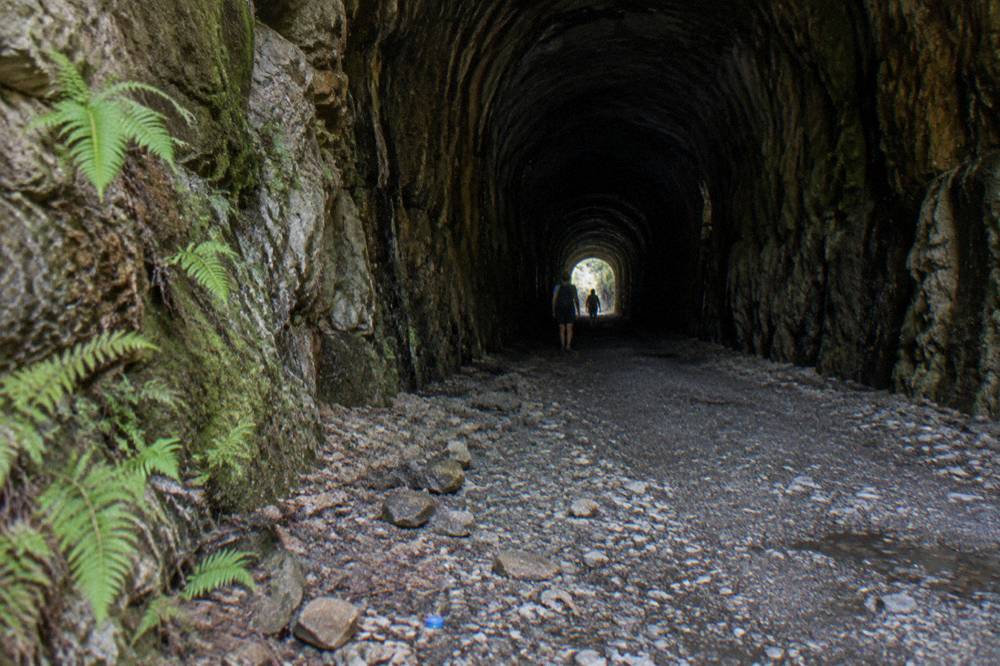
There is no official rarity ranking. What can be said with sources behind it: the species Arachnocampa richardsae is recorded for Wollemi National Park on the NSW National Parks animal pages, the Blue Mountains region holds many colonies per the NPWS story on the tunnel, and the same story describes "hundreds of blue-green tail lights" inside the tunnel itself. Hundreds in one 387 m tunnel is not a rare animal in crisis. It is a common animal in an uncommon address. That common-but-local status makes more sense once you know where the species came from, which the full guide to native Australian glow worms explains in plain terms.
For readers who would rather not drive at all, the guided night hike answers the accessibility half of the problem directly. It collects guests from Sydney accommodation, so the two-and-a-half-hour drive to the tunnel country and the unsealed road beyond it simply drop out of the equation, replaced by a small van, a guide and a headlamp. That trade, a ticket for a car, is why the bookable option converts an uncommon address into an easy one for visitors without a vehicle.
For readers planning around the tunnel, access conditions matter more than the worms do. The track is listed as open with a check-current-alerts note, and the alerts page currently carries a park fire ban running 1 October 2026 to 31 March 2027 plus road works: a single-lane section on Glowworm Tunnel Road from 11 October 2026 with delays up to five minutes, and Bungleboori precinct works until December 2026. None of that closes the tunnel. It just means the free sighting costs some planning, which the site's Glow Worm Tunnel road and car park guide breaks down turn by turn.
Why A Common Glow Worm Can Still Be Hard To See
Even standing in a colony's living room, you can miss glow worms, because they switch their lights off when disturbed. NSW National Parks states plainly that glow worms can control their lights and will turn them off if disturbed, and advises visitors to keep noise down, stay on the path, and shine torches at the ground or use a red-light option. A loud group with white headlamps can walk through a lit tunnel and see almost nothing.
This is the part of the answer most first-time visitors underestimate. The display is not a fixed installation; it is a behaviour, and the animals pause it when something threatens them. Noise, bright light and touching all register as threats. The NPWS story on the tunnel adds that pointing a torch directly at the worms can damage their bioluminescence and makes them switch off, and its advice is look but do not touch. A colony that has just been walked through by a party of flash photographers can sit dark for the next quiet group, which is how two visits to the same tunnel on the same night can produce completely different reports.
The biology explains the sensitivity. The light is not decoration; it is a hunting lure produced by a chemical reaction in the larva's transparent rear end. Every hour of darkness is feeding time. Switching off costs the worm a meal, so it only does so under real disturbance. The larval stage lasts six to nine months, and the adult gnat lives about three days, long enough only to mate and lay eggs. The colony's whole calendar runs on those months of uninterrupted glowing, which is why visitor behaviour, not visitor numbers alone, decides what the next person gets to see.
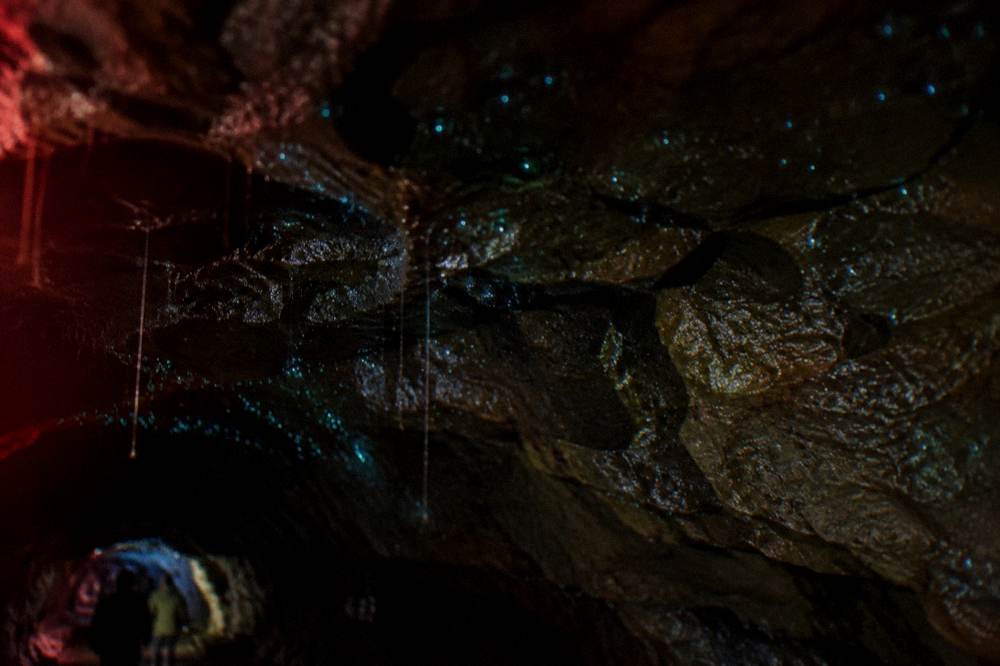
Guided visits manage this for you. The night hike from Sydney supplies headlamps with a red-light mode and a certified outdoor instructor who keeps the group small, at most nine travellers, and quiet. That is not a luxury; red light and low noise are the actual viewing technique, applied by someone who does it nightly. A visitor who understands the switch-off behaviour also understands why the operator cancels for bad weather: a soaked, windy, miserable night disturbs both the worms and the walk.
Your Best Odds Of Seeing A Glow Worm
Your best odds come from three choices: go where a colony is documented rather than where you hope one might be, go when the site is dark and quiet, and let your eyes adjust before judging the result. NSW National Parks advises turning off your torch and letting your eyes adjust, staying quiet and staying on the path. In the Blue Mountains that means the tunnel by day, or a guided night colony after dark.
Pick the site first. The two documented, reachable options in this region are the Glow Worm Tunnel, free and self-guided, and the guided cave colony visited on the Sydney night hike. Both are described in detail elsewhere on this site, including the self drive versus guided comparison and the night versus day viewing guide. Picking a documented site converts the question from "are there glow worms here" to "will they be switched on when I arrive", which is a much better question to be carrying.
| Choice | Better odds | Worse odds |
|---|---|---|
| Site | Documented colony: the tunnel, or a guided cave visit | Open lookouts, lit valley tracks, unverified spots |
| Light | Red-light torch or torch aimed at the ground | White beam pointed at the ceiling |
| Timing | Weekday, spring or autumn, after eyes adjust | Peak summer weekend, arriving with a crowd |
| Group | Small, quiet group | Large, loud party walking through first |
Then manage the two things you control: darkness and quiet. In the tunnel, walk to the middle where no daylight reaches, stand still, kill the torch and wait; the display builds as your eyes adjust and as any earlier group's disturbance fades. At an outdoor colony after dark, the same rules apply plus patience, since a colony spooked by your arrival needs minutes, not seconds, to relight. Operators and travel press add that displays are often stronger in warm, wet weather and after rain, and that moonlight works against you outdoors; treat that as operator and press opinion rather than measured data, but it points the same direction as the habitat logic: damp and dark is good.
The guided hike stacks those odds deliberately: a red-light headlamp, a small group, an instructor, and a colony that lives behind a waterfall, which is as humid and sheltered as habitat gets. It runs about five hours with evening hotel pickup from Sydney accommodation in a staggered window around 7:50pm to 8:35pm, and returns around 11pm to midnight per the operator. Free cancellation applies up to 24 hours before, and the listing is flagged as often selling out. Glow worms are wild animals, so no honest operator promises a sighting; this one promises the right room, the right light and someone who knows the house rules.
Common Questions About Seeing A Glow Worm
How Rare Is It To See A Glowworm?
Not rare in the right place, nearly impossible in the wrong one. The Blue Mountains region holds many colonies, mostly in caves and disused mines, but the habitat they need, sheltered humid darkness with running water, is uncommon, and most colonies sit where the public cannot reach. Visit a documented site like the Glow Worm Tunnel or a guided cave colony and the sighting becomes likely rather than lucky.
Are glow worms endangered in Australia?
No official source lists Arachnocampa richardsae as endangered, and NSW National Parks describes many colonies across the Blue Mountains region. The species is sensitive to disturbance at individual sites: lights, noise and drought can switch a colony off or shrink it. Protecting the habitat matters more than protecting the insect, since the larvae cannot relocate.
Can you see glow worms during the day?
Yes, in the Glow Worm Tunnel. The tunnel is 387 m long and dark enough in its middle for the blue-green lights to show at midday, which NSW National Parks confirms. Outdoor colonies on overhangs and cave mouths are a different matter; those are best after full dark.
Do glow worms turn their lights off if you disturb them?
Yes. NSW National Parks states that glow worms can control their lights and will turn them off if disturbed. Keep noise down, shine torches at the ground or use a red-light mode, never point a beam at the worms, and look but do not touch.
What time of year is best for seeing glow worms?
Glow worms are present year round, and no official source ranks months by brightness. NSW National Parks suggests visiting the tunnel during the week or in spring or autumn to avoid crowds and limited parking. Operators and travel press say displays are often stronger in warm, wet months and after rain; that is opinion, not official data.
Where is the easiest place to see glow worms near Sydney?
Two realistic options: the free, self-guided Glow Worm Tunnel in Wollemi National Park, about a 2.5 hour drive from Sydney, or the guided night hike from Sydney, from $128 USD per person, which picks up at hotels and visits a cave colony behind a waterfall. The first costs you a car and a dirt road; the second costs a ticket and no planning at all.