What Time Of Year Do Glowworms Come Out?
Glow worms glow year round in the Blue Mountains, but crowds, weather and road conditions change with the seasons. Here is how to pick the right month for a visit.
What Time Of Year Do Glowworms Come Out?
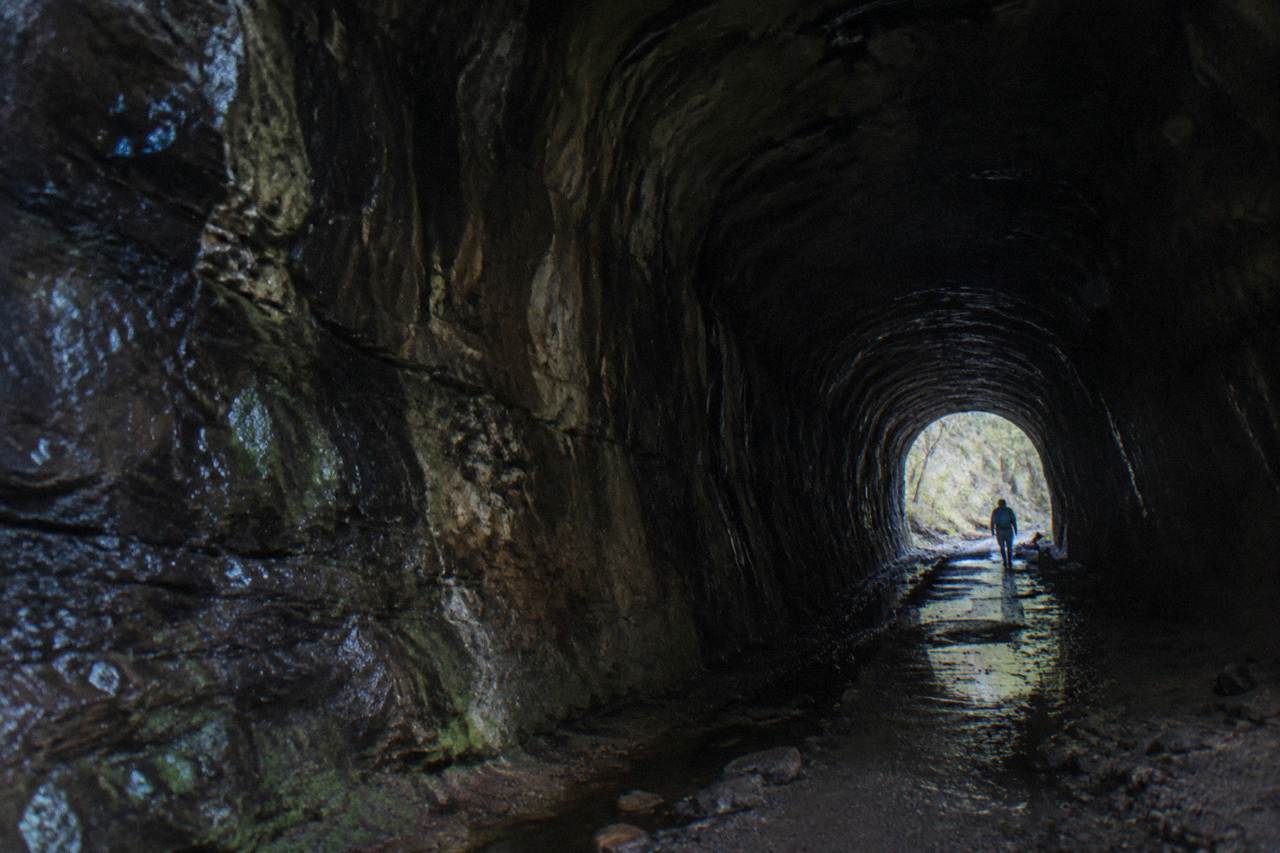
Glow worms come out in every month of the year, because the glowing stage is a larva that shines more or less continuously for six to nine months while it grows and feeds. NSW National Parks describes the display at the Glow Worm Tunnel in Wollemi National Park as a year-round spectacle, and the 387 m tunnel is dark enough for daytime viewing. The real seasonal question is the conditions around the worms, not the worms themselves.
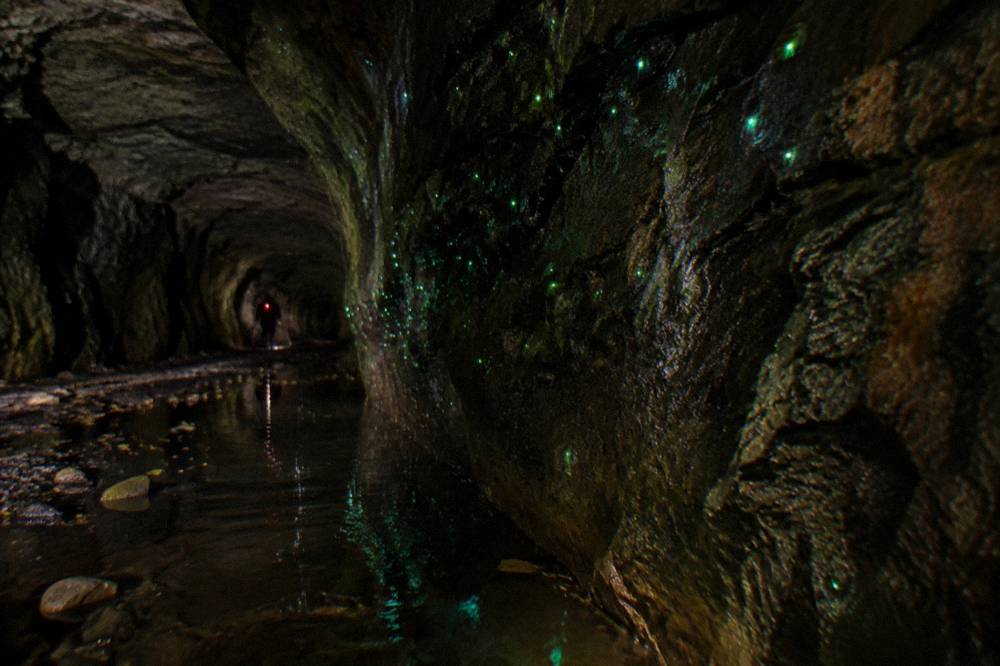
That answer surprises a lot of people, because "glow worm season" sounds like a thing that should exist. It does not, at least not in the way cherry blossom season or whale season does. The animal responsible, Arachnocampa richardsae, is the larval stage of a small fungus gnat fly, and a larva's whole job is to sit in one sheltered spot, glow, and lure prey into sticky silk snares. NSW National Parks explains that the light is bioluminescence produced in the larva's transparent rear end, and that the larva spends six to nine months in that glowing stage. A colony is not a once-a-year event, it is a standing population whose members are always somewhere in that long larval window.
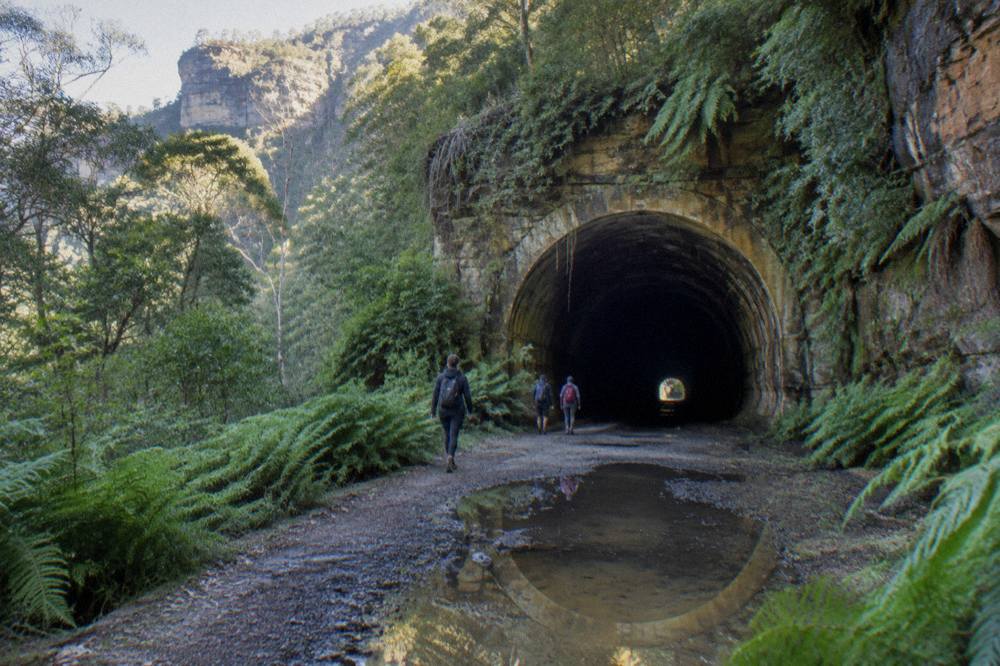
This is why the Glow Worm Tunnel near Lithgow works as a viewing site at all. The tunnel, built in the early 1900s for the Newnes mining railway, is long enough that its interior stays pitch black even at midday, so the worms inside glow whether or not the sun is out. NSW National Parks says plainly that because the tunnel is long, it gets dark enough to see glow worms during the day. Outside the tunnel, in caves and overhangs and rainforest gullies, colonies glow at night and dim in daylight, but the tunnel removes that constraint. Since the tunnel sits well west of the main Blue Mountains sights, you can pair a daytime visit with the broader region, and the guide to doing a Blue Mountains day trip from Sydney explains how to fit the planning together.
What does change through the year is everything around the worms. Parking at the end of Glowworm Tunnel Road is limited, and NSW National Parks says the track is best visited during the week or in spring or autumn, because it can be very busy in summer, on weekends and across holiday periods. The unsealed access road is passable in a 2WD in dry weather but is 4WD-only territory when wet. Winter nights in Katoomba fall to a mean minimum of 2.6 degrees in July. So the honest planning advice is about crowds, weather and road conditions, not about the worms themselves.
For travellers who would rather not think about gravel roads at all, there is one bookable alternative: a guided night hike from Sydney to a glow worm cave behind a waterfall, run by a licensed operator with hotel pickup and red-light headlamps supplied. It runs year round for the same reason the tunnel does, the worms are always there.
When Is The Best Month To Visit The Glow Worm Tunnel?
NSW National Parks does not rank months by brightness, and no official source does, so there is no verified "best month" for glow worms. The official advice is to visit during the week or in spring or autumn to avoid crowds and the limited parking that comes with summer and holiday periods. Operators and travel press often add that displays look stronger in warm, wet months and after rain, but that is operator opinion rather than measured data.
The distinction matters, because the internet is full of confident month-by-month claims about glow worm brightness. The only official statements are about presence and crowd management: the worms are there year round, and spring or autumn weekdays are the calmest time to stand in front of them. Everything beyond that, the claims that December to March glows hardest, that rain supercharges the display, that moonlight suppresses it, comes from tour operators and travel media. It is plausible and often repeated, and readers should treat it as opinion, not park data.
What official data does exist is weather data, and it is useful for a different reason. The Bureau of Meteorology's long-term averages for Katoomba, at an elevation of 1,017 m, show how much the mountain climate swings across the year, and that swing affects the drive, the walk and how long you want to stand still in the dark more than it affects the worms.
| Month | Mean minimum temp (C) | Mean rainfall (mm) |
|---|---|---|
| January | 12.9 | 164.9 |
| February | 13.0 | 177.8 |
| March | 11.6 | 174.6 |
| April | 8.8 | 121.9 |
| May | 6.1 | 100.3 |
| June | 3.7 | 116.0 |
| July | 2.6 | 84.9 |
| August | 3.3 | 79.3 |
| September | 5.5 | 70.7 |
| October | 7.8 | 91.5 |
| November | 9.9 | 110.3 |
| December | 11.8 | 120.4 |
Read that table as a comfort and safety guide rather than a brightness guide. February is the wettest month on average, and wet weather means Glowworm Tunnel Road is a 4WD proposition. July is the coldest but among the driest, and the track beyond the tunnel lookout is not suitable for children even in good conditions. The full planning picture, including what to carry, is covered in the what to bring guide.
If the seasons and the gravel road feel like too much variables to manage, the Sydney-pickup night hike removes the road question entirely: transport in a small van, parking fees, water and a certified outdoor instructor are all included, and the operator cancels and refunds when weather turns bad. Free cancellation up to 24 hours before applies as well.
Do Glow Worms Glow Brighter After Rain?
Operators and travel press regularly claim that glow worms glow more brightly after rain and in warm, wet months, and that claim is repeated widely, but no official source confirms it and NSW National Parks publishes no such ranking. What is verified is the habitat requirement: the larvae need dark, damp, sheltered spots with still, humid air and running water nearby. Wetter weather certainly suits the animal's home; whether it visibly boosts the light is opinion.
The habitat facts come straight from NSW National Parks. Glow worms live in dark, damp caves and rainforest gullies, and the best homes are sheltered and humid with limited airflow, darkness and running water nearby, which is why abandoned tunnels, overhangs and wet cliff lines end up colonised. A dry spell or a heatwave is the condition operators warn about, since the larvae are sensitive to heat and dryness. So a visit soon after rain has a certain logic: the gullies and seep lines the worms favour are at their wettest, and the colonies are least stressed.
But a logic is not a measurement, and this site's rule is to label it honestly. If you read that March after a storm is the single best glow worm moment in the Blue Mountains, you are reading operator and press opinion. The verified statement underneath it is simpler: the worms are present and glowing in every month, and their homes are damp ones. The best time to see glow worms guide works through the same evidence in more detail.
There is one seasonal factor that does interact with the light in a documented way: disturbance. NSW National Parks notes that glow worms can control their lights and will switch them off if disturbed, which is why visitors are asked to keep noise down, stay on the path, and shine torches at the ground or use a red-light setting rather than pointing them at the worms. A crowded summer Saturday, with torch beams and voices bouncing around the tunnel, can genuinely dim what you see, and that has nothing to do with the month and everything to do with the crowd. The park's weekday advice is, in part, advice about the worms' own behaviour. The same instinct to protect the worms applies to contact as well as noise, and the reasons you can't touch glowworms explain how easily their silk feeding lines can be ruined.
What About Winter, Summer And School Holidays?
Winter visits work: glow worms are present year round, and July and August are among the driest months at Katoomba, though the mean minimum sits near 2.6 to 3.3 degrees and the walk back to the car will be cold. Summer and school holidays bring the opposite trade-off, mild nights but very busy track and limited parking at the carpark, which NSW National Parks flags explicitly. Each season is workable; each has a cost. Whatever month you pick, our guide to the Grand Canyon walk and its glow worms spells out what to expect on the track after dark.
Winter is the underrated option. The mean minimum at Katoomba falls to 2.6 degrees in July, so it is a night for serious layers, but rainfall averages drop to 84.9 mm in July and 79.3 mm in August, the lowest of the year, and dry weather is exactly when the unsealed road is at its most forgiving. Crowds are thinner outside the holiday peaks too. For anyone comfortable with cold, a clear winter weekday is arguably the most reliable combination of access and quiet the calendar offers.
Summer flips that. The nights are warm, the worms are as present as ever, and the operator and press opinion about warm, wet months points this way. But December and January sit inside the school holiday window, parking at the end of Glowworm Tunnel Road is limited, and NSW National Parks says the track can be very busy across summer, weekends and holiday periods. There is also a park fire ban in Wollemi National Park from 1 October 2026 to 31 March 2027, which prohibits campfires and solid-fuel barbecues, worth knowing if your trip involves staying overnight nearby.
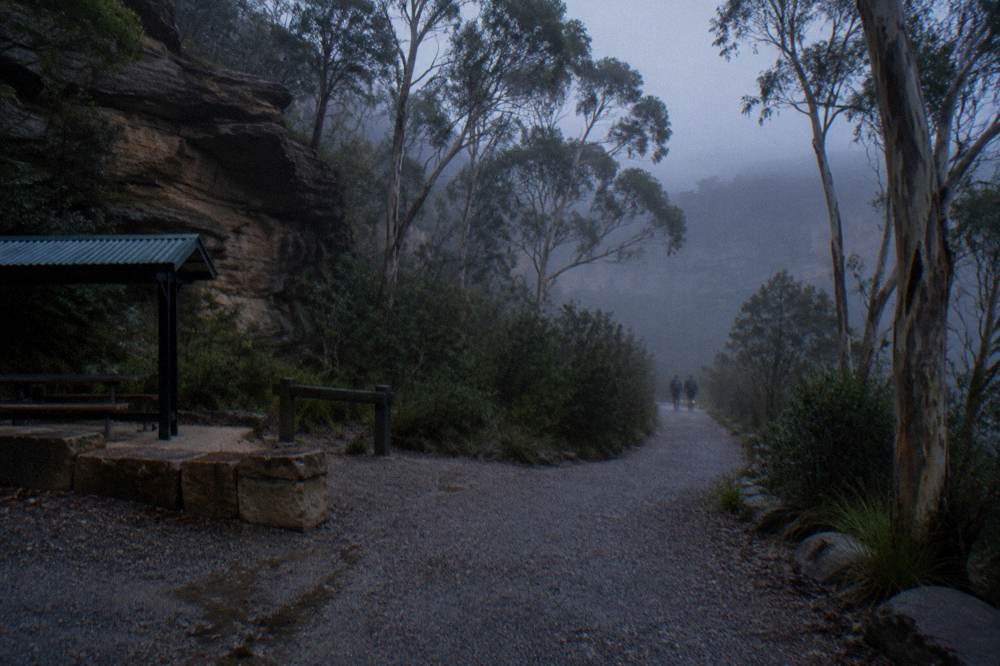
Spring and autumn are the official sweet spot, and it is worth being precise about why. NSW National Parks recommends visiting during the week or in spring or autumn, and the reason given is crowds and parking, not glow output. Autumn in particular pairs mild daytime walking temperatures with falling rainfall, and spring brings the track back to life after winter. Neither month offers a verified brightness bonus, but both offer the best odds of standing in the tunnel with room to let your eyes adjust.
The same year-round logic applies to the guided night hike from Sydney. Because the destination is a cave behind a waterfall, a naturally dark and humid space, the operator runs it across the calendar and simply cancels for bad weather, with a full refund window of 24 hours before departure. Travellers who want the seasonal question handled for them can check availability for their chosen month directly.
Night Or Day: Does The Season Change The Viewing?
Inside the 387 m tunnel, no: it is dark enough year round that glow worms are visible during the day, in any season, which is the site's defining trick. Outside the tunnel, at overhangs, caves and the waterfall cave on the guided night hike, viewing happens after dark in every month, and the only seasonal variable is how early darkness arrives, earlier in winter, much later in summer.
The tunnel's daytime viewing is the detail most first-time visitors miss. Because the bore is long, daylight does not reach the middle, so a 1.5 km walk from the carpark puts you in front of glowing larvae at two in the afternoon. That makes winter attractive in a way summer cannot match: midwinter sunset in the mountains arrives early enough that an afternoon tunnel visit can roll into an evening elsewhere without a marathon day. The can you see glow worms during the day post unpacks this.
For night viewing away from the tunnel, the season quietly changes the clock. A summer night hike from Sydney starts with hotel pickups in the 7:50pm to 8:35pm window and returns around 11pm to midnight per the operator, with darkness still settling in during the drive out. The same tour in June runs against a sky that has been black since early evening. The worms behave the same way in both months; the schedule and the temperature do not.
One seasonal factor worth naming is moonlight, and again it belongs in the opinion column. Operators say low or no moonlight makes for better displays, since ambient light competes with the glow. There is no official NSW National Parks statement to that effect, but the underlying logic, that the worms need darkness for their lights to shine, is straight from the park service's own habitat description. Planning a night visit around a moonless sky is a reasonable bet, just not a guaranteed one.
Planning Your Visit Around The Season
Pick a spring or autumn weekday if you want the official best-case: calm track, available parking, mild walking weather. Pick a dry winter weekday if cold does not bother you, since rainfall is at its lowest and the unsealed road is at its most drivable. Avoid summer weekends and school holidays unless you arrive prepared for crowds, and always check the NPWS alerts page before driving out, since road works and weather closures change week to week.
The alerts point is not a formality. NSW National Parks currently lists construction works at the Bungleboori precinct running until December 2026, a single-lane section with delays up to five minutes on Glowworm Tunnel Road from 11 October 2026, and a park fire ban across the summer months. None of that closes the tunnel, but all of it shapes the drive. The is the glow worm tunnel open guide covers how to read the alerts page before you commit.
| Season | Crowds and parking | Weather and road | Best for |
|---|---|---|---|
| Spring | Quieter on weekdays, official recommendation | Mild, moderate rain | First-time visitors |
| Summer | Busiest, holiday pressure on parking | Warm, wettest months, fire ban in place | Evening tours from Sydney |
| Autumn | Quieter on weekdays, official recommendation | Mild, easing rain | Photography and long visits |
| Winter | Quietest overall | Coldest, driest, 4WD less often needed | Confident, well-prepared walkers |
Whichever month you choose, the viewing etiquette does not change, because the worms do not. Stay on the path, keep noise to a minimum, let your eyes adjust after you switch off the torch, shine any light at the ground or use a red-light setting, and never point a beam at the glow worms themselves, since light disturbance makes them switch off. Touching is out entirely. These rules apply in January and July alike, and they are the single biggest thing any visitor controls about how good the display will be on the night they stand in front of it.
For the full picture on where these colonies live and why an abandoned railway tunnel ended up as one of the state's best viewing sites, the Blue Mountains glow worms guide is the reference page on this site, and the month-by-month ribbon on the homepage of Blue Mountains Glow Worms summarises the seasonal picture at a glance.
If driving yourself to Wollemi does not fit the trip, the guided alternative runs every month of the year: the Glow Worm Cave Night Hike From Sydney, from $128 USD per person, about five hours door to door, rated 4.9 from 210 reviews, with headlamps, transport and a certified outdoor instructor included. You can see the dates and Check availability on the operator's live listing, and the night hike from Sydney overview explains what the evening actually involves.
The seasonal bottom line is refreshingly boring. There is no month when the worms are absent and no month when they are officially at their best. There are only months when the road, the crowd and the cold are on your side, and months when they are not. Choose the ones you can manage, follow the light and noise rules when you arrive, and the colony will be there, glowing, exactly as it has done every night of every year since the railway closed and the dark moved in.
Common Questions About Glowworm Seasonality
What Time Of Year Do Glowworms Come Out?
Glowworms come out in every month of the year. The glowing stage is a larva that shines continuously for six to nine months, and colonies in the Blue Mountains and Wollemi National Park are active year round. The Glow Worm Tunnel is dark enough inside for daytime viewing in any season, so the choice of month is about crowds, weather and road conditions rather than the worms themselves.
Is there an official best month to see glow worms?
No. NSW National Parks does not rank months by glow worm brightness and no official source does. The park service recommends visiting during the week or in spring or autumn, and its stated reason is crowds and limited parking, not glow output.
Do glow worms glow more after rain?
Operators and travel press often say displays are stronger in warm, wet months and after rain, but that is opinion, not official data. What is verified is that glow worms need dark, damp, sheltered habitat with humid air and running water nearby, so wet weather suits their homes even if the brightness claim is unmeasured.
Can you see glow worms in winter?
Yes. Glow worms are present year round, and winter is among the driest periods at Katoomba, with July mean rainfall of 84.9 mm. Nights are cold, with a July mean minimum of 2.6 degrees, so warm layers are essential, but crowds are thinner and the unsealed access road is more often drivable.
Are glow worms visible during the day?
Inside the 387 m Glow Worm Tunnel, yes. NSW National Parks says the tunnel is long enough to stay dark inside, so glow worms can be seen during the day in any season. At outdoor sites such as caves, overhangs and the waterfall cave on the guided night hike, viewing happens after dark.
Does the season change the guided tour from Sydney?
The Glow Worm Cave Night Hike From Sydney runs year round, with hotel pickups in the 7:50pm to 8:35pm window and a return around 11pm to midnight per the operator. The worms behave the same in every month; the operator cancels for bad weather or if minimum numbers are not met, with free cancellation up to 24 hours before.