Why Can't You Touch Glowworms?
Glow worms switch off their lights when disturbed, and their silk snares are easily destroyed. Here is why NSW National Parks says look but do not touch, and how to visit responsibly.
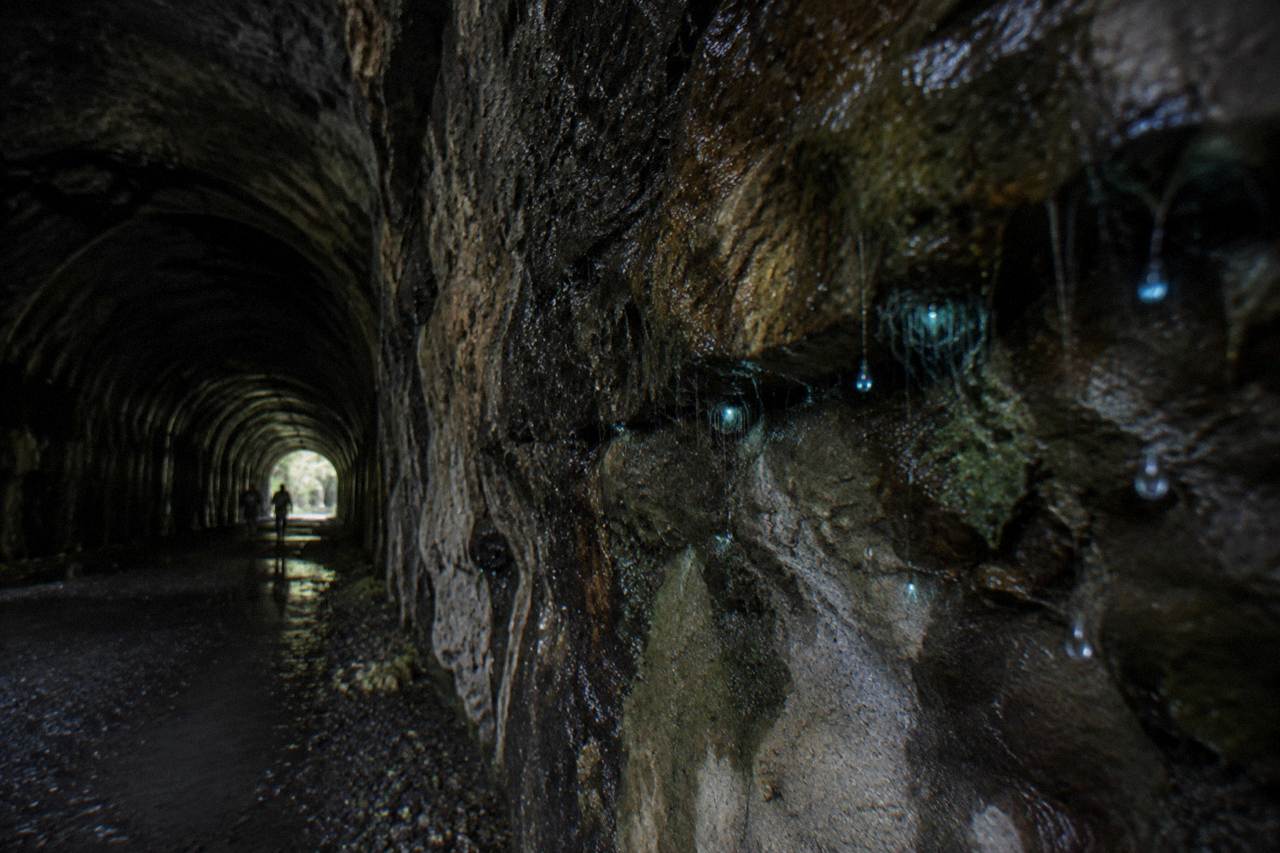
Glow worms look like a string of tiny blue-green fairy lights pinned to a cave wall, and the instinct to reach out is understandable. NSW National Parks is blunt about it: look but do not touch. The rule is not about protecting some rare and dangerous animal from tourists. It is about protecting a small, fragile insect larva whose entire survival strategy depends on staying still, staying dark and keeping its fishing lines intact.
Why Can't You Touch Glowworms?
Touching a glow worm can switch off its light, crush its body and destroy the silk snares it uses to catch food, because the glowing thing is not a worm at all but the soft larva of a fungus gnat. NSW National Parks says glow worms can control their lights and will turn them off if disturbed, and a larva that keeps its light off stops attracting the prey it needs to survive.
The animal behind the light is Arachnocampa richardsae, the species found in Wollemi National Park and the wider Blue Mountains region. It is the larval life stage of a small flying insect, a fungus gnat, and that larval stage lasts six to nine months. The glow comes from bioluminescence, a chemical reaction in the larva's transparent rear end, and it exists for one reason: to lure prey. Small flying insects such as mosquitoes and moths follow the light, get stuck in the sticky silk threads hanging beneath the larva, and are pulled in and eaten.
A larva is a soft-bodied creature a few centimetres long, sitting in a mucus and silk nest on a damp cave roof or tunnel wall. A fingertip that brushes it can damage the nest, snap the snares or squash the animal outright. Even if the larva survives contact physically, the disturbance usually makes it go dark. The Blue Mountains Glow Worms site's home region holds many colonies, mostly in caves and disused mines, and every one of them depends on visitors keeping their hands to themselves.
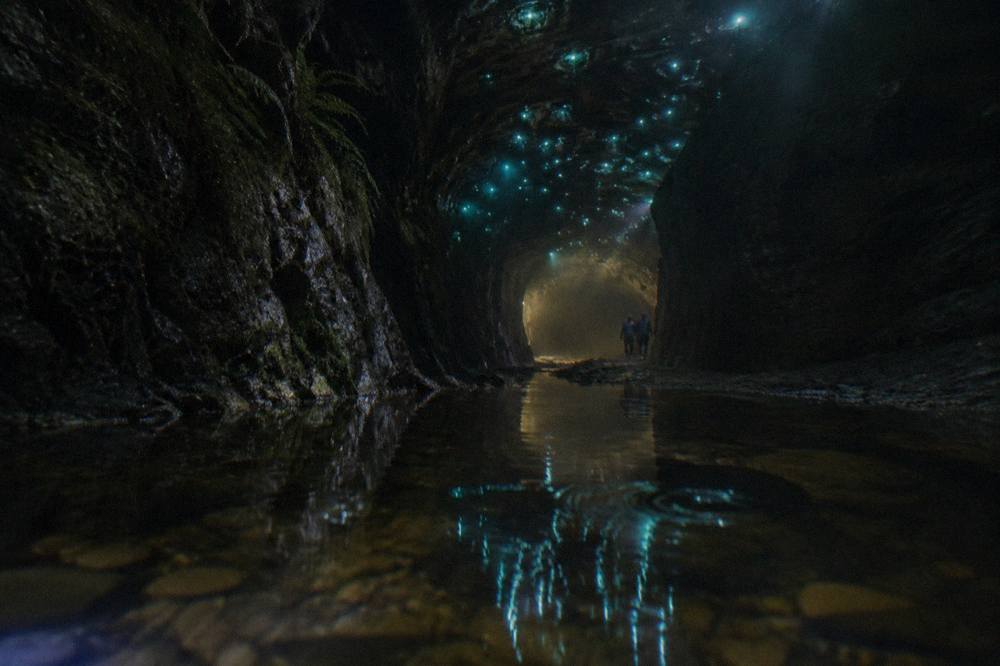
There is a second, quieter reason for the rule. Glow worm colonies live in places with still, humid air and running water nearby: caves, overhangs, rainforest gullies and abandoned tunnels like the Glow Worm Tunnel in Wollemi National Park. Those surfaces are often wet, slippery and crusted with delicate habitat. Hands leave oils, dislodge larvae and erode the surfaces they anchor to. One visitor touching one worm is trivial; a thousand visitors a summer doing it is a colony in decline.
If the goal is simply to see glow worms in the dark with someone else handling the logistics, the bookable option from Sydney is the guided cave hike:
The listing runs from $128 USD per person, about five hours door to door, with hotel pickup in Sydney between roughly 7:50pm and 8:35pm and a maximum of nine travellers per departure.
What Happens When A Glow Worm Is Disturbed?
A disturbed glow worm turns its light off, sometimes for the rest of the night, and repeated disturbance can starve it. NSW National Parks states plainly that glow worms can control their lights and will turn them off if disturbed, which means a colony that gets handled, lit up or shouted at stops doing the one thing visitors came to see.
The light is not a constant like a star's. It is a switch the larva controls, and it uses that switch defensively. When something loud, bright or physical happens, the larva goes dark. A single switched-off worm is invisible; a switched-off colony looks like an empty tunnel. Visitors who arrive after a noisy group, or after someone has swept a white torch beam across the wall, often see nothing at all and leave convinced there were never any glow worms there.
The longer-term cost is worse than a disappointing view. The larva's six to nine month life stage exists to eat and grow. Its light is its lure, its snares are its trap, and both are disabled by disturbance. A larva that keeps turning off loses feeding time, and a nest whose silk lines are torn has to be rebuilt, costing energy the animal has budgeted for growth. Enough of that, and the colony thins out.
That is why the viewing rules are so consistent across official sources. NSW National Parks asks visitors to stay on the path, keep noise to a minimum, let eyes adjust in the dark, and shine a torch only at the ground or use a red-light option, which is the least disruptive. The agency's guidance on the glow worm itself adds the sharpest line of all: do not point a torch at the glow worms, because it can damage their bioluminescence and makes them turn their lights off. The rules are not bureaucracy. They are the minimum behaviour that keeps the lights on for the next person.
Why Glow Worm Silk Snares Are So Delicate
Each glow worm larva hangs dozens of sticky silk threads from its nest to snare prey, and those threads are built to catch midges and mosquitoes, not to survive a human hand. The silk is secreted from the larva's mouth, dangles in the still air of a cave or tunnel, and snaps or fouls instantly when touched, leaving the larva with no way to feed until it rebuilds them.
The mechanism is genuinely remarkable, which makes the fragility more of a shame. The larva spins a nest of silk and mucus on the ceiling of its sheltered spot, then suspends the snares below it. Flying insects drawn by the blue-green glow fly into the threads and stick. The larva then pulls the trapped prey up into its nest with its mouth. NSW National Parks notes the larvae can take insects as big as a cockroach, which is a serious catch for an animal a couple of centimetres long.
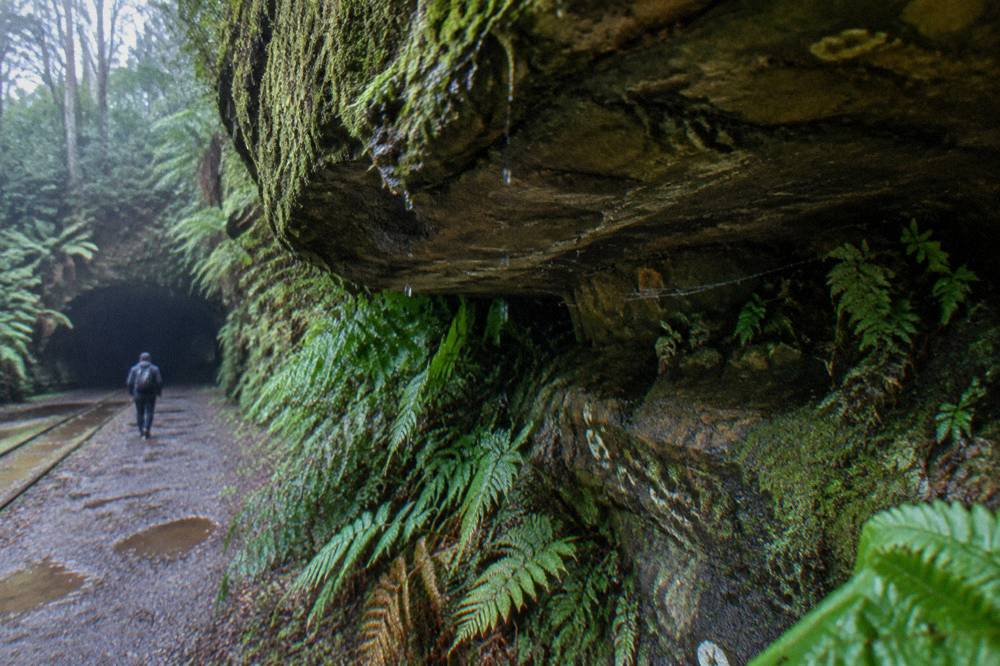
The threads only work because the air around them is still. Glow worm habitat is described by NSW National Parks as sheltered and humid, with limited air flow, darkness and running water nearby. That is why colonies cluster in caves, overhangs, gullies and abandoned tunnels rather than on open cliff faces. A hand passing through the snares, or even the gust and vibration of someone leaning in close, tangles the lines. The larva must re-spin them, and until it does, the light shines over an empty trap.
This is also why flash photography is a grey area rather than a settled rule. No NSW National Parks page sets out a photography or flash policy for the Glow Worm Tunnel, so the honest position is that there is no published rule either way. What is published is the disturbance principle: bright light pointed at the worms can damage their bioluminescence and switch them off. Photographers who want to think through the trade-offs can read the glow worm tunnel photography guide, which works through the same evidence.
Noise, Torches And Other Ways Visitors Disturb Colonies
Touching is the most obvious offence, but noise and light do the same damage from a distance, and NSW National Parks flags both. The agency asks visitors to keep noise to a minimum because glow worms are sensitive to sound, and to keep torches pointed at the ground or switched to red light, because a beam aimed at the worms can damage their bioluminescence and make them go dark.
Noise is the one most people miss. The larva's sensory world is tuned to stillness: it hangs its snares in calm air and waits. Voices, music and shouting carry into caves and tunnels and register as disturbance. That is why the official advice for the Glow Worm Tunnel walking track includes keeping quiet, and why guided groups move through glow worm sites in near silence in the last stretch.
Light discipline is the other half. The practical version of the rule, as NSW National Parks frames it, has three parts: stay on the path, let your eyes adjust once the torch goes off, and if you need light, shine it at the ground or use a red-light option. Red light is the least disruptive to the larvae, which is why the guided night hike from Sydney issues headlamps with a red-light mode for the walk in. The operator's listing describes a guided bush walk in the dark to a cave behind a waterfall where native glow worms can be seen, with a certified outdoor instructor, water and transport included.
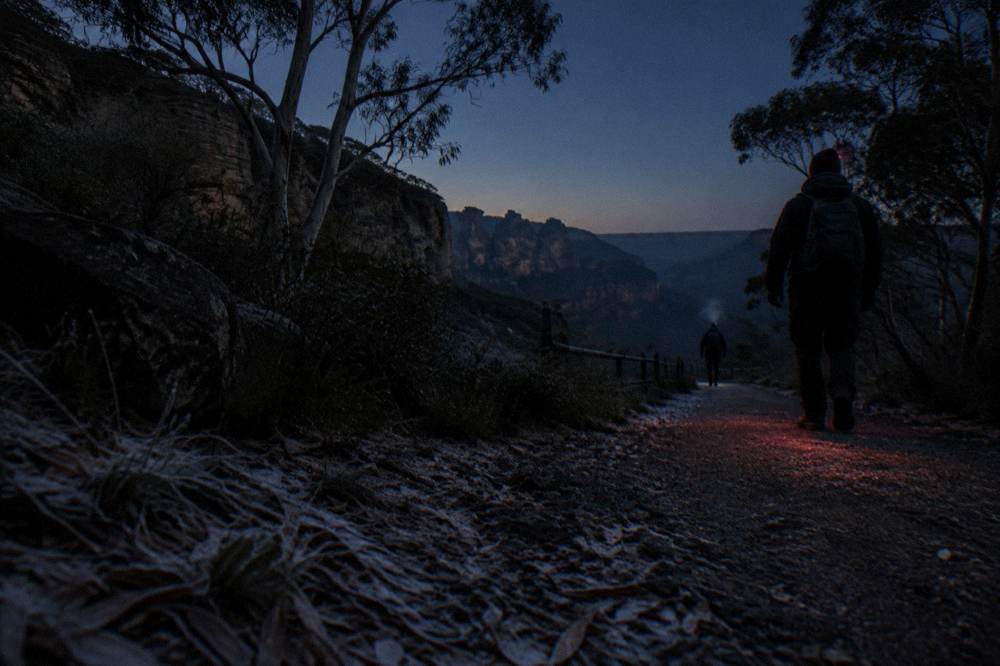
The remaining offences are habitat-level. Straying off the path compacts soil and can put boots through the damp gullies larvae depend on, so staying on the track is a habitat rule as much as a safety one. Anyone planning an independent visit to the famous tunnel near Lithgow should read the glow worm tunnel safety guide for the full picture, including the steps, the unsealed road and the wet tunnel floor.
For a sense of what a night visit actually involves, the night versus day glow worm tours comparison breaks down how the two experiences differ, from darkness levels to what you can expect a colony to do when a group arrives quietly rather than loudly.
How The Guided Night Hike Handles The Rules
The guided night hike from Sydney builds the official rules into the product rather than leaving them to visitors: headlamps with a red-light mode for the walk, a maximum of nine travellers, and a certified outdoor instructor who manages light and noise at the cave. The listing is rated 4.9 from 210 reviews and runs from $128 USD per person, about five hours, with hotel pickup and drop-off in Sydney.
Small group size is the quiet design choice that matters most here. Nine travellers move along a track in the dark with far less noise and vibration than a coach group, and a single instructor can hold the line on torches pointed down and voices low at the moment it counts. The listing also notes free cancellation up to 24 hours before, and that the operator cancels for bad weather or if minimum numbers are not met, which matters for glow worm viewing specifically: a wet, stormy night can be a poor one for a colony visit.
The hike also solves the access problem that trips up most independent visitors. The cave's location is not published by the operator, the walk is moderate fitness and not wheelchair accessible, and there is no fixed meeting point in the mountains because pickup is staggered from Sydney accommodation between about 7:50pm and 8:35pm. For anyone without a car, or unwilling to drive unsealed roads at night, that door-to-door structure is the practical way to follow every viewing rule without having to think about them.
It is worth being clear about what the hike is not. It is not a visit to the Glow Worm Tunnel at Newnes in Wollemi National Park; the hike goes to a cave behind a waterfall, and the operator does not publish its location. And no operator anywhere can guarantee a sighting, because glow worms are wild animals that switch off when conditions or behaviour disturb them. What a good guide can do is maximise the odds by arriving quietly, in the dark, with red light only.
How To Watch Glow Worms Properly
The full rule set is short and easy to follow: stay on the path, keep noise down, let eyes adjust in the dark, keep torches on the ground or on red light, never point a beam at the worms, and never touch them or their silk. Follow all six and a colony will keep glowing while you watch; break any one and the lights start going out one by one.
The eye-adjustment step deserves its own sentence, because it is the one people skip. NSW National Parks advises letting your eyes adjust after the torch goes off, and full dark adaptation takes real time, often twenty minutes or more before a dim colony becomes a bright one. Visitors who walk in, look for two seconds and leave convinced the worms are faint have usually just not waited. Patience is not politeness here, it is optics.
For the tunnel specifically, the same rules apply in daylight, because the 387 m tunnel is dark enough inside for the glow worms to be visible during the day. That is unusual for glow worm viewing and it is the reason the Newnes tunnel is famous: no night visit required, only the same quiet, red-light discipline once you are inside. The track itself is a 6 km return walk, Grade 3, with the tunnel entrance about 1.5 km from the carpark, and no fee is listed for access. Since daylight viewing is possible, timing your visit is simpler than you might think, and the glow worm tunnel opening hours guide explains exactly how to plan around it.
| Rule | What it protects | Official source |
|---|---|---|
| Do not touch | Larva body, silk nest and snares | NSW National Parks: look but do not touch |
| Do not point a torch at the worms | Bioluminescence; prevents lights switching off | NSW National Parks story guidance |
| Keep noise down | Larvae sense vibration and go dark | NSW National Parks track advice |
| Torch on the ground or red light | Keeps beams off the colony | NSW National Parks track advice |
| Stay on the path | Habitat and visitor safety | NSW National Parks track advice |
| Let eyes adjust | Your own night vision, not the worms | NSW National Parks track advice |
The pattern across all six rules is the same: every one of them protects the colony's willingness to keep glowing. NSW National Parks explains the biology on its glow worm facts page, and the track-specific advice sits on the Glow Worm Tunnel walking track page. Read either and the message is identical, look, quietly, and leave everything exactly as it was.
Whether you go self-guided or with a guide, the choice of season matters less than the choice of behaviour. Glow worms are present year round, and NSW National Parks suggests visiting during the week or in spring or autumn mainly to avoid crowds and limited parking, not because the worms are seasonal. The best time to see glow worms guide covers the weather and crowd angles in detail. If you're weighing which month suits you best, the season-by-season glow worm visiting guide explains how crowds, weather and road conditions shift through the year.
If seeing them in true darkness, with someone else driving and the light discipline handled, sounds like the better fit, the Sydney night hike is the one bookable option on this site:
It runs from $128 USD per person, about five hours, with pickup from Sydney accommodation and a small group of no more than nine.
Common Questions About Touching Glowworms
Why Can't You Touch Glowworms?
Because the glowing thing is the soft larva of a fungus gnat, not a worm, and touching it can crush the animal, tear its silk snares and make it switch off its light. NSW National Parks says glow worms will turn their lights off if disturbed, and a larva that stays dark stops catching the prey it needs to survive its six to nine month growth stage.
Do glow worms die if you touch them?
They can. The larva is a small, soft-bodied insect a few centimetres long, and direct contact can injure it or destroy the silk nest and snares it uses to feed. Even gentle contact usually makes it switch its light off, which costs it feeding time. The official rule is simple: look but do not touch.
Why do glow worms turn their lights off?
Disturbance. NSW National Parks states that glow worms can control their lights and will turn them off if disturbed, whether by touch, noise or a torch beam pointed at them. The light is a hunting lure, not a decoration, and a larva that senses trouble goes dark until the threat passes.
Is it bad to shine a torch on glow worms?
Yes. NSW National Parks advises never pointing a torch at glow worms, because it can damage their bioluminescence and makes them turn their lights off. Keep any torch beam on the ground, or use a red-light option, which is the least disruptive, and let your eyes adjust in the dark instead.
Can you take photos of glow worms?
No NSW National Parks page sets out a photography or flash rule for the Glow Worm Tunnel, so there is no published ban either way. The general disturbance principle still applies: bright light pointed at the colony can switch it off. Long exposures on a tripod, with no beam on the worms, are the usual compromise.
Can you see glow worms without a tour?
Yes. The Glow Worm Tunnel in Wollemi National Park is a free, self-guided walk with no fee listed by NSW National Parks, about a 2.5 hour drive from Sydney plus unsealed road access. The guided night hike from Sydney, from $128 USD per person, is the bookable option with hotel pickup, red-light headlamps and a maximum of nine travellers.