Glow Worm Night Tour Or Day Visit: Which Is Better?
You can see glow worms in the Blue Mountains at midday or at midnight, and the experience is genuinely different each way. The tunnel near Lithgow is pitch black inside, so a daytime walk works, while the bookable night hike from Sydney runs entirely after dark with headlamps and red light. Here is what changes between the two.
Short answer
Yes, you can see glow worms by day inside the Glow Worm Tunnel, because the 387 m tunnel is dark enough for viewing at any hour, per NSW National Parks. A guided night tour instead takes you to a cave behind a waterfall after dark, with red-light headlamps, from $128 USD per person.
Glow worms switch their lights off when disturbed, and that single fact shapes almost every decision about when to go looking for them. NSW National Parks notes that the insects, the larvae of a fungus gnat called Arachnocampa richardsae, can control their own bioluminescence and go dark if a torch hits them or noise carries. Timing, light discipline and crowd levels all follow from that. The short version of this whole comparison: the Glow Worm Tunnel near Lithgow is dark enough inside to see glow worms during the day, while the guided night hike from Sydney visits a cave behind a waterfall after dark, with headlamps in red-light mode. Neither is a guaranteed sighting, because the animals are wild and the operator cancels for bad weather. If you do decide to book a guided night hike, our guide to booking a glow worm tour covers what to expect on pricing, timing and group size.
The two options suit different travellers. A daytime tunnel walk is free, self-guided and reachable by car from Lithgow. A night tour is guided, small-group, picked up from your Sydney hotel, and costs from $128 USD per person. This guide walks through what you actually see at each hour, how your eyes behave in the dark, what operators say about moonlight and rain, and how to pick between the two.
What Changes Between Night And Day Glow Worm Viewing
The glow worms themselves are the same insects at any hour, but the viewing conditions are not: the tunnel offers a dark interior even at midday, while outdoor sites such as a cave or overhang only deliver a real display after full dark, once your eyes have had 20 to 30 minutes to adjust. The difference is not the worms, it is the container. A 387 m railway tunnel stays pitch black in its middle section regardless of the sun outside, which is why NSW National Parks says glow worms can be seen there during the day. An open cave mouth or a rock overhang behind a waterfall has no such shielding, so the same blue-green lights only become visible once ambient light is gone.
Crowds shift with the clock too. The park service advises visiting the tunnel during the week or in spring or autumn, noting it can be very busy in summer, on weekends and in holiday periods, with limited parking at those times. A weekday mid-morning tunnel walk often means sharing the space with a handful of people. A night tour inverts that entirely: the departure window from Sydney hotels runs from about 7:50pm to 8:35pm, staggered so the group heads out after most day visitors have left the mountains altogether.
Noise behaves differently as well. Day visitors arrive with cameras, conversation and children, and the tunnel's echo carries all of it. Night groups move under a guide's instructions, keeping quiet as a matter of policy, because the worms respond to disturbance by turning off. For more on the biology behind that, see What Are Glow Worms, which covers the larva, its silk snares and why the light exists at all.
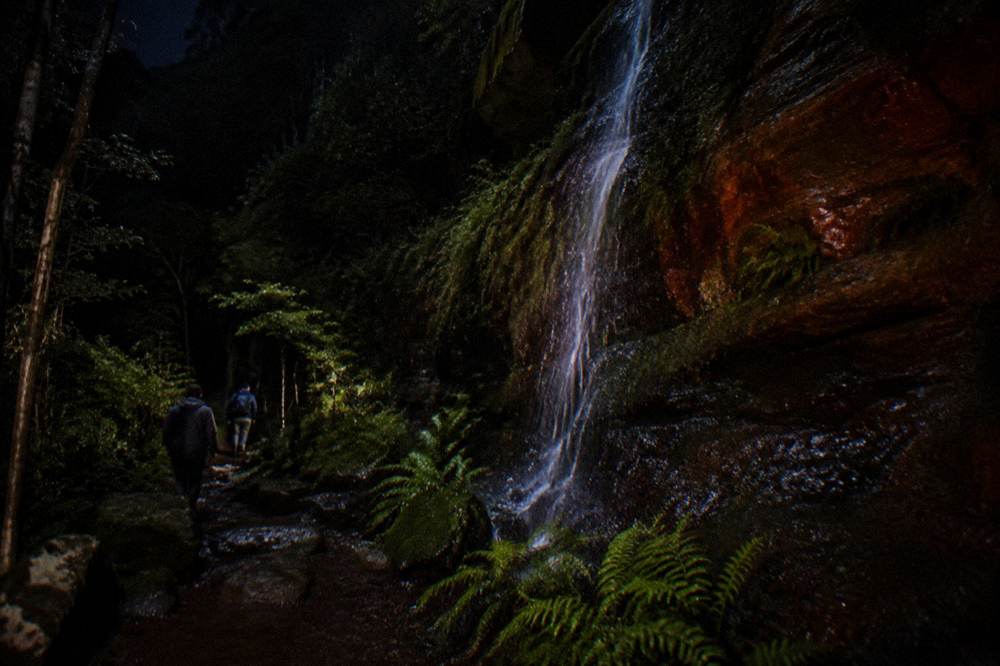
The listing above is the one bookable glow worm night tour this site covers, a small-group hike of up to 9 travellers run by Wildscape Adventures, rated 4.9 from 210 reviews. It is worth being clear about what it is and is not: the operator does not publish the cave's location, and the trip is not a visit to the Glow Worm Tunnel at Newnes. It is a bush walk in the dark to a cave with a waterfall where native glow worms can be seen, with hotel pickup and drop-off from Sydney and a return around 11pm to midnight per the operator. If this cave has you wondering about your other options, our guide to every confirmed glow worm spot in NSW sorts the verified locations from the rumours.
Why The Glow Worm Tunnel Works In Daylight
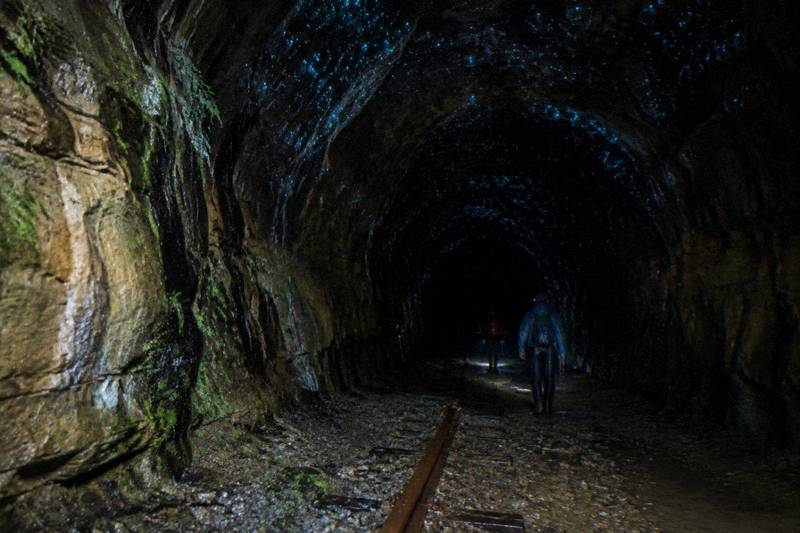
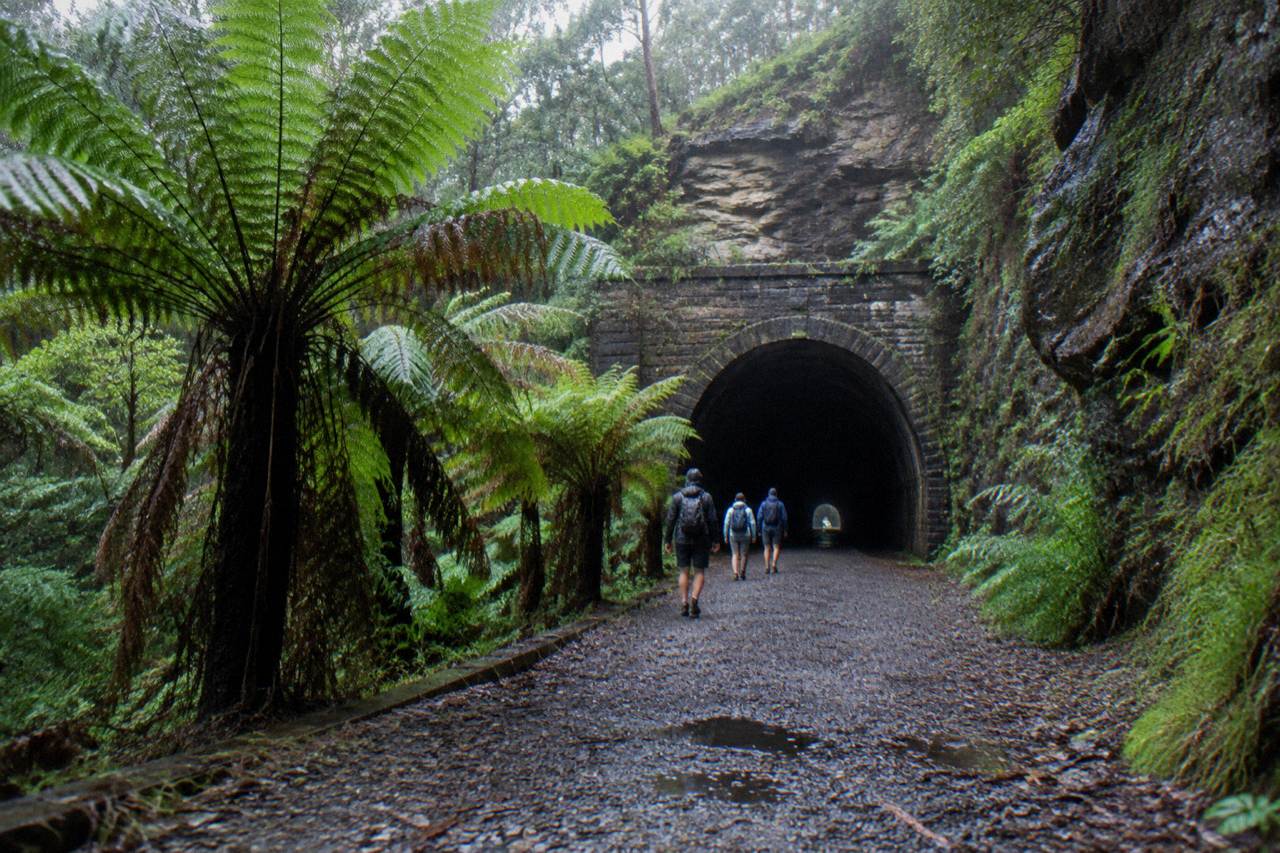
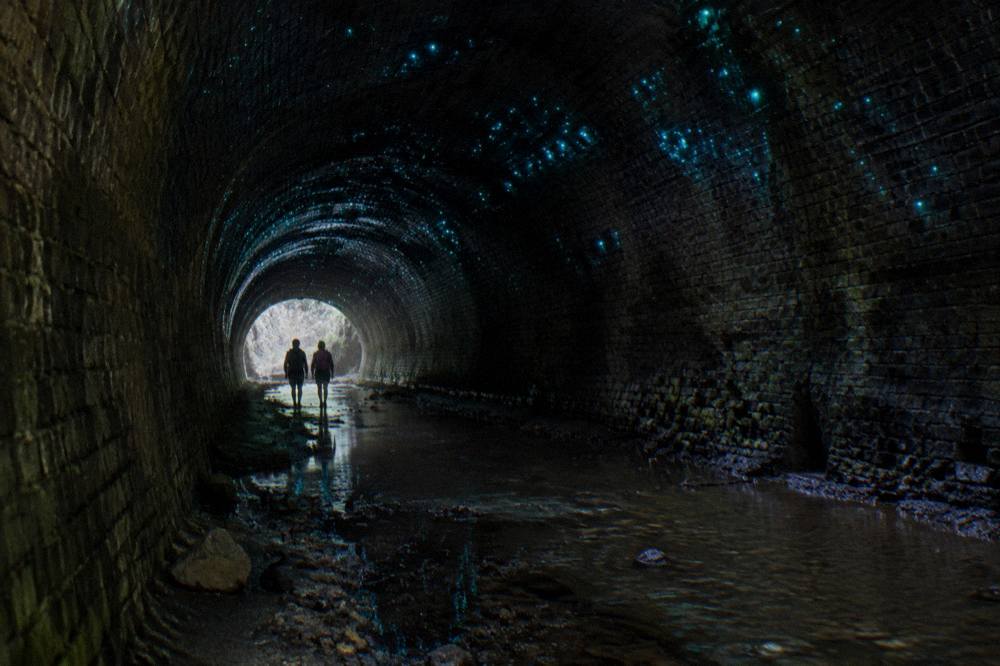
The tunnel is dark enough inside to see glow worms during the day because it runs 387 m through solid rock with no light source beyond the two portals, so the middle section stays pitch black at any hour, per NSW National Parks. The tunnel was built in the early 1900s for the Newnes mining railway, as Tunnel No. 2 of the Wolgan Valley Railway, and its length is precisely what makes daytime viewing possible. Walk 30 m in from the entrance and the daylight falls away; walk further and the glow worms appear on the ceiling and walls as hundreds of small lights. The park service's own story about the site describes "hundreds of blue-green tail lights" visible inside.
Daytime viewing has real advantages. You can combine the tunnel with the rest of the walk, a 6 km return track that runs 1.5 km from the carpark to the tunnel entrance and then, optionally, on through Penrose Gorge to a lookout over Donkey Mountain and the Wolgan Valley. The track is Grade 3 with short steep hills and over 80 steps without handrails, so daylight makes the terrain itself far easier to manage. There is no fee listed for the track on any of the park service pages, and the suggested time for the full return walk is 2 to 3 hours.
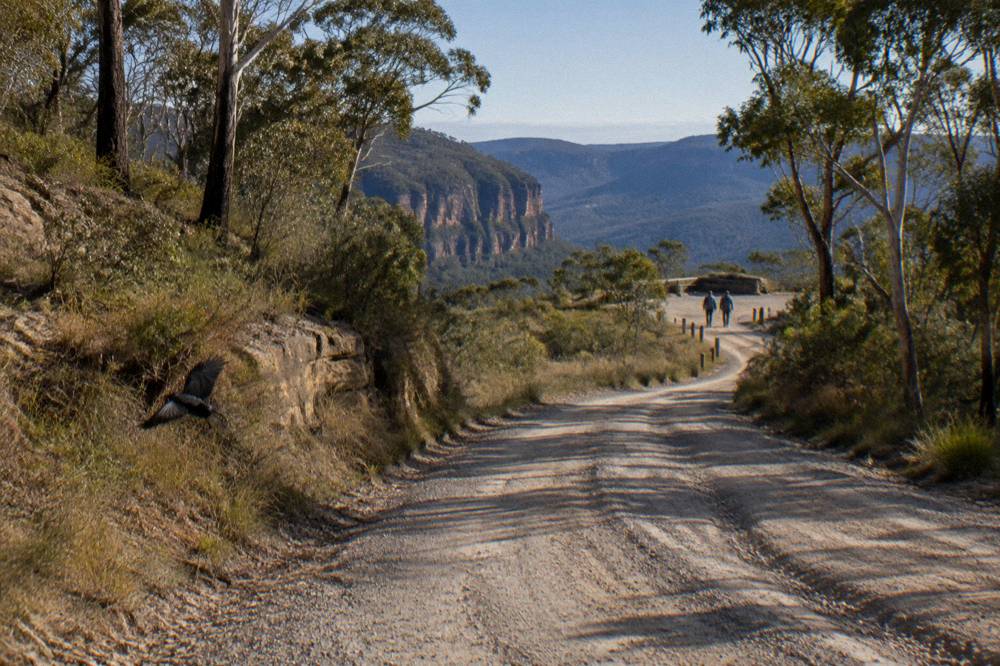
The catch is access. The carpark sits at the end of Glowworm Tunnel Road, an unsealed gravel route where a 2WD is possible in dry weather but a 4WD is recommended, and required, in wet weather. No public transport reaches it at all. The park service describes the site as just a 2.5 hr drive from Sydney, and the practical details of that drive, including the single-lane 60 m tunnel just before the carpark and the current roadworks alerts, are covered in Glow Worm Tunnel Road And Car Park.
Day viewing also demands light discipline of its own. The park service's guidance is to stay on the path, keep noise to a minimum, shine a torch at the ground or use a red-light option, and let your eyes adjust when you turn your torch off. Pointing a torch at the worms can damage their bioluminescence and makes them switch off, so the rule is look but do not touch. Daylight outside does not exempt you from any of that once you are inside.
What A Night Tour Adds: Headlamps, Red Light And Eye Adjustment
A guided night tour moves the whole experience after dark: the walk itself is done by headlamp, the group switches to red-light mode near the worms, and your eyes get the 20 to 30 minutes of adjustment time in genuine darkness that outdoor glow worm sites need for a full display. The adjustment figure is general guidance rather than a park service rule, but it reflects how human vision works. Rod cells, the ones that see in near-dark, need that long to reach sensitivity, and a single white torch beam resets the clock. A guided night format manages this for you: lights go red, voices go quiet, and the group waits.
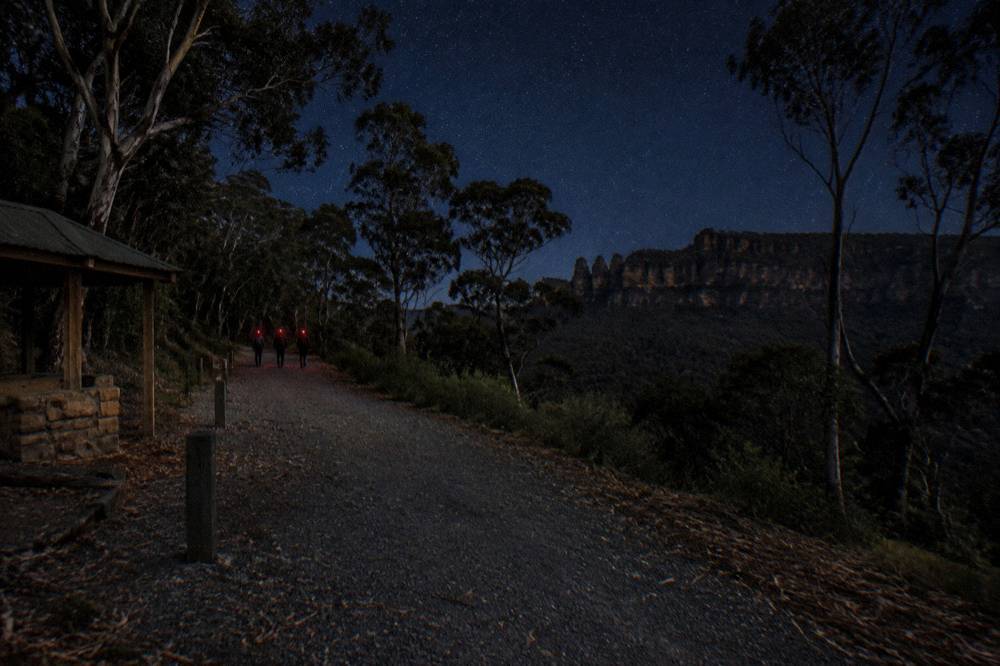
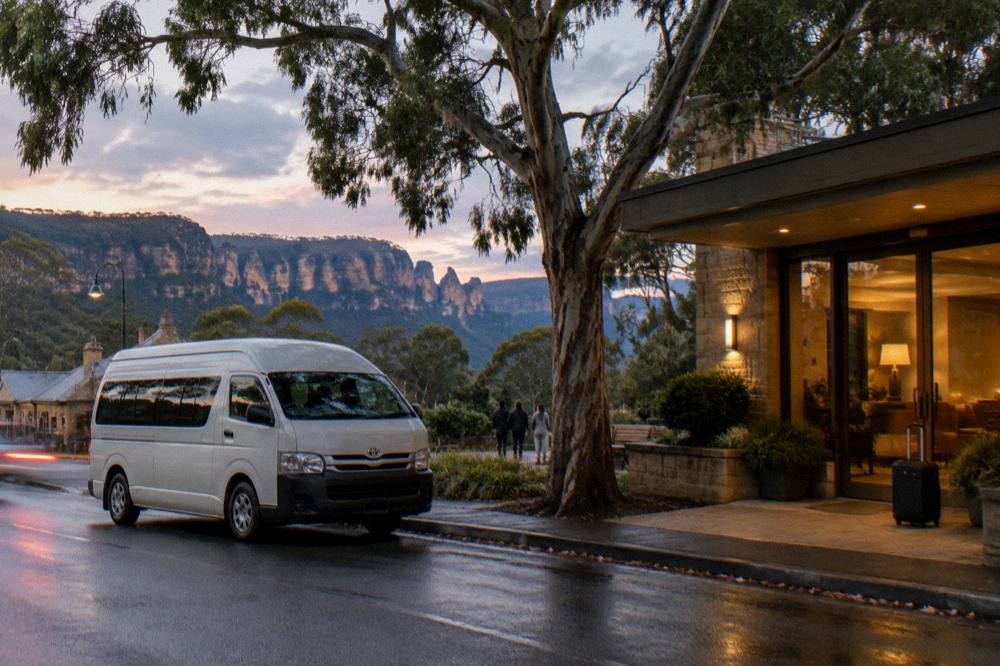
The bookable night hike from Sydney, run by Wildscape Adventures, includes headlamps with a red-light mode, transport in a small van, parking fees, water and a certified outdoor instructor. Pickup is from Sydney accommodation in a window of about 7:50pm to 8:35pm, staggered rather than at a fixed meeting point, and the trip runs about 5 hours with a return around 11pm to midnight per the operator. The group is capped at 9 travellers, moderate fitness is required, and the walk is not wheelchair accessible. Free cancellation applies up to 24 hours before, and the operator cancels for bad weather or if minimum numbers are not met.
| Tour detail | What the listing states |
|---|---|
| Price | From $128 USD per person |
| Rating | 4.9 from 210 reviews |
| Duration | About 5 hours |
| Pickup | Sydney accommodation, about 7:50pm to 8:35pm, staggered |
| Return | Around 11pm to midnight per the operator |
| Group size | Maximum 9 travellers |
| Included | Headlamps with red-light mode, small van transport, parking fees, water, certified outdoor instructor |
| Cancellation | Free up to 24 hours before; cancelled for bad weather or if minimum numbers are not met |
| Fitness | Moderate fitness required; not wheelchair accessible |
Two honest caveats belong here. First, the meal situation on that tour is not settled: the booking platforms disagree, so never assume dinner is or is not included. Second, glow worms are wild animals, and no operator can promise a sighting. What a night format buys you is the conditions under which a display is most likely to be impressive if the worms are present: full dark, still air, a guide who knows where colonies live, and red-light discipline enforced across a small group.
There is also a wildlife bonus that daylight cannot offer. The listing describes a chance of seeing other local wildlife on the walk out, which is a common feature of guided night walks in the Blue Mountains generally, since many native species are more active after dusk. Daytime tunnel visitors see the geology and the history; night groups get the bush at its most active hour.
Day Versus Night At A Glance
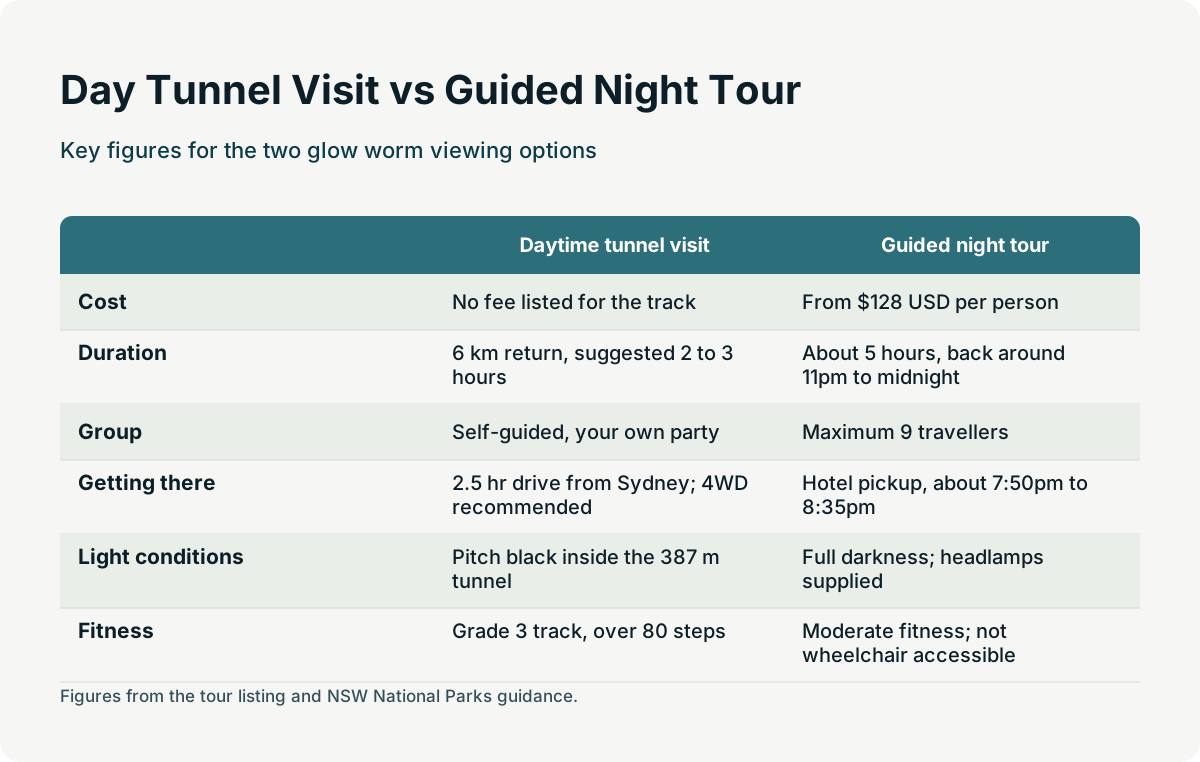
Day wins on cost, flexibility and terrain safety; night wins on display conditions, guidance and wildlife, and the deciding factors are usually your transport, your fitness for dark uneven ground, and whether you want to drive gravel roads or be picked up at a hotel. The table below sets the two against each other using only verified figures.
| Factor | Daytime tunnel visit | Guided night tour from Sydney |
|---|---|---|
| Cost | No fee listed for the track by NSW National Parks | From $128 USD per person |
| Location | Glow Worm Tunnel, Wollemi National Park, near Lithgow | A cave with a waterfall; location not published by the operator |
| Getting there | Self-drive on unsealed Glowworm Tunnel Road; 4WD recommended, required when wet; no public transport | Hotel pickup from Sydney, about 7:50pm to 8:35pm, staggered |
| Duration | 6 km return, suggested 2 to 3 hours | About 5 hours, back around 11pm to midnight per the operator |
| Group | Self-guided, your own party | Maximum 9 travellers with a certified outdoor instructor |
| Light conditions | Pitch black inside the 387 m tunnel at any hour | Full darkness outside; headlamps with red-light mode supplied |
| Fitness | Grade 3 track, over 80 steps without handrails, short steep hills | Moderate fitness; not wheelchair accessible |
| Cancellation | None needed; check NPWS alerts for weather closures | Free up to 24 hours before; operator cancels for bad weather |
The pattern in that table is consistent: the day option trades convenience for effort, and the night option trades money for a managed experience. Neither dominates the other, which is why the honest answer to "which is better" is always "better for what".
Moonlight, Rain And Season: What Operators Say
Glow worms are present year round at the tunnel, per NSW National Parks, and no official source ranks months by brightness; claims that displays are stronger in warm, wet months, after rain, or under low moonlight come from operators and travel press, and should be read as opinion, not data. That distinction matters because it is the single most repeated piece of glow worm folklore in the Blue Mountains. The park service's own seasonal advice is about crowds, not worms: visit during the week or in spring or autumn to avoid busy periods and limited parking.
The operator-side view, from tour companies and travel press, is that warm wet months and nights after rain tend to produce stronger displays, that still air and high humidity help, and that bright moonlight inhibits how much the worms glow. The biology is at least consistent with the rain claim: the larvae hunt by luring prey into silk snares, and damp conditions support the small flying insects they eat. But the park service publishes no brightness ranking. Other pages covering the same trip are gathered on Blue Mountains Glow Worms.
What the Bureau of Meteorology does publish is climate data for Katoomba, which frames what a night in the mountains actually feels like. Mean minimum temperatures run from 12.9 degrees in January down to 2.6 in July, and mean rainfall peaks in February at 177.8 mm. A night tour in winter is a cold one, whatever the worms are doing.
| Month | Mean minimum temp (C) | Mean rainfall (mm) | Practical note for viewing |
|---|---|---|---|
| January | 12.9 | 164.9 | Warm nights; peak holiday crowds at the tunnel |
| February | 13.0 | 177.8 | Wettest month on average; operators report strong displays |
| April | 8.8 | 121.9 | NPWS-recommended season, autumn |
| July | 2.6 | 84.9 | Cold nights; quietest tracks |
| October | 7.8 | 91.5 | NPWS-recommended season, spring |
The full monthly picture, plus the year-round question, is in Best Time To See Glow Worms. The short answer there is the same one here: go whenever you can, prefer a week day, and treat the rain-and-moonlight folklore as a bonus rather than a plan.
Choosing Between A Self-Guided Day Walk And A Guided Night
Choose the self-guided day walk if you have a suitable vehicle, want the visit free, and are comfortable on a Grade 3 track; choose the guided night tour if you are staying in Sydney without a car, want light discipline and safety handled for you, or want the after-dark bush at its most active. The vehicle question is the biggest single filter. Glowworm Tunnel Road is unsealed gravel, passable in a 2WD only in dry weather, and the park service recommends a 4WD outright. A rental car agreement that forbids unsealed roads can rule the day option out before anything else does.
Fitness is the second filter. The day track includes over 80 steps without handrails, a pinch point 0.5 m wide after the bridge, and an uneven, sometimes wet tunnel floor. The night hike requires moderate fitness and takes place on bush track in the dark, which is a different kind of demand: slower, more careful, but guided. Neither option is wheelchair accessible. Families weighing all of this together will find the trade-offs set out in Glow Worm Tunnel With Kids.
Then there is the question of what you are actually there for. If the answer is the historic tunnel itself, the railway relics, the gorge and the lookout over Donkey Mountain, only the day walk delivers those. If the answer is the sensation of standing in darkness while a colony lights up around you, with a guide managing every variable, the night tour is built for exactly that. Some readers do both across two days, and there is a case for it.
For a Sydney visitor without a car, that tour is the only bookable way on this site's roster to see glow worms in the dark with someone else handling the drive, the lights and the timing. The listing is flagged as often selling out, which reflects a 9-traveller cap on a nightly departure.
Planning Either Trip From Sydney
Katoomba is about 1.5 to 2 hours from Sydney by road and about 2 hours by regular daily train from Sydney Central, per NSW National Parks, while the tunnel carpark is a 2.5 hr drive with no public transport at all, so a day visit means driving yourself and a night tour means being driven. That asymmetry is why the two options map so cleanly onto two kinds of traveller. The train to Katoomba is a genuine asset for the Blue Mountains generally, but it stops well short of Wollemi National Park's gravel roads.
For the day trip, the practical sequence is: check the park service alerts before leaving, because the current notices include construction works at the Bungleboori precinct until December 2026, a single-lane section on Glowworm Tunnel Road from 11 October 2026 with delays up to 5 minutes, and a park fire ban running 1 October 2026 to 31 March 2027. Drive via Lithgow and Clarence, or via State Mine Gully Road, carry a red-light torch or a torch you can dim, bring water because there is none at the carpark, and expect very limited mobile reception. The emergency advice from the park service is to carry the Emergency Plus app.
For the night tour, the practical sequence is shorter: book, note your pickup window of roughly 7:50pm to 8:35pm, dress for the season, and be ready at your accommodation. The operator handles the rest, including parking fees and headlamps. The full logistics of both routes, including the drive times and what to pack, are expanded in How To Get To The Glow Worm Tunnel From Sydney and What To Bring To The Glow Worm Tunnel.
Which Option Suits You
If you are driving your own 4WD-capable vehicle and want a free, historic, full-length bushwalk, go by day; if you are based in Sydney, want the strongest possible dark-adapted display conditions, or simply do not want to drive gravel roads at night, book the guided night tour. The middle cases are rarer than they look. A visitor with a car who is nervous about unsealed roads after rain can still take the night tour and drive nothing. A confident local with a 4WD will almost always prefer the freedom of the day walk, and can return in a different season for free.
One more framing helps: the day visit is a walk that happens to contain glow worms, and the night tour is a glow worm experience that happens to contain a walk. The tunnel day trip gives you the Penrose Gorge, the Donkey Mountain lookout and a piece of railway history as the main event, with the worms as the centrepiece. The night tour inverts the emphasis. Knowing which of those two days you want is usually enough to decide.
Whichever you choose, the etiquette is identical, and it is not optional: stay on the path, keep quiet, use red light or shine your torch at the ground, never point a light at the worms, and look but do not touch. The colony at the tunnel survived because visitors mostly follow those rules, and every future display depends on the next group following them too. The park service's glow worm page sets all of this out, and it is the same guidance the night tour's instructor enforces with headlamps.
Common Questions About Night Versus Day Glow Worm Tours
Can you see glow worms during the day?
Yes, inside the Glow Worm Tunnel. The 387 m tunnel is dark enough in its middle section for glow worms to be visible at any hour, which is why NSW National Parks notes they can be seen there during the day. Outdoor sites such as caves and overhangs only show a real display after full dark.
Is a glow worm night tour better than a day visit?
Neither is better outright. The day visit is free, self-guided and includes the full 6 km return walk through Penrose Gorge; the night tour, from $128 USD per person, handles transport, lights and guidance, and gives your eyes the 20 to 30 minutes of dark adjustment that outdoor glow worm viewing needs.
Do glow worms glow brighter after rain?
No official source says so. NSW National Parks publishes no brightness ranking by month or weather. Operators and travel press report that displays are often stronger in warm, wet months and after rain, and that bright moonlight inhibits glowing, but that is opinion, not data.
How long does it take for eyes to adjust to see glow worms?
General guidance is 20 to 30 minutes for full dark adaptation, which is why guided night walks switch to red light and keep voices down while the group waits. Inside the tunnel the darkness is immediate, so the wait is shorter.
Why do night tours use red light?
Glow worms can control their lights and will switch them off if disturbed, and a torch pointed at them can damage their bioluminescence. Red light is the least disruptive option, per NSW National Parks, which is why the bookable night tour supplies headlamps with a red-light mode.
Can you do a glow worm tour from Sydney without a car?
Yes. The guided night tour picks up from Sydney accommodation in a window of about 7:50pm to 8:35pm and returns around 11pm to midnight per the operator. The daytime tunnel carpark has no public transport at all and requires a self-drive on unsealed roads.