Are Glow Worms Harmful?
Are glow worms harmful? The honest answer from NSW National Parks sources: they are fungus gnat larvae that hunt insects, and no reviewed source reports a hazard to people. The real risks are the dark, steps and wet floors.
Are Glow Worms Harmful?
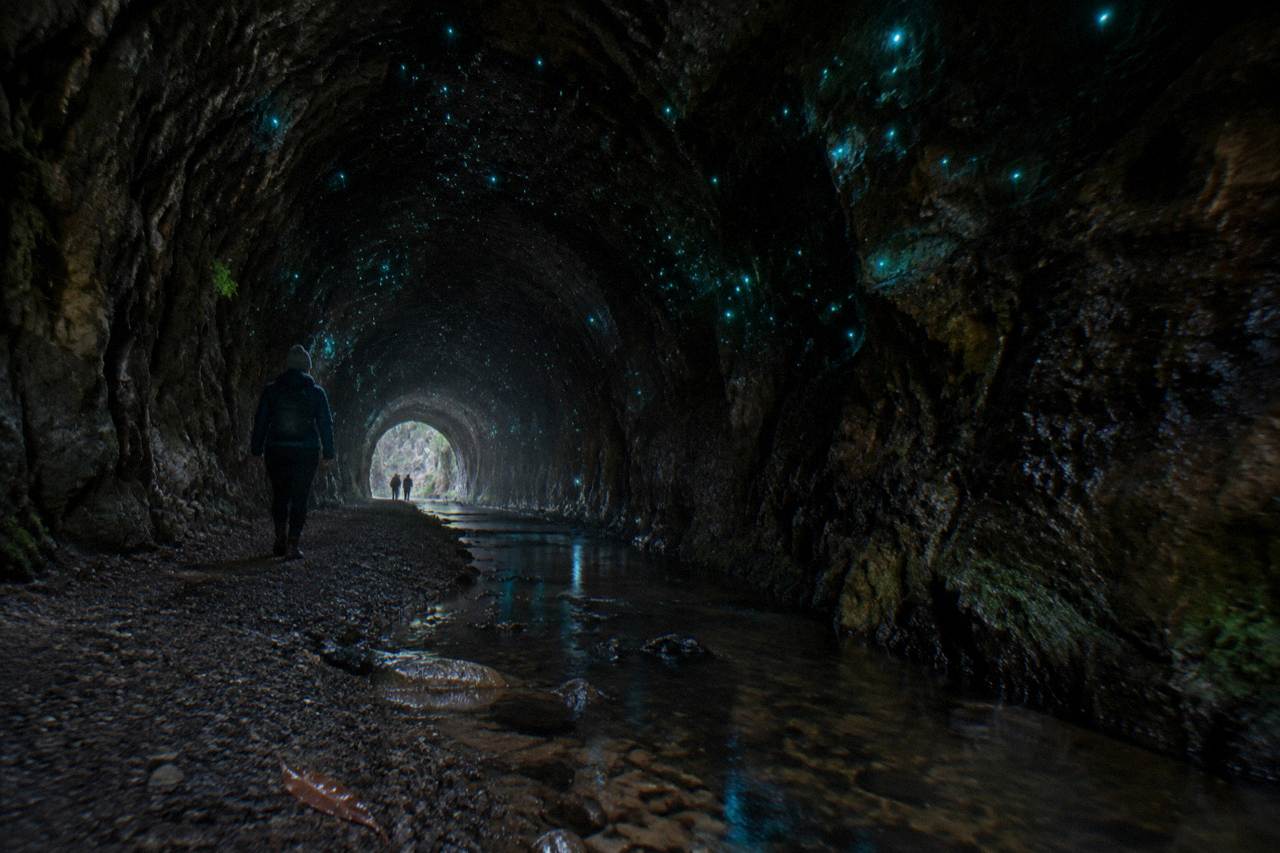
No source reports any harm from glow worms to people. NSW National Parks describes them as the larval stage of a small flying insect, a fungus gnat, that uses its light to lure mosquitoes, moths and other small insects into sticky silk snares. Nothing in the official material describes a sting, a bite, a toxin or any other hazard to humans. That harmless native larva you might spot glowing in dark, damp spots is a homegrown species, as our guide to whether glow worms are native to Australia explains.
The question comes up more often than you might expect, and it makes sense once you see the animal's method. A glow worm hangs from a cave ceiling or tunnel wall, switches on a blue-green light at its transparent rear end, and waits for flying insects to follow that light into hanging silk threads. The prey sticks, the glow worm pulls it in and eats it. That is a genuinely predatory lifestyle, and anything that hunts with light and glue invites the obvious follow-up question: does it ever hunt us?
It does not. The species found in the Blue Mountains and Wollemi National Park is Arachnocampa richardsae, and NSW National Parks describes it as the larval life stage of small flying insects whose adult form is a harmless fungus gnat. The larva grows to roughly the size that can handle small bugs, and the parks service notes a colony can trap insects as big as a cockroach. A cockroach is the ceiling of its ambitions. People are nowhere on the menu, and no official page, operator description or park alert claims otherwise.
What the official sources do instead is warn about the reverse direction: harm flowing from people to glow worms. The parks service says glow worms can control their lights and will turn them off if disturbed, and its viewing guidance asks visitors to stay on the path, keep noise down, and shine torches at the ground or use a red-light setting. The animal in this relationship is the fragile party.
If reading about the biology makes you want to see a colony in person, there are two honest ways to do it in this region: the free, self-guided Glow Worm Tunnel track in Wollemi National Park, or a guided night hike from Sydney.
The guided option is the Glow Worm Cave Night Hike From Sydney, a roughly five-hour evening trip that picks up from Sydney accommodation, walks participants in with headlamps to a cave behind a waterfall where native glow worms live, and returns around 11pm to midnight per the operator. It carries a 4.9 rating from 210 reviews, runs from $128 USD per person, caps groups at nine travellers, and includes a certified outdoor instructor, transport and water. Free cancellation applies up to 24 hours before. The operator does not publish the cave's location, and the listing notes it often sells out.
What Do Glow Worms Actually Eat?
Glow worms eat small flying insects, mainly mosquitoes and moths, which they lure with light and catch in sticky silk snares that dangle from their nests. NSW National Parks describes the silk as secreted from the larva's mouth, with trapped prey pulled into the nest before being eaten. A colony can subdue insects as large as a cockroach.
The mechanism is the interesting part. The light itself, a chemical reaction called bioluminescence that shines through the larva's transparent rear end, is not a lamp for the benefit of tourists. It is a fishing lure. Small flying insects in the dark follow the glow, blunder into the hanging threads, and stick fast. The glow worm then hauls the line in, so to speak, drawing the prey up into its nest to be eaten.
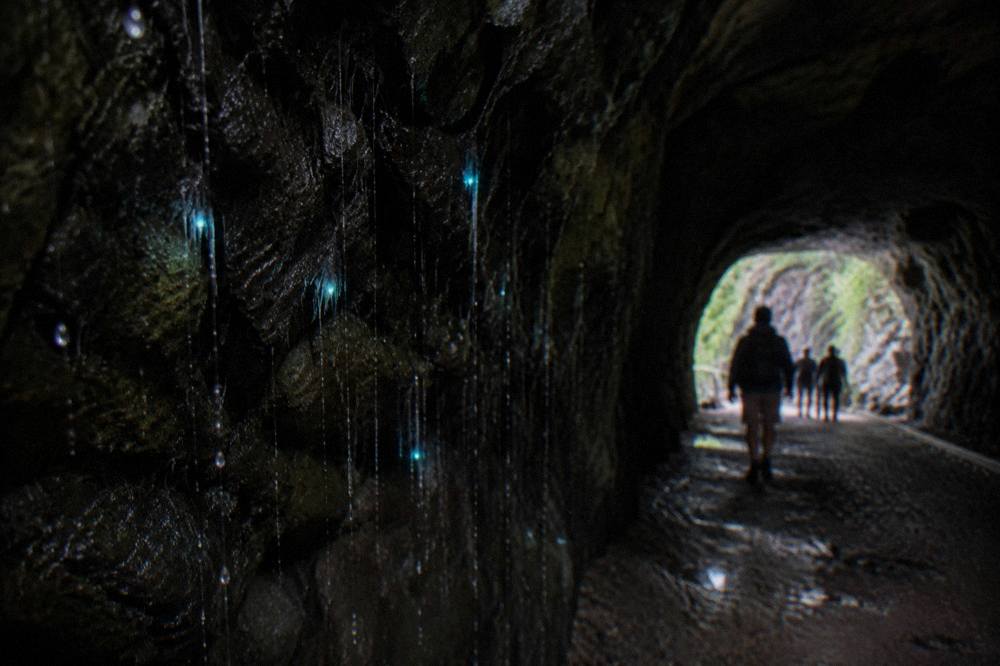
That hunting strategy explains why glow worms live where they live. The parks service says the best glow worm homes are sheltered and humid, with limited air flow, darkness, still moist air and running water nearby, because running water brings the flying insects that make up the diet. Caves, overhangs, rainforest gullies and abandoned tunnels fit that brief. The 387-metre railway tunnel at Newnes in Wollemi National Park was likely colonised by adults flying in from nearby rainforest gullies, and its stable, pitch-black conditions gave the colony a permanent foothold.
It also explains the life cycle. Eggs hatch after 7 to 9 days, the larva spends 6 to 9 months in its glowing, hunting stage, the cocoon lasts 14 days, and the adult fungus gnat lives only about 3 days, with mating and egg-laying as its only goals. The adult barely eats. Everything the animal will ever accomplish, including that memorable light show, happens in the larval stage, and it happens at the scale of mosquitoes and moths. If you're curious about what that brief adult actually looks like, the full guide to the glow-worm's transformation into a fungus gnat fly covers every stage from cocoon to emergence.
If you are weighing a guided night against finding glow worms yourself, the biology is worth keeping in mind: colonies are wild, they switch off when disturbed, and a guide with a red-light headlamp knows how to approach without switching the show off.
Are Glow Worms Dangerous To Touch?
No official source reviewed describes glow worms as dangerous to touch, but every source asks you not to. NSW National Parks guidance for the Glow Worm Tunnel says look but do not touch, because glow worms can control their lights and will turn them off if disturbed, and a torch pointed at them can damage their bioluminescence. The risk in this exchange runs entirely one way.
There is no venom, no sting and no biting apparatus built for anything larger than a small insect. The silk snares are built to hold mosquitoes and moths, not fingers, and the larva has no defence worth fearing. What it has instead is fragility. The light is the animal's entire livelihood: it is how it eats, and a colony that gets disturbed enough to switch off loses hunting time it cannot easily replace.
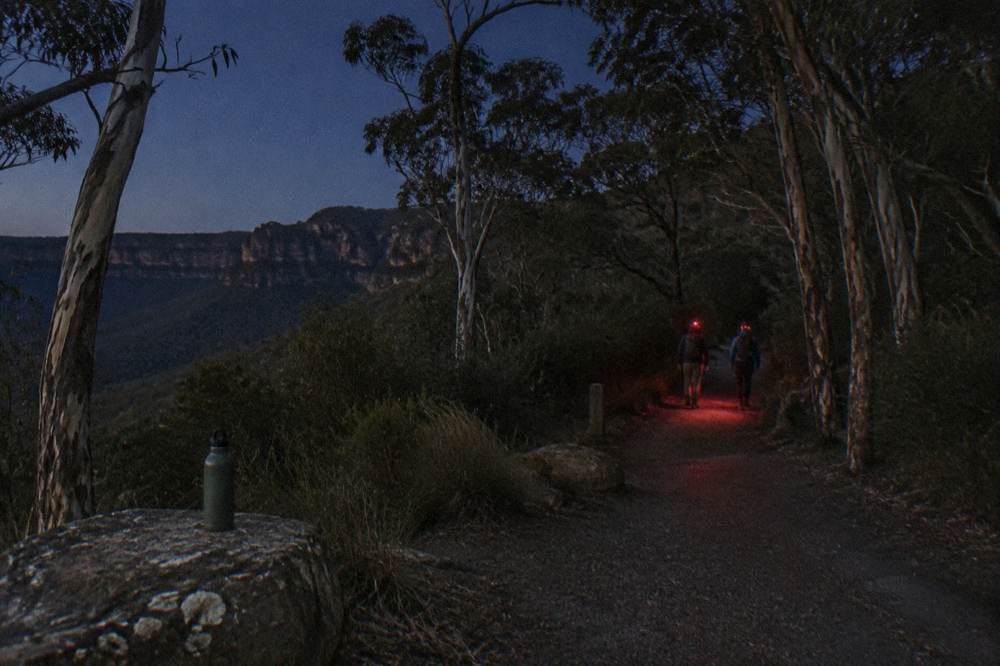
The practical guidance from the parks service is consistent across its pages. Stay on the path, keep noise to a minimum, let your eyes adjust when you turn off your torch, and shine any torch at the ground or use a red-light option, which is the least disruptive. The NPWS story on the Wollemi tunnel adds the plainest instruction of all: do not point a torch at the glow worms, because it can damage their bioluminescence and makes them turn their lights off, and look but do not touch.
The guided night hike from Sydney builds those rules into its equipment. The operator supplies headlamps with a red-light mode, which is exactly the option the parks service recommends, and the walk is led by a certified outdoor instructor in a group capped at nine travellers. Small groups and red light are two of the least disruptive ways to visit a colony, and they also happen to make the experience better: a quiet group in red light gets a wall of glowing larvae instead of a dark one.
For readers planning a self-guided visit to the tunnel, the same rules apply without a guide. The Glow Worm Tunnel walking track page from NSW National Parks carries the current viewing advice, and the tunnel is dark enough inside that glow worms can be seen during the day, so there is no need to push for a night visit to get a good display.
What Are The Real Hazards At A Glow Worm Site?
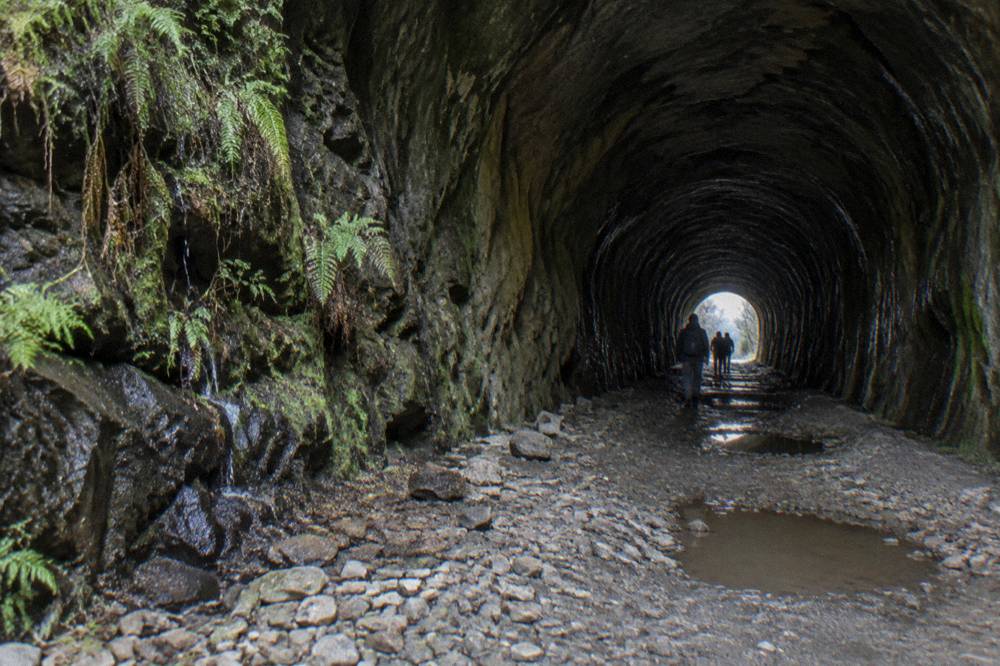
The hazards at glow worm sites are environmental, not biological: darkness, wet and uneven floors, steps without handrails, and remote roads. The Glow Worm Tunnel track alone has more than 80 steps without handrails, a pinch point 0.5 metres wide, and an uneven, rocky tunnel floor that may be wet. No hazard listed on any official page involves the glow worms themselves.
This is where an honest article earns its keep, because the question "are glow worms harmful" is best answered by redirecting attention. The animal is safe. The places it lives are not always, and the official pages are blunt about it.
| Hazard | What the official sources say | Where it applies |
|---|---|---|
| Darkness | Tunnel is pitch black inside; let eyes adjust when torches go off | Glow Worm Tunnel interior, night walks |
| Uneven, wet floor | Tunnel floor is uneven, rocky and may be wet | Glow Worm Tunnel interior |
| Steps without handrails | More than 80 steps, including about 30 stone steps down and 30 narrow winding timber steps back up | Track between carpark and tunnel |
| Pinch point | A 0.5 m wide pinch point after the bridge | Track below the tunnel |
| Remote unsealed roads | 2WD possible in dry weather, 4WD recommended, 4WD only when wet; no long vehicles | Glowworm Tunnel Road and State Mine Gully Road |
| Limited facilities | No drinking water, very limited mobile reception, two non-flush toilets | Tunnel carpark area |
Add the standard remote-area cautions: the parks service advises carrying the Emergency Plus app because mobile reception at the tunnel is very limited, and the track is Grade 3, meaning some bushwalking experience is recommended. The section of track from the tunnel on toward Newnes can close during or after heavy rain because of rockfall and flood risk. None of this is a reason to stay home. It is a reason to take the dark seriously, wear closed shoes with grip, and consider whether a guided visit suits your fitness and experience level.
The night hike from Sydney handles most of that list by design. Pickup and drop-off from Sydney accommodation removes the unsealed-road question entirely, the instructor carries the route knowledge, and the moderate-fitness requirement is stated plainly on the listing: the hike is not wheelchair accessible and asks for reasonable fitness for a guided bush walk in the dark. It is cancelled for bad weather or if minimum numbers are not met, with free cancellation up to 24 hours before, so a deteriorating forecast does not strand your money.
How Should You Behave Around A Glow Worm Colony?
Follow the NSW National Parks viewing rules: stay on the path, keep noise to a minimum, shine your torch at the ground or use a red-light setting, never point a torch at the glow worms, and look but do not touch. Let your eyes adjust in the dark before expecting the full display. These rules protect the colony's ability to feed, which is what keeps the lights on for the next visitor.
The reasoning behind each rule is worth spelling out, because rules make more sense when the biology is visible. Noise and bright light tell a glow worm it is under threat, and a threatened glow worm switches off. A colony that switches off every time a group walks through spends its nights dark instead of hunting, and a colony that cannot hunt cannot hold its patch of cave wall. The viewing rules are not park bureaucracy; they are the terms under which the light show stays running.
Photography deserves a specific note, and an honest one. No flash or camera rule was found on the NSW National Parks pages. What the sources do say is that torch light pointed at glow worms can damage their bioluminescence and makes them switch off, and a camera flash is a very bright torch. Readers planning photographs can draw their own conclusion and read the full guidance in the glow worm tunnel photography guide.
Timing matters less than behaviour. Glow worms are present year round, and the tunnel is dark enough inside for daytime viewing, so the old assumption that you must go at night does not hold there. NSW National Parks suggests visiting during the week or in spring or autumn to avoid crowds and limited parking. Operators and travel press say displays are often stronger in warm, wet months and after rain, but that is operator and press opinion rather than official data, and no official source ranks months by brightness. The month-by-month ribbon on the homepage lays this out plainly. If you're also working out when to arrive on the day, the guide to the Glow Worm Tunnel's opening hours clears up what official sources actually say.
The guided night hike applies this discipline as standard practice rather than leaving it to the visitor. Headlamps come with a red-light mode, the group is capped at nine travellers, and a certified outdoor instructor manages the pace, the noise and the approach to the colony. For anyone who wants to follow every rule in this section without having to remember them, it is the low-effort way to do so, and the listing notes it often sells out.
For families, the same rules scale down nicely, and the glow worm tunnel with kids guide covers the practical side. Note that the parks service flags the track beyond the Donkey Mountain lookout as not suitable for children, and the tunnel track's steps and pinch point rule out prams and wheelchairs entirely.
So Should You Worry About Glow Worms At All?
No. Across every official page reviewed, glow worms appear as a harmless larval insect that hunts mosquitoes and moths, and as the party needing protection from visitors. The things to plan for are the dark, the steps, the wet floor and the remote roads, and those are manageable with the right footwear, a red-light torch and a realistic read of your own fitness.
Worry, redirected, is useful. A visitor who asks "are glow worms harmful" and learns instead about the 0.5-metre pinch point, the 80-plus railless steps and the 4WD-only wet-weather road rule is a safer visitor than one who never asked. The biology question has a clean answer, and the access question has a longer one, which is why this site gives the access question its own pages: the Glow Worm Tunnel walking track guide and the glow worm tunnel safety guide cover both in depth.
It is also worth being precise about what is not known. No NPWS page reviewed states a photography flash rule, so none is claimed here. No official source describes a Helensburgh glow worm tunnel, and the official Jenolan Caves site makes no mention of glow worms at all, so neither is presented as a Blue Mountains option. Precision about gaps is part of an honest answer.
For most readers the decision comes down to one choice: drive yourself to the free tunnel and walk in under your own preparation, or let a small guided group handle the dark, the roads and the red-light discipline for you. Both are legitimate. The guided night hike from Sydney, covered in the Blue Mountains glow worm tour guide, is the bookable way to see glow worms with the logistics handled, and it is the only product this site lists. The tunnel is the free way, and Bureau of Meteorology climate averages for Katoomba are a fair starting point for picking a mild, damp week for either.
Whichever way you go, the glow worms themselves are the safest thing in the room. Bring grip on your shoes, red light on your torch, and patience for your eyes, and the colony on the wall will do the rest. For a broader look at where these animals fit in the region, the Blue Mountains Glow Worms homepage gathers the seasonal, access and tour comparisons in one place.
Common Questions About Glow Worm Safety
Are Glow Worms Harmful?
No. Glow worms are the larvae of a fungus gnat, they hunt small flying insects with silk snares, and no official source reviewed reports any sting, bite, toxin or other hazard to people. NSW National Parks guidance instead asks visitors not to harm them: look but do not touch, keep noise down, and use red light.
Can a glow worm bite or sting a human?
There is no bite or sting in the animal's biology. Its mouthparts pull trapped insects into its silk nest, and the largest prey described by NSW National Parks is an insect the size of a cockroach. Nothing about the apparatus scales to a person, and no official page describes any risk of contact beyond disturbing the colony.
Why do glow worms turn their lights off around people?
NSW National Parks says glow worms can control their lights and will turn them off if disturbed. Noise, torch light pointed at them and physical contact all count as disturbance. A colony that keeps switching off loses feeding time, which is why the viewing rules ask for quiet, red light and no touching.
Is it safe to touch a glow worm?
No official source reviewed describes glow worms as dangerous to touch, but NSW National Parks says look but do not touch. The animal is fragile, its light is its feeding tool, and handling it risks injury to the glow worm rather than to you.
What is actually dangerous at glow worm sites?
The environment. The Glow Worm Tunnel track has more than 80 steps without handrails, a 0.5 m pinch point and an uneven, rocky tunnel floor that may be wet, and the access roads are unsealed, with 4WD required in wet weather. Plan for darkness, grip, water and very limited mobile reception.
Are glow worms safe for kids to see?
Yes, with the usual caveats. The tunnel is dark and the track is Grade 3, and NSW National Parks flags the section beyond the Donkey Mountain lookout as not suitable for children. Pram and wheelchair access is not possible on the tunnel track. A short, supervised visit to the tunnel entrance, or the small-group guided night hike, are the realistic family options.