What Are Some Fun Activities To Do At Night In The Blue Mountains?
Honest guide to after-dark options in the Blue Mountains: a small-group glow worm night hike from Sydney, wildlife spotlighting, self-guided tunnel visits, and what the official sources actually say.
What Are Some Fun Activities To Do At Night In The Blue Mountains?
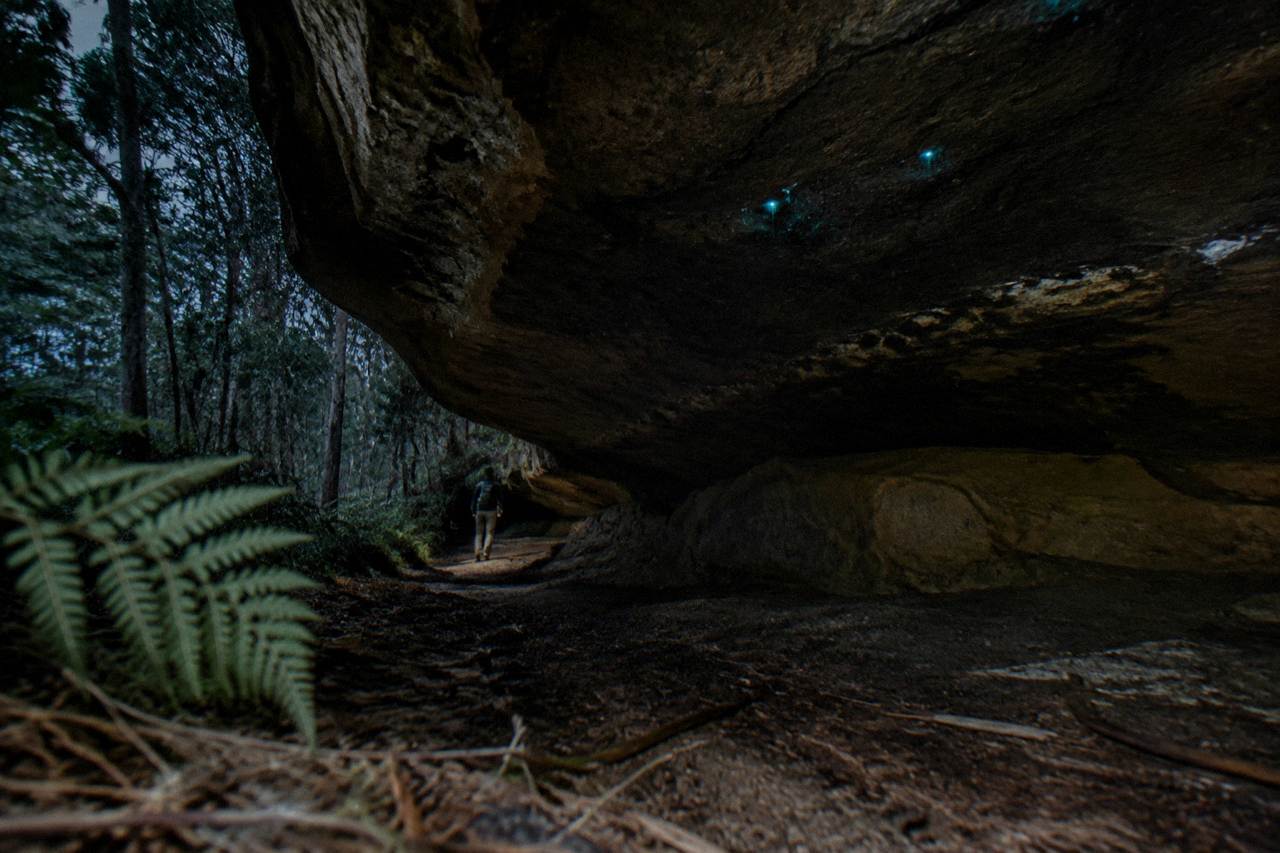
The honest shortlist is short: a guided glow worm night hike from Sydney, the chance of spotlighted wildlife on that same walk, and a self-guided visit to the Glow Worm Tunnel near Lithgow if you have your own vehicle. NSW National Parks lists no evening glow worm walks near Katoomba, Leura or Blackheath, so the documented after-dark options centre on Wollemi National Park and the one bookable night tour.
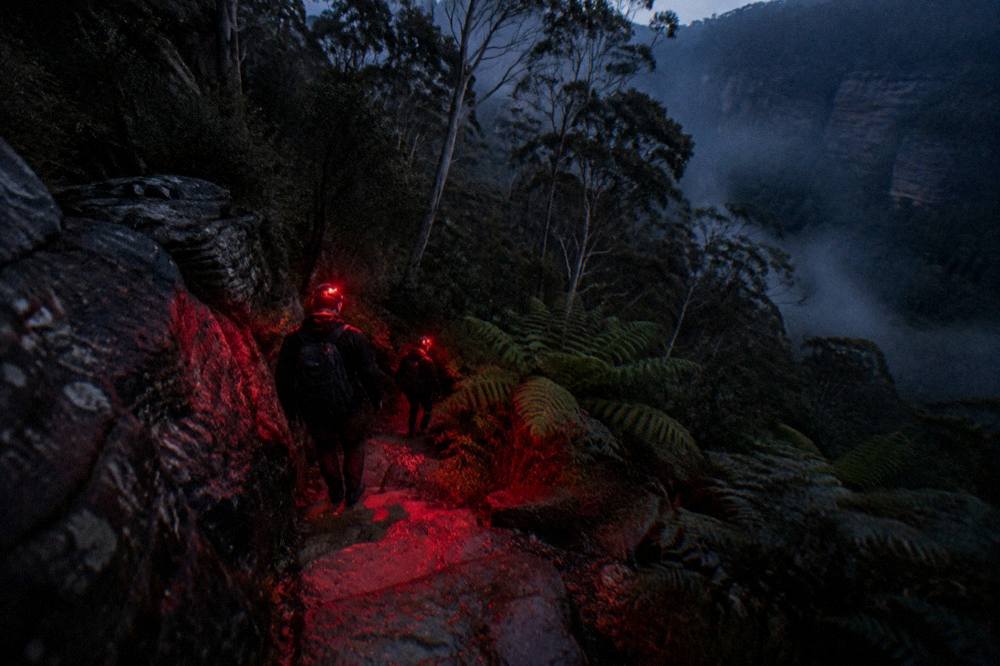
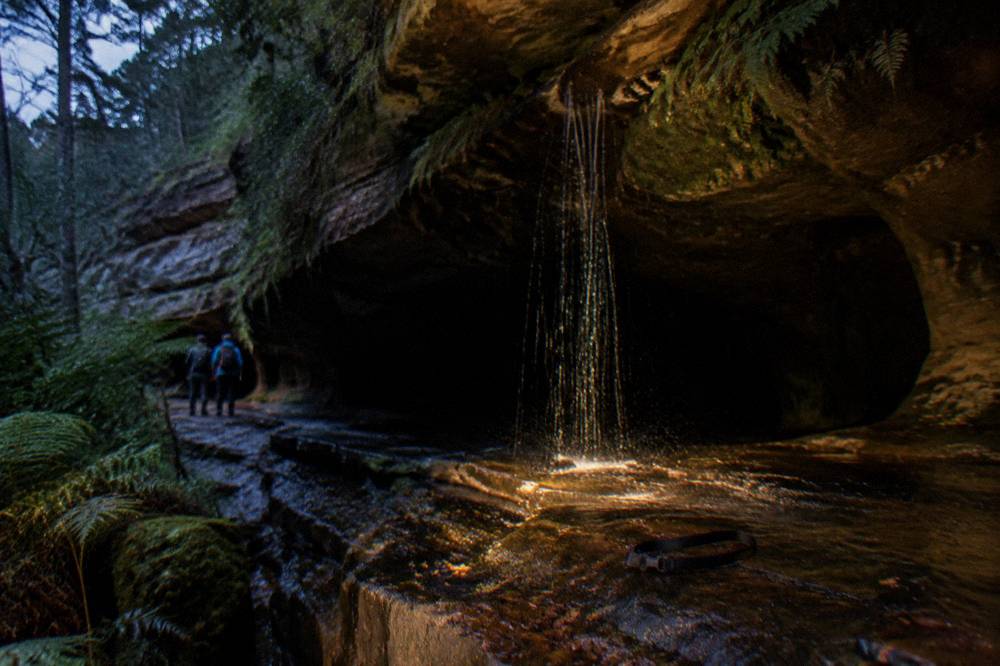
That may sound thin for a region this famous, but it is the truth of the sources, and thin is not the same as disappointing. The night hike run by Wildscape Adventures picks up from Sydney accommodation in a small van between about 7:50pm and 8:35pm, drives west, and puts a maximum of nine travellers on a bush track in the dark with headlamps switched to red-light mode. The destination is a cave behind a waterfall where native glow worms, the larvae of a fungus gnat called Arachnocampa richardsae, hang their silk snares and glow to lure prey. The listing also promises a chance of other local wildlife along the way, which is the spotlighting-style encounter most visitors remember. It is rated 4.9 from 210 reviews and costs from $128 USD per person, with free cancellation up to 24 hours before. If you're wondering whether those glowing larvae pose any danger on the walk in, our guide to glow worm safety for visitors explains what actually matters on the track.
The reason there is no long menu of Katoomba night activities in these pages is simple: no NSW National Parks or operator source was found that describes an evening or self-guided glow worm walk near Katoomba, Leura or Blackheath, including well-known spots like Govetts Leap, the Grand Canyon Track and Wentworth Falls. The NPWS Grand Canyon Track page describes a 6.3 km loop, 3 to 4 hours, Grade 3, with no glow worm mention at all. The locally promoted glow worm site is the Glow Worm Tunnel in Wollemi National Park, and the bookable Sydney-pickup way to see glow worms in the dark is the guided night hike. Everything else on the after-dark list is a variation on those two. If you were hoping Jenolan Caves might fill the glow worm gap instead, the honest verdict on Jenolan Caves for glow worm seekers explains why that expectation tends to disappoint.
If you are weighing the guided option against making your own way out there, the glow worm night hike from Sydney guide breaks the decision down in detail, and this site's night versus day glow worm tours comparison covers the timing question. For a quick sense of the product itself, the tour page for the Glow Worm Cave Night Hike From Sydney holds the full listing, or you can Check availability directly.
Why The Guided Night Hike Suits Most Visitors
The guided hike suits most visitors because it removes every hard part of a night visit: the drive on unsealed roads, the route-finding in the dark, and the risk of disturbing the colony with white light. Pickup and drop-off at Sydney accommodation, a certified outdoor instructor, headlamps with a red-light mode, water and parking fees are all included, and the operator cancels for bad weather rather than selling a poor night.
The operator does not publish the cave's location, which is a deliberate protection for the colony and also means a self-guided copy of this trip is genuinely impossible. What the listing describes is a guided bush walk in the dark to a cave with a waterfall, where native glow worms can be seen, plus a chance of other local wildlife on the track. Glow worms are wild animals, not a switch that gets flipped at 9pm, and the operator is explicit that the tour is cancelled for bad weather or if minimum numbers are not met. That honesty cuts both ways: no operator can promise a sighting, but this one does not sell you a wet, moonlit night and call it fine either.
The practical numbers matter here too. The tour runs about 5 hours in total, with the pickup window between about 7:50pm and 8:35pm because the van collects guests from different hotels rather than one fixed meeting point, and the operator lists returns around 11pm to midnight. The group cap is 9 travellers, the fitness requirement is moderate, and the walk is not wheelchair accessible. Free cancellation applies up to 24 hours before, which makes it one of the easier last-minute decisions on a Sydney trip. The listing is flagged as often selling out.
Is a small-group night hike with hotel pickup the right fit for your trip?
What The Night Hike Actually Includes
The from $128 USD per person price covers the small-van transport from Sydney accommodation and back, the guided bush walk with a certified outdoor instructor, headlamps with a red-light mode, water, and parking fees. It does not publish a settled meal arrangement, the sources disagree on that point, so treat dinner as unconfirmed and eat before pickup. The tour runs about 5 hours with a maximum of 9 travellers.
The table below is the honest version of the inclusions list, drawn from the operator's own listing details rather than marketing paraphrase. One point deserves flagging: whether food is provided is genuinely unsettled, because the booking sources disagree. Eat before the pickup window opens. Everything else covered here is indexed on Blue Mountains Glow Worms.
| Item | Included | Notes |
|---|---|---|
| Hotel pickup and drop-off | Yes | Sydney accommodation, window about 7:50pm to 8:35pm, staggered |
| Transport in a small van | Yes | No fixed meeting point |
| Certified outdoor instructor | Yes | Guided walk throughout |
| Headlamps with red-light mode | Yes | Red light is the least disruptive to glow worms |
| Water | Yes | Supplied |
| Parking fees | Yes | Included |
| Meal | Unsettled | Booking sources disagree; never assume dinner |
| Group size | Maximum 9 | Small-group format |
| Cancellation | Free up to 24 hours before | Bad weather or low numbers can cancel the tour |
The red-light detail is not a gimmick. NSW National Parks explains that glow worms can control their lights and will turn them off if disturbed, and its guidance for the tunnel is to shine a torch at the ground or use a red-light option, keep noise down, stay on the path, and look but do not touch. Pointing a torch straight at the worms can damage their bioluminescence and makes them switch off, which ruins the display for everyone behind you. The tour supplying headlamps with a red-light mode is the operator building that guidance into the equipment, which is exactly what you want from a guide at night.
Can You See Glow Worms On Your Own At Night?
Yes, but only at the Glow Worm Tunnel near Lithgow, and only with your own vehicle: the track is a 6 km return walk listed as open with current alerts to check, and no public transport reaches the carpark. The unsealed Glowworm Tunnel Road is passable in a 2WD in dry weather, but 4WD is recommended and required in wet weather. The tunnel itself is 387 m long and dark enough to see glow worms during the day. If you're wondering whether the tunnel is even a reliable place to spot them, the chances of actually seeing a glowworm in the wild depend heavily on finding the right dark, damp conditions.
The self-guided route is real and free in the sense that no entry or permit fee appears on any NSW National Parks page for the track. NSW National Parks describes the Glow Worm Tunnel walking track as a 6 km return Grade 3 walk with a 1.5 km stretch from the carpark to the tunnel entrance, an optional continuation through Penrose Gorge to a lookout over Donkey Mountain and the Wolgan Valley, and over 80 steps without handrails. It was built in the early 1900s as Tunnel No. 2 of the Newnes mining railway, and its length is what makes it work: because the tunnel is long, it gets dark enough to see glow worms during the day, which is why a night visit is not strictly necessary here.
Going at night adds difficulty without adding much glow. The road in is unsealed gravel, the tunnel floor is uneven and rocky and may be wet, mobile reception is very limited, and the Glow Worm Tunnel to Newnes section can close during or after heavy rain because of rockfall and flood risk. If you do drive it, the approach is via Lithgow, either through Clarence and Old Bells Line of Road onto Glowworm Tunnel Road, or via State Mine Gully Road, and trucks frequently use Old Bells Line of Road. The full driving picture, including the single-lane 60 m tunnel just before the carpark, is in the site's Glow Worm Tunnel road and car park guide.
For glow worm etiquette in the dark, the rules from NSW National Parks' glow worm page are the same ones the guided hike follows: stay on the path, keep noise to a minimum, let your eyes adjust after you switch off your torch, and never point a light at the worms. The site's glow worm tunnel safety guide covers the steps, the pinch point and the no-water situation in full.
Best Months And Conditions For A Night Out
Glow worms are present year round, and no official source ranks months by brightness. NSW National Parks suggests visiting during the week or in spring or autumn to avoid crowds and limited parking. Operators and travel press say displays are often stronger in warm, wet months and after rain, but that is opinion, not data. Katoomba's mean minimum ranges from 2.6C in July to 13.0C in February.
The weather numbers below come from the Bureau of Meteorology's climate statistics for Katoomba (Farnells Rd), station 063039, at 1,017 m elevation. They are planning figures, not glow forecasts: what they tell you is how cold a night in the mountains actually gets, which matters more for packing than for the worms.
| Month | Mean minimum (C) | Mean rainfall (mm) |
|---|---|---|
| January | 12.9 | 164.9 |
| February | 13.0 | 177.8 |
| March | 11.6 | 174.6 |
| April | 8.8 | 121.9 |
| May | 6.1 | 100.3 |
| June | 3.7 | 116.0 |
| July | 2.6 | 84.9 |
| August | 3.3 | 79.3 |
| September | 5.5 | 70.7 |
| October | 7.8 | 91.5 |
| November | 9.9 | 110.3 |
| December | 11.8 | 120.4 |
The season question is where honest writing and marketing part ways. Some operators and travel articles claim the worms glow brightest from December to March, or after rain, or on moonless nights. Those claims are consistent across sources but no official body ranks the months, so this site labels them opinion and moves on. What is solid: the colony is permanent, the tunnel is dark enough for daytime viewing, and the guided night hike runs year round subject to weather. The month-by-month ribbon on the homepage pulls the same verified figures together in one place.
Getting There And Back At Night
Katoomba is about 1.5 to 2 hours from Sydney by road and about 2 hours by regular daily train from Sydney Central, per NSW National Parks' Katoomba area visitor info. The Glow Worm Tunnel carpark is about a 2.5 hour drive from Sydney with no public transport at the far end. The guided night hike sidesteps all of it with hotel pickup between about 7:50pm and 8:35pm and a return around 11pm to midnight.
Driving yourself to the tunnel at night is the option that deserves the most caution. The last 26.8 km of Glowworm Tunnel Road is unsealed, 4WD is recommended and effectively required when it is wet, parking is limited at peak times, and there is no drinking water and very limited mobile reception at the trackhead. The NSW National Parks Katoomba area visitor info confirms the road and train times for the town itself, but nothing in the official pages suggests the tunnel road is a casual night drive. If rain has fallen recently, the self-drive plan should become a guided plan or a different night.
The train, by contrast, is a genuinely pleasant way to reach the mountains for an evening, but it drops you in Katoomba, and no documented glow worm site is an evening stroll from Katoomba station. That gap is exactly why the pickup tour exists. Blue Mountains Glow Worms exists as a site because the after-dark question in this region has one well-documented answer, and it is a van leaving Sydney around 8pm.
Whichever way you go, plan the return before you leave. The guided option returns you to your accommodation around 11pm to midnight per the operator. The self-drive option puts you on unsealed roads in the dark with a 2.5 hour run back to Sydney, which is a different proposition from the daylight visit most tunnel articles describe.
For a broader look at the region's after-dark and daytime options together, the Blue Mountains day trip from Sydney guide covers the daylight half of the visit, and booking a glow worm tour walks through the practical booking questions step by step.
If the guided night hike is the fit for your trip, the current listing holds the live dates and the from $128 USD per person price, and it is worth checking early given the often-sells-out flag.
Common Questions About Night Activities In The Blue Mountains
What Are Some Fun Activities To Do At Night In The Blue Mountains?
The documented options are a guided glow worm night hike from Sydney with hotel pickup, the chance of spotlighted wildlife on that walk, and a self-guided visit to the Glow Worm Tunnel near Lithgow if you have a suitable vehicle. NSW National Parks lists no evening glow worm walks near Katoomba, Leura or Blackheath.
Can you see glow worms near Katoomba at night?
No NSW National Parks or operator source was found that describes glow worms or evening glow worm walks near Katoomba, Leura or Blackheath, including Govetts Leap, the Grand Canyon Track and Wentworth Falls. The documented glow worm sites are the Glow Worm Tunnel in Wollemi National Park and the cave visited by the guided night hike.
How much does the guided night hike cost?
From $128 USD per person, rated 4.9 from 210 reviews, running about 5 hours with hotel pickup and drop-off from Sydney accommodation. Cancellation is free up to 24 hours before, and the tour can be cancelled for bad weather or if minimum numbers are not met.
Is the Glow Worm Tunnel open at night?
The track is listed as open with a note to check current alerts, and no opening hours or entry fee appear on the NSW National Parks pages. The tunnel is 387 m long and dark enough inside to see glow worms during the day, so a night visit is not required. Access is by unsealed road, with 4WD recommended and required in wet weather.
What should you bring for a night visit?
A torch with a red-light mode or a red filter, warm layers given Katoomba's mean minimum can fall to 2.6C in July, water, and sturdy shoes for uneven, possibly wet ground. Never point a torch at the glow worms, keep noise down, and stay on the path.
Are glow worms guaranteed on the night hike?
No. Glow worms are wild, and the operator cancels for bad weather or if minimum numbers are not met. The listing describes a cave with a waterfall where native glow worms can be seen, plus a chance of other local wildlife, but no honest operator guarantees a sighting.