Is Jenolan Caves Worth It?
An honest verdict on Jenolan Caves for glow worm seekers: what the official site actually shows, why glow worms are not on the menu, and where to see them instead.
Is Jenolan Caves Worth It?
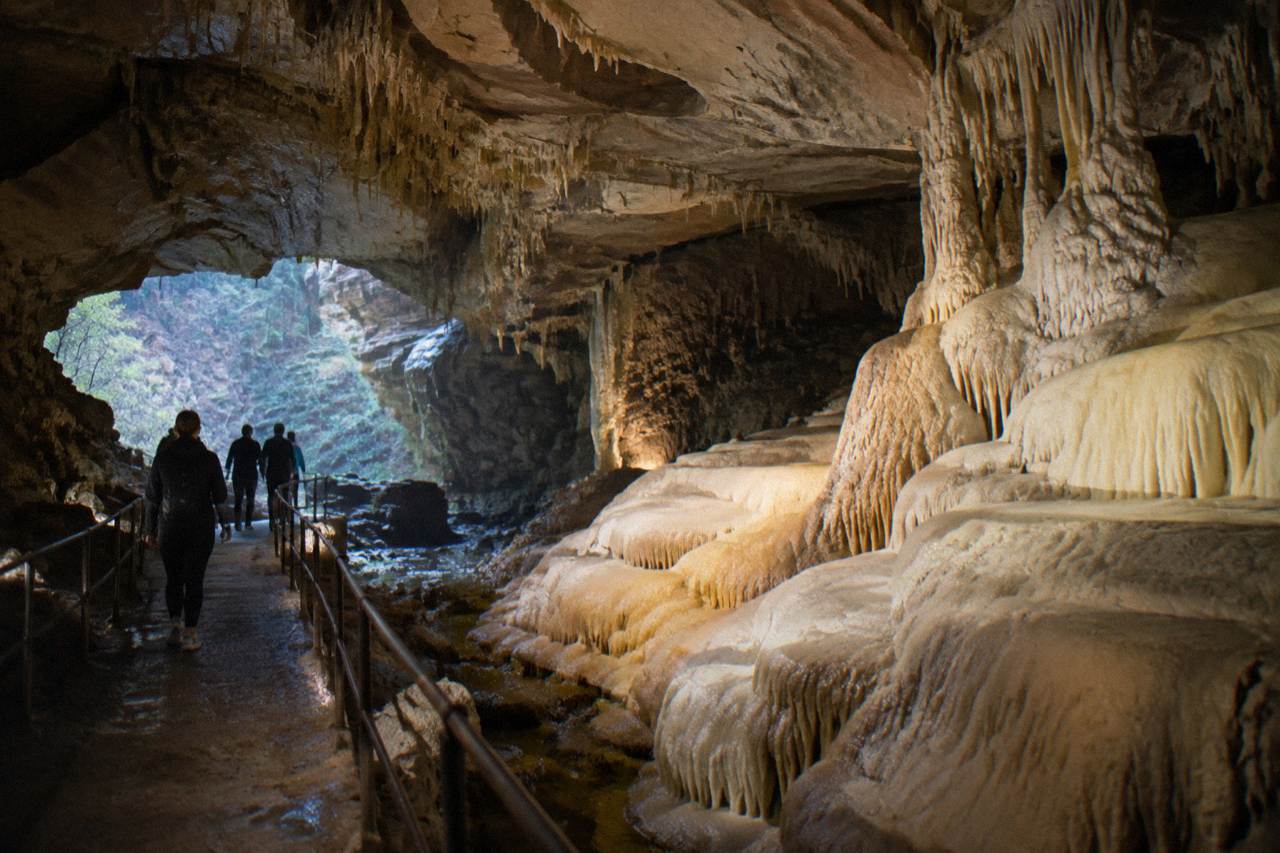
Jenolan Caves is worth visiting for its limestone formations and its wildlife, and the official Jenolan site promotes exactly that: caves, guided tours, and animals such as cave crickets and rock-wallabies. What it does not promise is glow worms. No page on the official site mentions them, and no tour listing found for Jenolan mentions them either. For a glow worm trip, Jenolan is the wrong address. If you're still curious about the science behind that absence, our guide to glow worms and the Jenolan Caves explains why these caves lack the conditions glow worms need.
That is the short version, and it matters because the two experiences get tangled together in search results. Jenolan Caves sits in the Blue Mountains region, it is underground, it is dark, and it is famous. A reasonable traveller could assume that a famous dark cave system in the Blue Mountains must be home to the blue-green lights they have seen in photos. The assumption is understandable and, on the evidence, wrong.
The official Jenolan Caves site describes limestone formations, guided cave tours, and wildlife including cave crickets and rock-wallabies. Nowhere in its cave descriptions or wildlife sections does the word glow worm appear. That is not a subtle omission, it is the whole answer: the people who run the caves and market them aggressively do not sell glow worms, because glow worms are not what a Jenolan visit delivers. If you still want to see glow worms near Jenolan, our guide to combining Jenolan Caves with a glow worm tour explains where to actually find them.
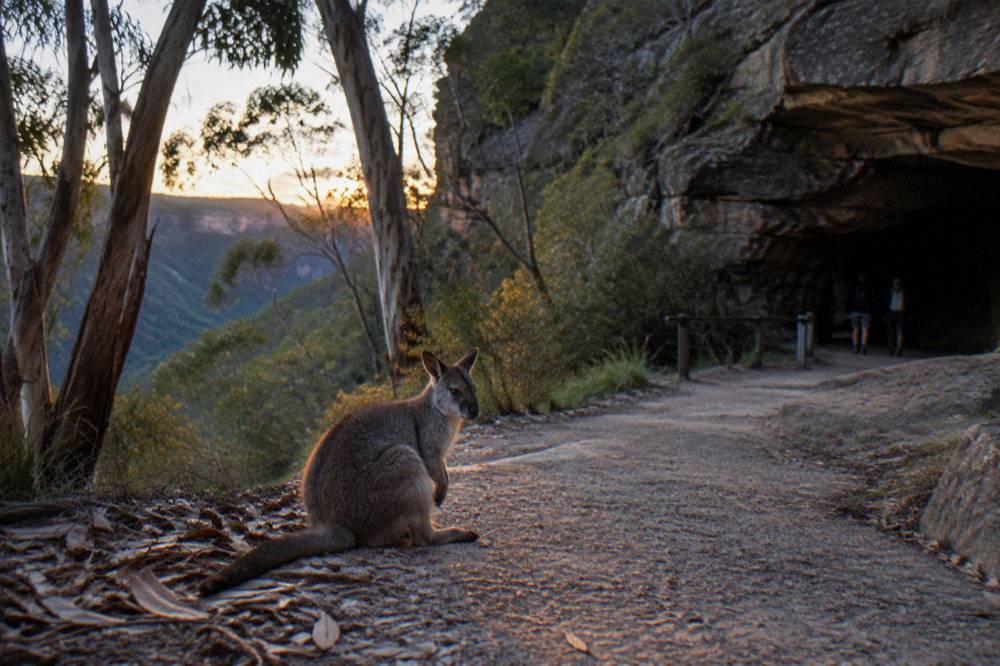
This matters for planning. A day at Jenolan can still be a good day, and this article is not an argument against going. It is an argument for knowing what you are buying. If limestone arches, underground rivers and a chance to spot a rock-wallaby at dusk sound appealing, Jenolan earns its reputation. If the entire point of the trip is standing in darkness watching a colony of living lights, your money and your limited daylight are better spent elsewhere, and the rest of this article explains exactly where.
The bookable, Sydney-pickup way to see glow worms in the dark is the Glow Worm Cave Night Hike From Sydney, which this site covers in detail. It is a different kind of night out, and for glow worm seekers it is the one that answers the brief.
What Can You Actually See At Jenolan Caves?
The official Jenolan site shows a limestone cave system with guided tours through decorated chambers, plus surface wildlife such as rock-wallabies and cave crickets. It is one of the best known cave attractions in New South Wales. It does not list glow worms among its features, in its cave descriptions or in its wildlife sections, so a visitor should not plan on seeing any there.
Limestone caves and glow worm colonies are different things that happen to share darkness. Jenolan's appeal rests on geology: chambers carved and decorated over immense timescales, the kind of formations that guided tours are built around. The official site leans on this, and on the animals that live around the caves. Cave crickets and rock-wallabies are the named wildlife. That is a genuinely worthwhile offering, and it draws visitors from Sydney and beyond for good reason.
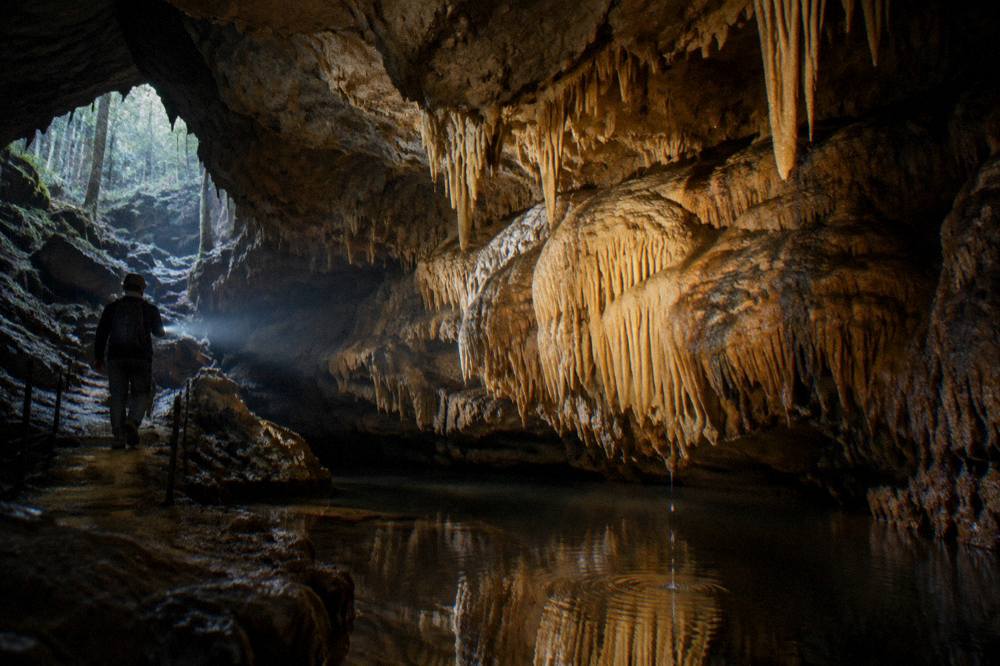
Glow worms, by contrast, are larvae of a fungus gnat, and they choose their homes by humidity, still air, darkness and running water, not by how spectacular the rock looks. NSW National Parks explains that the best glow worm homes are sheltered and humid with limited air flow, in places like caves, overhangs, rainforest gullies and abandoned tunnels. A show cave with walkways, lighting and steady foot traffic is a different habitat from the wet, quiet, pitch-black spaces where colonies thrive.
The practical takeaway: Jenolan rewards visitors who want the grandeur of a limestone cave system and the chance to see native animals. It does not reward visitors whose only goal is bioluminescence. Planning a trip around the wrong expectation is how a good day out turns into a disappointment, and the fix is simply to match the destination to the goal.
For a fuller treatment of the mismatch, our guide on glow worms and Jenolan Caves walks through the evidence in detail.
Does Jenolan Caves Have Glow Worms?
No official source describes glow worms at Jenolan Caves. The official Jenolan site mentions none, and no tour listing found for Jenolan mentions them either. The honest position is that there is no documented glow worm colony at Jenolan, so a glow worm seeker should not book a Jenolan cave tour expecting to see one. Glow worms are documented in Wollemi National Park and at sites in the wider Blue Mountains.
This deserves a direct answer because the internet is fuzzy on it. Search results for Blue Mountains caves mix Jenolan, the Glow Worm Tunnel at Newnes, and various night tours into a single blur of "caves with lights". The primary sources are not fuzzy. The Jenolan official site, whose entire business is describing what visitors can see in its caves, mentions no glow worms anywhere. If a colony were a feature, it would be on the marketing.
The documented glow worm sites in the region are elsewhere. NSW National Parks names the Glow Worm Tunnel in Wollemi National Park as a glow worm habitat, home to the species Arachnocampa richardsae, and notes that the wider Blue Mountains region holds many colonies, mostly in caves and disused mines. The 387 m tunnel near Lithgow is pitch black inside, which is why the colony there can be seen even during the day. That is the address glow worm seekers want, and it is about 2.5 hours from Sydney by road per NSW National Parks. If that tunnel has you curious about the park it sits in, our honest verdict on Wollemi National Park covers the walk, the Newnes ruins and what to expect before you drive out.
The other documented option is the guided night hike this site features: a small-group bush walk by headlamp to a cave behind a waterfall where native glow worms can be seen. The listing describes hotel pickup in Sydney, a maximum of 9 travellers, headlamps with a red-light mode, and a certified outdoor instructor. It runs from $128 USD per person and carries a 4.9 rating from 210 reviews, with free cancellation up to 24 hours before. Glow worms are wild, so no honest operator promises a guaranteed sighting, and this one cancels for bad weather rather than selling a poor night.
How Does Jenolan Compare With The Glow Worm Tunnel?
Jenolan Caves offers guided tours of limestone formations and surface wildlife, with no glow worms documented on site. The Glow Worm Tunnel in Wollemi National Park is a free, self-guided walk into a 387 m disused railway tunnel where a glow worm colony lives, about a 2.5 hour drive from Sydney with no public transport to the carpark. They are different products for different goals, and only one of them has glow worms.
The comparison is worth laying out side by side, because the two destinations get booked interchangeably by visitors who have not separated them. The table below is the honest version.
| Jenolan Caves | Glow Worm Tunnel (Wollemi NP) | |
|---|---|---|
| Main draw | Limestone formations, guided cave tours | Wild glow worm colony in a disused railway tunnel |
| Glow worms documented? | No mention on the official site | Yes, NSW National Parks names it a glow worm habitat |
| Access | Road access from the Blue Mountains region | Unsealed roads, 2WD possible in dry weather, 4WD recommended, about 2.5 hours from Sydney |
| Public transport | Check the official site and a mapping service | None reaches the carpark |
| Cost | Check the official Jenolan site for tour prices | No entry fee listed by NSW National Parks |
| Effort | Varies by tour, check the official site | 6 km return, Grade 3, over 80 steps without handrails |
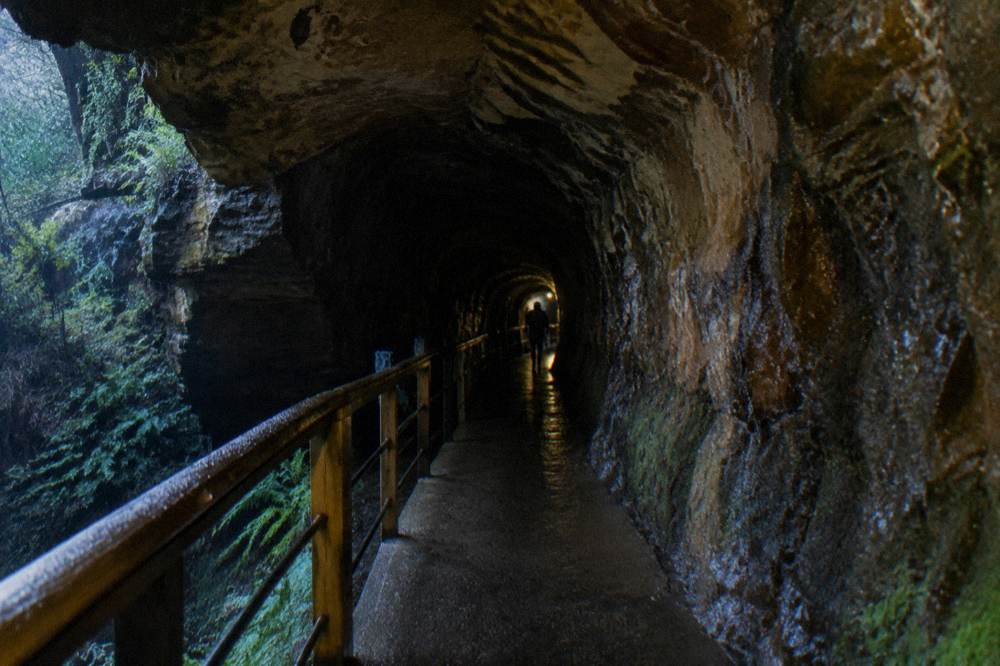
The tunnel is not a polished attraction. It is a bushwalk on an unsealed road network, with limited parking, very limited mobile reception and a track that NSW National Parks says suits people with some bushwalking experience. What it offers in exchange is the real thing: a colony of wild glow worms lighting the roof of a tunnel built in the early 1900s for the Newnes mining railway, dark enough inside that the lights show even at midday.
Jenolan is the easier, more structured day out, and for many travellers that is exactly what they want. The mistake is only in expecting both destinations to deliver the same thing. If your heart is set on glow worms, the tunnel, or a guided night hike to a glow worm cave, is where the evidence points. Our guide on self-drive versus guided options for the tunnel breaks down that choice.
For the night hike, the small-group format is part of the appeal: a maximum of 9 travellers, staggered hotel pickup in Sydney between about 7:50pm and 8:35pm, and a return around 11pm to midnight per the operator. The listing is flagged as often selling out.
How Do You Get To Jenolan Caves?
Jenolan Caves sits in the Blue Mountains region west of Sydney, reached by road, and travellers should check a mapping service for current drive times and the official Jenolan site for directions and tour schedules. Check fares and timetables on the operator's own pages. The same trip can be planned around the Glow Worm Tunnel, about 2.5 hours from Sydney by road per NSW National Parks.
Katoomba is about 1.5 to 2 hours from Sydney by road and about 2 hours by regular daily train from Sydney Central, but there are no verified travel-time figures for Jenolan specifically. Rather than guess, the advice is plain: plan the route with a mapping service, and confirm tour times on the official site before committing a day.
One planning note that is verified: no public transport reaches the Glow Worm Tunnel carpark. Access there is by private vehicle on unsealed gravel roads, 2WD possible in dry weather and 4WD recommended, with no long vehicles allowed. Anyone combining a Jenolan visit with a tunnel visit should treat them as two separate road legs, not one loop, and check NSW National Parks alerts before driving, since the Glowworm Tunnel Road has a single-lane section with delays up to 5 minutes from 11 October 2026.
The Honest Verdict For Glow Worm Seekers
Go to Jenolan Caves for limestone, guided tours and rock-wallabies, and you will get what the official site promises. Go expecting glow worms and you will not, because no source documents them there. The glow worm itinerary that the evidence supports is the free, self-guided Glow Worm Tunnel walk near Lithgow, or the guided night hike from Sydney to a glow worm cave, from $128 USD per person.
The verdict is not a ranking of which destination is better, because they are not competing. Jenolan is a world class show cave system. The tunnel and the night hike are wild encounters with a living light show, one self-guided and free of listed fees, the other guided, small-group and door to door from Sydney. A traveller with two spare evenings could honestly do both: Jenolan for the geology, then a night hike for the bioluminescence.
What this site recommends against is the mixed-up version of the plan, where a Jenolan booking is assumed to cover the glow worm box. It will not. The species at the centre of this whole itinerary, Arachnocampa richardsae, lives in dark, damp, sheltered places with running water nearby, and the documented colonies in the region are in the Wollemi tunnel, in caves and disused mines across the Blue Mountains, and at the waterfall cave the night hike visits. More on where the lights actually are lives in our guide to where to see glow worms in NSW.
For visitors who want the full picture before choosing a night, Blue Mountains Glow Worms keeps a month-by-month ribbon and comparison on the homepage to help match the season to the trip.
The night hike remains the most direct answer for Sydney-based visitors: pickup from your accommodation, a guided walk in the dark to a cave behind a waterfall, and a genuine chance of other wildlife along the way, with free cancellation up to 24 hours before if the plan changes. It is the one bookable product this site stands behind, and for glow worm seekers it beats a Jenolan booking on the only measure that matters here.
Common Questions About Jenolan Caves
Is Jenolan Caves Worth It?
Yes, for limestone cave tours and wildlife such as rock-wallabies and cave crickets, which is what the official site promises. No, if the goal is glow worms: no official source documents a colony there, so glow worm seekers should head to the Glow Worm Tunnel in Wollemi National Park or book a guided night hike from Sydney instead.
Does Jenolan Caves have glow worms?
No official source says so. The official Jenolan site mentions no glow worms in its cave descriptions or wildlife sections, and no tour listing found for Jenolan mentions them either.
Where can I see glow worms near Jenolan Caves?
The documented sites in the region are the Glow Worm Tunnel in Wollemi National Park, about 2.5 hours from Sydney by road per NSW National Parks, and the guided night hike from Sydney to a glow worm cave behind a waterfall. The Blue Mountains region holds many colonies, mostly in caves and disused mines.
Is the Glow Worm Tunnel free to visit?
No entry fee is listed by NSW National Parks for the tunnel track. It is a free, self-guided walk of 6 km return, reached by unsealed roads where 4WD is recommended and access is by 4WD only in wet weather.
Can you see glow worms during the day?
Yes, at the tunnel. NSW National Parks notes the 387 m tunnel gets dark enough inside to see glow worms during the day. Elsewhere, including on the night hike, displays are viewed after dark.
What tour should I book to see glow worms from Sydney?
The Glow Worm Cave Night Hike From Sydney, from $128 USD per person, rated 4.9 from 210 reviews. It includes evening hotel pickup, headlamps with a red-light mode, and a guided bush walk to a cave where native glow worms can be seen, with free cancellation up to 24 hours before.