Jenolan Caves Glow Worms: What The Sources Actually Say
Jenolan Caves is the most famous cave system in New South Wales, and a lot of travellers assume glow worms must be part of the show. The official sources tell a different story, and this guide sets out exactly what is documented, what is not, and where glow worms in the Blue Mountains region are actually recorded.
Short answer
The official Jenolan Caves site makes no mention of glow worms, and no booking listing reviewed for Jenolan mentions them either. Glow worms are documented at the Glow Worm Tunnel in Wollemi National Park, about 2.5 hours from Sydney by road, and at the cave visited by a Sydney-pickup night hike, from $128 USD per person.
Jenolan Caves has been drawing visitors into its limestone chambers since well before the Blue Mountains had a tourism industry, and its show caves, formations and underground rivers are genuinely famous. The glow worm question comes up constantly anyway. Travellers see "caves" and "Blue Mountains" in the same sentence, remember that glow worms live in dark, damp places, and arrive expecting a twinkling ceiling somewhere inside the Jenolan system. This guide is the honest redirect: it reports what the official sources say about Jenolan, what they do not say, and where glow worms in this region are actually documented, including the free Glow Worm Tunnel walk in Wollemi National Park and the bookable night hike from Sydney. If you're still weighing the trip itself, our verdict on whether Jenolan Caves is worth it covers what you actually get for the entry price.
Are There Glow Worms At Jenolan Caves?
The honest answer is that glow worms are not documented at Jenolan Caves in any official source. The official Jenolan Caves website mentions no glow worms in its cave descriptions or wildlife sections, and no booking listing found for Jenolan mentions them either. That is not proof they are absent, it is an absence of documentation, and this guide reports it exactly that way.
The Jenolan Caves official site focuses on limestone formations, guided cave tours and the wildlife the caves are known for, which includes cave crickets and rock-wallabies rather than bioluminescent larvae. The site's cave descriptions, wildlife pages and tour listings contain no glow worm references at all. The same holds for the booking platforms: the Jenolan products describe temple chambers, stalactites and underground rivers, with no glow worm component in any itinerary.
That absence matters because glow worms are not a generic cave feature. NSW National Parks describes them as the larval stage of a small fungus gnat, Arachnocampa richardsae, needing sheltered, humid, still air with darkness and running water nearby for food. A cave system can be spectacular for limestone and still not be the kind of stable, humid, food-rich habitat a permanent glow worm colony needs. The official source on the species is the NSW National Parks glow worm page, which lists the parks where the animal is found, and Jenolan is not among the named sites.
The distinction to hold onto is between "not documented" and "not there". NPWS and operator pages do not describe glow worms at Jenolan. What the sources do support is that the Blue Mountains region holds many glow worm colonies, mostly in caves and disused mines, and that the two places where they are properly documented and publicly promoted are elsewhere: the Glow Worm Tunnel near Lithgow and the waterfall cave visited by a guided night hike. For a broader look at the species and its life cycle, see the companion guide on what glow worms actually are.
Where Glow Worms Are Documented Near The Blue Mountains
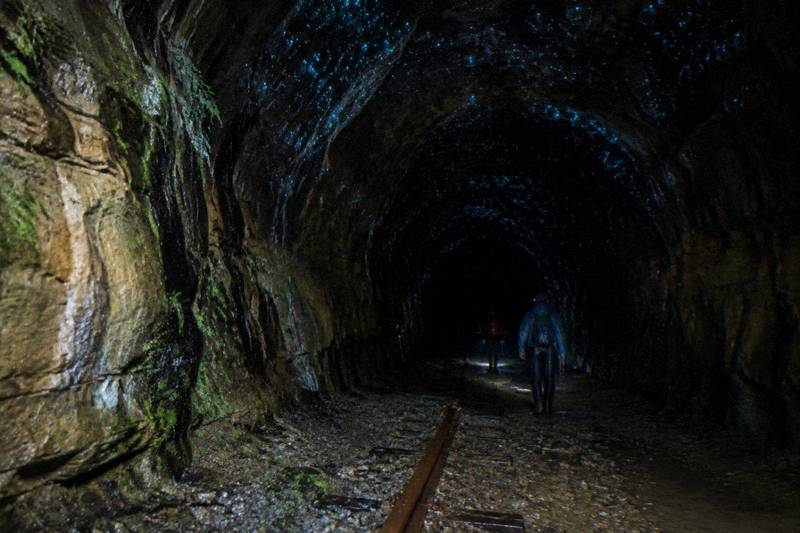
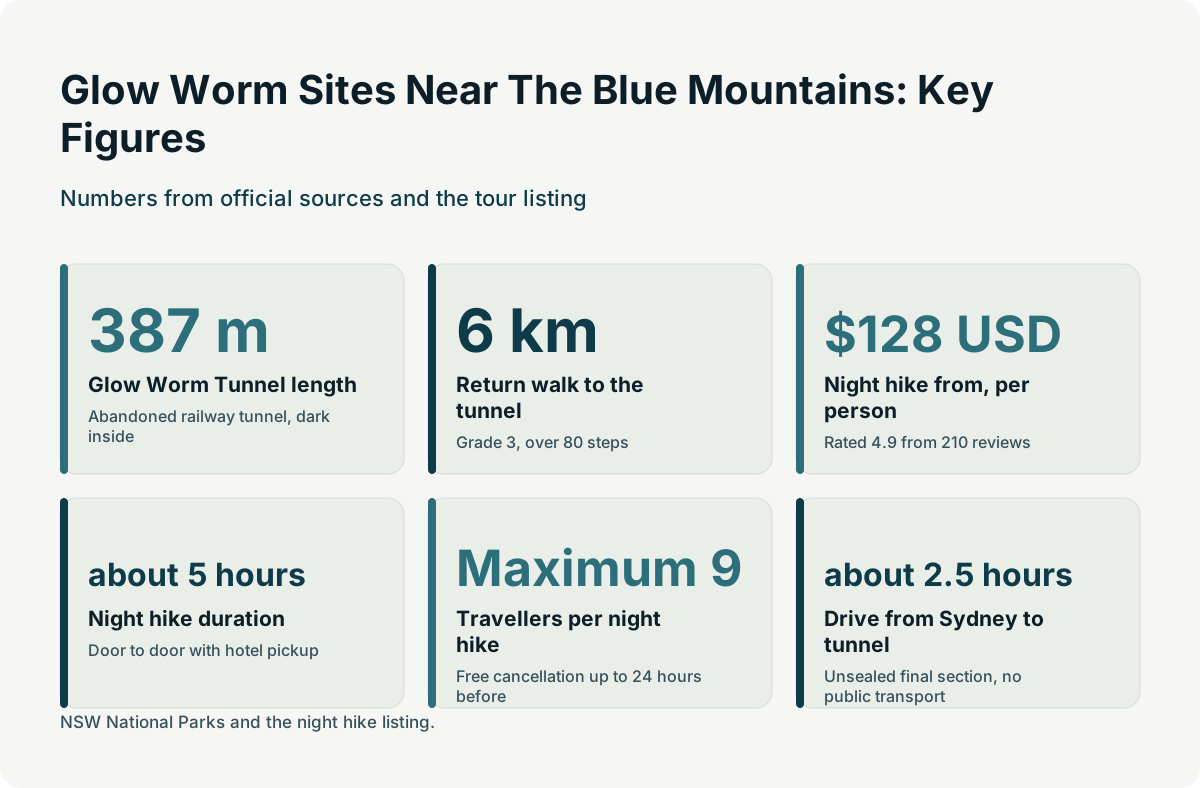
Two places in the Blue Mountains region have glow worms properly documented in official sources. The first is the Glow Worm Tunnel in Wollemi National Park, a 387 m abandoned railway tunnel about a 2.5 hour drive from Sydney, where NSW National Parks confirms a permanent colony. The second is a cave behind a waterfall visited by a guided night hike from Sydney, from $128 USD per person, rated 4.9 from 210 reviews.
The Glow Worm Tunnel is the region's flagship wild site. It was built in the early 1900s as Tunnel No. 2 of the Newnes mining railway, and because it is long enough to go properly dark, glow worms can be seen inside even during the day. NSW National Parks describes the walking track as a 6 km return Grade 3 walk, with a 1.5 km approach from the carpark to the tunnel entrance, and notes that the stable conditions inside gave the colony a permanent foothold. The track itself has no fee listed on any NPWS page reviewed, which makes it the budget option for travellers with their own vehicle and some bushwalking experience.
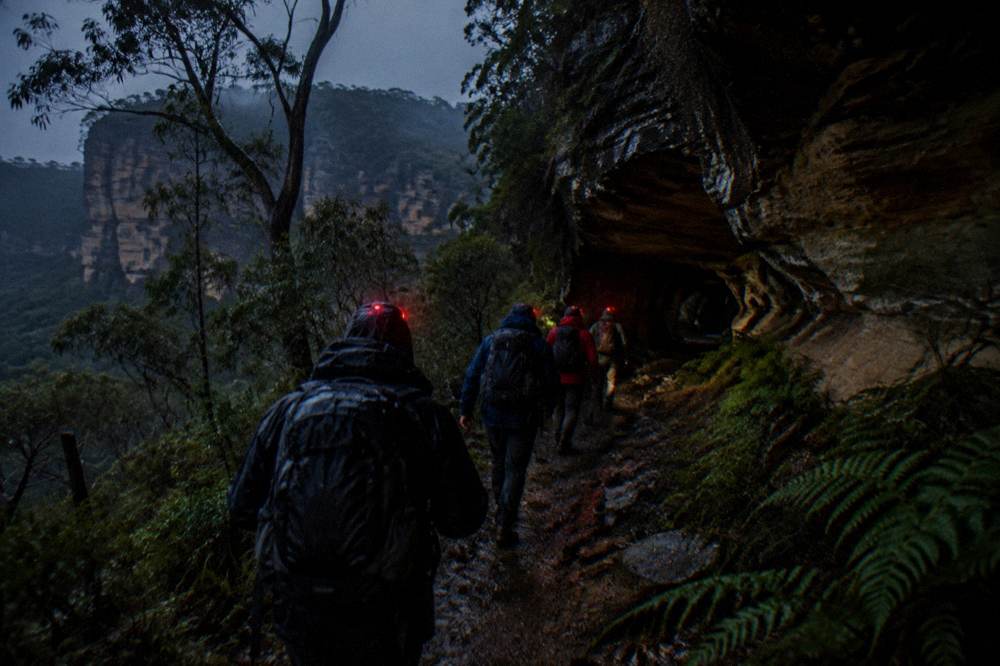
The second documented option is the night hike run by Wildscape Adventures, the featured tour on this site. It picks up from Sydney accommodation in a window of about 7:50pm to 8:35pm, drives out in a small van, and runs a guided bush walk in the dark with headlamps in red-light mode to a cave behind a waterfall where native glow worms can be seen. The listing describes about 5 hours door to door, a maximum of 9 travellers, moderate fitness requirements, and free cancellation up to 24 hours before. The operator does not publish the cave's location, which is worth knowing before you book: this is a guided wildlife experience, not a ticket to a named landmark.
Both options share one honest caveat: glow worms are wild animals, not an exhibit. They switch their lights off if disturbed, and the night hike operator cancels for bad weather or if minimum numbers are not met. A visit in still, humid conditions after rain tends to be rewarding, and NSW National Parks suggests visiting the tunnel during the week or in spring or autumn to avoid crowds and limited parking. The month-by-month ribbon on the homepage works through the seasonal picture in detail, and the guide to the best time to see glow worms in the Blue Mountains covers the same ground for the tunnel.
The two documented options suit different travellers, and the differences are practical rather than subtle. The tunnel asks for a car, an unsealed road and a Grade 3 walk, and costs nothing on the track itself. The night hike asks for a booking and an evening, and handles every kilometre of driving and navigation for you.
| Factor | Glow Worm Tunnel (self-guided) | Night Hike From Sydney |
|---|---|---|
| Glow worm site | 387 m abandoned railway tunnel | Cave behind a waterfall, location not published |
| Cost | No fee listed by NSW National Parks | From $128 USD per person |
| Getting there | About 2.5 hours by road, unsealed final section | Hotel pickup, about 7:50pm to 8:35pm window |
| Effort | 6 km return Grade 3 walk, over 80 steps | Guided bush walk in the dark, moderate fitness |
| Group size | Whatever you bring | Maximum 9 travellers |
| Cancellation | N/A, check NPWS alerts for closures | Free up to 24 hours before |
Jenolan Caves Vs The Glow Worm Tunnel
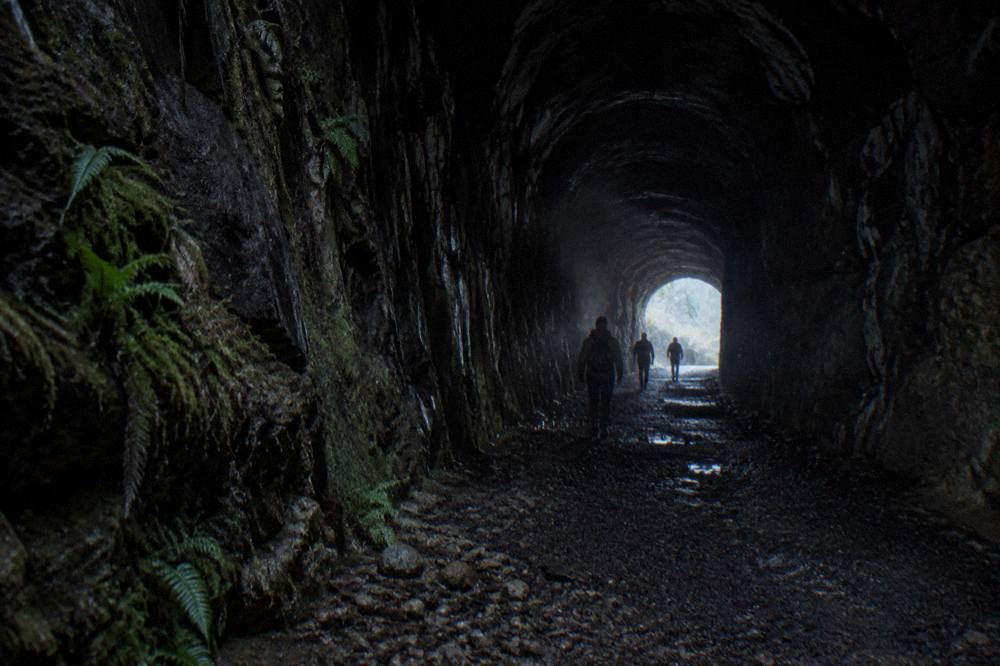
Jenolan Caves and the Glow Worm Tunnel are different experiences, and only one of them has documented glow worms. Jenolan offers guided limestone cave tours with no glow worm component in any listing reviewed. The tunnel is a free, self-guided walk into an abandoned railway tunnel where NSW National Parks confirms a permanent glow worm colony, visible even in daytime.
The comparison is worth laying out side by side, because a lot of itineraries try to do both and the logistics differ sharply. Jenolan is a developed tourist site with guided cave tours, a restaurant and formed paths, reached by a winding mountain road. The tunnel is a bushwalk on an unsealed road network, with limited parking, no drinking water, very limited mobile reception and two non-flush toilets at the trailhead. Neither experience is harder overall, they are just hard in different ways.
| Factor | Jenolan Caves | Glow Worm Tunnel (Wollemi NP) |
|---|---|---|
| Glow worms documented | No, not mentioned on the official site | Yes, permanent colony per NSW National Parks |
| What you see | Limestone formations, underground rivers, show caves | A 387 m dark railway tunnel with glow worms on the walls |
| Access | Sealed mountain road, formed paths inside | Unsealed road, 6 km return Grade 3 bushwalk |
| Entry cost | Cave tour prices are on the Jenolan site | No fee listed on any NPWS page reviewed |
| Best for | Families wanting a structured cave tour | Self-sufficient walkers with their own vehicle |
| Daytime viewing | Standard opening hours | Possible, the tunnel is dark enough inside |
One practical note for anyone driving to the tunnel: the access road situation changes. Glowworm Tunnel Road is unsealed gravel, passable in a 2WD in dry weather and 4WD-only when wet, and current NPWS alerts include construction works at the Bungleboori precinct until December 2026 plus a single-lane section on Glowworm Tunnel Road from 11 October 2026 with delays up to 5 minutes. The full picture, including parking and road detail, is in the guide to driving and parking at the Glow Worm Tunnel.
The Night Hike From Sydney: The Bookable Glow Worm Option
For travellers without a car, or without a taste for unsealed roads, the bookable way to see glow worms in the Blue Mountains is a guided night hike from Sydney, from $128 USD per person, rated 4.9 from 210 reviews. It runs about 5 hours with hotel pickup and drop-off, takes a maximum of 9 travellers, and walks to a glow worm cave behind a waterfall with headlamps in red-light mode.
The hike solves the problem this whole article circles: the documented glow worm sites are hard to reach on public transport, and Jenolan does not document glow worms at all. NSW National Parks puts the tunnel about 2.5 hours from Sydney by road, and no public transport reaches its carpark, so a self-guided visit means renting a car and driving gravel roads at night if you want a dark-sky viewing. The night hike folds all of that into one evening: pickup from Sydney accommodation, transport in a small van, a certified outdoor instructor, parking fees and water included, and a guided bush walk to the cave.
The listing is flagged as often selling out, and it reflects the small group cap of 9. Cancellation is free up to 24 hours before, and the operator cancels for bad weather or if minimum numbers are not met, so it is worth checking the live listing close to your date. The tour page on this site, the Blue Mountains glow worm tour explained, walks through the full itinerary, and you can Check availability once you have a date in mind.
Two things to weigh before booking. First, the meal situation is not settled: the booking platforms disagree on whether food is included, so treat dinner as unconfirmed and eat beforehand. Second, the operator does not publish the cave's location, and glow worms are wild, so the experience is framed as a chance to see them rather than a guaranteed sighting. Neither point is a dealbreaker, but both belong in an honest preview.
What Jenolan Caves Does Offer Instead
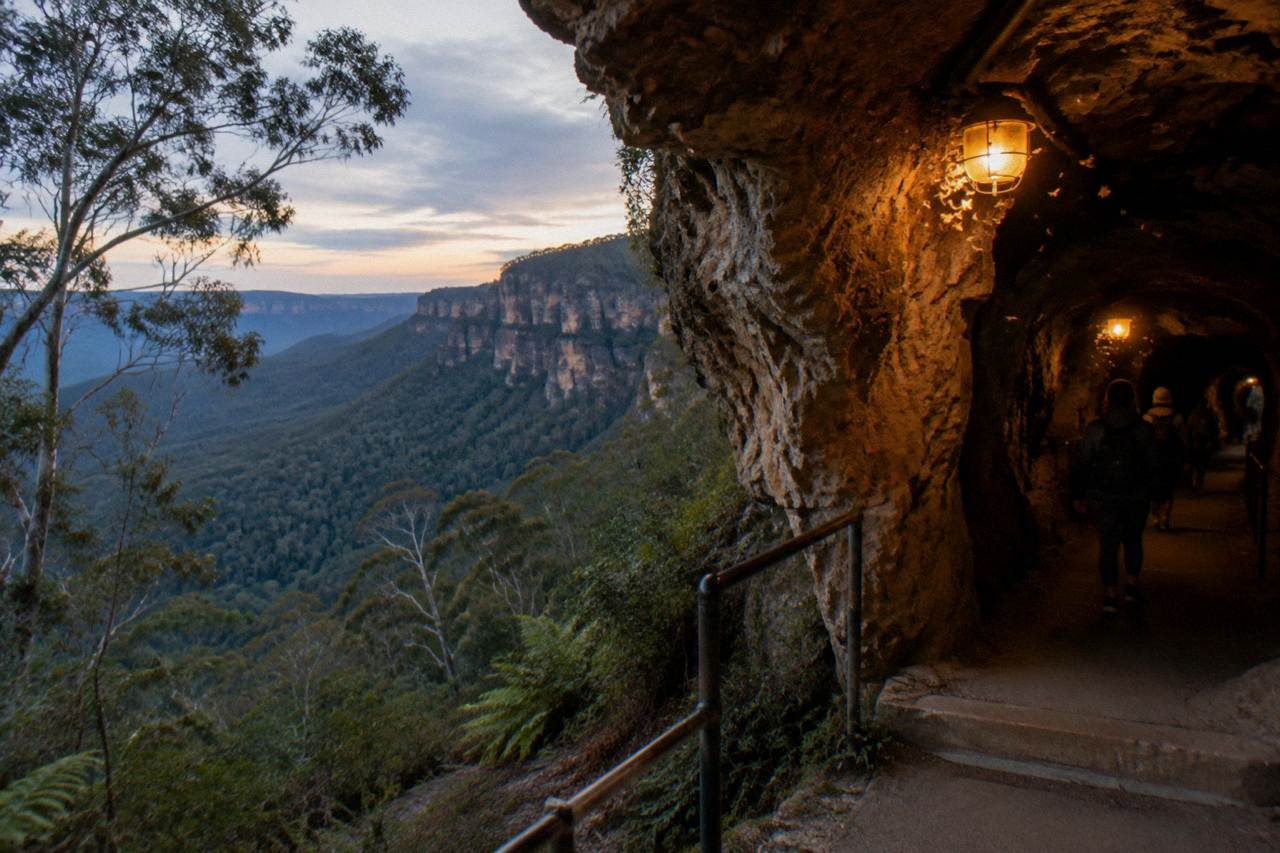
Jenolan Caves remains one of the most impressive cave systems in Australia, and its documented attractions are limestone formations, underground rivers and guided show cave tours, plus wildlife such as rock-wallabies and cave crickets. None of the official pages mention glow worms. If your heart is set on caves rather than bioluminescence, Jenolan delivers; if it is set on glow worms, the sources point elsewhere. For those determined to see living light in a cave, our guide to Australia's best glow worm spots covers where the colonies actually are.
The official Jenolan Caves website presents a system of decorated limestone chambers, rivers that run through the mountain, and a menu of guided tours pitched at different fitness and interest levels. It is a genuinely world-class show cave site, and nothing in this guide should be read as talking it down. The point is narrower: its own marketing and wildlife pages name cave crickets and rock-wallabies, and glow worms appear nowhere in them.
That makes Jenolan a good half of a very full day rather than a glow worm destination. A realistic plan pairs a Jenolan cave tour in the morning with a glow worm experience after dark, and the night hike's evening pickup window, starting around 7:50pm from Sydney hotels, is built for exactly that shape of day. Travellers basing themselves in the mountains rather than the city have a harder pairing, because no NPWS or operator evidence of evening glow worm walks near Katoomba, Leura or Blackheath was found; the documented sites sit further afield.
For travellers weighing Jenolan against the region's other big draws, the guide to Jenolan Caves and glow worm tours together works through the combination itineraries, and the comparison of self-driving versus a guided glow worm visit covers the trade-offs for independent travellers.
How To Plan A Glow Worm Trip From Sydney
A glow worm trip from Sydney comes down to three honest paths: drive yourself to the Glow Worm Tunnel, about 2.5 hours each way on roads that turn to 4WD-only when wet; book the night hike from $128 USD per person with hotel pickup; or visit Jenolan for its limestone, accepting that it does not document glow worms. Katoomba, the usual Blue Mountains base, is about 1.5 to 2 hours from Sydney by road.
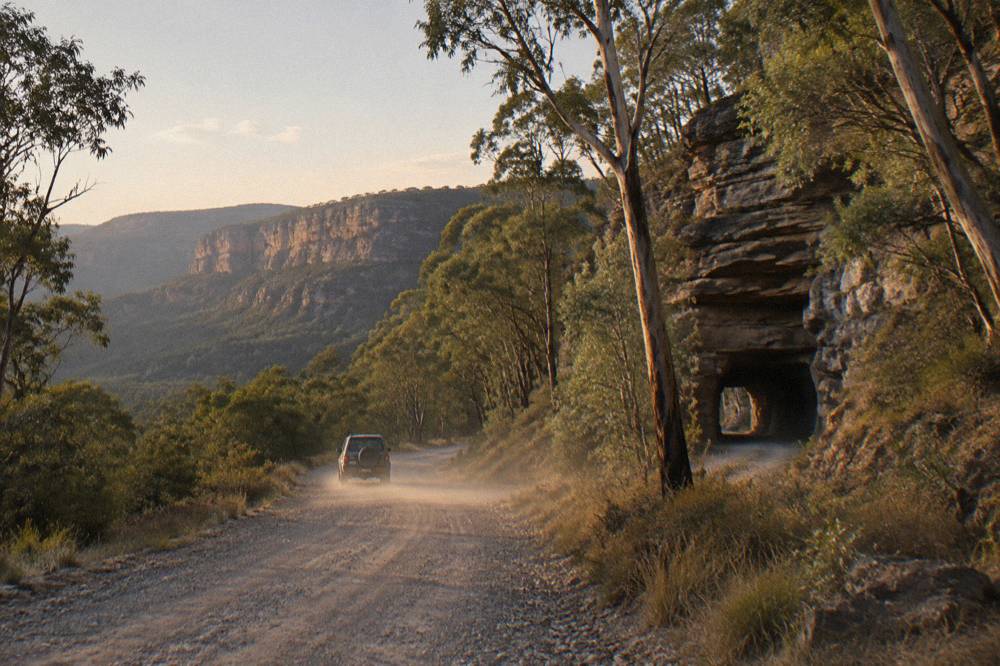
The first path suits confident drivers with a full day. The route runs from Sydney to Lithgow, then via Clarence and the Old Bells Line of Road onto Glowworm Tunnel Road, an unsealed stretch of about 26.8 km through a single-lane 60 m tunnel just before the carpark. From the carpark it is a 1.5 km walk to the tunnel entrance, and the full track is 6 km return with over 80 steps, some without handrails. Check the NPWS alerts before you go: the fire ban season runs from 1 October 2026 to 31 March 2027, and the Bungleboori works and the single-lane road section described above are live.
The second path is the night hike, covered in detail above, and it is the only one of the three that needs no car, no gravel road and no navigation in the dark. The third path is Jenolan on its own terms, which is a fine day out and simply not a glow worm day out. The step-by-step logistics for the tunnel drive, including the road conditions and what to pack, are in the guide on getting to the Glow Worm Tunnel from Sydney.
| Option | Drive from Sydney | Cost | Glow worms documented | Needs a car |
|---|---|---|---|---|
| Glow Worm Tunnel self-guided | About 2.5 hours | No fee listed by NSW National Parks | Yes, permanent colony | Yes, 4WD in wet weather |
| Night hike from Sydney | Pickup from your hotel | From $128 USD per person | Yes, cave behind a waterfall | No |
| Jenolan Caves | Check the operator | Tour prices on the Jenolan site | No, not mentioned officially | Yes, or a day tour |
Whatever you choose, the viewing etiquette is the same and NSW National Parks states it plainly: stay on the path, keep noise to a minimum, let your eyes adjust in the dark, and shine your torch at the ground or use a red-light option, because pointing a torch at glow worms can damage their bioluminescence and makes them switch their lights off. Look but do not touch. The night hike builds this in by supplying headlamps with a red-light mode. If you're curious about why that hands-off rule matters so much, the reasons you can't touch glowworms explain how even a light brush can destroy their silk snares.
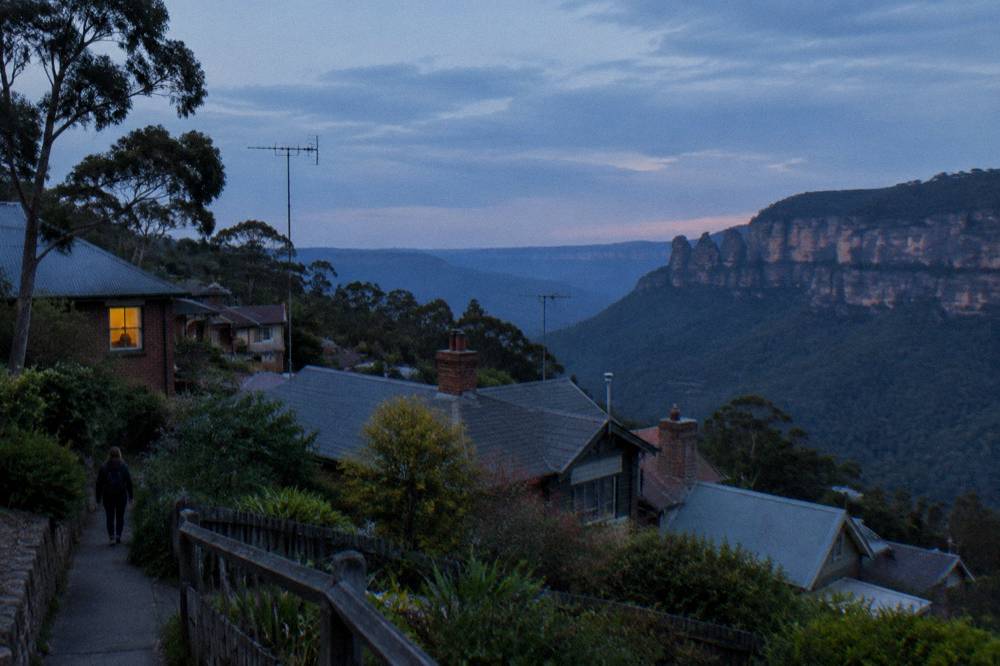
The short version for a reader skimming to the end: Jenolan is worth visiting for what it actually is, and the sources do not document glow worms there. The documented glow worm experiences in the Blue Mountains region are the free tunnel walk near Lithgow and the guided night hike from Sydney, and Blue Mountains Glow Worms exists to help you choose between them honestly.
If the night hike is the option that fits, the live listing carries the current dates, the pickup details and the free-cancellation terms, all in one place before you commit.
Common Questions About Jenolan Caves Glow Worms
Are there glow worms at Jenolan Caves?
The official Jenolan Caves site mentions no glow worms in its cave descriptions or wildlife sections, and no booking listing found for Jenolan mentions them either. That is an absence of documentation rather than proof they are absent, so this site reports it exactly that way and points to the places where glow worms are properly documented.
Where can I see glow worms in the Blue Mountains instead?
Two places have glow worms documented in official sources: the Glow Worm Tunnel in Wollemi National Park, a free self-guided walk about 2.5 hours from Sydney by road, and the cave behind a waterfall visited by a guided night hike from Sydney, from $128 USD per person, rated 4.9 from 210 reviews.
Is Jenolan Caves still worth visiting without glow worms?
Yes. Jenolan is one of Australia's best-known show cave systems, with limestone formations, underground rivers and guided tours, plus wildlife such as rock-wallabies and cave crickets. Visit it for what it documents rather than for bioluminescence.
Can I see glow worms during the day?
At the Glow Worm Tunnel, yes. The tunnel is 387 m long and dark enough inside for glow worms to be visible in daytime, which NSW National Parks states directly. Elsewhere, including on the night hike, viewing happens after dark with eyes given time to adjust.
How much does it cost to see the glow worms?
The Glow Worm Tunnel track has no fee listed on any NSW National Parks page reviewed. The night hike from Sydney starts at $128 USD per person with hotel pickup and drop-off included, and free cancellation up to 24 hours before.
Why can't you point a torch at glow worms?
NSW National Parks advises that pointing a torch at glow worms can damage their bioluminescence and makes them switch their lights off. Shine your torch at the ground or use a red-light option, keep noise down, stay on the path and look but do not touch.