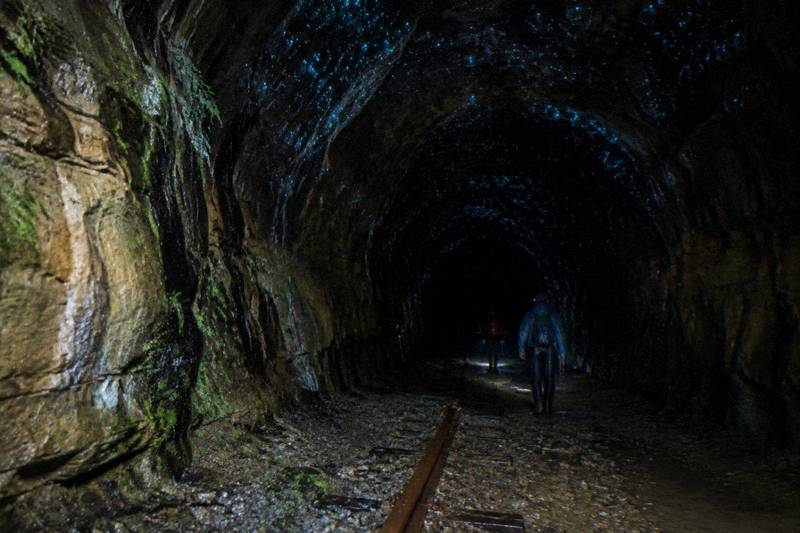
Where To See Glow Worms In The Blue Mountains
Glow worms in the Blue Mountains region live in exactly two kinds of documented places: a disused railway tunnel in Wollemi National Park that anyone can walk into for free, and a handful of caves and overhangs that tour operators keep quiet. Everything else is rumour.
Short answer
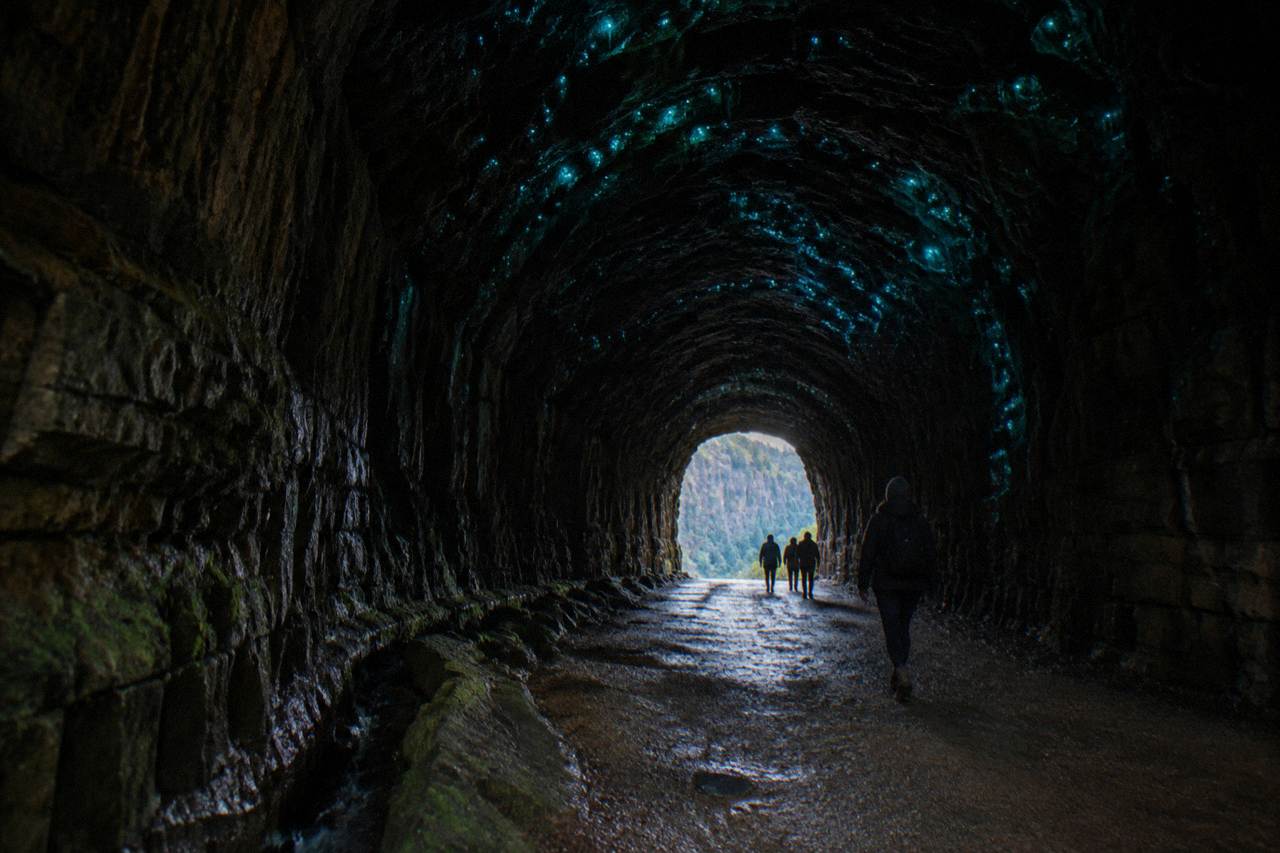
The only glow worm site in the Blue Mountains region documented by NSW National Parks is the Glow Worm Tunnel in Wollemi National Park, a free 6 km return walk about 2.5 hours from Sydney. One bookable night hike from Sydney, from $128 USD per person, visits a cave behind a waterfall whose location the operator does not publish. No NPWS source describes glow worms at Katoomba, Leura, Blackheath or Jenolan.
The Blue Mountains region holds many glow worm colonies, and NSW National Parks says most of them live in caves and disused mines that the public never sees. That single sentence explains almost everything confusing about this topic. Visitors arrive in Katoomba expecting glow worms on the clifftops, find nothing, and leave convinced the whole thing is a myth. Meanwhile the real colonies sit in two very different places: a 387 m railway tunnel in Wollemi National Park that the same government agency documents in detail, and a cave behind a waterfall that a Sydney tour operator visits by night but declines to pin on a map. That mismatch between expectation and reality is exactly why many people wonder whether spotting one is unusual at all, a question the guide to how hard glow worms are to actually find answers in plain terms.
This guide sets out what is documented, what is sold, and what has no evidence behind it. Where a claim comes from a tour company rather than an official source, it says so.
Where Do Glow Worms Actually Live Near The Blue Mountains?
The region's documented glow worm population lives in dark, damp, sheltered spaces: the Glow Worm Tunnel in Wollemi National Park, which NSW National Parks describes in detail, plus scattered colonies in caves, overhangs and abandoned mines across the Blue Mountains that the same agency says are mostly inaccessible. One commercial night hike visits a cave behind a waterfall whose location the operator keeps unpublished. No other public site in the region has an official glow worm description. For a fuller picture of the area, from its World Heritage listing to its cool climate and ancient plants, see our guide to what makes the Blue Mountains special in Australia.
NSW National Parks is blunt about the habitat. Glow worms need darkness, still moist air, shelter from wind and running water nearby, which is why they colonise caves, overhangs, rainforest gullies and abandoned tunnels rather than open bushland. A clifftop lookout at sunset fails every one of those conditions. A disused railway tunnel bored through sandstone in the early 1900s passes all of them, which is why the Wollemi tunnel holds a permanent colony while the Grand Canyon Track a few valleys east holds none that any official source mentions.
The distinction matters for planning. The tunnel is free, self-guided and reachable by road. The night hike cave is commercial, guided and reachable only by booking. Everything else you may have read, glow worms at Govetts Leap, at Wentworth Falls, in the Jenolan caves, is either folklore or a confusion with one of the two real sites, and the sections below separate those carefully.
What Is The Glow Worm Tunnel In Wollemi National Park?
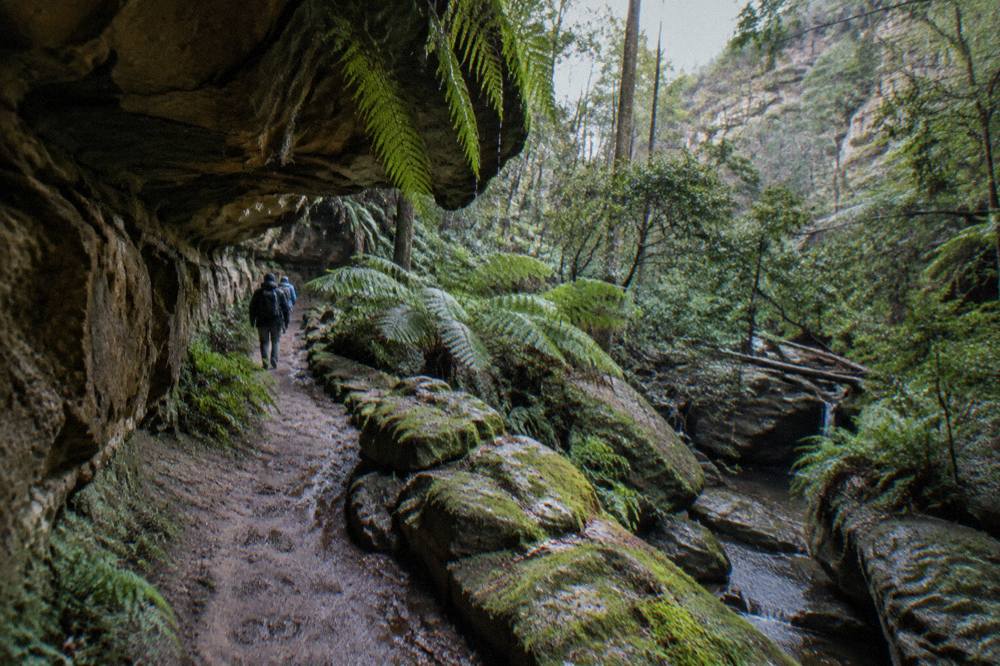
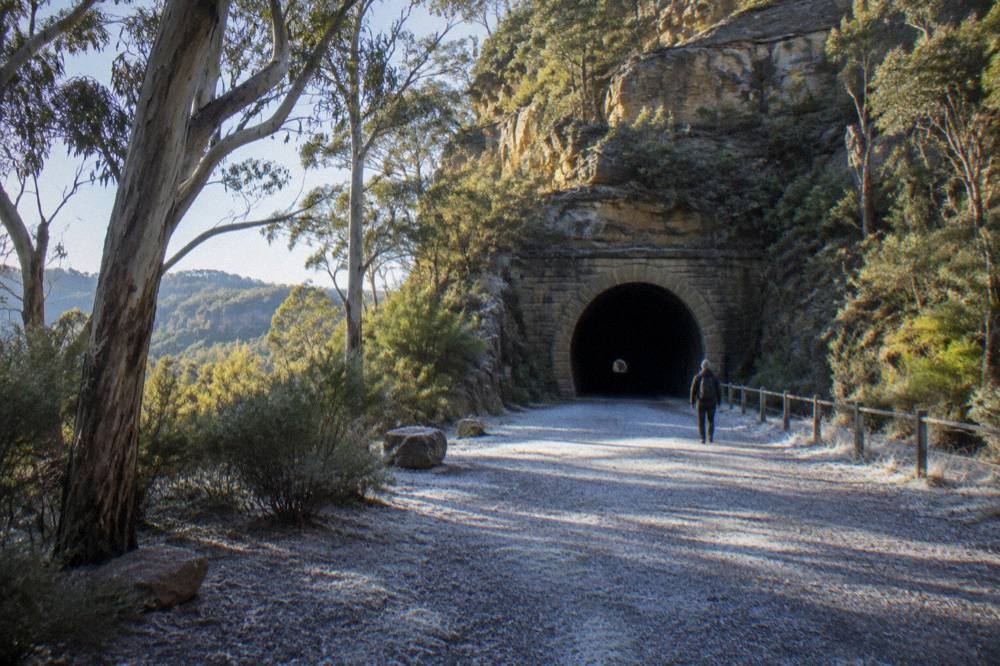
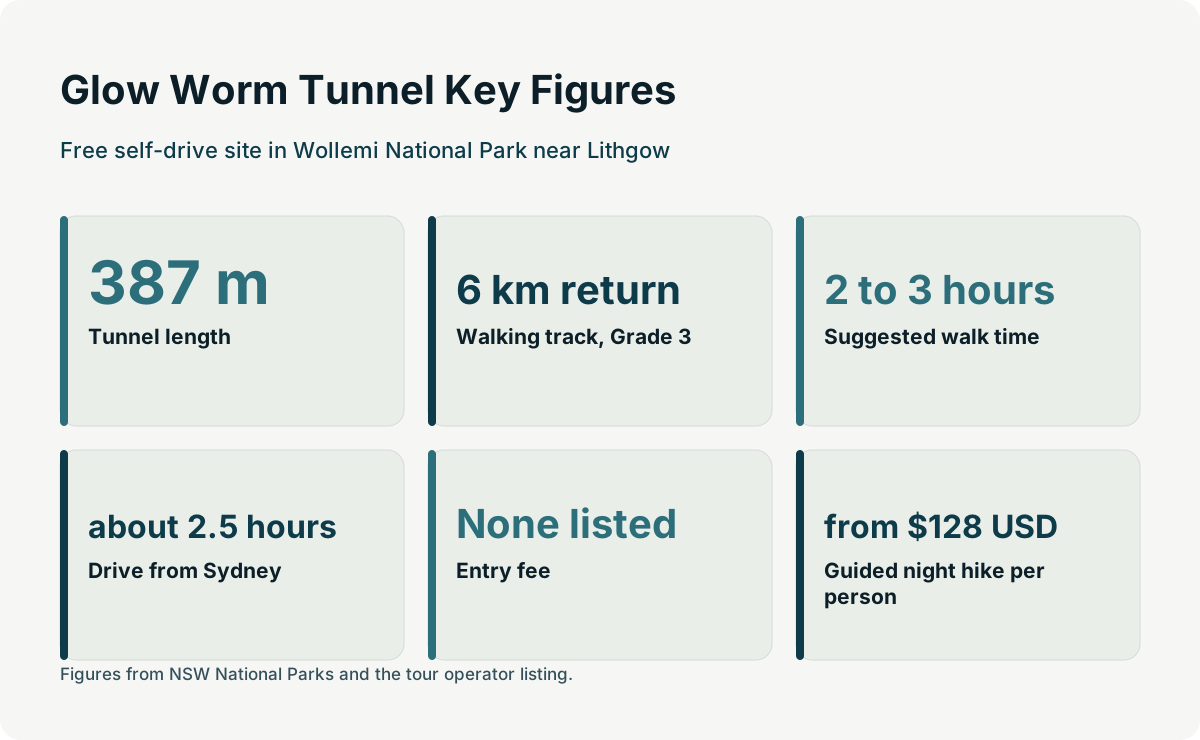
The Glow Worm Tunnel is a 387 m disused railway tunnel in Wollemi National Park near Lithgow, about 2.5 hours from Sydney by road, reached by a 6 km return walking track rated Grade 3. NSW National Parks lists no entry fee, no permit and no booking, and confirms glow worms are visible there year round, even during the day, because the tunnel is long enough to go properly dark inside. Since glow worms are visible all year, your main planning question becomes timing your visit around weather and crowds, which our guide to the best months for seeing glow worms covers in detail.
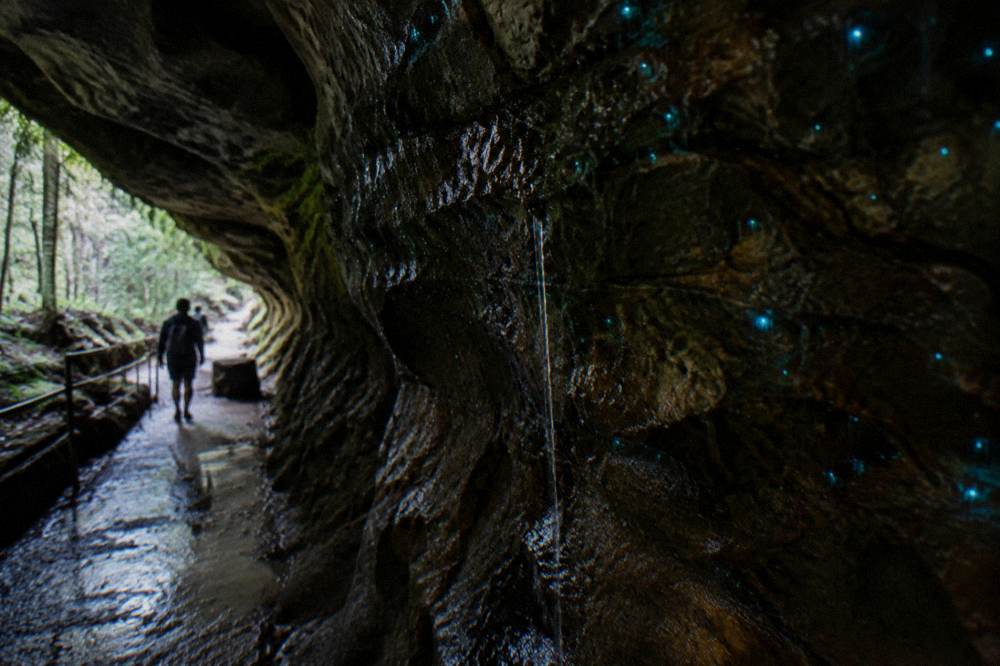
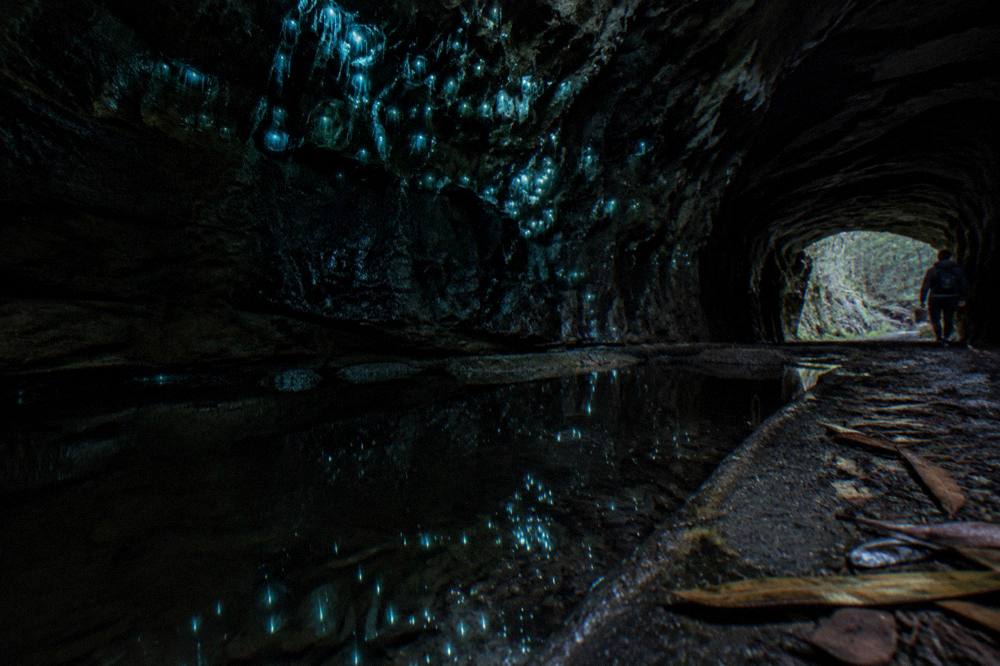
The tunnel was built in the early 1900s for the Newnes mining railway, Tunnel No. 2 of the Wolgan Valley line, and the colony moved in because the conditions suited it perfectly: constant humidity, still air, running water and total darkness at the centre. The park agency's own story describes "hundreds of blue-green tail lights" along the walls. Track upgrades have evened the floor and added a handrail inside, though the surface remains uneven and rocky and can be wet underfoot.
Getting there is the real work. The walk itself is 6 km return with a suggested time of 2 to 3 hours, starting at the carpark at the end of Glowworm Tunnel Road, itself reached by 8.4 km of Old Bells Line of Road and then 26.8 km of unsealed road from the Lithgow direction, or about 39 km via State Mine Gully Road. A 2WD can manage in dry weather; the park service recommends a 4WD and says access is by 4WD only when wet. There is no public transport to the carpark at all. The full access picture, including the current road works and the single-lane section, is covered in our detailed Glow Worm Tunnel walking track guide, and the driving routes and parking limits are broken down in Glow Worm Tunnel road and car park access.
Two cautions from the official pages deserve their own sentence. First, the track includes over 80 steps without handrails and a pinch point half a metre wide, so it is not a pram or wheelchair walk and the section beyond the lookout is not suitable for children. Second, the alerts page changes often: a park fire ban runs from 1 October 2026 to 31 March 2027, construction at the Bungleboori precinct continues until December 2026, and Glowworm Tunnel Road is reduced to a single lane at the Lost City North intersection from 11 October 2026 with delays of up to five minutes. Check the alerts before you drive out.
| Feature | Detail (source: NSW National Parks) |
|---|---|
| Location | Wollemi National Park, near Lithgow |
| Drive from Sydney | About 2.5 hours |
| Track | 6 km return, Grade 3, 2 to 3 hours suggested |
| Walk from carpark to tunnel | 1.5 km |
| Tunnel length | 387 m |
| Entry fee | None listed |
| Best time per NPWS | Weekdays, or spring or autumn |
| Parking | Limited at peak times |
What Is The Night Hike Cave Behind A Waterfall?
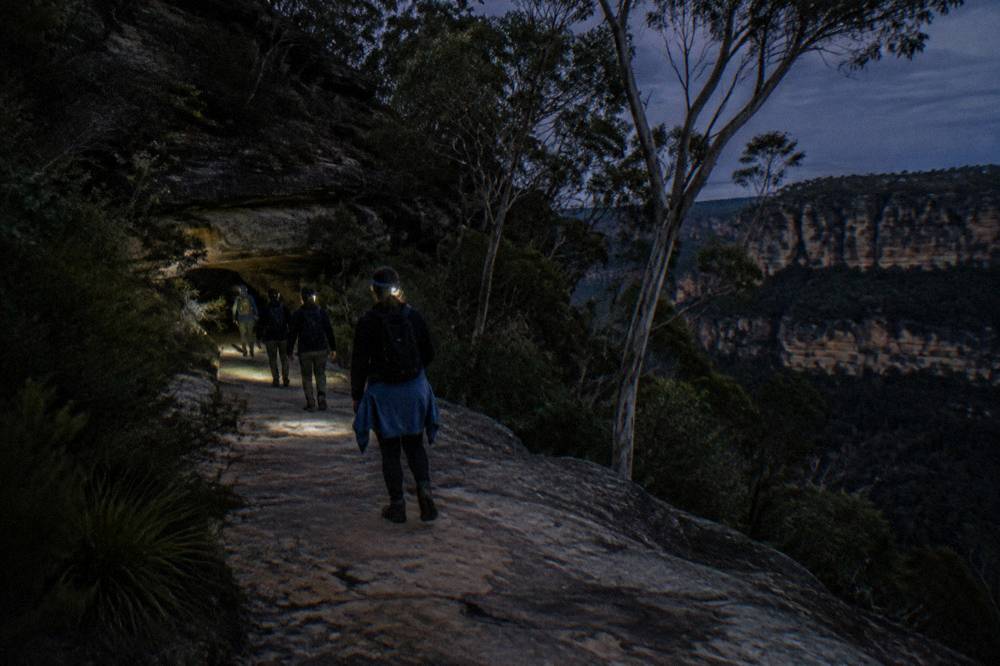
The bookable option is a guided night hike from Sydney, from $128 USD per person, about 5 hours door to door, run by Wildscape Adventures with a maximum of 9 travellers. It walks by headlamp, red-light mode, to a cave behind a waterfall where native glow worms can be seen, plus a chance of other wildlife. The operator does not publish the cave's location, and sightings are wild, not guaranteed.
This is the only glow worm product listed on this site, and its shape explains its price. Hotel pickup runs in a staggered window from about 7:50pm to 8:35pm because there is no fixed meeting point, the group travels in a small van, and the return lands between about 11pm and midnight per the operator. Transport, parking fees, water and a certified outdoor instructor are included, and the listing carries a 4.9 rating from 210 reviews. Cancellation is free up to 24 hours before, and the operator cancels for bad weather or if minimum numbers are not met, which is the honest trade-off for visiting a wild colony rather than a theme park.
It is worth being precise about what this hike is not. It is not a visit to the Glow Worm Tunnel: the cave is a different, undisclosed site in the Blue Mountains, and no tunnel is involved. The listing is flagged as often selling out, which is the operator's own claim. Whether a meal is included is not settled between the booking pages, so assume you will eat before pickup or after drop-off. For the full comparison of the two ways to see glow worms, read self-drive versus guided at the Glow Worm Tunnel, which prices out both approaches honestly.
The appeal of the guided night walk is not just the transport. A guide who knows the track removes the two failure modes of a self-drive tunnel visit: arriving at a dark carpark on an unsealed road late at night, and shining the wrong kind of light at the colony once you get there. The tour supplies headlamps with a red-light mode, which the park service's own guidance identifies as the least disruptive option, and it schedules the visit for full darkness, when the display is at its natural best outside the permanently dark tunnel.
Which Famous Blue Mountains Walks Have No Glow Worm Evidence?
NSW National Parks and operator pages do not describe glow worms at the Grand Canyon Track, Govetts Leap, Wentworth Falls, Leura or Blackheath, and the official Jenolan Caves site makes no mention of glow worms anywhere in its cave descriptions or wildlife pages. These are superb walks and caves on their own merits, but planning a glow worm trip around them means planning a trip without glow worms.
Start with the Grand Canyon Track at Blackheath, because it is the one most often confused with the Wollemi tunnel. The name sounds promising and the track is genuinely spectacular: a 6.3 km loop, Grade 3, taking 3 to 4 hours through a deep sandstone canyon. But the park service's track pages say nothing about glow worms, and a canyon that tourists walk in daylight is exactly the wrong habitat anyway, too much airflow and light. The same applies to the clifftop lookouts at Govetts Leap and Wentworth Falls and to the gardens and streets of Leura: beautiful, floodlit at night, and biologically wrong for a species that needs still, humid darkness.
Jenolan Caves deserves its own careful answer, because the assumption that glow worms live in limestone show caves is common and reasonable. The official Jenolan site focuses on limestone formations, cave crickets and rock-wallabies, and a search of its cave descriptions turns up no glow worm reference. That is not proof of absence in every one of the caves, but no operator listing found mentions them either. If Jenolan is already on your itinerary, go for the caves; our Jenolan Caves and glow worm tours article explains how to combine it with a real glow worm stop.
The pattern behind all of these is habitat, again. Glow worms colonise a place only when it offers darkness, humidity, shelter and running water, and the park service notes that the Blue Mountains region's colonies sit mostly in caves and disused mines. A tourist walking track with railings and a viewing platform rarely qualifies. When you read a blog claiming glow worms at a famous lookout, ask what the source is: if the answer is another blog, treat it as rumour.
What Glow Worm Species Are Found In The Blue Mountains Region?
The glow worms of the Blue Mountains and Wollemi National Park are Arachnocampa richardsae, and they are not worms at all but the larval stage of a small fungus gnat fly. The light is bioluminescence produced in a transparent rear end, used to lure prey into sticky silk snares. The larval stage lasts 6 to 9 months, the cocoon 14 days, and the adult fly lives only about 3 days, just long enough to mate and lay eggs.
The biology explains every viewing rule you will ever be given. A glow worm's light is a fishing lamp: the larva secretes silk from its mouth, hangs sticky threads called snares from its nest, and glows to draw small flying insects, mosquitoes and moths, into the trap. The park service's story notes they can catch bugs as big as a cockroach. The glow is a chemical reaction in a transparent rear segment, and the colony's story describes it as blue-green in colour.
The life cycle is short and brutal. Eggs hatch after 7 to 9 days, the larva spends 6 to 9 months in its glowing, feeding stage, then seals into a cocoon for 14 days before emerging as an adult fungus gnat. The adult does not eat: it lives about 3 days, mates, lays eggs and dies. This is why a colony needs undisturbed habitat, and why a single careless torch beam matters. NSW National Parks says glow worms can control their lights and will turn them off if disturbed, and its story adds that pointing a torch at them can damage their bioluminescence and switches the display off. The full behavioural picture, including why touching them is off the menu, is in what are glow worms, Arachnocampa.
For photographers, the biology sets the constraints. A colony that turns its lights off when disturbed means flash photography and loud voices will end the show for everyone in the tunnel at that moment, whether or not any official rule prohibits it. The park service's pages list no photography rule either way, so the honest advice is behavioural, not regulatory: red light, quiet, patience, and long exposures on a tripod if you want the postcard. Our glow worm tunnel photography guide covers the practical settings.
Free Self-Drive Or Guided Night Hike: Which Suits You?
The free self-drive option suits you if you have a car, can handle the 2.5 hour drive each way, and can time your visit for dry weather, since the roads turn 4WD-only when wet. The guided night hike, from $128 USD per person, suits you if you would rather be picked up in Sydney and taken to an undisclosed cave with a guide, headlamps and a group of at most 9.
The money comparison is more nuanced than free versus $128. A self-drive tunnel trip from Sydney burns roughly five hours behind the wheel plus 2 to 3 hours of walking, plus fuel and a full day. The hike from Sydney costs the fixed price, runs about 5 hours total with pickup around 8pm, and returns you to your hotel between about 11pm and midnight. One is a day expedition; the other is an evening out. Neither guarantees glow worms in the sense a theme park guarantees a ride: both colonies are wild, and the operator cancels for bad weather while the tunnel track section toward Newnes can close after heavy rain.
There is a third option worth naming honestly because it exists in the market. Beyond The Blacktop, a licensed NPWS Parks Eco Pass operator, runs its own guided tours to the Wollemi tunnel from Katoomba Station or the Zig Zag Railway at Clarence, about 5 hours, with its own page listing a guided adult tour at $210, a child at $159, a senior at $189, and $275 adult with Dry Canyon, currency not stated on the page, and no Sydney hotel pickup. That is the operator's own pricing, not a rival listing we sell. Other names you may encounter, Mt Tomah and Bilpin area operators, Love Cabins in Bilpin, and Wolgan Valley Eco Tours, have varied status: some listings show as temporarily closed or show no availability, so confirm directly with any operator before planning around them. The budget end of the spectrum, including genuinely free options, is mapped in free glow worm spots and budget Blue Mountains.
| Option | Cost | Time commitment | Glow worm site | Guide included |
|---|---|---|---|---|
| Self-drive to Glow Worm Tunnel | No entry fee listed | Full day, about 5 hours driving plus 2 to 3 hours walking | Wollemi tunnel, documented | No |
| Night hike from Sydney | From $128 USD per person | About 5 hours, evening | Undisclosed cave behind a waterfall | Yes, certified instructor |
| Beyond The Blacktop tunnel tour | $210 adult per the operator's page, currency not stated | About 5 hours | Wollemi tunnel | Yes |
| Mt Tomah area operators | Status varies, some listed closed | About 1 hour when running | Private overhang | Yes |
When Is The Best Time To See Glow Worms?
Glow worms are present year round at both documented sites, and NSW National Parks explicitly recommends visiting the tunnel during the week or in spring or autumn to avoid crowds and the limited summer parking. The tunnel is dark enough inside for daytime viewing; the night hike cave obviously requires night. Operators and travel press say displays are often stronger in warm, wet months and after rain, but that is opinion, not official data, and no source ranks the months.
The official position is easy to state because it is narrow. The park service says glow worms can be seen at the tunnel any time, day or night, because the 387 m bore goes fully dark, and it says the best visiting windows are weekdays and the shoulder seasons. That is the whole of the official seasonal advice. Everything else you will read, December to March peaks, post-rain boosts, moonlight suppressing the glow, comes from tour operators and the travel press, and it is plausible given the biology, since the larvae need moist conditions and dry heat harms colonies, but it is not government data and should not be treated as such.
Climate shapes the practical experience more than the glow does. Bureau of Meteorology averages for Katoomba, at 1,017 m elevation, put the mean minimum at 12.9 degrees in January down to 2.6 in July, with mean monthly rainfall peaking at 177.8 mm in February and bottoming at 70.7 mm in September. Winter nights on an unsealed plateau road are a real consideration for self-drivers, and summer weekends bring the parking squeeze the park service warns about. The month-by-month ribbon on the homepage of Blue Mountains Glow Worms folds these figures into a single planning view.
For a Sydney traveller weighing seasons against schedules, the guided night hike removes most of the weather guesswork in one move: the operator watches the forecast, cancels free of charge up to 24 hours out when conditions turn, and reschedules around the colony's needs rather than yours. That is a genuine advantage over a self-drive tunnel trip, where a wet-night decision point sits entirely on you, on an unsealed road, hours from help.
What Are The Rules For Viewing Glow Worms?
NSW National Parks gives four rules: stay on the path, keep noise to a minimum, let your eyes adjust when you turn off your torch, and shine any torch at the ground or use a red-light option, which is the least disruptive. The agency's story adds that a torch pointed at the worms can damage their bioluminescence and makes them switch off, and that you should look but not touch.
These rules are behavioural, and they come from the animal's biology rather than from bureaucracy. A glow worm that is disturbed, by light, noise or touch, turns its lamp off, and a colony that keeps getting disturbed is a colony spending its energy hiding instead of feeding. The park service's own construction projects near glow worm habitat use red lights and noise minimisation for exactly this reason. No NPWS page states a flash photography rule in either direction, so the honest line is that nobody has published one, and the considerate choice is obvious.
The other rules around the tunnel are conventional park rules and matter for planning. Camping, cycling on the track or in the tunnel, pets and smoking are all prohibited; the nearest campground is Newnes, reached by a different road. There are two non-flush toilets at the carpark, no drinking water, one timber bench and very limited mobile reception, for which the park service recommends the Emergency Plus app. Facilities, packing and the full safety picture, including those 80-plus handrail-less steps, are itemised in what to bring to the Glow Worm Tunnel and Glow Worm Tunnel safety.
| Rule or facility | Official position |
|---|---|
| Torch use | Shine at the ground, or use red light; never point at the worms |
| Noise | Keep to a minimum; worms turn off when disturbed |
| Touching | Look but do not touch |
| Track | Stay on the path |
| Camping, cycling, pets, smoking | Prohibited |
| Toilets | Two non-flush at the carpark |
| Drinking water | None; bring your own |
| Mobile reception | Very limited; Emergency Plus app advised |
How Do You Choose Between The Two Real Sites?
Choose the Wollemi tunnel if you have a car, a dry-weather day and a tolerance for long unsealed roads, because it is free, official and viewable in daylight. Choose the guided night hike from Sydney if you want the colony at full darkness, a guide who handles the light discipline and the driving, and an evening that fits a city stay. The tunnel's steps rule out prams; the hike caps groups at 9 and needs moderate fitness.
The decision rarely comes down to glow worms, since both sites have them. It comes down to logistics and temperament. The tunnel rewards preparation: a vehicle suited to the road conditions, an early start to beat the parking squeeze, a weekday if you can manage it, and a willingness to walk 6 km return on a Grade 3 track. The hike rewards delegation: you trade $128 USD per person and an evening for a guide, gear and a door-to-door run. Both are honest products, and both can end in a cancelled or diminished viewing, the tunnel through weather and road conditions, the hike through the operator's own weather and minimum-number cancellations.
One planning note that first-time visitors miss: the two sites are not interchangeable substitutes for the same experience. The tunnel is a horizontal walk through a historic bore where the darkness is structural, so the glow is visible even at 2pm. The cave behind the waterfall is a night scene by definition, with headlamps and a waterfall and a chance of spotting other wildlife on the walk in. Some visitors do both across a single trip, the tunnel as a daytime expedition from Lithgow or Katoomba, the hike as the last night's finale. For fitting either into a broader trip, see Blue Mountains day trip from Sydney.
Can You See Glow Worms In Sydney Itself?
No. There is no glow worm tunnel in Sydney, and the nearest documented tunnel, the Wollemi one, is about 2.5 hours away by road per NSW National Parks. The Helensburgh tunnel sometimes mentioned online is in the Illawarra region south of Sydney, a different place entirely, and no NSW National Parks, council or museum page describing a glow worm tunnel there was found. The realistic options both leave the city.
The Helensburgh question deserves its plain answer because it circulates widely. The tunnel exists as a structure, but no official source describes glow worms there, a past tour listing for it was not live, and no access details, hours or safety information could be verified. Anyone considering a look should confirm access with the local council before travelling anywhere near it. Our Helensburgh versus Newnes comparison works through the evidence in detail.
For a Sydney-based traveller without a car, the honest menu is short. The train to Katoomba takes about 2 hours, but no public transport reaches the tunnel carpark, and NPWS and operator pages mention no evening glow worm walks near Katoomba, Leura or Blackheath. That leaves the guided night hike as the practical glow worm option from the city, which is precisely why it exists. The wider set of destinations across the state, including where the species sits in the national picture, is covered in where to see glow worms in NSW and glow worms in Australia.
Common Questions About Seeing Glow Worms In The Blue Mountains
Are there glow worms in the Blue Mountains?
Yes. NSW National Parks documents a permanent colony in the Glow Worm Tunnel in Wollemi National Park, near Lithgow, and says the wider Blue Mountains region holds many colonies, mostly in caves and disused mines. One commercial night hike from Sydney visits a cave behind a waterfall whose location is not published.
Can you see glow worms in the Blue Mountains for free?
Yes, at the Glow Worm Tunnel. NSW National Parks lists no entry, parking or permit fee on any of the tunnel's pages. The costs are travel: about 2.5 hours driving from Sydney on unsealed roads that suit a 4WD in wet weather, plus a 6 km return walk.
Do glow worms exist at Jenolan Caves?
No official source mentions them. The Jenolan Caves site describes limestone formations, cave crickets and rock-wallabies with no glow worm reference, and no tour listing found for Jenolan mentions them either. Jenolan is worth visiting for its caves, not for glow worms.
Can you see the glow worms during the day?
At the Wollemi tunnel, yes. NSW National Parks says the 387 m tunnel is long enough to go fully dark inside, so the glow is visible in daytime. The night hike cave is a different site and is visited after dark by design.
What is the best month to see glow worms?
No official source ranks the months. Glow worms are present year round, and NSW National Parks recommends visiting during the week or in spring or autumn to avoid crowds and limited parking. Operator and press claims that displays are stronger in warm, wet months are opinion, not data.
Is the guided night hike the same as the Glow Worm Tunnel?
No. The night hike from Sydney visits a cave behind a waterfall at a location the operator does not publish, not the Wollemi tunnel. The tunnel is a free self-guided walk about 2.5 hours from Sydney; the hike is a guided evening tour from $128 USD per person with hotel pickup.