Is There A Glow Worm Tunnel In Sydney?
No, there is no glow worm tunnel in Sydney itself. The nearest real tunnel sits in Wollemi National Park about 2.5 hours away by road, and the bookable Sydney pickup option is a guided night hike to a glow worm cave.
Is There A Glow Worm Tunnel In Sydney?
No, there is no glow worm tunnel in Sydney itself. The nearest one is in Wollemi National Park near Lithgow, about a 2.5 hour drive away according to NSW National Parks. A second name that comes up, Helensburgh, is south of Sydney in the Illawarra region, and no official source was found describing glow worms there. The one bookable Sydney pickup tour goes to a cave behind a waterfall, from $128 USD per person.
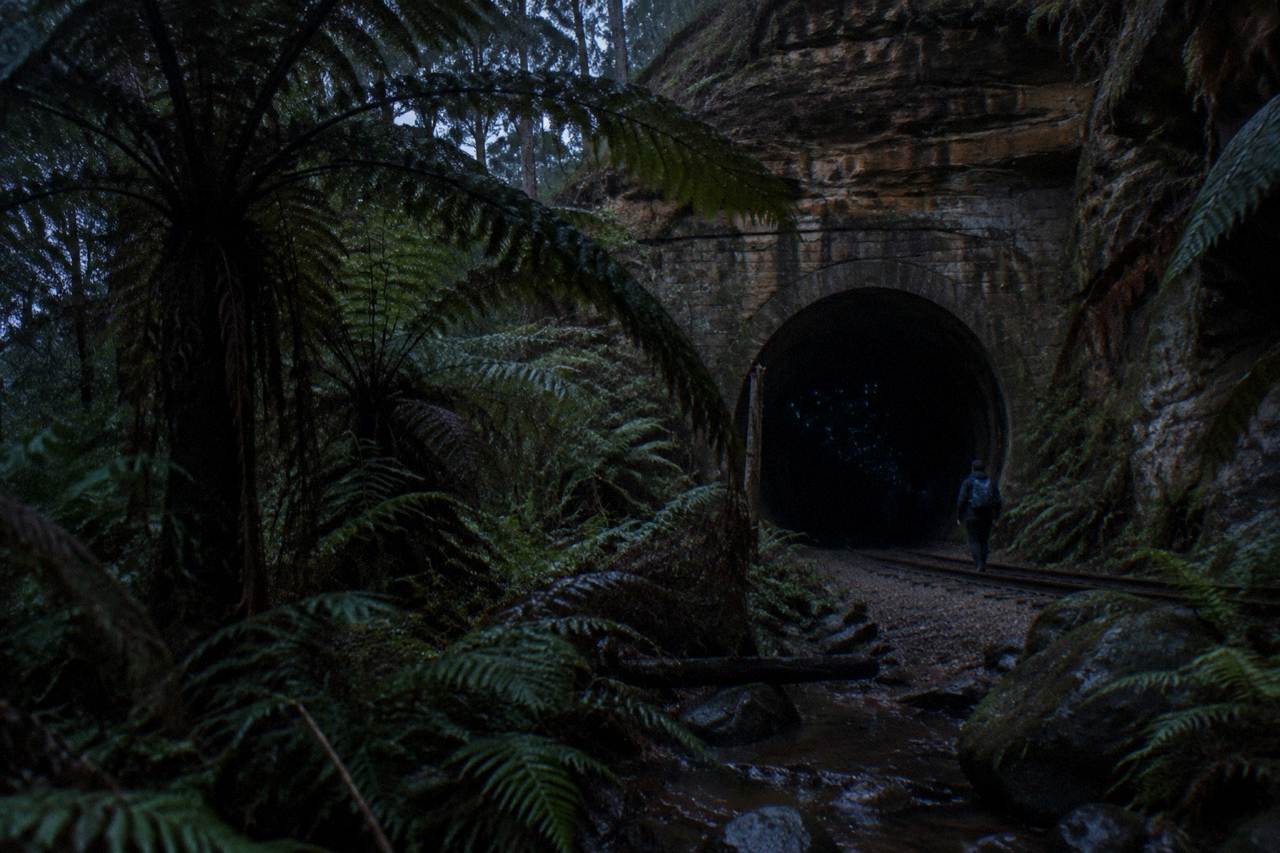
That is the short answer, and it surprises a lot of people who have seen photographs of a glowing railway tunnel and assumed it sits somewhere inside the Sydney basin. The images almost always come from the Wollemi National Park tunnel, an abandoned 1900s mining railway structure 387 m long, reached through unsealed roads on the Newnes Plateau. Nothing like it exists within Sydney's suburbs, and no national park, council or museum page describes one. Most of those photographs circulate without a location label, which is how a tunnel hours out of the city turns into a "Sydney" result in a search bar. The distinction matters for planning, too: one option needs a car and a free half day, the other collects you from a hotel door.
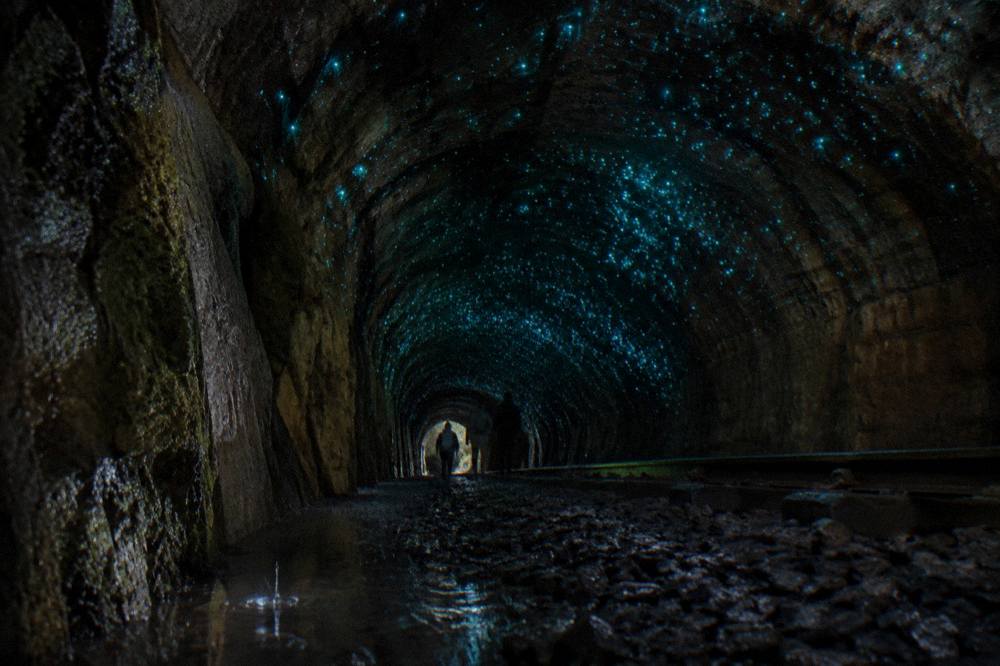
Sydney does have glow worms in the wider region, in caves, overhangs and disused mines across the Blue Mountains, but a tunnel you can walk into, in darkness deep enough for the larvae to shine, sits well outside the city. The practical question then becomes which of the real options fits your trip, and this article walks through each of them: the Wollemi tunnel you drive to yourself, the Helensburgh question that keeps coming up in searches, and the guided night hike that collects you from a Sydney hotel.
The tour above is the only glow worm experience on this site's roster, and it exists precisely because the tunnel is awkward to reach from Sydney without a car and a full free evening. Before deciding anything, it helps to understand exactly where the real tunnel sits and what the drive involves.
Where Is The Nearest Glow Worm Tunnel To Sydney?
The nearest glow worm tunnel to Sydney is the Glow Worm Tunnel in Wollemi National Park, near Lithgow, about a 2.5 hour drive each way according to NSW National Parks. The walk from the carpark is 6 km return, about 2 to 3 hours, on a Grade 3 track. No entry or parking fee is listed on the official track pages. The tunnel is 387 m long and dark enough inside to see glow worms during the day. If you're weighing whether the drive out there is worth it at all, our honest verdict on Wollemi National Park covers the tunnel, the Newnes ruins, and who the park really suits.
The tunnel was built in the early 1900s as Tunnel No. 2 of the Newnes mining railway, and glow worms colonised it because it offers exactly what the larvae need: darkness, humidity, still air and a food supply of small flying insects drawn in from the surrounding gullies. NSW National Parks notes the species here is Arachnocampa richardsae, the larval stage of a fungus gnat, and the same agency's Glow Worm Tunnel walking track page carries the practical details: a 1.5 km walk from the carpark to the entrance, over 80 steps without handrails, a pinch point just half a metre wide, and an uneven, sometimes wet tunnel floor.
Getting there is the real filter. From Lithgow you drive via Clarence and Petra Avenue onto Old Bells Line of Road, then 26.8 km along Glowworm Tunnel Road, an unsealed gravel route that a 2WD can manage in dry weather but that the park service recommends a 4WD for, and restricts to 4WD only when wet. There is no public transport to the carpark at all. Parking is limited at peak times, and the park service's own advice is to visit on a weekday or in spring or autumn, when crowds and the carpark squeeze are both smaller.
The carpark itself is bare bones. Facilities run to two non-flush toilets and a single timber bench, there is no drinking water anywhere on the route, and mobile reception is very limited, which is why the park service suggests loading the Emergency Plus app before you lose signal. Camping, cycling on the track or in the tunnel, smoking and pets are all prohibited, with the nearest legal campground back at Newnes via Wolgan Valley Road. From inside the tunnel you can push on another 1.5 km through Penrose Gorge to a lookout over Donkey Mountain and the Wolgan Valley, though the park service flags the ground beyond that lookout as unsuitable for children, and the tunnel to Newnes section can close during or after heavy rain because of rockfall and flood risk.
There is a second way in, too. The Pagoda walking track from the Old Coach Road carpark runs 4 km return and suits anyone already exploring the Newnes Plateau rather than coming up from the Lithgow side.
If you want the full picture on the approach roads, the parking squeeze and the walking track itself, the site's guide to getting to the Glow Worm Tunnel from Sydney covers the drive in detail.
What About The Helensburgh Glow Worm Tunnel?
Helensburgh is south of Sydney in the Illawarra region, not in the Blue Mountains, and no NSW National Parks, council or museum page describing a glow worm tunnel there exists. A past tour listing for it was not live. Anyone considering a visit should confirm access with the local council before travelling.
The Helensburgh name keeps appearing in searches for glow worm tunnels near Sydney, and it is easy to see why: an abandoned rail tunnel in the Illawarra sounds like the perfect parallel to the Wollemi one. The honest position, based on the sources this site was able to verify, is that the official record is silent. The glow worm pages published by NSW National Parks point only to the Wollemi tunnel, and the Illawarra sources reviewed cover other subjects entirely.
That silence matters, and so does the geography. Glow worm colonies are fragile, and unofficial visitor pressure on an unmanaged site can do real damage, since the larvae switch their lights off when disturbed by noise and torchlight. The Blue Mountains and the Illawarra are different regions reached by different roads, and a plan built on the wrong one sends you out of the city in the wrong direction. This site's Helensburgh versus Newnes comparison unpacks the two names in full, but the summary for a Sydney planner is simple: the documented, managed, free-to-visit tunnel is the Wollemi one, and any Helensburgh visit should be confirmed with the local council first rather than assumed from social media posts.
Can You See Glow Worms On A Tour From Sydney?
Yes, one bookable tour picks you up in Sydney and shows you glow worms without you driving anywhere. The Glow Worm Cave Night Hike runs about 5 hours, from $128 USD per person, rated 4.9 from 210 reviews, with hotel pickup between about 7:50pm and 8:35pm and a return around 11pm to midnight. It goes to a cave behind a waterfall, not the Wollemi tunnel, and carries a maximum of 9 travellers. If you'd rather explore glow worms on your own schedule, our guide to getting from Sydney to the Blue Mountains without a car covers the train and tour options that make the trip easy.
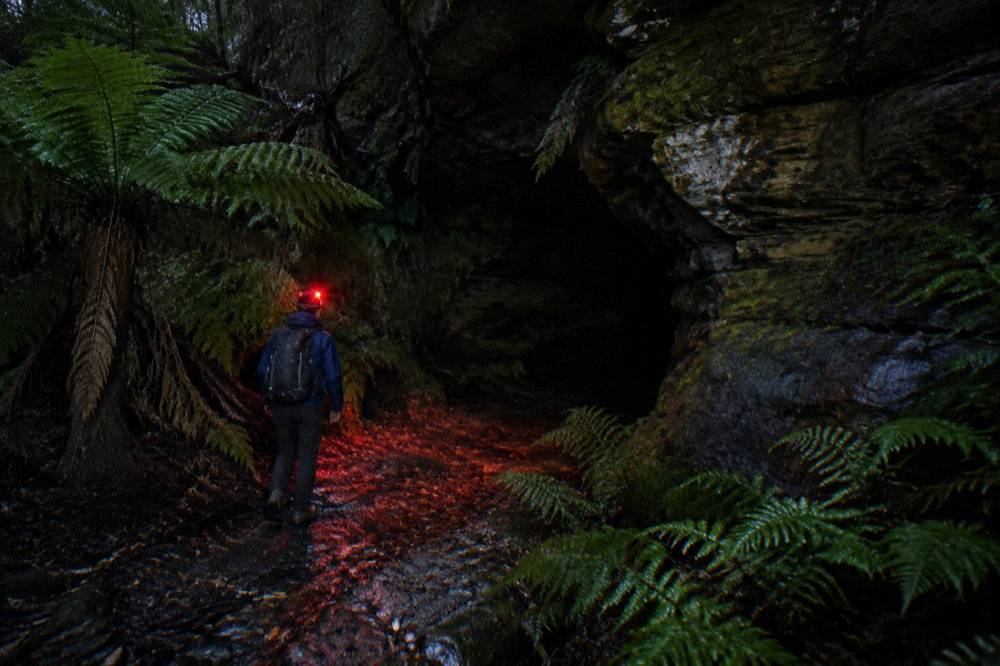
This is the option that answers the underlying question most people are really asking. If you are staying in Sydney without a car, or you simply do not want to spend hours on gravel roads after dark, a guided night hike with hotel pickup is the practical way to see glow worms in the region. The operator, Wildscape Adventures, does not publish the cave's location, but the listing describes a guided bush walk in the dark using headlamps with a red-light mode, a certified outdoor instructor, transport in a small van, parking fees and water. The listing also mentions a chance of other local wildlife along the way, and the whole walk runs in English. If you're weighing other after-dark options in the region, our guide to nighttime activities in the Blue Mountains compares the glow worm hike with self-guided tunnel visits and wildlife spotlighting.
A few honest caveats belong here. Glow worms are wild animals, so no tour can guarantee a sighting, and the operator cancels for bad weather or if minimum numbers are not met. The hike needs moderate fitness and is not wheelchair accessible. Free cancellation applies up to 24 hours before, which makes it a low-risk thing to lock in early, and the listing is flagged as often selling out, which is worth knowing if you are travelling in peak season. Whether food is provided is not settled between the listing sources, so read the inclusions on the live listing before you book.
For readers weighing guided versus independent options more broadly, the site's self drive versus guided glow worm tunnel guide works through the trade-offs, and the night versus day glow worm tours guide explains why the tunnel can be visited in daylight while most other colonies cannot.
Why Glow Worms Need Tunnels, Caves And Darkness
Glow worms are the larval stage of a fungus gnat, not worms, and they glow from a transparent rear end to lure prey into sticky silk snares. They need dark, damp, still air with a food supply nearby, which is why colonies live in caves, overhangs, rainforest gullies and abandoned tunnels rather than open bushland. A lit, busy Sydney rail tunnel offers none of that.
The biology explains the geography. NSW National Parks describes how the larvae spend 6 to 9 months in their glowing stage, catching mosquitoes and moths in silk threads secreted from their mouths, before a 14 day cocoon and an adult life of about 3 days devoted entirely to mating and laying eggs. The light is bioluminescence, a chemical reaction in the rear of the body, and the larvae can switch it off when disturbed, which is why torch discipline and quiet matter so much at any colony.
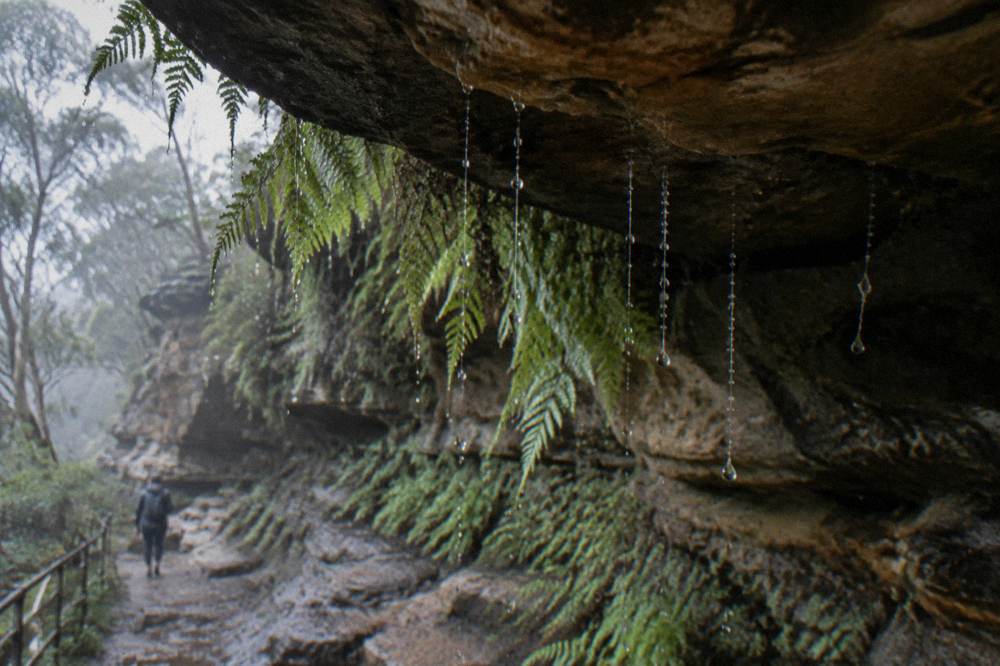
Inside the Wollemi tunnel, the park service's own story describes hundreds of blue-green tail lights across the roof and larvae strong enough to haul in prey as big as a cockroach. This is also why the "is there one in Sydney" question has a firm no attached. The region's colonies, as the NSW National Parks glow worm page explains, sit in sheltered, humid spots with limited airflow and running water nearby: the Wollemi tunnel, caves and disused mines across the Blue Mountains, and rainforest gullies. Sydney's own rail tunnels are lit, ventilated, noisy and dry, the opposite of a glow worm home. The full life story, from 7 to 9 day egg to three day adult, is covered in the site's glow worm biology guide.
How To Plan Your Trip From Sydney
Plan around three realistic options: drive yourself to the Wollemi tunnel, about 2.5 hours each way on partly unsealed roads with no public transport; take a train to Katoomba, about 2 hours from Central, and join a tour from there; or book the Sydney pickup night hike from $128 USD per person. The tunnel itself has no entry fee listed, so the main costs are transport and time.
Here is how the three routes compare for a visitor based in the city:
| Option | Travel time from Sydney | What you see | Best for |
|---|---|---|---|
| Self drive to Wollemi tunnel | About 2.5 hours each way, partly unsealed roads | The 387 m railway tunnel, free to visit, glow worms visible by day | Independent travellers with a car and a full day |
| Train to Katoomba, then a tour | About 2 hours by train from Central | Varies by operator; the direct tunnel operator departs Katoomba Station, from $210 adult per its own page, currency not stated | Visitors staying overnight in the mountains |
| Sydney pickup night hike | Pickup 7:50pm to 8:35pm, back around 11pm to midnight | A glow worm cave behind a waterfall, guided, from $128 USD per person | Visitors without a car who want glow worms the easy way |
Two notes keep the table honest. The direct tunnel operator's prices come from its own website, which does not state a currency, and it offers no Sydney hotel pickup, so it is an alternative to the night hike rather than a like-for-like rival. And while some operators and travel press say displays are often stronger in warm, wet months and after rain, that is opinion rather than official data: no official source ranks months, and glow worms are present at the tunnel year round because it is dark inside even at midday.
Whichever route you take, the etiquette is the same and it protects the colony: stay on the path, keep noise down, shine any torch at the ground or use a red-light mode, never point a beam at the glow worms, and look without touching. The night hike supplies headlamps with a red-light setting for exactly this reason.
One practical detail worth having: track enquiries go through the Blue Mountains Heritage Centre at 270 Govetts Leap Road, Blackheath, open 9am to 4pm daily except Christmas Day, on 02 4787 8877. And if you would rather ride than drive, Katoomba sits about 1.5 to 2 hours from Sydney by road and about 2 hours by regular daily train from Sydney Central, though from Katoomba you still need a vehicle or a tour to close the gap to the tunnel itself.
For everything else around the trip, Blue Mountains Glow Worms keeps a month-by-month ribbon and planning tables on the homepage, and the site's Blue Mountains day trip from Sydney guide covers the wider itinerary if glow worms are one stop on a longer day.
Common Questions About Glow Worms Near Sydney
Is There A Glow Worm Tunnel In Sydney?
No. Sydney itself has no glow worm tunnel. The nearest real one is in Wollemi National Park near Lithgow, about a 2.5 hour drive away, and the bookable Sydney pickup night hike goes to a cave behind a waterfall instead, from $128 USD per person.
How far is the Glow Worm Tunnel from Sydney?
About 2.5 hours by road each way, per NSW National Parks. The final stretch runs along unsealed Glowworm Tunnel Road, which suits a 2WD only in dry weather and a 4WD when wet, and there is no public transport to the carpark.
Is the Helensburgh tunnel the same as the Blue Mountains one?
No. Helensburgh is in the Illawarra region south of Sydney, a different place entirely. No official source was found describing a glow worm tunnel there, so confirm access with the local council before travelling.
Can you see glow worms at the tunnel during the day?
Yes. The tunnel is 387 m long and dark enough inside for glow worms to be visible in daytime, which is unusual; most other colonies need full darkness. The park service still advises quiet, red light and staying on the path.
Is the Glow Worm Tunnel free to visit?
No entry, parking or permit fee is listed on the official track and visitor pages. Your costs are transport and time: a long drive or a guided tour such as the Sydney pickup night hike from $128 USD per person.
Does the Sydney night hike go to the tunnel?
No. The hike goes to a glow worm cave behind a waterfall whose location the operator does not publish. It is the bookable, Sydney pickup way to see glow worms in the dark, but it is not a visit to the Wollemi tunnel.