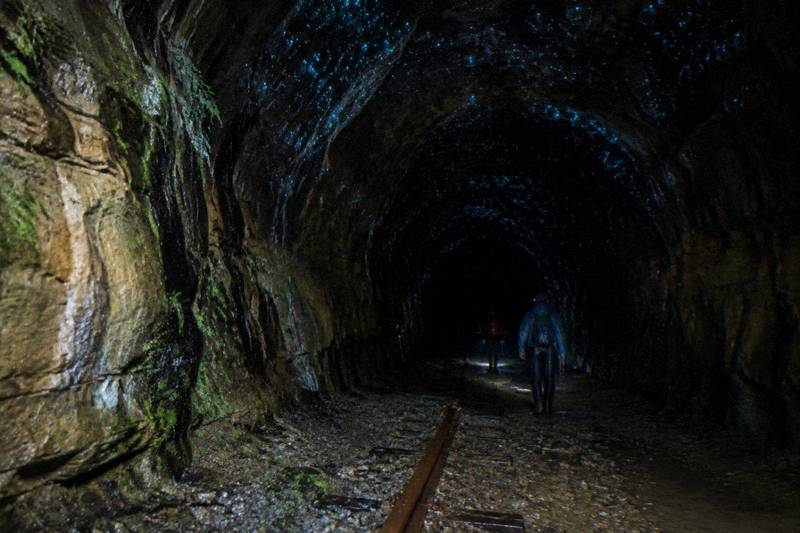
Helensburgh Glow Worm Tunnel Vs Newnes: Which One Is Real
Search for a Helensburgh glow worm tunnel and you will find a tangle of forum posts, old listings and half-remembered trip reports. The name mixes up two tunnels in two different regions, and only one of them is documented by NSW National Parks.
Short answer
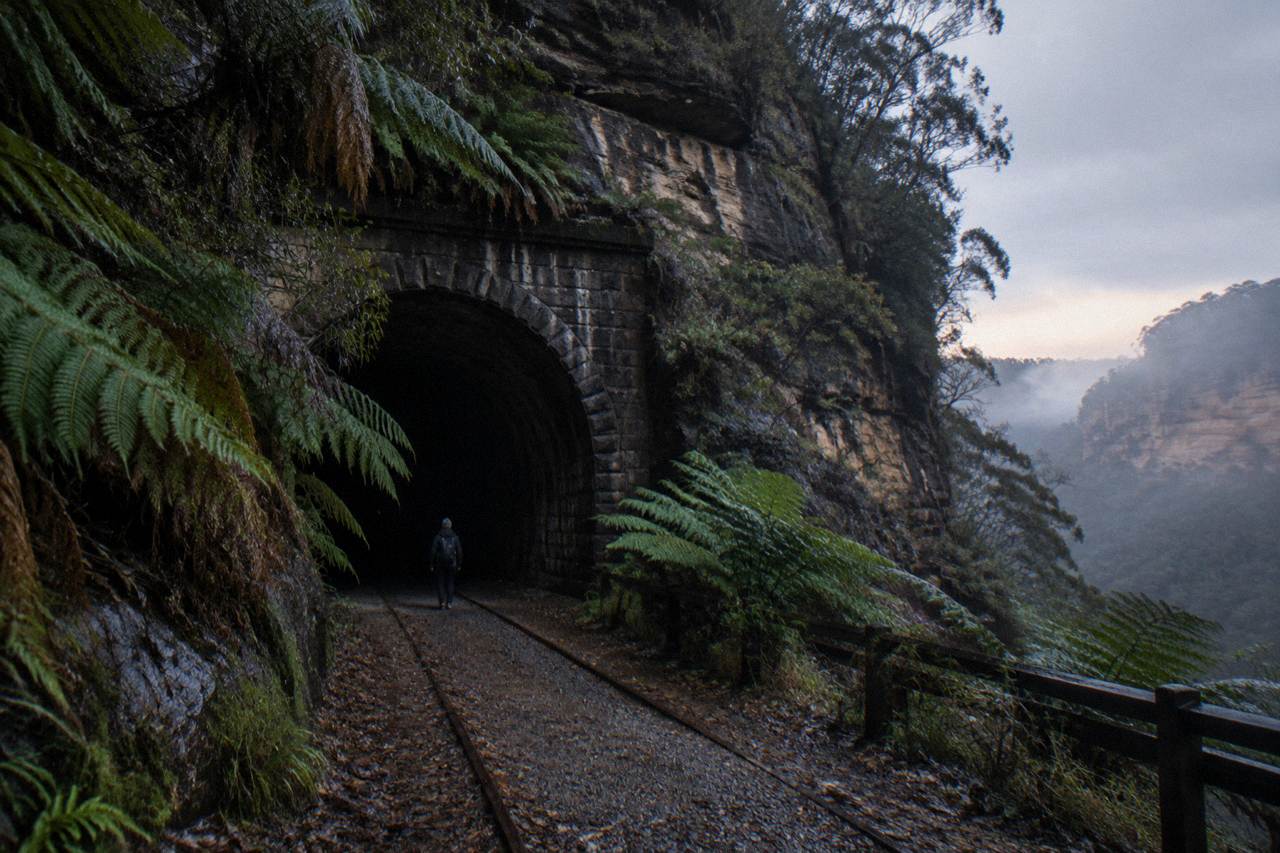
No official source from NSW National Parks, Wollongong Council or a museum describes a glow worm tunnel in Helensburgh, and a past tour listing for it was not live. The tunnel visitors usually mean is the Glow Worm Tunnel at Newnes in Wollemi National Park, about 2.5 hours from Sydney by road, listed as open with no entry fee.
The Helensburgh glow worm tunnel is one of those names that keeps surfacing in travel forums and old blog posts, usually with a photo attached and rarely with an address. Helensburgh is a real town, but it sits in the Illawarra region south of Sydney, a different part of the state from the Blue Mountains. When NSW National Parks talks about a glow worm tunnel, it means one place: the abandoned railway tunnel at Newnes, inside Wollemi National Park near Lithgow, about 2.5 hours from Sydney by road. That is the tunnel with a documented, year-round glow worm colony, a published walking track page, and an entry fee of nothing. If you're planning the drive out that way, our guide to Lithgow and what to do on the town side of the trip covers where to eat, refuel, and stretch your legs before the walk.
The confusion is understandable. Both names describe disused rail tunnels in damp forest, and glow worms do colonise exactly that kind of habitat. But the official record is lopsided. The Blue Mountains Glow Worms site exists because the Newnes tunnel is the one glow worm destination in the region with a full paper trail, and this guide separates it from the Helensburgh name once and for all.
Is There A Glow Worm Tunnel In Helensburgh?
No official source describes a glow worm tunnel in Helensburgh. None of the NSW National Parks, Wollongong Council or museum pages mentions a glow worm tunnel or cave at Helensburgh. A past tour listing for a Helensburgh glow worm experience is not live. No opening hours, fees or access details can be stated, because no official page supplies them.
Helensburgh is a small town in the Illawarra, south of Sydney in the Wollongong local government area. It has old rail heritage, including the historic Helensburgh railway tunnels, and disused tunnels are exactly the sort of dark, damp, still-air habitat that glow worms favour. That habitat logic is probably where the glow worm association began, and it may even be true in a biological sense. The problem is that truth and documentation are different things.
The official record has a gap. The NSW National Parks glow worm page names exactly one tunnel, the Glow Worm Tunnel in Wollemi National Park. Wollongong Council's pages cover Helensburgh as a suburb, with no glow worm tunnel reference. Forum posts and second-hand trip reports are not a substitute for any of that.
A past tour listing for a Helensburgh glow worm experience appeared in earlier searches but was not live, which means it cannot be booked, priced or verified now. Anyone considering a visit should confirm access with the local council before going anywhere near a disused rail tunnel, and treat any third-party claim about hours, fees or safety with caution. There is nothing official to check it against.
The practical takeaway is simple. If you saw the name Helensburgh attached to glow worms somewhere, the source was either unofficial or out of date. The documented glow worm tunnel in New South Wales, the one every official page points to, is at Newnes.
Where Is The Glow Worm Tunnel Visitors Actually Mean?
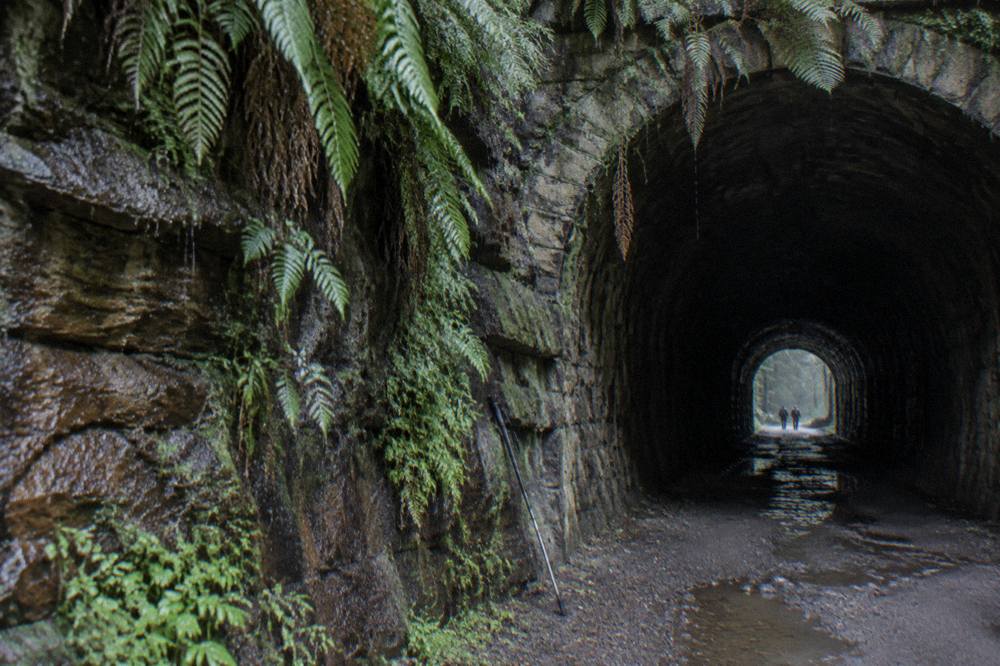
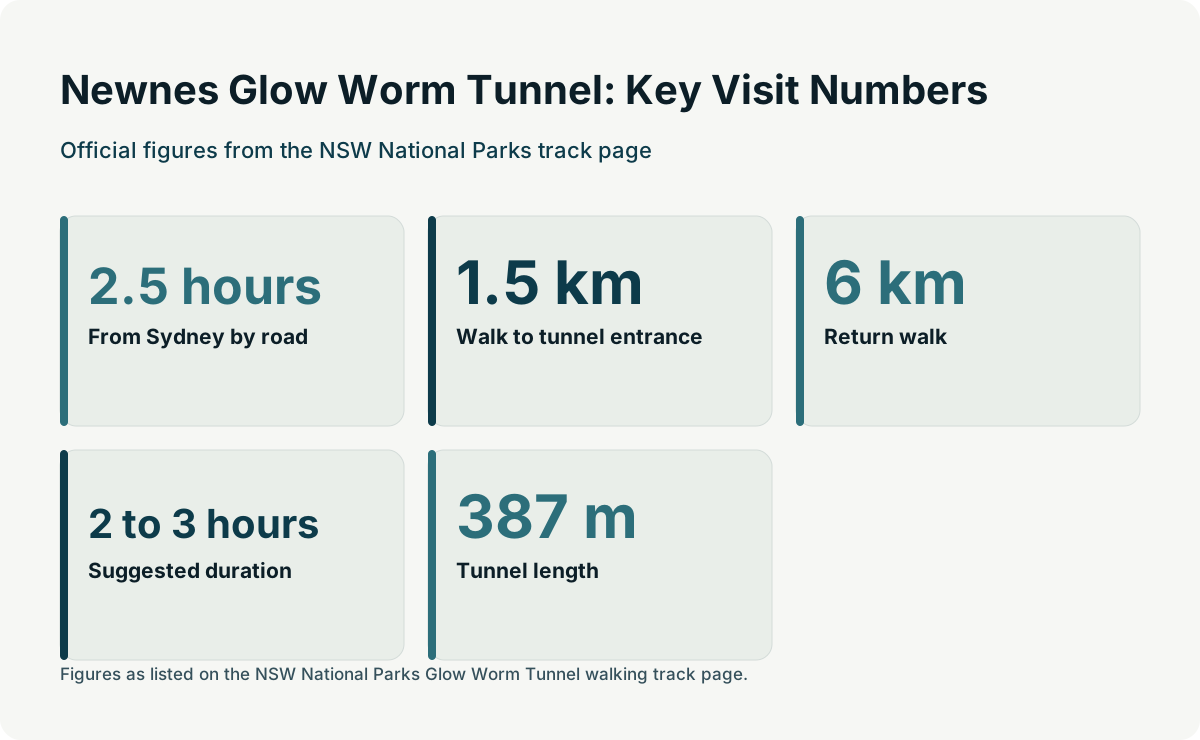
The tunnel behind most Blue Mountains glow worm searches is the Glow Worm Tunnel at Newnes, in Wollemi National Park near Lithgow, about 2.5 hours from Sydney by road. NSW National Parks lists it as open, a 6 km return walk, with no entry fee stated. The tunnel is 387 m long and dark enough inside to see glow worms during the day.
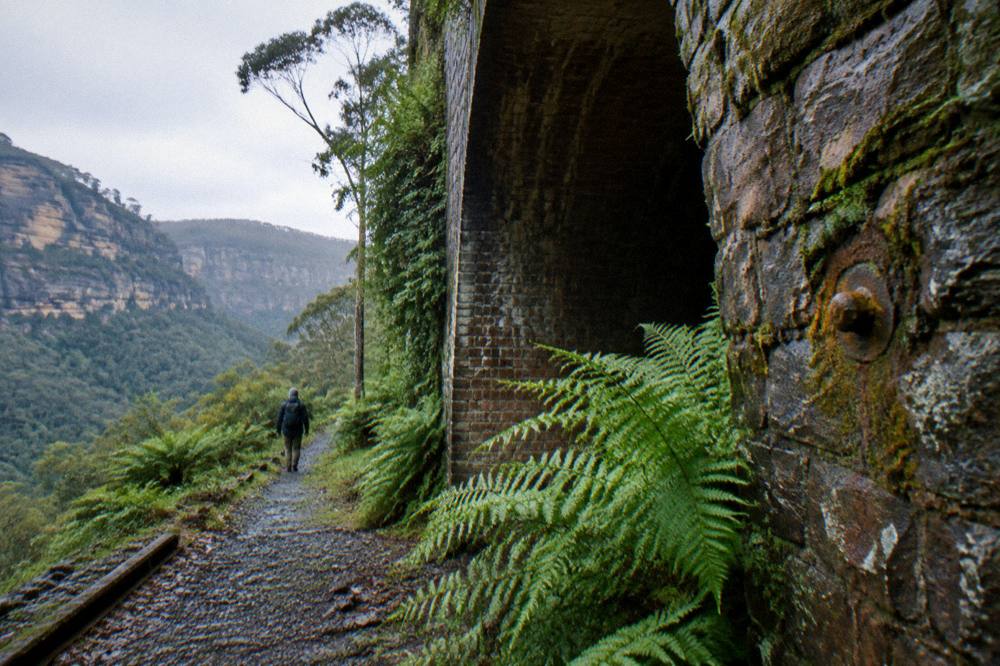
The tunnel was built in the early 1900s as Tunnel No. 2 of the Newnes mining railway, part of the Wolgan Valley Railway serving the shale oil works. When the railway closed, the darkness stayed, and so did the damp. Glow worms, which NSW National Parks identifies as Arachnocampa richardsae, the larval stage of a fungus gnat, colonised the tunnel from nearby rainforest gullies because it offered sheltered, humid, still air with a food supply. The colony is now permanent and visible year round. The same abandoned railway that created the tunnel also left behind the old Newnes works, and our guide to the Newnes Hotel and shale oil ruins covers what still stands there today.
The walking track page on the NSW National Parks site carries the full official detail: the track starts at the carpark at the end of Glowworm Tunnel Road, it is 1.5 km to the tunnel entrance, the return walk is 6 km, suggested at 2 to 3 hours, Grade 3 with some bushwalking experience recommended. There are over 80 steps without handrails and a pinch point 0.5 m wide, so it is not a wheelchair or pram walk.
Because the tunnel is long, it gets dark enough to see glow worms during the day, which sets it apart from almost every other glow worm site in the state. You do not need to time a visit for full darkness, though night visits elsewhere reward patience with fuller displays once eyes adjust. NPWS advises visiting during the week or in spring or autumn, when parking pressure and crowds are lower.
This is also the tunnel that the bookable Sydney night hike does not go to, a distinction worth making early. The guided tour from Sydney runs to a different glow worm site, a cave behind a waterfall in the Blue Mountains whose location the operator does not publish. The Newnes tunnel is a free, self-guided walk, or a direct operator tour if you want a guide on the plateau itself.
For readers who would rather not drive unsealed roads at night to reach glow worms, the Sydney-pickup option is the practical route. The listing describes evening hotel pickup between roughly 7:50pm and 8.35pm, a small van of at most 9 travellers, headlamps with a red-light mode, and a certified outdoor instructor, returning around 11pm to midnight. It is a different experience to the free tunnel walk, and the two suit different travellers, which the rest of this guide works through.
Helensburgh Vs Newnes: How The Two Names Compare
Helensburgh is in the Illawarra south of Sydney, with no official glow worm tunnel documentation and no live tour listing. Newnes is in Wollemi National Park near Lithgow, west of Sydney in the Blue Mountains region, with a fully documented glow worm tunnel listed as open and free to enter. Only one of the two has any official standing.
The comparison table below is the short version of everything above. Region is the first separator: the Illawarra and the Blue Mountains are different parts of New South Wales, roughly two hours apart by road in opposite directions from Sydney. Source standing is the second: NSW National Parks publishes track pages, alerts and biology notes for Newnes and nothing for Helensburgh.
| Helensburgh tunnel | Newnes Glow Worm Tunnel | |
|---|---|---|
| Region | Illawarra, south of Sydney | Wollemi National Park, near Lithgow, Blue Mountains region |
| Official source | None found on NPWS, council or museum pages | Full NPWS track page, alerts and glow worm biology page |
| Glow worm documentation | No official description | Documented colony of Arachnocampa richardsae, visible year round |
| Status | Past tour listing not live | Listed open, check current alerts |
| Distance from Sydney | South of Sydney, Illawarra | About 2.5 hours by road per NPWS |
| Entry fee | Nothing can be stated | No fee listed by NSW National Parks |
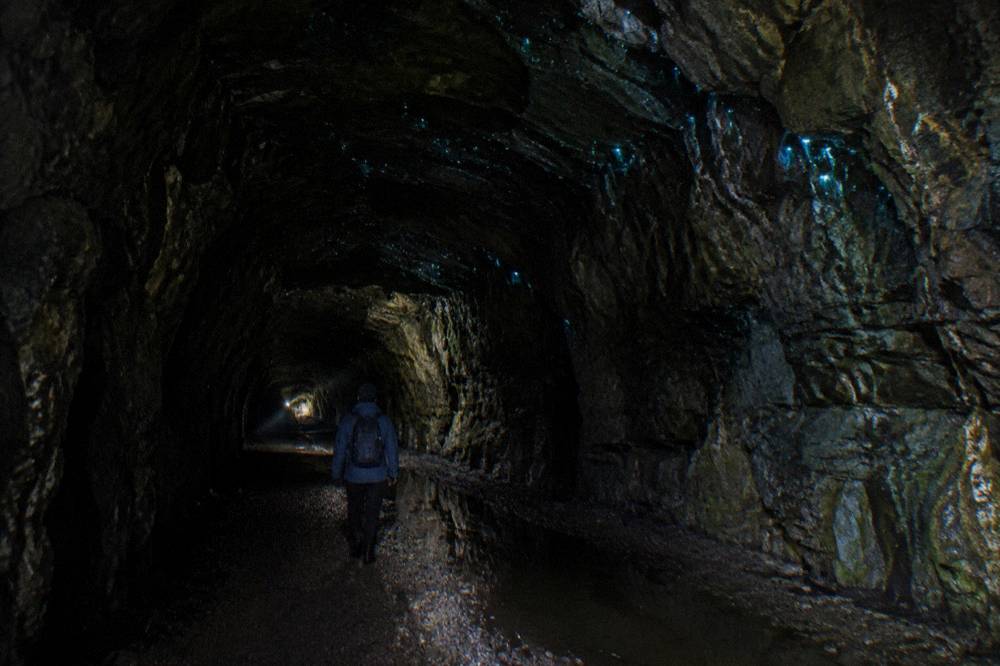
The third row is the one that matters most to a traveller. A tunnel can be real, old and dark without being a place anyone can responsibly send you to see glow worms. The Newnes tunnel has a colony NSW National Parks describes in its own story pages, with hundreds of blue-green tail lights, and a viewing etiquette published alongside it: stay on the path, keep noise down, shine a torch at the ground or use red light, and never point a torch at the glow worms because it can damage their bioluminescence and makes them switch off. The Helensburgh name has none of that infrastructure around it.
There is also a naming trap on the booking side. Searches for a Helensburgh or Blue Mountains glow worm tour sometimes surface listings that go to neither tunnel, such as the Mt Tomah or Bilpin area operators whose status varies, some listed as temporarily closed. The only Sydney-pickup glow worm product with a verified live listing is the night hike, which goes to a cave behind a waterfall, not the Newnes tunnel and not Helensburgh. Keeping the three straight saves a lot of dead-end searching.
The honest answer for anyone set on Helensburgh specifically is to contact the local council first and treat the trip as rail heritage sightseeing, not a glow worm outing. For everyone else, the where-to-go-instead table in the next section is the useful part of this guide.
Where To Go Instead: Documented Glow Worm Spots Near Sydney
The documented options are the free Newnes tunnel walk, a direct operator tour to the tunnel from the Blue Mountains, and the Sydney-pickup night hike to a glow worm cave behind a waterfall. Jenolan Caves has no glow worm mention on its official site, and no evening glow worm walks near Katoomba, Leura or Blackheath appear on NPWS or operator pages.
The table below lists what is actually verifiable. The tunnel is free and self-guided, but it sits at the end of unsealed roads with no public transport, so it rewards a confident driver. The direct tunnel operators run from Katoomba Station or the Zig Zag Railway at Clarence, roughly 5 hours, with no Sydney hotel pickup. The night hike picks you up in Sydney and returns by around midnight, at from $128 USD per person, rated 4.9 from 210 reviews.
| Option | Where | Getting there | Cost basis |
|---|---|---|---|
| Glow Worm Tunnel self-guided walk | Newnes, Wollemi National Park | Own vehicle, unsealed roads, 2WD possible in dry weather, 4WD when wet | No fee listed by NPWS |
| Direct tunnel operator tour | Departs Katoomba Station or Clarence | Own transport to the meeting point | Operator's own page lists $210 adult, currency not stated |
| Sydney-pickup night hike | Glow worm cave behind a waterfall, location unpublished | Evening hotel pickup about 7.50pm to 8.35pm | From $128 USD per person, 4.9 from 210 reviews |
Two cautions belong beside that table. First, the smaller private operators in the Mt Tomah, Bilpin and Wolgan Valley areas exist, but their status varies, with some listings showing no availability or temporary closure, so check the operator's own page before planning around them. Second, glow worms are wild animals. No operator can guarantee a sighting, and the Sydney hike's own terms state it cancels for bad weather or if minimum numbers are not met.
The Jenolan question deserves its own line, because it is the other name that gets tangled into this search. The official Jenolan Caves site focuses on limestone formations and wildlife such as cave crickets and rock-wallabies, and it makes no mention of glow worms anywhere in its cave descriptions or wildlife sections. No tour listing found for Jenolan mentions them either. Jenolan is a spectacular cave system, but it is not a glow worm destination.
The same honesty applies to the famous Blue Mountains lookouts. NPWS and operator pages do not describe glow worms at the Grand Canyon Track, Govetts Leap, Wentworth Falls, Leura or Blackheath. The NPWS page for the Grand Canyon Track describes a 6.3 km Grade 3 loop of 3 to 4 hours with no glow worm mention at all. If a blog post promises glow worms at a lit-up lookout, the official record does not back it.
How To Visit The Newnes Tunnel Yourself
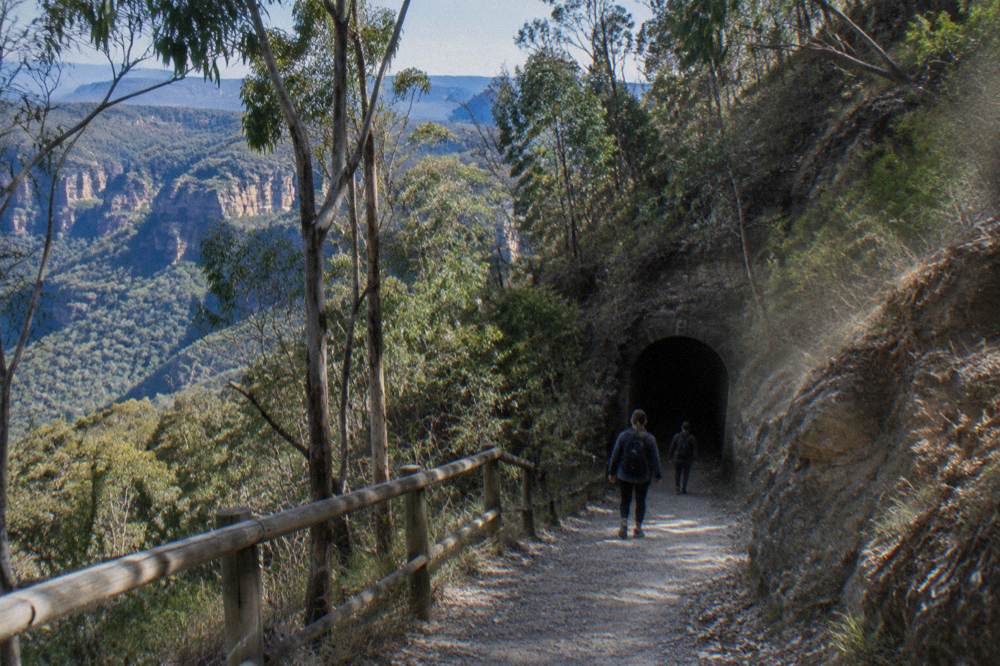
Drive to the Glowworm Tunnel Road carpark near Lithgow, walk 1.5 km to the tunnel entrance, and allow 2 to 3 hours for the 6 km return track. The road is unsealed, 2WD possible in dry weather and 4WD only when wet, parking is limited, and there is no public transport to the carpark. Check NPWS alerts before you set out.
The route detail comes straight from the NPWS visitor info pages. From Lithgow, the common approach runs via Clarence and the Zig Zag Railway, along Old Bells Line of Road for 8.4 km, then Glowworm Tunnel Road for 26.8 km, passing through a 60 m single-lane tunnel just before the carpark. The alternative is State Mine Gully Road, gravel for most of its roughly 39 km. Trucks use Old Bells Line of Road frequently, so drive with care and expect the 40 km/h limit during working hours.
Current alerts matter more here than at most free attractions. Construction works at the Bungleboori precinct run until December 2026, with that site itself closed to visitors, and Glowworm Tunnel Road at the intersection with Lost City North and Maiyingu Marragu is reduced to a single lane from 11 October 2026, with delays of up to 5 minutes. A park fire ban applies across Wollemi National Park from 1 October 2026 to 31 March 2027. None of these close the tunnel track itself, but they shape the drive.
Inside the tunnel, the etiquette is the one published by NSW National Parks on its glow worm page: stay on the path, keep noise to a minimum, let your eyes adjust when you turn off your torch, and shine any torch at the ground or use a red-light option. The NPWS story adds that pointing a torch at the glow worms can damage their bioluminescence and makes them turn their lights off, and the rule is look but do not touch. The tour from Sydney supplies headlamps with a red-light mode for exactly this reason.
Facilities are sparse: two non-flush toilets, no drinking water, one timber bench at the start, and very limited mobile reception, so the Emergency Plus app is advised. Camping is prohibited at the tunnel, with the nearest campground at Newnes via Wolgan Valley Road, and pets, smoking and cycling in the tunnel are all banned. The full planning detail, from what to pack to walking it with children, is covered in the what to bring guide and the glow worm tunnel with kids guide.
For a deeper read on the walk itself, including the steps, the pinch point and the section beyond the tunnel, see how long the glow worm tunnel walk is. The short version: 6 km return, over 80 steps without handrails, and a track beyond the lookout that NPWS says is not suitable for children.
For travellers without a car, or without the appetite for night driving on gravel, the Sydney-pickup hike solves the access problem in one booking. Pickup from your accommodation between about 7.50pm and 8.35pm, a maximum of 9 travellers, water and parking fees included, and free cancellation up to 24 hours before. The trade-off is that it goes to the operator's own cave site rather than the famous tunnel, and the operator deliberately does not publish that location.
Which Option Suits You Best?
Choose the free Newnes tunnel walk if you have a suitable vehicle, want the historic 387 m tunnel itself, and can handle a Grade 3 track. Choose a direct tunnel tour if you want a guide on the plateau without driving yourself. Choose the Sydney-pickup night hike if you want door-to-door transport, a small group and a waterfall cave, from $128 USD per person.
The decision mostly comes down to transport and confidence. The tunnel is free, but it is not cheap to reach: unsealed roads, no public transport, limited parking, and a drive of about 2.5 hours from Sydney each way. For a Sydney visitor without a car, the arithmetic rarely works, which is why the pickup tour exists at all. For a local or a confident driver with a free afternoon, the tunnel is one of the best no-cost wildlife experiences in the state.
Season and timing shift the choice too. Glow worms are present year round, and the tunnel is dark enough for daytime viewing, so a mid-morning arrival works and avoids the worst parking pressure. NPWS suggests weekdays or spring and autumn for thinner crowds. Operators and travel press say displays are often stronger in warm, wet months and after rain, but that is operator and press opinion, not official data, and no official source ranks months by brightness. The month-by-month ribbon on the homepage lays out the weather side of this in detail.
Group shape matters as well. The tunnel walk suits families with sure-footed older children, given the steps and the pinch point, and the glow worm tunnel safety guide covers the hazards honestly. The Sydney hike caps groups at 9 and asks for moderate fitness, with no wheelchair access, so it suits adults and fit teenagers rather than young families.
Budget is the final filter. The tunnel costs nothing to enter, though fuel and a full day disappear. The direct tunnel operators price their own tours on their own pages, with one operator listing an adult guided tour at $210, currency not stated, from Katoomba or Clarence with no Sydney pickup. The Sydney hike is from $128 USD per person with hotel transport both ways, which is the number to beat when comparing total trip cost.
| You are | Best fit | Why |
|---|---|---|
| Sydney visitor, no car | Sydney-pickup night hike | Hotel pickup and drop-off, about 5 hours total |
| Confident driver with a free day | Free Newnes tunnel walk | No entry fee, historic tunnel, year-round colony |
| Blue Mountains based, want a guide | Direct tunnel operator tour | Departs Katoomba Station or Clarence, about 5 hours |
| Family with young children | Daytime tunnel walk, turning back at the entrance | Tunnel interior visible by day, avoid the beyond-lookout section |
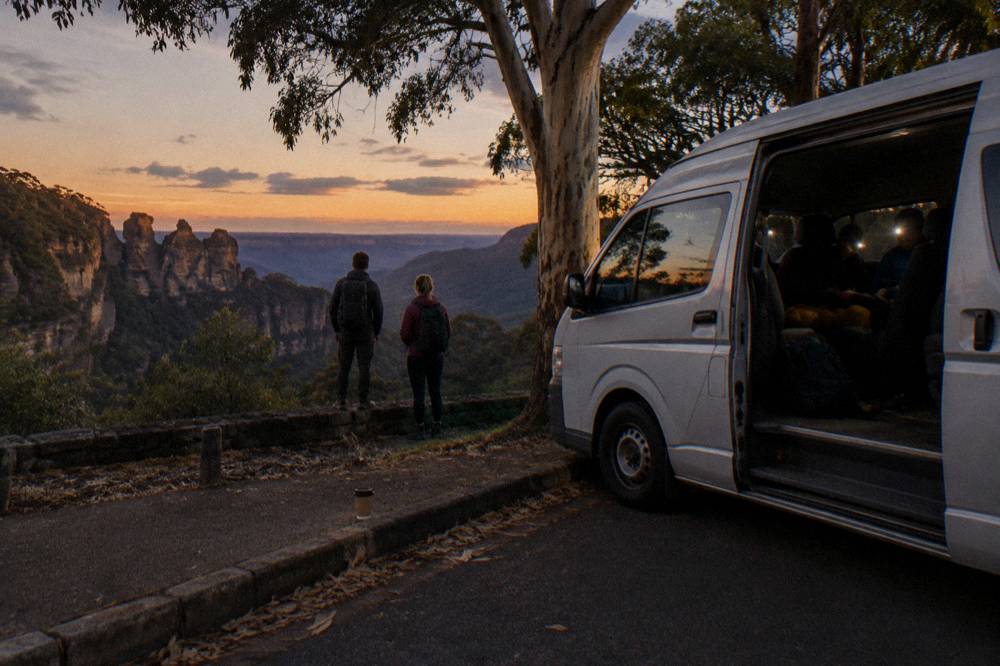
For the Sydney visitor row of that table, the night hike earns its place on logistics alone. It compresses the whole glow worm experience into about 5 hours, door to door, with the operator handling the drive, the equipment and the timing, and the listing is flagged as often selling out, which is worth knowing before you build an itinerary around it.
One more time, plainly, because this is the sentence most searchers need: the Helensburgh glow worm tunnel is not a documented, bookable or officially described attraction, and the Newnes Glow Worm Tunnel is. Everything else in this guide is detail hanging off that single fact.
How The Two Regions Got Confused
Disused rail tunnels in damp forest all look alike in photos, and glow worm habitat logic makes every dark tunnel a plausible candidate, so the names bleed into each other online. Helensburgh has real historic rail tunnels, and the Illawarra climate suits glow worms in principle. But plausible habitat is not documented colony, and no official source connects the two.
The mechanics of the mix-up are worth understanding because they recur across glow worm content generally. A traveller visits one tunnel, posts photos, tags it loosely, and a later reader attaches the images to a different tunnel with a similar description. An old tour listing surfaces in search results even after it stops being bookable. A blog post rounds up "glow worm tunnels in NSW" and includes names it never verified. Within a few years, the Helensburgh name carries an expectation that nothing official supports.
The same dynamic has attached glow worms to Jenolan Caves, to the Grand Canyon Track and to half the lookouts between Katoomba and Blackheath. In each case the test is the same: does a park service, council, museum or operator page actually describe glow worms at that place? For Newnes the answer is a full yes across multiple NPWS pages. For Helensburgh, Jenolan and the lookouts, the answer is no.
That is why this site leans on the Newnes tunnel and the one verified Sydney-pickup hike, and treats everything else with a raised eyebrow. The where to see glow worms in NSW guide applies the same test across the state, and the free glow worm spots and budget guide covers what a no-cost trip actually looks like.
The disambiguation matters most at booking time, because it is the moment money changes hands. A reader who knows only the word Helensburgh may book nothing and see nothing. A reader who knows the Newnes tunnel is the documented site, and that the Sydney hike goes to a separate waterfall cave, can choose between a free walk and a guided night out with full information. That choice is the entire purpose of this page.
Before the closing questions, one practical note on timing. The Sydney hike runs in the evening, with pickup from about 7.50pm and return around 11pm to midnight, so it slots into a Sydney trip without surrendering a whole day. The tunnel walk is a daylight or early-evening commitment with a long drive either side. Travellers trying to do both on one short trip usually find the hike the easier half.
Common Questions About Helensburgh Vs Newnes
Is there a glow worm tunnel in Helensburgh?
No official source describes one. None of the NSW National Parks, Wollongong Council or museum pages mentions a glow worm tunnel or cave at Helensburgh. A past tour listing for it was not live. Helensburgh is in the Illawarra south of Sydney, not the Blue Mountains.
Where is the real glow worm tunnel near the Blue Mountains?
The Glow Worm Tunnel at Newnes, in Wollemi National Park near Lithgow, about 2.5 hours from Sydney by road. It is a 387 m abandoned railway tunnel with a documented year-round glow worm colony, listed by NSW National Parks as open with no entry fee stated.
Can you book a tour to the Helensburgh tunnel?
No live listing was found for a Helensburgh glow worm tour. The bookable Sydney-pickup glow worm product is a night hike to a cave behind a waterfall in the Blue Mountains, from $128 USD per person, and direct operators run tours to the Newnes tunnel from Katoomba Station or Clarence.
Is the Helensburgh tunnel the same as the Newnes tunnel?
No. They are in different regions, the Illawarra and the Blue Mountains area respectively, roughly two hours apart by road in opposite directions from Sydney. Only the Newnes tunnel has official glow worm documentation from NSW National Parks.
Does it cost anything to see the Newnes glow worm tunnel?
No fee is listed on any of the NSW National Parks track, visitor info or alerts pages. Access is by your own vehicle on unsealed roads, with no public transport to the carpark, so fuel and time are the real costs.
Can you see glow worms at Jenolan Caves instead?
The official Jenolan Caves site makes no mention of glow worms in its cave descriptions or wildlife sections, and no tour listing found for Jenolan mentions them either. Jenolan is a limestone cave system worth visiting on its own merits, but it is not a documented glow worm destination.