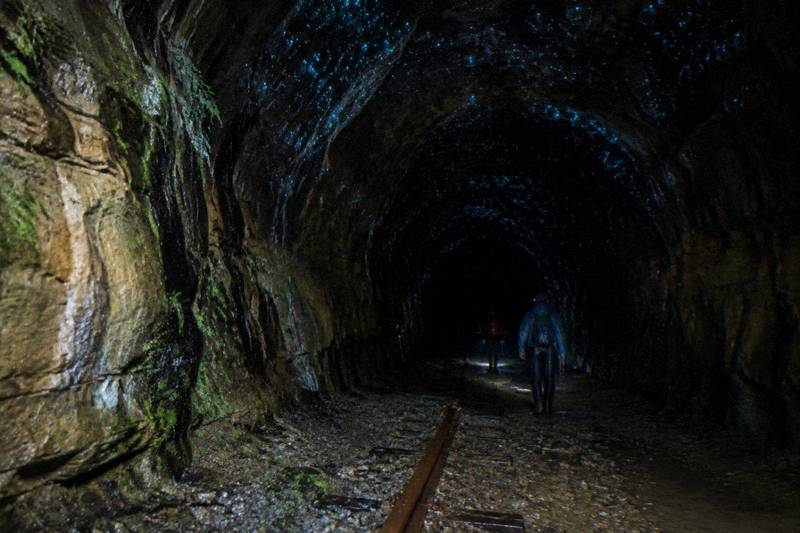
Blue Mountains Day Trip From Sydney With A Glow Worm Evening
Katoomba sits about 1.5 to 2 hours from Sydney by road and about 2 hours by regular daily train, which makes a Blue Mountains day trip one of the easiest escapes from the city. This guide covers the transport maths, the daytime sightseeing options, and the one bookable way to end the day with native glow worms in the dark.
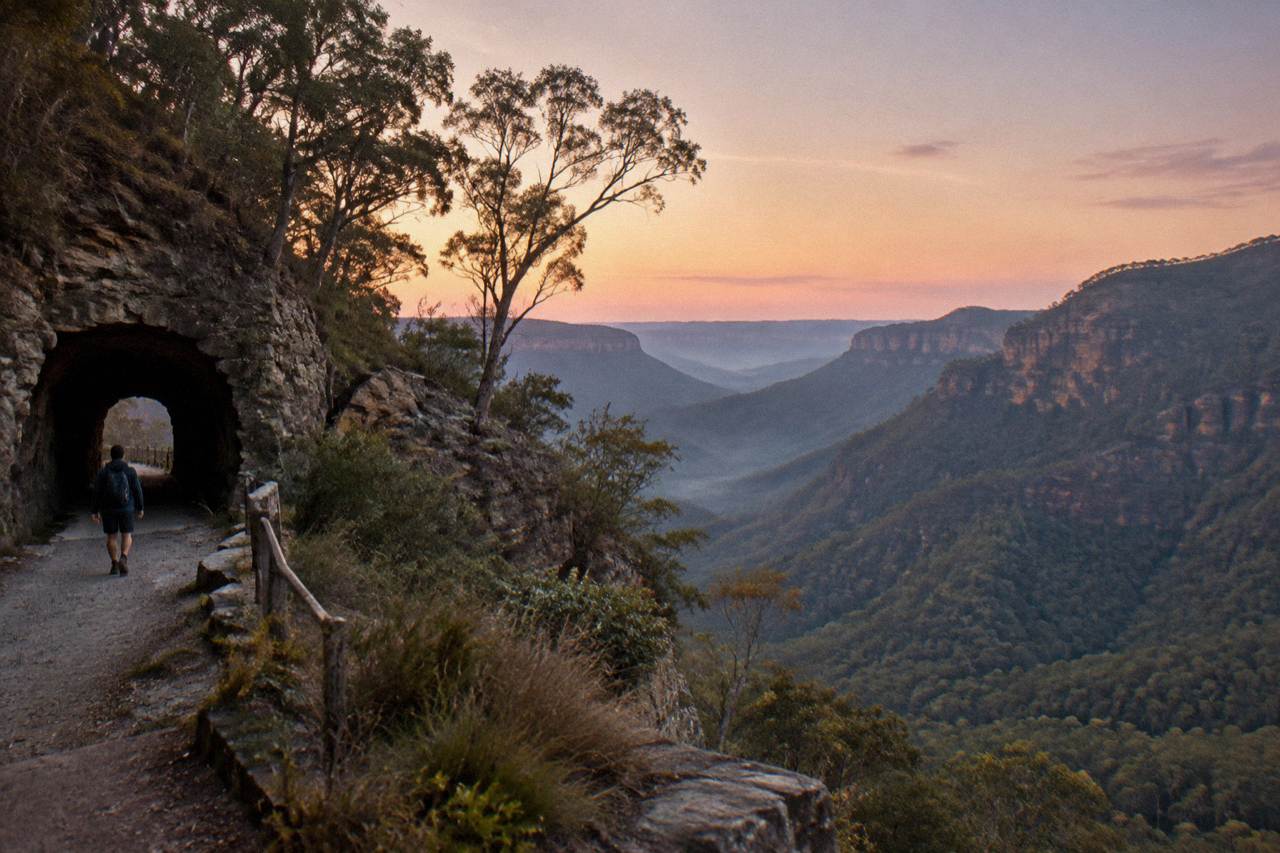
Short answer
A Blue Mountains day trip from Sydney works because Katoomba is about 1.5 to 2 hours away by road and about 2 hours by regular daily train from Sydney Central. Spend the day on lookouts, waterfall walks and sightseeing products, then finish with a guided glow worm night hike from $128 USD per person with evening hotel pickup from Sydney.
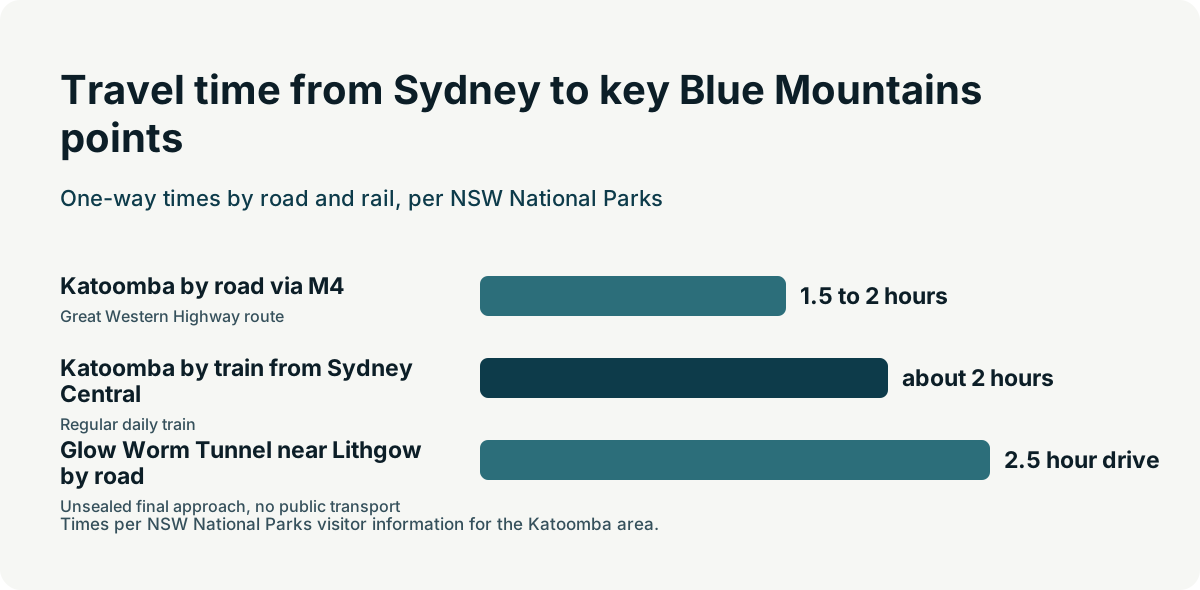
Katoomba is about 1.5 to 2 hours from Sydney by road and about 2 hours by regular daily train from Sydney Central, according to NSW National Parks visitor information for the Katoomba area. Those two numbers are the reason a Blue Mountains day trip is such a well-worn route: the mountains are close enough that you can see the main lookouts, walk to a waterfall and still be back in the city before midnight. The catch is that most day trip plans stop at dinner, and the Blue Mountains region keeps its best light show for after dark.
This guide lays out the full day. It compares driving and catching the train, lists what the daytime sightseeing products actually cover, and explains the one bookable way to end a Blue Mountains day with native glow worms: a small-group guided night hike with evening hotel pickup from Sydney, from $128 USD per person, rated 4.9 from 210 reviews. It also flags what a day trip cannot cover, because the Glow Worm Tunnel near Lithgow is a 2.5 hour drive from Sydney and does not pair well with a single-day Katoomba itinerary. If you're curious about other spots across the country, our guide to where to find glow worms in Australia covers the best viewing locations beyond the Blue Mountains.
How Far Are The Blue Mountains From Sydney, Really?
Katoomba, the main day trip hub, is about 1.5 to 2 hours from Sydney by road via the M4 and Great Western Highway, and about 2 hours by regular daily train from Sydney Central, per NSW National Parks. The Glow Worm Tunnel near Lithgow, by contrast, is described by NPWS as a 2.5 hour drive from Sydney, and it sits on unsealed roads with no public transport at all.
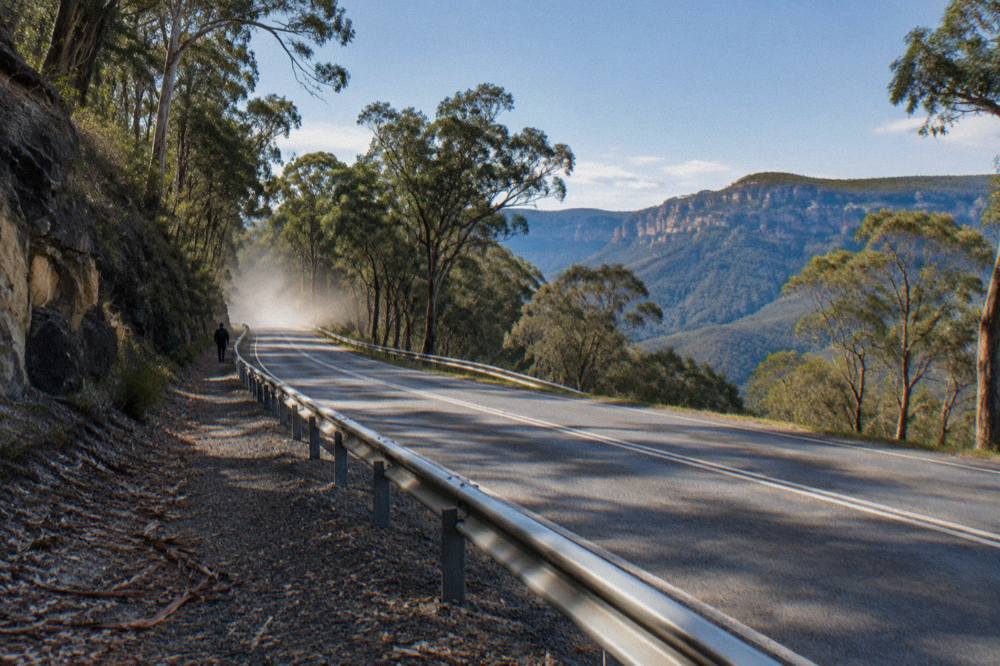
The "Blue Mountains" of a day trip usually means the Katoomba to Blackheath strip: Echo Point, the Three Sisters, Scenic World, Govetts Leap and a handful of waterfall tracks. That strip is the close part of the region. Wollemi National Park, which holds the Glow Worm Tunnel, is a different proposition. NPWS describes that track as just a 2.5 hour drive from Sydney, and the final approach runs along Glowworm Tunnel Road, an unsealed gravel route where a 2WD is possible in dry weather but a 4WD is recommended, and access is by 4WD only when wet. No public transport service reaches the carpark.
The distance gap matters for planning. A day trip built around Katoomba gives you roughly six to eight usable daylight hours in the mountains if you leave Sydney by 9am. Stretching the same day to the tunnel adds at least two hours of driving each way on top, on roads that punish rushing. Most travellers who want both split them across two days, or they skip the tunnel and book the guided night hike instead, which handles all of the after-dark driving for them.
Elevation is the other quiet factor. Katoomba sits at about 1,017 metres, and the Bureau of Meteorology's long-term averages for the town show a mean minimum of 2.6C in July and 12.9C in January. The plateau is genuinely colder than Sydney in every month, so a day trip packed for city weather regularly catches people out at the lookout railings.
Is It Better To Drive Or Catch The Train?
Driving gives you flexibility and direct access to trailheads, with Katoomba about 1.5 to 2 hours from Sydney by road. The train takes about 2 hours from Sydney Central, runs daily, and drops you in walking distance of Katoomba's shops, lookouts and bus connections. Neither option reaches the glow worm sites without extra planning, because the tunnel carpark has no public transport at all.
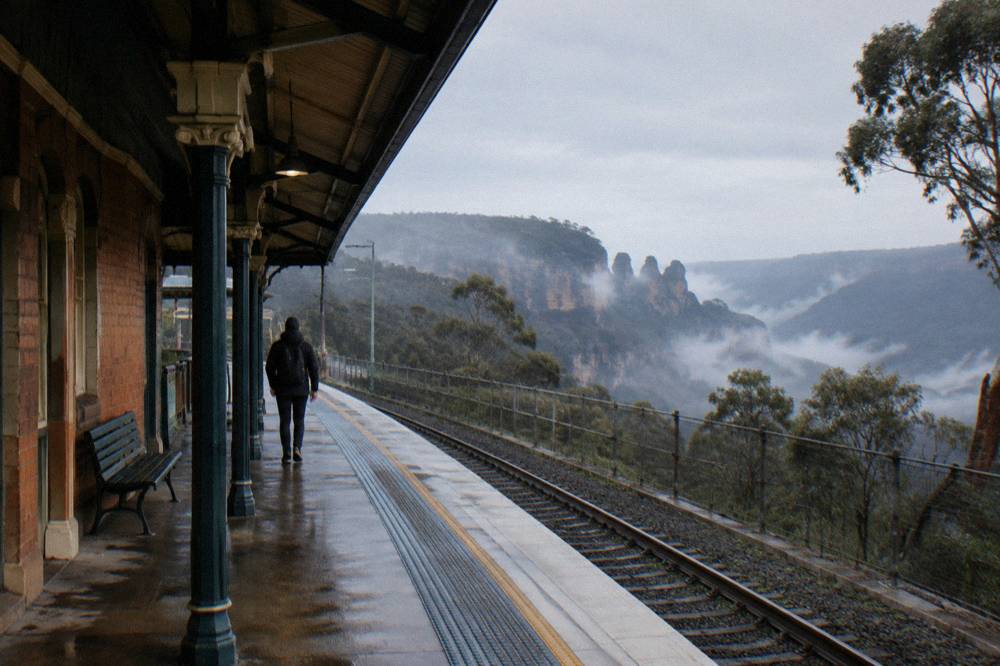
NSW National Parks lists both figures on its Katoomba area visitor information: roughly 1.5 to 2 hours by road via the M4 and Great Western Highway, and about 2 hours by regular daily train from Sydney Central. The train wins on stress. You avoid weekend traffic on the highway, you avoid Katoomba's limited paid parking, and the station sits at the top of the town within reach of the main lookouts. The train loses on reach. Trailheads outside the Katoomba strip, and everything in Wollemi National Park, need wheels.
The car wins on schedule control. You can leave early, chase the light between lookouts, and carry gear that a train day makes awkward. It loses on the same weekend traffic, and on parking, which NPWS warns is limited at peak times across the popular areas. A useful middle path is train up, then use the local hop-on sightseeing buses around Katoomba for the day.
| Option | Time each way | Best for | Watch out for |
|---|---|---|---|
| Drive via M4 and Great Western Highway | About 1.5 to 2 hours to Katoomba | Trailheads, flexible timing, families | Weekend traffic, limited parking at peaks |
| Train from Sydney Central | About 2 hours | Stress-free travel, Katoomba-based days | No reach beyond the town without a bus or taxi |
| Guided tour with Sydney pickup | Varies by product | First-time visitors who want commentary | Daytime sightseeing products do not include glow worms |
| Night hike with hotel pickup | Pickup window about 7:50pm to 8:35pm | Glow worms without any driving | Returns around 11pm to midnight per the operator |
One planning note for anyone weighing the glow worm evening: the guided night hike does not require you to be in the mountains at all. Pickup is from Sydney accommodation in a staggered window of about 7:50pm to 8:35pm, with the operator noting returns around 11pm to midnight. That means the glow worm part of the day can be added to a train day trip, a driving day trip, or even a day spent entirely in Sydney. The listing is flagged as often selling out, which is the operator's own urgency note and worth taking seriously in peak periods.
For a deeper comparison of the glow worm sites themselves, the glow worm tunnel walking track guide covers the self-guided route in full, and the night versus day glow worm viewing guide explains why darkness changes what you see.
What Can You Fit Into One Day In The Blue Mountains?
A realistic single day covers one hub, not the whole region. Katoomba gives you the Three Sisters at Echo Point, Scenic World's rides and boardwalk, and short waterfall walks such as the Katoomba Falls track. Blackheath adds Govetts Leap and the Grand Canyon Track, a 6.3 km Grade 3 loop that NPWS suggests takes 3 to 4 hours. Trying to combine all of it with a tunnel visit ends in a rushed day.
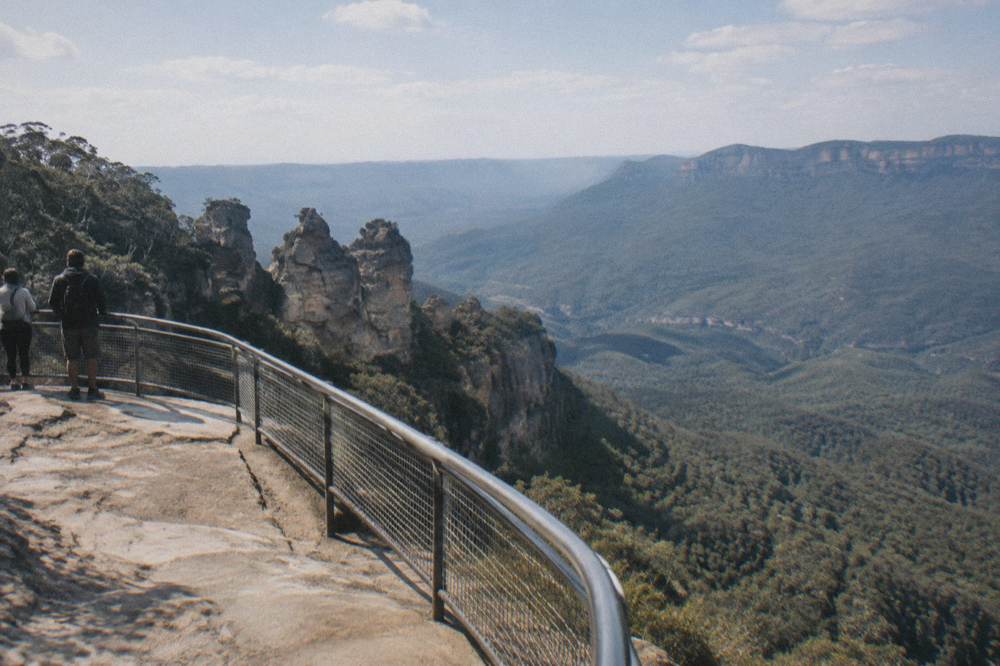
The booking platforms carry a wide range of daytime Blue Mountains sightseeing products: Scenic World entry packages, hop-on hop-off bus passes, waterfall and lookout tours, and sunset or evening scenic tours that return to Sydney. These are other tours that do not include glow worms, and we state them plainly as daytime sightseeing options rather than rivals to anything on this site. Their prices vary constantly by season and package, so check the live listing for any product you are considering rather than relying on a printed figure.
The honest structural fact about the region is that glow worm viewing is not spread evenly across it. NPWS and operator pages do not describe evening glow worm walks near Katoomba, Leura or Blackheath, and no source describes glow worms at the Grand Canyon Track, Govetts Leap, Wentworth Falls, Leura or Blackheath. The documented glow worm sites are the tunnel in Wollemi National Park and a small number of caves, overhangs and disused mines across the region, most of which are in remote locations or in places operators do not publish. That is why the bookable glow worm evening is a guided product with a hidden cave destination rather than a lookout you can walk to after dinner.
| Day trip block | Where | Rough time needed | Notes |
|---|---|---|---|
| Echo Point and the Three Sisters | Katoomba | 30 to 60 minutes | Free lookout, busiest at midday |
| Scenic World | Katoomba | 2 to 3 hours | Paid attraction; pricing on the live listing |
| Katoomba Falls walk | Katoomba | 1 to 2 hours | Short steep sections, Grade 3 style track |
| Govetts Leap lookout | Blackheath | 30 to 60 minutes | Free, dramatic valley views |
| Grand Canyon Track | Blackheath | 3 to 4 hours | 6.3 km loop, Grade 3, no glow worm mention by NPWS |
| Glow worm night hike | Cave location not published | About 5 hours total | From $128 USD, hotel pickup from Sydney |
The pattern that works for most visitors is one anchor activity, one or two lookouts, and a meal in Katoomba or Blackheath before the evening. If the glow worm hike is on the plan, the anchor should finish by late afternoon, because the pickup window opens in Sydney between about 7:50pm and 8:35pm. That timing detail shapes the whole day, and it is worth checking the booking a glow worm tour guide before you commit.
Can You Add Glow Worms To The Same Day Trip?
Yes, and the guided night hike is built for exactly that. It runs about 5 hours end to end, picks up from Sydney accommodation between about 7:50pm and 8:35pm, and returns around 11pm to midnight per the operator. Because the cave's location is not published, the only bookable way to reach it is with the operator, and the hike is capped at 9 travellers with moderate fitness required.
The hike is a guided bush walk in the dark to a cave behind a waterfall where native glow worms can be seen. Headlamps with a red-light mode are supplied, transport runs in a small van, and a certified outdoor instructor leads the group, with parking fees and water included. The listing rates it 4.9 from 210 reviews, from $128 USD per person. The operator does not publish the cave's location, which is standard practice for glow worm sites: light, noise and touching all disturb the larvae, and NSW National Parks notes that glow worms will turn their lights off if disturbed.
Two honesty notes belong here. First, glow worms are wild, and sightings are never guaranteed; the operator cancels for bad weather or if minimum numbers are not met, which protects both the experience and the colony. Second, the meal situation is genuinely unsettled, with the booking platforms disagreeing about food, so plan to eat in Katoomba or Blackheath before heading back toward Sydney rather than assuming dinner is provided.
The question of whether the tunnel fits into the same day trip has a different answer. The tunnel track is a free, self-guided walk, 6 km return with a 1.5 km approach from the carpark, and the tunnel is dark enough inside for daytime viewing. But it is a 2.5 hour drive from Sydney on roads that require care, and NPWS suggests allowing 2 to 3 hours for the walk itself. The how to get to the glow worm tunnel from Sydney guide works through that route in detail for travellers with two days or a strong preference for self-guiding.
How Much Does A Blue Mountains Day Trip Cost?
The glow worm evening costs from $128 USD per person, and the self-guided tunnel walk has no entry fee listed by NSW National Parks. Everything else on a day trip is variable: train fares and attraction pricing sit on the operators' live listings. A realistic planning range for a day trip with the night hike is the hike price plus your transport, food and any paid attractions.
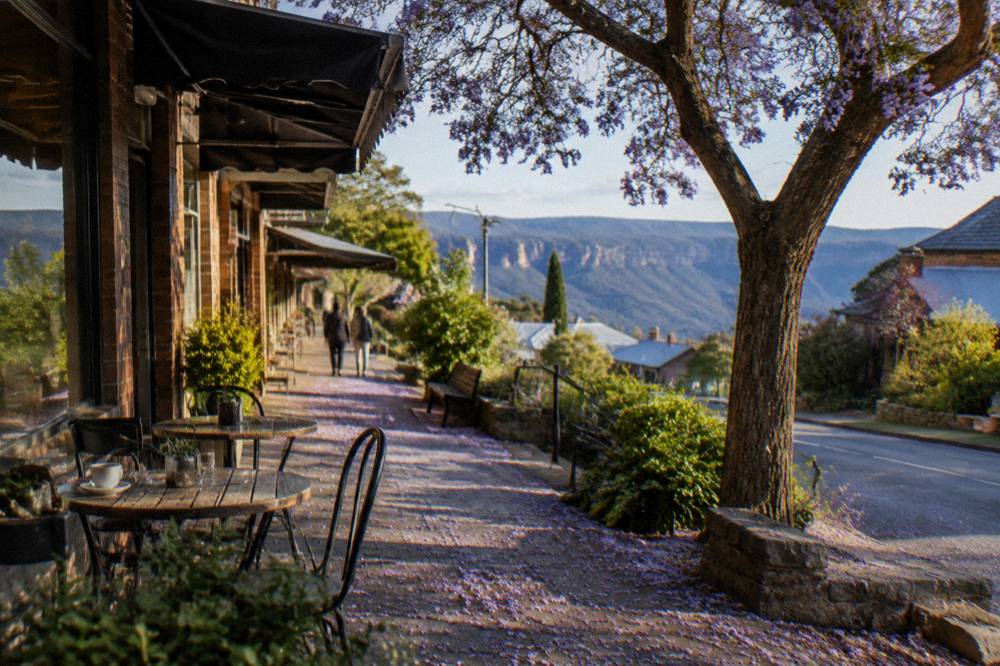
Only one bookable glow worm product exists on this site, and its price is firm: from $128 USD per person, about 5 hours, hotel pickup and drop-off included, free cancellation up to 24 hours before. For the tunnel, the honest figure is zero: none of the NPWS track, visitor info or alerts pages list an entry, parking or permit fee. The costs that sit between those two anchors are transport, food and any paid sightseeing, and those move with season and demand.
| Day trip element | Planning figure | Source status |
|---|---|---|
| Glow worm night hike | From $128 USD per person | Firm, from the listing |
| Tunnel walk entry | No fee listed | NPWS pages list none |
| Train to Katoomba | Check the operator's fare page | No verified official figure on file |
| Scenic World and sightseeing products | Check the live listing | Prices vary by package and season |
| Fuel or car hire | Check a mapping service for distance costs | Not verified |
| Direct tunnel tour operator | Adult $210, currency not stated on its own page | Operator's own price, no Sydney pickup |
One comparison deserves careful wording. Beyond The Blacktop, a licensed NPWS Parks Eco Pass operator, lists its own guided Glow Worm Tunnel tour at $210 for an adult, $159 for a child and $189 for a senior, with a Dry Canyon combination at $275 for an adult, currency not stated on its page, departing from Katoomba Station or the Zig Zag Railway at Clarence over about 5 hours with no Sydney hotel pickup. That is the operator's own price for a different product at a different site, not a rival rate for the $128 hike. Smaller operators around Mt Tomah, Bilpin and the Wolgan Valley exist, but their status varies, with some listings showing no availability.
For the glow worm evening itself, the price you see on the listing is the whole story: from $128 USD per person, with transport, headlamps, parking fees, water and the instructor all inside that figure, and free cancellation up to 24 hours before if the day trip plan changes shape.
For travellers counting every dollar, the free glow worm spots and budget guide collects what the region genuinely offers at no cost, and the Blue Mountains glow worms overview explains where the documented colonies actually are.
What Should Your Day Trip Timeline Look Like?
Leave Sydney by 8 or 9am, spend the late morning at your anchor activity, use the afternoon for lookouts and a walk, eat an early dinner in Katoomba or Blackheath, and be back in Sydney for the glow worm pickup window of about 7:50pm to 8:35pm if the night hike is on the plan. The operator returns groups to Sydney around 11pm to midnight, which makes it a long but achievable single day.
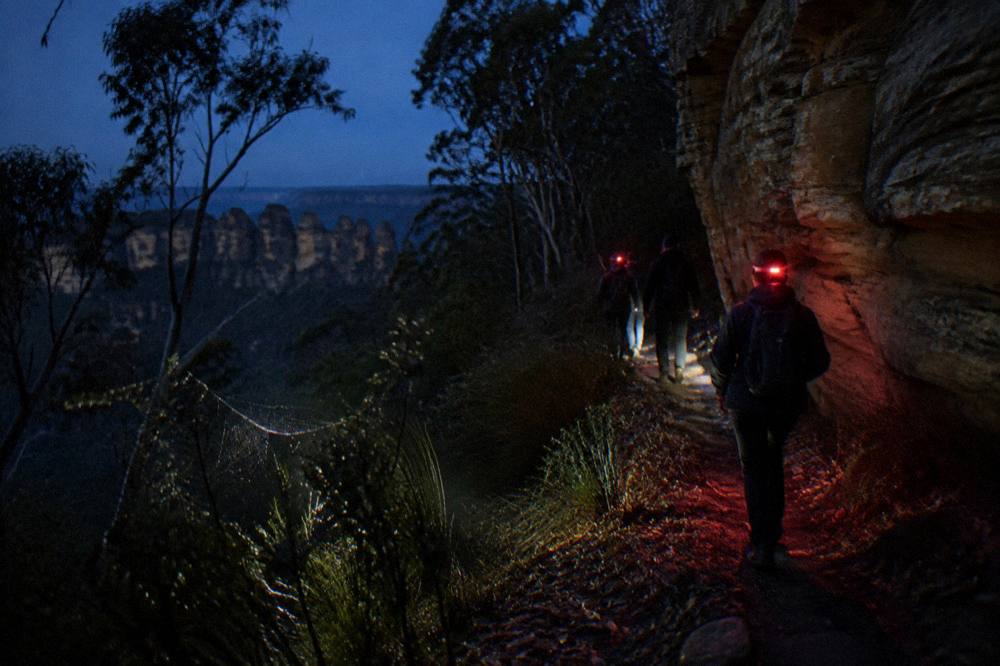
The timeline below assumes the full version: a daytime Katoomba or Blackheath loop plus the evening hike. Trim the middle if you want a gentler day, or drop the hike and keep the tunnel for a second trip.
| Time | Where | What happens |
|---|---|---|
| 7:30am | Sydney | Depart by car or head to Central for the train |
| 9:30am | Katoomba | Arrive, coffee, walk to Echo Point and the Three Sisters |
| 10:30am | Katoomba | Anchor activity: Scenic World or a waterfall walk |
| 1:00pm | Katoomba or Leura | Lunch, then a short gallery or garden stop |
| 2:30pm | Blackheath | Govetts Leap lookout, or the Grand Canyon Track if time allows |
| 4:30pm | Katoomba | Early dinner before the drive back |
| 6:00pm | Road or rail | Head for Sydney |
| 7:50pm to 8:35pm | Sydney | Staggered hotel pickup for the glow worm hike |
| 11pm to midnight | Sydney | Return per the operator's timing |
The one structural risk in that plan is the pickup window. It is staggered across Sydney hotels rather than a single meeting point, so the exact time within the window depends on where you are staying and the night's run order. Build slack into the return leg: a 4:30pm dinner in Katoomba is comfortable, a 6pm one is not. If you are staying overnight in the mountains instead, note that the hike's pickup is from Sydney accommodation, so a mountains-based night needs the tunnel or a private arrangement instead.
Season shifts the timeline too. NSW National Parks advises that the busy periods are summer, weekends and holidays, with limited parking, and suggests visiting during the week or in spring or autumn. Katoomba's mean minimum temperatures run from 2.6C in July to 13.0C in February per Bureau of Meteorology averages, so winter timelines should end with warm layers for the evening regardless of what the city felt like at lunchtime.
Because the evening hike anchors the back half of the day, it is worth locking it in before you fix the daytime blocks: the pickup window and the 9 traveller cap are the two constraints everything else has to fit around.
What Should You Know Before You Book The Evening Hike?
The hike takes up to 9 travellers, needs moderate fitness, is not wheelchair accessible, and includes headlamps with red-light mode, small-van transport, parking fees, water and a certified outdoor instructor. Free cancellation applies up to 24 hours before, and the operator cancels for bad weather or if minimum numbers are not met. The listing is flagged as often selling out.
Those conditions come straight from the operator's listing details, and they describe a genuine bush walk rather than a stroll to a viewing platform. The dark, the uneven ground and the red-light discipline are all part of why the experience works: NSW National Parks explains that torch light pointed at glow worms can damage their bioluminescence and makes them switch off, which is why the tour supplies red-light headlamps and asks guests to stay quiet on the approach. The insects themselves are the larvae of a fungus gnat, Arachnocampa richardsae, spending 6 to 9 months in that larval stage, glowing from a transparent rear end to lure prey into silk snares.
Planning the daytime around the booking is simple once the pickup window is fixed. Book the hike first, since it is the single bookable glow worm product in the region and the one element of the day that cannot be improvised, then fill the daylight hours to suit. The glow worm tour from Sydney guide covers the product itself in more depth for readers deciding whether the evening fits their trip at all.
Common Questions About A Blue Mountains Day Trip
Can you do a Blue Mountains day trip from Sydney?
Yes. Katoomba is about 1.5 to 2 hours from Sydney by road and about 2 hours by regular daily train from Sydney Central, per NSW National Parks, so a full day trip with lookouts, a walk and a meal is comfortably achievable. Adding the glow worm night hike extends the day to around 11pm to midnight, since pickup runs from Sydney accommodation between about 7:50pm and 8:35pm.
Is it possible to do a day trip to the Blue Mountains from Sydney and still see glow worms?
Yes, by booking the guided night hike. It picks up from Sydney accommodation in the evening, runs about 5 hours, and visits a cave behind a waterfall where native glow worms can be seen. The Glow Worm Tunnel near Lithgow is harder to pair with a single-day trip: it is a 2.5 hour drive from Sydney on unsealed roads with no public transport.
What is the best Blue Mountains tour from Sydney?
It depends on what you want from the day. Daytime sightseeing products cover Scenic World, lookouts and sunset returns, and none of them include glow worms. For the after-dark part of the region, the one bookable glow worm product is the small-group night hike, from $128 USD per person, rated 4.9 from 210 reviews, with hotel pickup and drop-off from Sydney.
How much does a Blue Mountains day trip cost?
The fixed figure on this site is the glow worm hike, from $128 USD per person. The self-guided Glow Worm Tunnel walk has no entry or parking fee listed by NSW National Parks. Train fares, attraction entry and food vary, so check the live listings for anything beyond those anchors rather than relying on printed prices.
Is the train or driving better for a Blue Mountains day trip?
The train takes about 2 hours from Sydney Central and suits a Katoomba-focused day, avoiding highway traffic and limited peak parking. Driving takes about 1.5 to 2 hours and suits trailheads outside the town. Neither reaches the Glow Worm Tunnel carpark, which has no public transport and requires a private vehicle on unsealed roads.
Can you see glow worms during the day on a day trip?
Only at the tunnel, which is dark enough inside for daytime viewing because it is 387 m long. The cave on the guided night hike is an after-dark experience by design, and the hike runs in the evening with red-light headlamps. Glow worms are present in the region year round, so there is no season in which a day trip is pointless.
The short version of the whole plan: pick your transport on reach, not just price, keep the daytime to one hub, eat early, and let the guided evening handle the dark. Blue Mountains Glow Worms exists to document exactly this kind of trip, and the region rewards the planning. For the full product detail, see the Blue Mountains glow worm tour page or the self drive versus guided comparison.