Free Glow Worm Spots And Budget Blue Mountains Visits
The Glow Worm Tunnel in Wollemi National Park is the one glow worm site near the Blue Mountains that NSW National Parks lists with no entry fee, and it is a self-guided walk anyone with a car and a torch can do. This guide sets out what free actually costs in fuel, time and effort, the rules that protect the colony, and the honest point at which a paid tour earns its price.
Short answer
The free glow worm option is the Glow Worm Tunnel in Wollemi National Park: a 6 km return walk with no entry fee listed by NSW National Parks, reached by unsealed road about 2.5 hours from Sydney. You pay only for fuel and gear. The Pagoda track alternative is 4 km return. The paid Sydney-pickup cave hike runs from $128 USD per person.
Free and the Blue Mountains go together well, and glow worms are the best example. The main glow worm site in the region, the Glow Worm Tunnel in Wollemi National Park, carries no entry fee on any NSW National Parks page, and no booking or permit is needed to walk in. That makes it one of the few genuinely free wildlife spectacles within reach of Sydney, provided you can get yourself there. The catch is that free does not mean effortless: the walk is 6 km return, the access road is unsealed gravel, and the colony has rules that every visitor is asked to follow. If the gravel road and long walk sound like more than you bargained for, our guide to the best Blue Mountains tour from Sydney explains when a guided glow worm night hike beats going it alone.
This guide walks through the free options in the order a budget planner would ask about them. Where does the free glow worm viewing happen, what does the trip actually cost once fuel and gear are counted, is the self-guided walk a sensible idea for your group, and what does the park service ask of you at the tunnel. There is also a paid option worth knowing about, a Sydney-pickup night hike to a glow worm cave behind a waterfall, and we flag exactly the circumstances where it makes sense to pay rather than drive.
Where Can You See Glow Worms For Free Near The Blue Mountains?
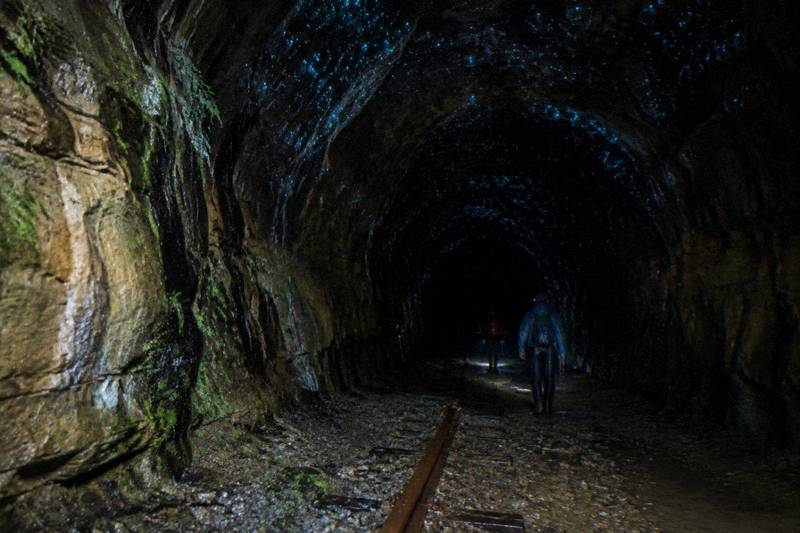
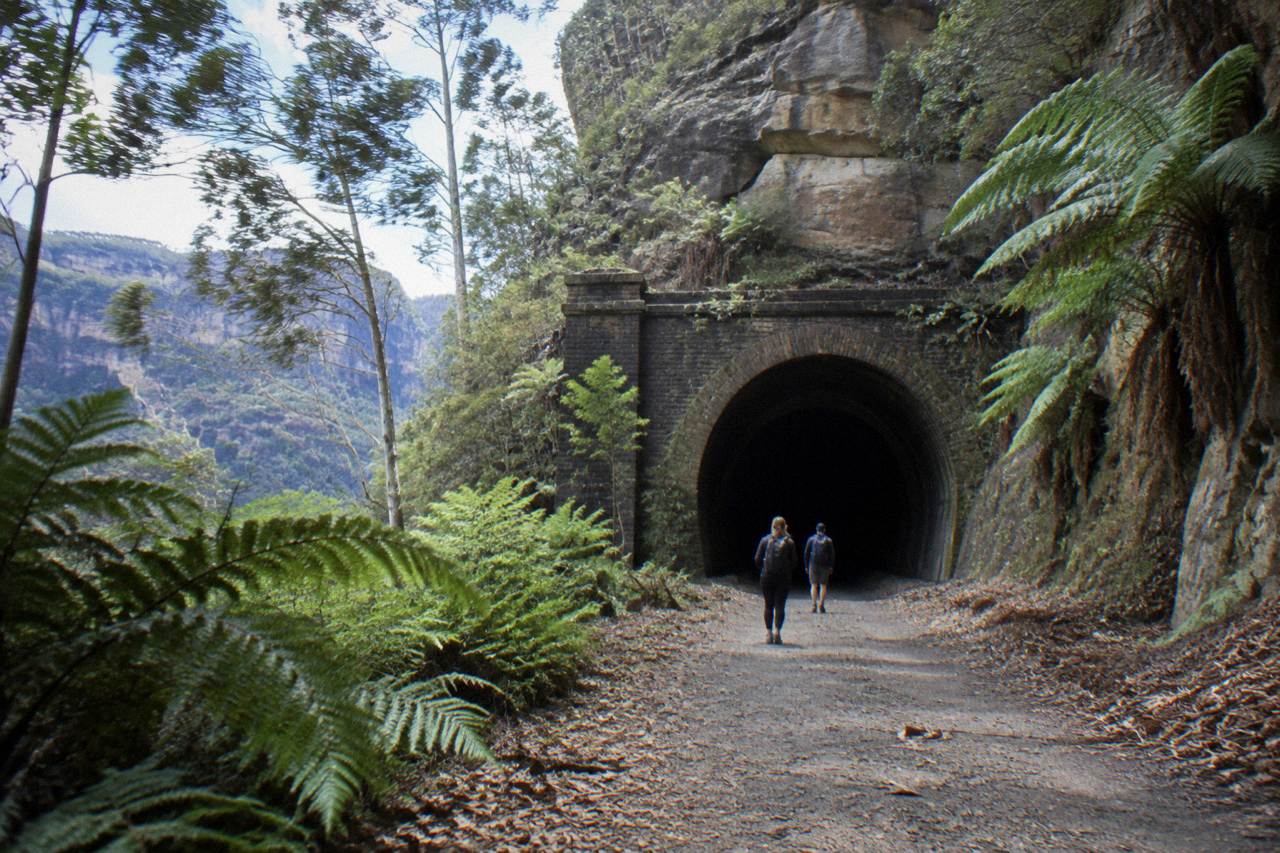
The one free glow worm site documented by NSW National Parks in this region is the Glow Worm Tunnel in Wollemi National Park, near Lithgow, about 2.5 hours from Sydney by road. The tunnel track has no entry fee listed and no permit requirement, and the 387 m tunnel is dark enough that glow worms can be seen during the day. A second free approach, the Pagoda track from the Old Coach Road carpark, is 4 km return.
The tunnel is a relic of the Wolgan Valley Railway, built in the early 1900s to serve the Newnes mining operation. Its darkness and constant damp turned it into exactly the habitat glow worms need: sheltered, humid, still air with water nearby. The colony inside is permanent, and because the tunnel is long and pitch black in its middle, the blue-green lights are visible even at midday. That single fact is what makes the free visit so practical, since you do not need to time your trip to full darkness the way you would at an open-air overhang.
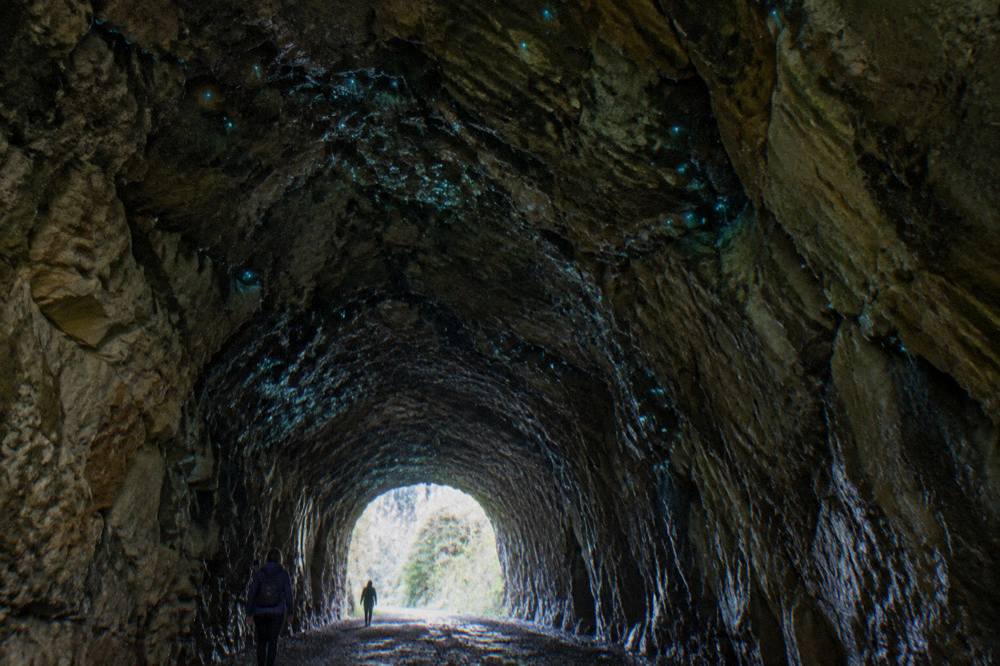
NSW National Parks describes the walk as an easy to moderate Grade 3 track, 6 km return with a suggested 2 to 3 hours, starting at the carpark at the end of Glowworm Tunnel Road. It is 1.5 km from the carpark to the tunnel entrance, then the track can continue 1.5 km on through Penrose Gorge to a lookout over Donkey Mountain and the Wolgan Valley. The full details of the route, the steps and the pinch points are covered in the Glow Worm Tunnel walking track guide, which is worth reading before you commit.
A word on honesty, because the region is full of glow worm claims. No NPWS or operator source we could find describes glow worms at the Grand Canyon Track, Govetts Leap, Wentworth Falls, Leura or Blackheath, and the official Jenolan Caves site does not mention them either. The Helensburgh tunnel sometimes circulates in searches, but it is in the Illawarra south of Sydney, a different place entirely, and no official page we found describes a glow worm tunnel there. If a free glow worm trip in the Blue Mountains region is the goal, the Wollemi tunnel is the documented answer. Once you've settled on the Wollemi tunnel, the official guide to what makes the Blue Mountains special covers the World Heritage listing, the cool mountain climate and the ancient plants you'll pass along the way.
What Does The Free Tunnel Visit Actually Cost?
The tunnel itself costs nothing: no entry fee, no parking fee and no permit appear on any NSW National Parks page for the track. The real costs are the drive, roughly 2.5 hours each way from Sydney on roads that include 26.8 km of unsealed Glowworm Tunnel Road, plus gear you bring yourself: torches with red light, sturdy shoes, water and warm layers. Fuel is not priced here because no verified figure exists.
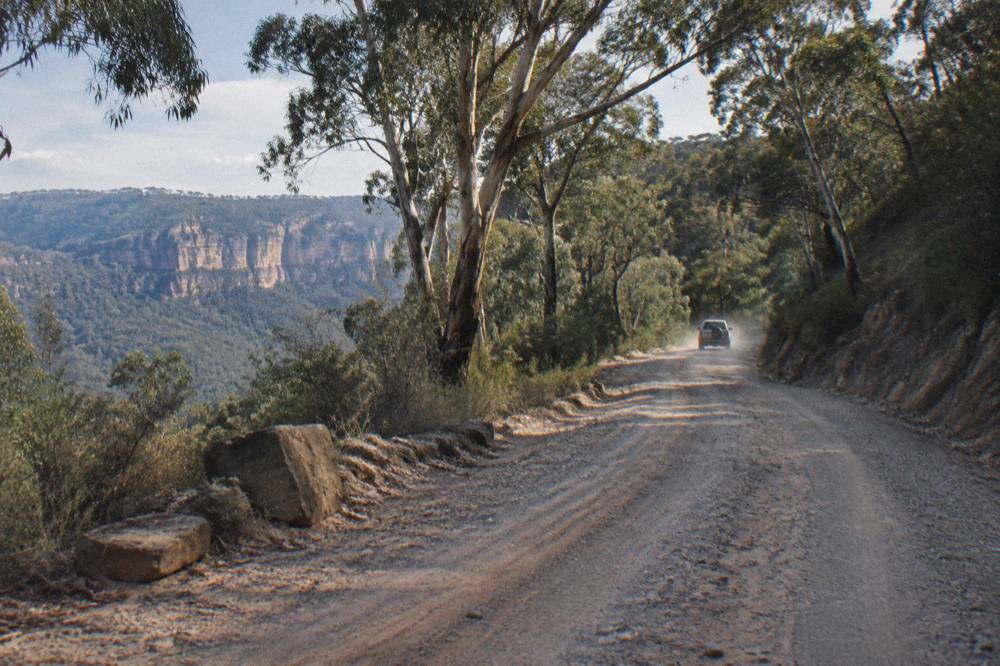
Free means free at the gate, but the wallet still opens for the journey. The route from Lithgow runs via Clarence and the Zig Zag Railway area, along Old Bells Line of Road for 8.4 km, then 26.8 km along Glowworm Tunnel Road to the carpark, passing through a 60 m single-lane tunnel just before the end. The State Mine Gully Road alternative is about 39 km from Lithgow. Both final stretches are unsealed gravel, passable in a 2WD in dry weather, with 4WD recommended and effectively required when it is wet. No public transport reaches the carpark at all.
Here is the honest cost picture, item by item. Fuel prices change constantly and depend on your vehicle, so the table records what you pay for rather than a number we cannot verify.
| Cost item | What you pay | Notes |
|---|---|---|
| Tunnel entry | No fee listed | NPWS pages for the track, visitor info and alerts list no entry charge |
| Parking | No fee listed | Limited spaces at peak times, per NPWS |
| Permit or booking | None required | Track is open, check current alerts before travelling |
| Fuel | Your own vehicle, about 2.5 hours from Sydney | Not priced here; check a mapping service for distance from your start point |
| Gear | Torches with red-light mode, closed shoes, water, warm layers | No drinking water at the carpark, per NPWS |
| Time | 2 to 3 hours for the walk, plus the drive each way | 6 km return, Grade 3 |
The gear line matters more than people expect. There are two non-flush toilets at the carpark, one timber bench, no drinking water and very limited mobile reception, and the park service advises carrying the Emergency Plus app. The tunnel floor is uneven and rocky and may be wet, and the route includes over 80 steps without handrails plus a pinch point half a metre wide after the bridge. None of that costs money, but all of it costs preparation, and the what to bring for the Glow Worm Tunnel guide covers the packing list in full.
For a budget comparison across the region, the how to get to the Glow Worm Tunnel from Sydney guide sets out the driving routes in detail. The short version: the free trip is a full-day commitment from Sydney once the drive, the walk and the viewing time are added together, and it is cheapest when a car with a few friends splits the fuel.
There is one paid option in this region with a verified price, and it exists precisely because the free trip is a big ask for visitors without a car. The Glow Worm Cave Night Hike From Sydney runs from $128 USD per person, rated 4.9 from 210 reviews, about 5 hours door to door, with evening hotel pickup and drop-off within a staggered window of about 7:50pm to 8:35pm. It visits a different site, a cave behind a waterfall, with headlamps, water, parking fees and a certified outdoor instructor included, and free cancellation up to 24 hours before. The listing is flagged as often selling out. We come back to the choice between free and paid below.
Is The Free Self-Guided Walk Right For Your Group?
The free walk suits travellers with a car, daylight to spare and moderate fitness: 6 km return, Grade 3, over 80 steps without handrails, no wheelchair or pram access, and an unsealed road that demands caution in the wet. Visitors without a vehicle, or anyone unwilling to drive gravel at night, will not manage the free option, and that is where the paid hike earns its price.
Honesty first: the free option is genuinely free but not genuinely easy. The park service describes the track as needing some bushwalking experience, with short steep hills, narrow winding timber steps and a barrier with a one-metre gap at the trailhead. The section beyond the lookout is not suitable for children, and the tunnel floor itself is rocky and damp. In dry weather a careful 2WD driver can complete the road, but the park advice is firm that wet conditions mean 4WD only, and the Glow Worm Tunnel to Newnes section can close during or after heavy rain because of rockfall and flood risk.
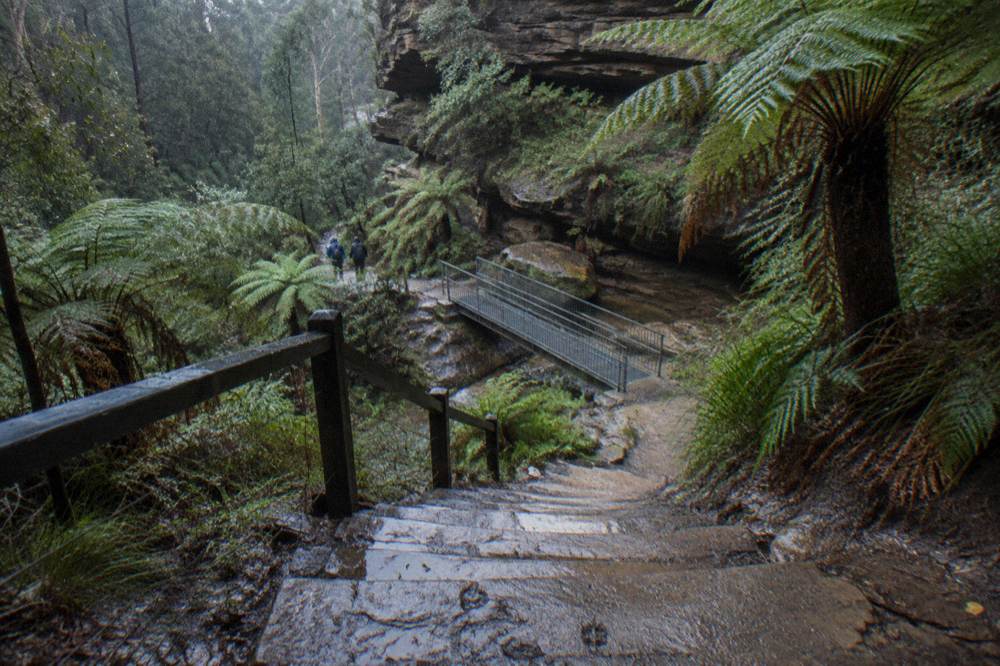
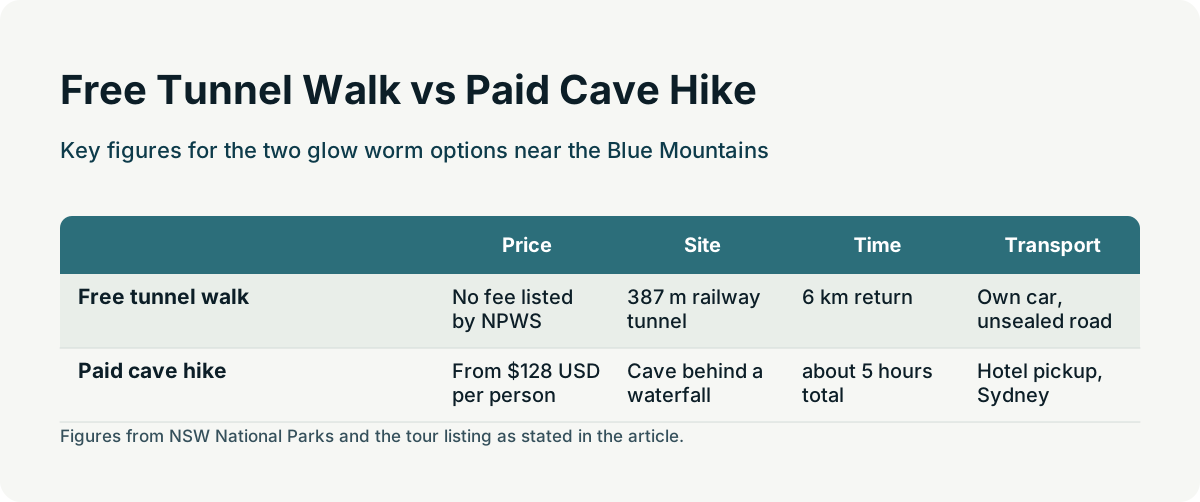
Set the two ways to see glow worms side by side and the trade is clear. The comparison below uses only figures verified on the park pages and the operator's listing.
| Free tunnel walk | Paid cave hike | |
|---|---|---|
| Price | No fee listed by NPWS | From $128 USD per person |
| Site | 387 m railway tunnel, Wollemi NP | Cave behind a waterfall, location not published |
| Distance | 6 km return, self-guided | Guided bush walk at night, about 5 hours total |
| Transport | Your own car, unsealed road, no public transport | Hotel pickup and drop-off from Sydney, about 7:50pm to 8:35pm window |
| Group | As many as you bring | Maximum 9 travellers |
| Gear | Bring your own torch with red light | Headlamps with red-light mode supplied |
| Cancellation | Just do not go | Free up to 24 hours before |
The paid tour, run by Wildscape Adventures, is not a tunnel tour and never claims to be: the operator does not publish the cave's location, and the experience is a guided walk in the dark with a chance of other wildlife along the way. Glow worms are wild animals and no operator guarantees a sighting, and the tour cancels for bad weather or if minimum numbers are not met. What the $128 buys is the removal of every barrier the free trip puts up: the drive, the gravel road, the gear, the navigation and the knowledge of how to behave around the colony. Full detail on that product is in the Blue Mountains glow worm tour guide, and the tour page itself is at Glow Worm Cave Night Hike from Sydney, where you can also Check availability.
The decision rule is simple. If you have a car, a free day and reasonable legs, drive yourself and pay nothing at the gate. If you are car-free in Sydney, travelling with small children, or simply do not want to walk 6 km on gravel roads and bush tracks after dark, the pickup tour is the only bookable glow worm experience in the region with a verified price and rating.
What Rules Protect The Free Colony?
NSW National Parks asks visitors to stay on the path, keep noise to a minimum, let eyes adjust in the dark, and shine torches at the ground or use a red-light mode, never directly at the glow worms, because light disturbance can damage their bioluminescence and makes them switch their lights off. Look but do not touch. Camping, cycling in the tunnel, pets and smoking are all prohibited.
The rules are not bureaucracy, they are biology. The species here is Arachnocampa richardsae, the larval stage of a fungus gnat, and its light is a hunting lure: the transparent rear end glows to pull small insects into sticky silk snares that hang from the nest. The park service notes that glow worms can control their lights and will turn them off if disturbed, so a careless torch beam or a loud voice can switch off the very display you drove 2.5 hours to see. The NPWS guidance is specific and worth copying exactly.
| Rule | What NPWS says | Why it matters |
|---|---|---|
| Stay on the path | Track users must remain on the formed route | Protects habitat and your footing on uneven ground |
| Keep noise down | Minimum noise requested | Glow worms respond to disturbance by switching off |
| Torch use | Shine at the ground or use a red-light option | Direct light can damage bioluminescence and darkens the display |
| Eyes | Turn off your torch and let your eyes adjust | Full displays take time to appear in the dark |
| Touching | Look but do not touch | The larvae and their silk snares are fragile |
| Prohibited | Camping, cycling on the track or in the tunnel, pets, smoking | Listed on the NPWS track pages |
Two honest gaps in the record. NPWS publishes no flash photography rule; if you photograph, red light and patience are the safe default, and the Glow Worm Tunnel photography guide covers technique. And no official source ranks months by glow worm brightness, so any claim that a particular month is best is operator and press opinion, not data.
The wider context for these rules is that the Blue Mountains region holds many glow worm colonies, mostly in caves and disused mines. Free access only stays free if the colony stays healthy, which is why the full background on hazards and etiquette lives in the Glow Worm Tunnel safety guide.
When Is The Best Free Time To Go?
Glow worms are present at the tunnel year round, and the tunnel is dark enough for daytime viewing, so there is no season when the free visit is impossible. NSW National Parks suggests visiting during the week or in spring or autumn, because summer weekends and holidays bring crowds and limited parking. Operators and travel press say displays are often stronger in warm, wet months, which is opinion, not official data.
The official advice is about people, not worms. The park service says it plainly: it is best to visit during the week or in spring or autumn, since it can be very busy with limited parking in summer, on weekends and in holiday periods. For a budget traveller that advice doubles as a comfort guide, because Katoomba's mean minimum temperatures run from 13.0 degrees in February down to 2.6 degrees in July at the Farnells Rd weather station, 1,017 m above sea level, and the tunnel carpark sits in the same cold upland climate. A winter weekday visit is quiet and free, but pack for close to freezing nights.
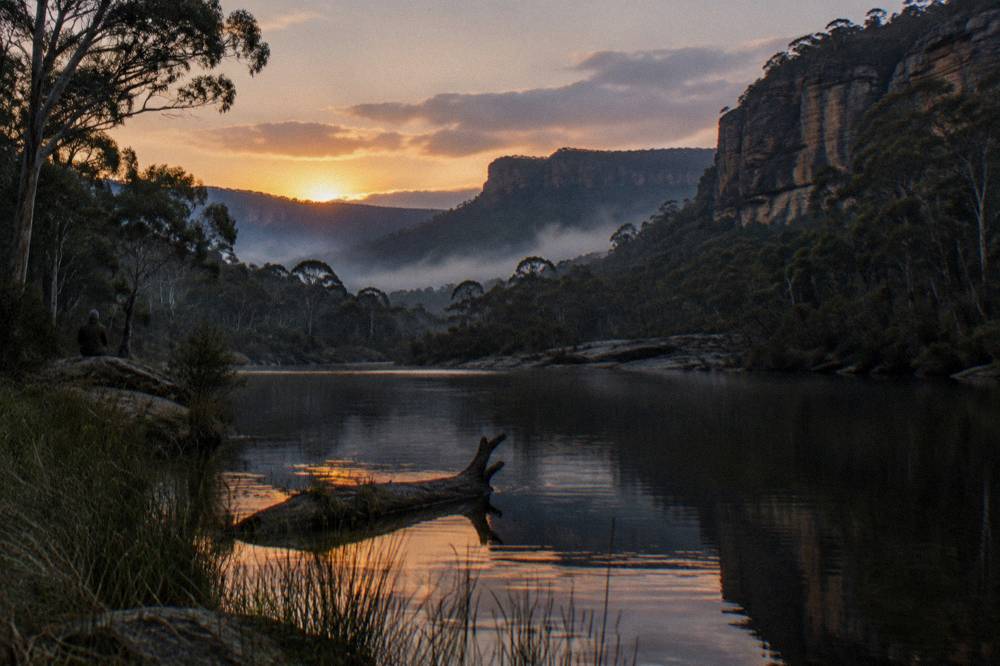
The monthly picture from the Bureau of Meteorology for Katoomba shows why spring and autumn earn the recommendation: mild nights, moderate rainfall and thinner crowds. Mean rainfall peaks in the first three months of the year, at 164.9 mm in January, 177.8 mm in February and 174.6 mm in March, and drops to its lowest from July to September, bottoming at 70.7 mm in September. Operators argue the wet months make the worms glow harder, and one local tour operator's page claims rain increases bioluminescence, but no official source confirms a monthly ranking, so treat that as opinion when planning. The month-by-month ribbon on the homepage of Blue Mountains Glow Worms pulls the same climate data together for a quick scan.
One planning note that matters for the free trip specifically: the tunnel works in daylight, so you do not need to drive the gravel road home in the dark. A mid-morning arrival gives you the display, a picnic and a daylight return, which is the safest and cheapest version of the free visit. The full seasonal analysis, including the daytime viewing question, is in the best time to see glow worms in the Blue Mountains guide and the companion piece on night versus day glow worm tours.
Check the alerts before you set out, whatever the season. The park fire ban in Wollemi National Park applies from 1 October 2026 to 31 March 2027, and current notices include construction works at the Bungleboori precinct until December 2026 and a single-lane section on Glowworm Tunnel Road from 11 October 2026 with delays up to five minutes. None of these close the tunnel track itself, but road works plus gravel plus dusk is a combination worth avoiding.
What Else Is Free To Do Around The Tunnel?
Two free walks sit close to the tunnel route: the Pagoda track from the Old Coach Road carpark, 4 km return, and the Newnes Industrial Ruins walk in Wollemi National Park, which passes coke ovens, brick kilns, beehive kilns and a 15 m retaining wall from the shale oil era. Both are described on NSW National Parks pages with no fee listed, and both fit naturally into a free day trip.
The Pagoda track is the budget insider's route. Instead of driving the full length of Glowworm Tunnel Road, some visitors start from the Old Coach Road carpark and walk 4 km return via the Pagoda track to reach the same tunnel, trading road kilometres for track kilometres. It suits confident walkers with a car that would struggle on the longer gravel run, and it appears on the NPWS story page about the tunnel. The trade-off is simple: less driving, more walking, same free glow worms.
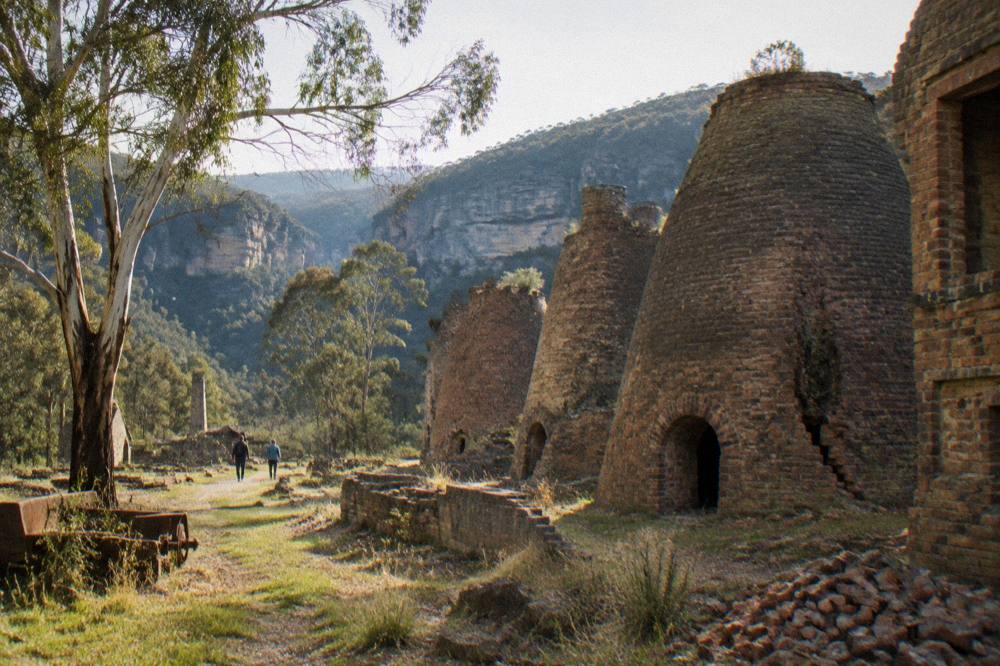
The Newnes Industrial Ruins walk is the other free stop that earns its place on the drive. NSW National Parks describes remnants of the shale oil industry, including coke ovens, brick kilns, paraffin sheds, a 15 m wall known as the Big Wall, and rows of beehive kilns, all reached via Wolgan Road, a mix of sealed and unsealed surface where 4WD is recommended especially in wet weather. The Old Newnes Hotel appears on park pages only as an access landmark, and the nearest camping is the Newnes campground via Wolgan Valley Road, since camping is prohibited at the tunnel itself. The ruins walk is a daylight activity, so it pairs well with a tunnel visit on a loop from Lithgow.
Beyond those, honesty limits the list. The Grand Canyon Track at Blackheath is a splendid free 6.3 km loop, 3 to 4 hours, Grade 3, but no NPWS source mentions glow worms there, so it belongs on a Blue Mountains day out, not on a glow worm itinerary. Lookouts and village walks around Katoomba and Blackheath are free in the ordinary way national park townships are, but the documented free activities on this route are the tunnel, the Pagoda track and the Newnes ruins. For the broader free-and-cheap picture, the Blue Mountains day trip from Sydney guide covers the wider planning. If you want the full loop details anyway, the Grand Canyon walk guide with the glow worm question settled covers what to expect on that track.
For travellers weighing the free day against the paid night, the arithmetic is personal. The free trip costs a tank of fuel, a full day and a set of legs. The paid hike costs from $128 USD per person and about five evening hours, door to door, with the driving, gear and guiding handled. Both see wild glow worms in the dark, both can be undone by weather, and neither guarantees a sighting, because glow worms are animals, not a light switch. Choose the free walk when the journey is part of the fun, and the pickup tour when the worms are the whole point.
Common Questions About Free Glow Worm Spots In The Blue Mountains
Can you see glow worms in the Blue Mountains for free?
Yes. The Glow Worm Tunnel in Wollemi National Park has no entry fee listed by NSW National Parks, no permit requirement and no booking system. The visit is a self-guided 6 km return walk, and the only real costs are fuel, food and gear.
Is the Glow Worm Tunnel really free?
Every NPWS page for the track, its visitor info and its alerts lists no entry, parking or permit fee. The NPWS story page calls it a year-round spectacle that is free. You still pay for fuel and bring your own torches, shoes and water.
What is the cheaper walk to the glow worms?
The Pagoda track from the Old Coach Road carpark is 4 km return, shorter than the standard 6 km return route from the end of Glowworm Tunnel Road. It swaps gravel road driving for extra walking and reaches the same tunnel.
How much does a paid glow worm tour cost compared with going free?
The one bookable glow worm tour in the region with a verified price is the Sydney-pickup cave hike at from $128 USD per person, rated 4.9 from 210 reviews. It includes hotel pickup and drop-off, headlamps and a certified instructor. A direct operator tour of the tunnel from Katoomba lists an adult price of $210 on its own page, currency not stated.
Can you do the free tunnel visit without a car?
Not realistically. No public transport reaches the tunnel carpark, and the final roads are unsealed gravel. Car-free visitors based in Sydney can take a train to Katoomba, about 2 hours from Central, but from there the tunnel still requires a vehicle.
When is the free tunnel busiest?
NSW National Parks says summer, weekends and holiday periods bring crowds and limited parking, and recommends visiting during the week or in spring or autumn. The tunnel is dark enough for daytime viewing, so a weekday morning avoids both crowds and a dark drive home.