Where Can I Park Near The Glow Worm Tunnel?
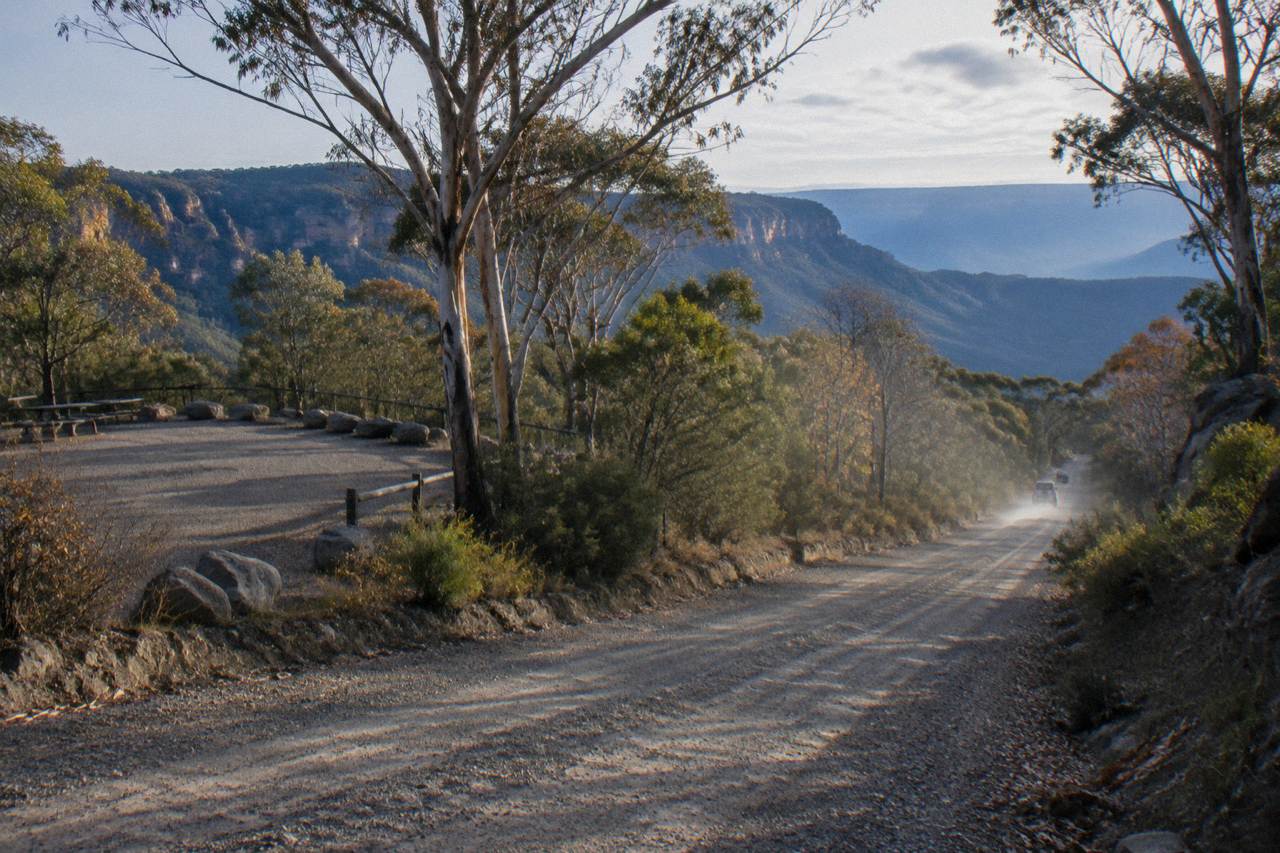
Parking at the Glow Worm Tunnel is limited and sits at the end of 26.8 km of unsealed Glowworm Tunnel Road, 1.5 km from the tunnel. Here is where to park, when it fills, and the Old Coach Road alternative.
Where Can I Park Near The Glow Worm Tunnel?
The parking is at the end of Glowworm Tunnel Road, an unsealed gravel road inside Wollemi National Park, and the walk from the carpark to the tunnel entrance is 1.5 km each way. NSW National Parks lists no parking fee, but spaces are limited and the agency warns the area gets very busy in summer, on weekends and during holidays. One alternative exists at the Old Coach Road carpark, reached via the Pagoda track. For anyone planning a longer trip through the area, the Wollemi National Park wilderness guide covers other tracks, lookouts and camping options nearby.
That is the short version. The long version matters, because the drive to this carpark is a bigger commitment than the walk itself, and arriving at a full carpark after an hour on gravel is a bad way to start a night looking for glow worms. This page lays out exactly where the parking is, what the road to it is like, when it fills, and what the alternatives are if you would rather not gamble on a space. Before you commit to the drive, check the full guide to driving to the Glow Worm Tunnel for what the unsealed stretch and the walk from the carpark actually involve.
The tunnel itself is a 387 m abandoned railway tunnel, built in the early 1900s for the Newnes mining railway, and it is dark enough inside that the glow worm colony can be seen during the day. It sits near Lithgow in Wollemi National Park, about a 2.5 hour drive from Sydney according to NSW National Parks. The carpark is the practical gateway to all of that, and it is worth understanding before you set out.
One thing to settle early: no public transport reaches this carpark. NSW National Parks lists road access only, and the mapping of bus and train options confirms it. If you are not driving yourself, your realistic options are a licensed tour operator with a vehicle, or the Sydney-pickup night hike this site features, which collects guests from their accommodation and includes parking fees in the price. More on that option later in this article.
If you are planning the full drive, the companion guide to the Glow Worm Tunnel road and car park walks the route in more detail, and the question of whether you can drive to the tunnel is answered separately for anyone weighing a 2WD against a 4WD.
For readers who would rather not read the whole page, the essentials are in the table below. Everything in it comes from NSW National Parks visitor information for the Glow Worm Tunnel walking track, which is the authority on this road and this carpark.
| Detail | What NSW National Parks says |
|---|---|
| Main carpark | End of Glowworm Tunnel Road, 1.5 km walk to the tunnel entrance |
| Parking fee | None listed on the track, visitor info or alerts pages |
| Capacity | Limited, and very busy in summer, on weekends and in holiday periods |
| Road surface | Unsealed gravel; 2WD possible in dry weather, 4WD recommended, 4WD only when wet |
| Long vehicles | No access for long vehicles |
| Alternative carpark | Old Coach Road carpark, via the Pagoda track, 4 km return to the tunnel |
| Facilities | 2 non-flush toilets, one timber bench, no drinking water |
| Mobile reception | Very limited; the Emergency Plus app is advised |
How Do I Get To The Glowworm Tunnel Road Carpark?
From Lithgow, the signposted route runs via Clarence and the Zig Zag Railway, along Petra Avenue and Old Bells Line of Road for 8.4 km, then along Glowworm Tunnel Road for 26.8 km to the carpark. Just before the carpark the road passes through a 60 m single-lane tunnel. An alternative approach uses State Mine Gully Road, gravel for most of its roughly 39 km, which becomes Glowworm Tunnel Road.
The Clarence route is the one NSW National Parks describes as the standard access. Old Bells Line of Road carries frequent trucks, and a 40 km/h limit applies during working hours, so the first stretch is slower than the map suggests. Once you turn onto Glowworm Tunnel Road the surface is unsealed gravel for the long middle section, and the condition of that gravel decides what kind of car you need. In dry weather a 2WD can make it. After rain, NSW National Parks says access is by 4WD only, and the road is not a place to test that advice.
There is a practical wrinkle for anyone driving out in the second half of 2026. NSW National Parks alerts list construction works at the Bungleboori precinct, in the adjoining Gardens of Stone State Conservation Area, continuing until December 2026, with the Bungleboori site itself closed to visitors. On Glowworm Tunnel Road, the intersection with Lost City North and Maiyingu Marragu is reduced to a single lane from 11 October, with delays of up to 5 minutes. None of that closes the tunnel carpark, but it adds time and it changes the feel of the drive, so check the official track page and its alerts the week you travel.
A second alert worth knowing about: a park fire ban applies across Wollemi National Park from 1 October 2026 to 31 March 2027, prohibiting campfires and solid-fuel barbecues. That does not affect parking, but if you were picturing a fire at the end of the road, picture a thermos instead.
The carpark itself is a modest clearing at the road's end. Two non-flush toilets stand there, one of them ambulant-accessible, and a single timber bench marks the start of the track. There is no drinking water, no tap, no kiosk, and mobile reception is described by NSW National Parks as very limited, which is why the agency suggests loading the Emergency Plus app before you lose signal. Treat the carpark as a trailhead with a toilet, nothing more, and carry everything you need for the walk in with you.
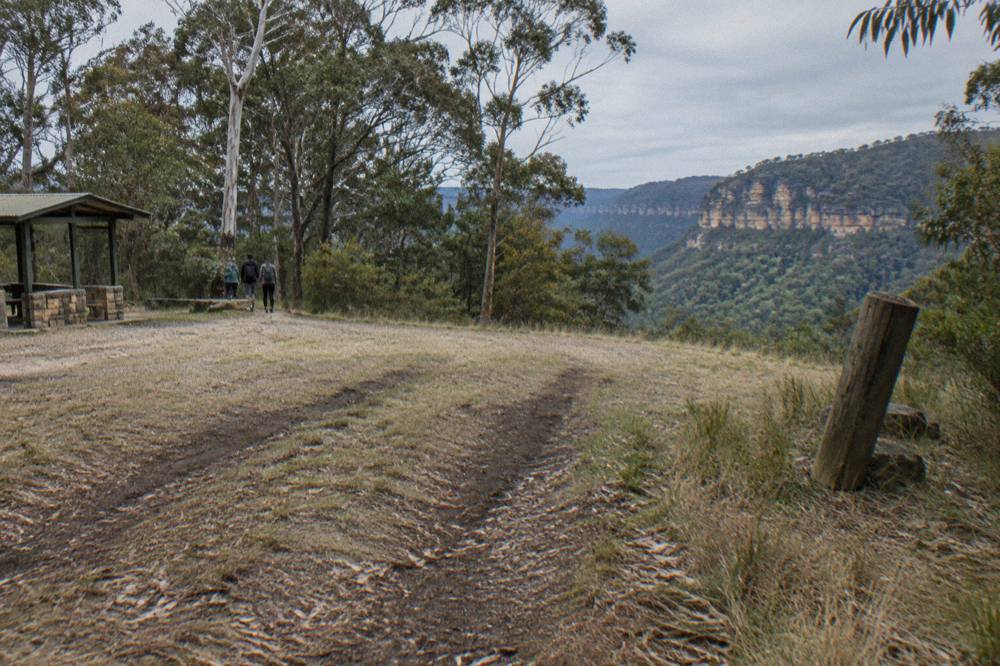
The walk from the carpark is 1.5 km to the tunnel entrance, and the full walking track is graded Grade 3 with some short steep hills and over 80 steps without handrails, including about 30 stone steps down to a bridge and about 30 narrow winding timber steps back up. There is a pinch point about 0.5 m wide after the bridge, and the trailhead barrier has a 1 m gap. None of it is wheelchair or pram accessible. The parking, in other words, is only half the planning problem, and the Glow Worm Tunnel walking track guide covers the on-foot half in full.
Is The Carpark Ever Closed?
The carpark itself has no gate, no listed opening hours and no booking system, and NSW National Parks lists no entry fee for the track or the parking. What closes is the road, effectively, when rain turns the gravel into something a 2WD cannot handle, and occasionally the tunnel-to-Newnes track section after heavy rain because of rockfall and flood risk. The alerts page is the single source of truth for both, and it changes week to week.
When Is Parking Hardest To Find?
Summer, weekends and school holidays, in that combination, are when the limited parking at the carpark fills. NSW National Parks says it directly: it is best to visit during the week or in spring or autumn, because it can be very busy and there is limited parking during summer, weekends and holiday periods. A midweek morning in May is a different world from a Saturday in January.
The reason is arithmetic more than anything else. The carpark was built for a remote railway maintenance access road, not for a glow worm tourism boom, and the road was never designed as a high-volume tourist route. When the spaces run out, the overflow problem lands on the shoulders of a narrow unsealed road, which is exactly where NSW National Parks does not want cars parked. Arriving early is the standard advice, but arriving early on a summer Saturday still means joining a queue of people who had the same idea.
Spring and autumn carry a second advantage beyond the crowds. The glow worms are present year round, and the tunnel is dark enough inside that daytime viewing works in any season, so a weekday spring visit loses nothing on the spectacle while gaining a great deal on the parking. Operators and travel press add the opinion that displays are often stronger in warm, wet months and after rain, but that is operator and press opinion rather than official data, and NSW National Parks publishes no month-by-month ranking. The month-by-month ribbon on the homepage of Blue Mountains Glow Worms reflects that same honest position.
There is one more timing consideration that is easy to miss. The tunnel is a daytime-capable site, so you do not need darkness to see the glow worms there, but if you are hoping for the fuller effect of eyes fully adjusted and a ceiling of lights, you are planning a late finish. That means returning to the carpark in the dark, on gravel steps and a rocky track, with a torch. NSW National Parks advises shining any torch at the ground or using a red-light mode, both for your footing and because glow worms turn their lights off when disturbed and bright light can damage their bioluminescence.
Does It Cost Anything To Park?
No fee is listed anywhere on the NSW National Parks track, visitor information or alerts pages for this carpark or this track. The agency's own story about the tunnel calls it a year-round spectacle that is free. That can change, and parks do introduce booking systems elsewhere, so the honest answer is: nothing listed, check the official page before you drive out. For a fuller picture of free and budget options across the region, the free glow worm spots and budget Blue Mountains guide puts this carpark in context.
Is There An Alternative Carpark At Old Coach Road?
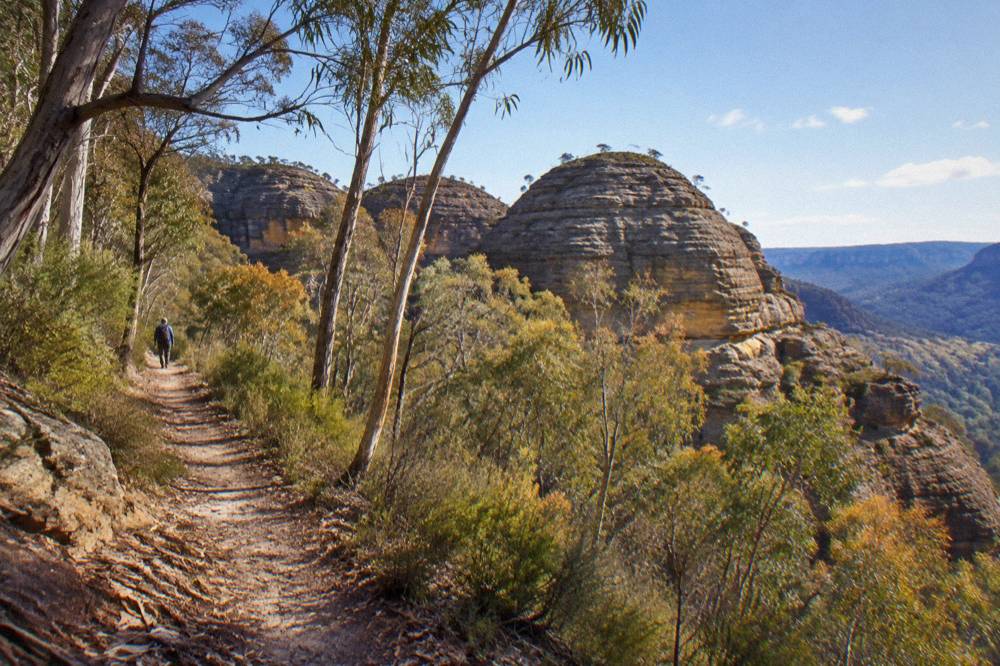
Yes. The Old Coach Road carpark is a second, officially recognised access point, and from it the Pagoda walking track runs 4 km return to the tunnel. It is the option NSW National Parks describes in its own story about the site, and it suits walkers who want a longer approach or who find the main carpark full.
The Pagoda route trades distance for a different arrival. Four kilometres return is a real walk rather than the 1.5 km stroll from the main carpark, and it approaches through pagoda rock formations that give the track its name. For a fit walker with a spare hour or two, it turns a full carpark from a disaster into a better day. The route still involves unsealed access roads to reach the Old Coach Road carpark in the first place, so it is not an escape from gravel, only from the specific congestion at the end of Glowworm Tunnel Road.
It also matters for the walk's character. The main approach is short and direct, aimed at people whose goal is the tunnel and nothing else. The Pagoda approach is a bushwalk that happens to end at one of the more atmospheric disused tunnels in the state. Families with older children and confident walkers tend to prefer the second; anyone with limited time or modest fitness tends to prefer the first. Neither is wrong, and knowing both exist is what turns a parking problem into a choice.
A note of caution applies to both carparks equally: neither has drinking water, both have very limited mobile reception, and both sit at the end of roads where a flat tyre or a missed turn is a longer walk than it would be in Katoomba. The what to bring guide covers the packing side, and the Glow Worm Tunnel safety guide covers the rest. The short form: more water than you think, a red-light torch, warm layers, and a plan you have told someone about.
Can I Skip The Drive Altogether?
Yes, and for many visitors that is the better answer. There is no public transport to the carpark, but licensed operators run guided trips to the tunnel area, and the one bookable night hike from Sydney on this site's roster picks up from city accommodation, includes parking fees and transport, and removes the gravel-road question entirely.
The bookable option this site covers is the Glow Worm Cave Night Hike From Sydney, run by Wildscape Adventures. It is priced from $128 USD per person, rated 4.9 from 210 reviews, and runs about 5 hours. Pickup is from Sydney accommodation in a staggered evening window around 7:50pm to 8:35pm, with no fixed meeting point, and the operator lists returns around 11pm to midnight. Groups are capped at 9 travellers, the walk requires moderate fitness and is not wheelchair accessible, and cancellation is free up to 24 hours before. The listing is flagged as often selling out. If you're wondering how close the glow worms actually are to the city, our guide to the glow worm tunnel's real distance from Sydney clears that up before you book.
Two honest clarifications keep the comparison fair. First, this hike goes to a glow worm cave behind a waterfall in the Blue Mountains, not to the Glow Worm Tunnel near Lithgow; the operator does not publish the cave's location. Second, the hike is a chance to see glow worms, not a guarantee, because the worms are wild animals and the operator cancels for bad weather or if minimum numbers are not met. Neither point makes it a worse option, but both belong in any honest parking-versus-tour comparison.
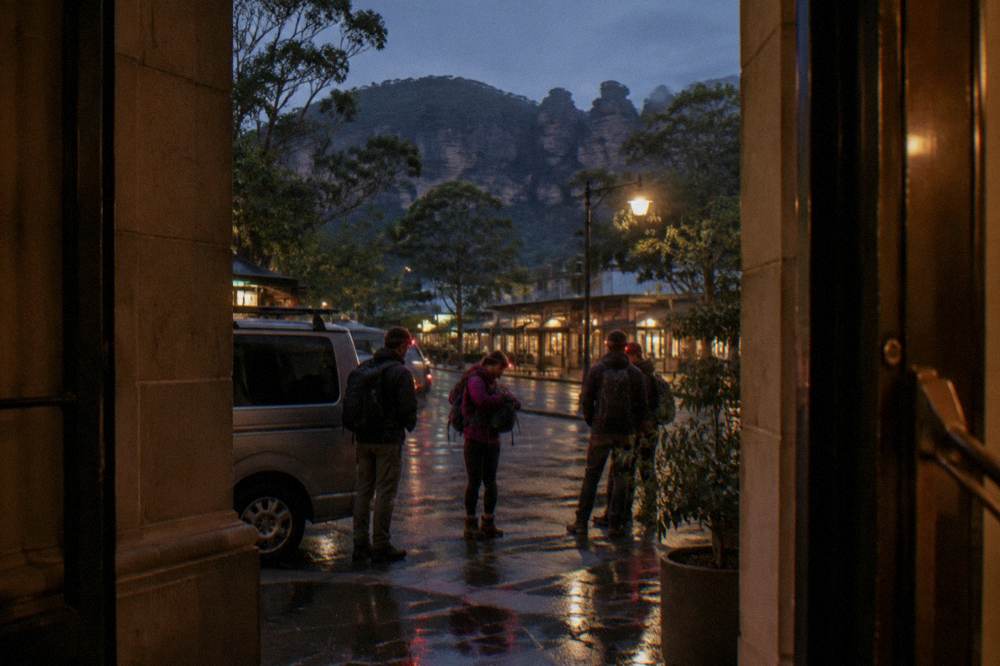
For the tunnel specifically, licensed NPWS Eco Pass operators also run guided trips from the Blue Mountains side. Beyond The Blacktop's own page lists a guided tunnel tour at $210 for adults, with child and senior rates below that and a Dry Canyon combination above it, currency not stated on the page, departing from Katoomba Station or the Zig Zag Railway at Clarence, about 5 hours, with no Sydney hotel pickup. A full-day tunnel tour from Penrith by Red Lantern Tours is also NPWS-listed, with pricing on request. These are operators' own prices and details, printed here as each operator states them.
The choice, then, is not really carpark versus tour. It is gravel-road logistics versus someone else's logistics. If you want the tunnel itself, you drive or you book a tunnel-area operator. If you want glow worms at night with zero driving, the Sydney-pickup hike is the documented option, and the Glow Worm tour from Sydney guide compares the two approaches in more depth. The how to get to the Glow Worm Tunnel from Sydney guide handles the self-drive route in detail.
Common Questions About Parking At The Glow Worm Tunnel
Where Can I Park Near The Glow Worm Tunnel?
The main carpark is at the end of Glowworm Tunnel Road in Wollemi National Park, a 1.5 km walk from the tunnel entrance. A second official option is the Old Coach Road carpark, reached via the Pagoda track, 4 km return. NSW National Parks lists no parking fee at either.
Do I need a 4WD to reach the carpark?
In dry weather a 2WD can make the unsealed road, and NSW National Parks describes 2WD access as possible then. A 4WD is recommended generally and required in wet weather. Long vehicles have no access.
Is parking free at the Glow Worm Tunnel?
No fee is listed on the NSW National Parks track, visitor info or alerts pages, and the agency's own story describes the site as free. Check the official page before travelling, since parks can change arrangements.
When does the carpark fill up?
Summer, weekends and holiday periods, according to NSW National Parks, which recommends visiting during the week or in spring or autumn to avoid crowds and the limited parking.
Are there toilets or water at the carpark?
There are 2 non-flush toilets, one ambulant, and one timber bench. There is no drinking water and very limited mobile reception, so the Emergency Plus app is advised.
Can I get to the carpark by public transport?
No. NSW National Parks lists road access only, and no public transport service reaches the carpark. The alternatives are driving, a licensed tour operator, or the Sydney-pickup night hike that includes transport and parking fees.